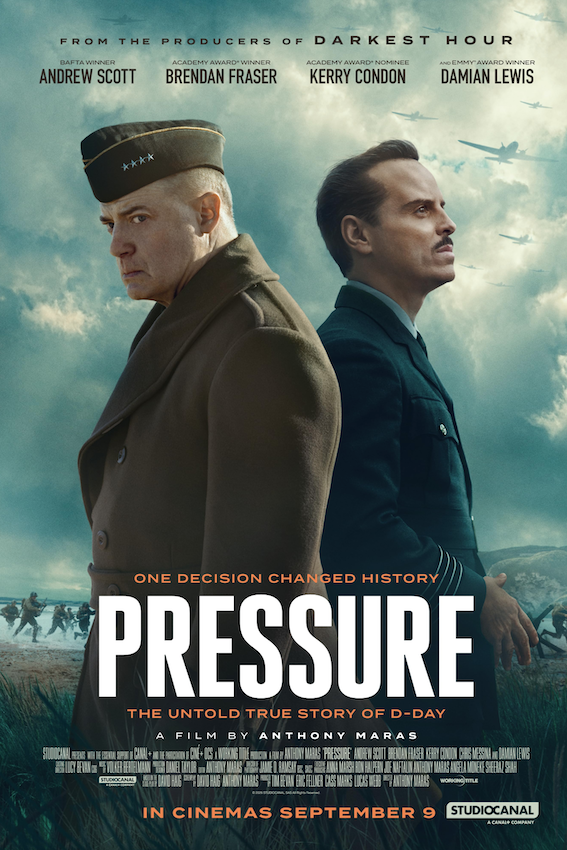
2026
Directed by Anthony Maras
Based on the stage play by David Haig
Screenplay: David Haig & Anthony Maras
Composer – Volker Bertelmann
I need to put (film) because we saw the stage play, in which David Haig played the lead in his own play. It was first produced in Chichester in 2014, then we saw it in 2018.
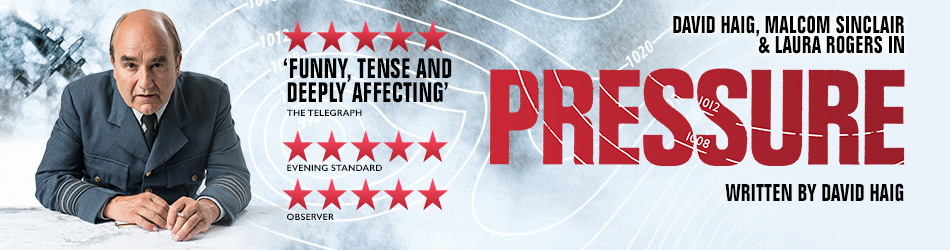
SEE: Pressure, by David Haig, London 2018
CAST:
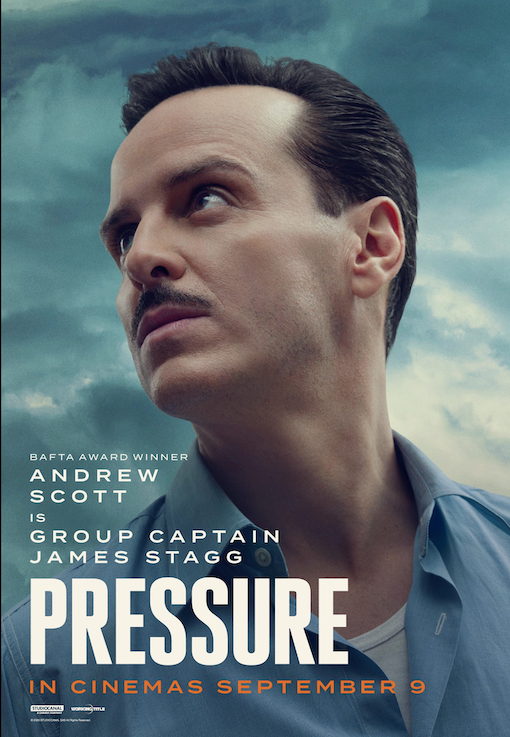
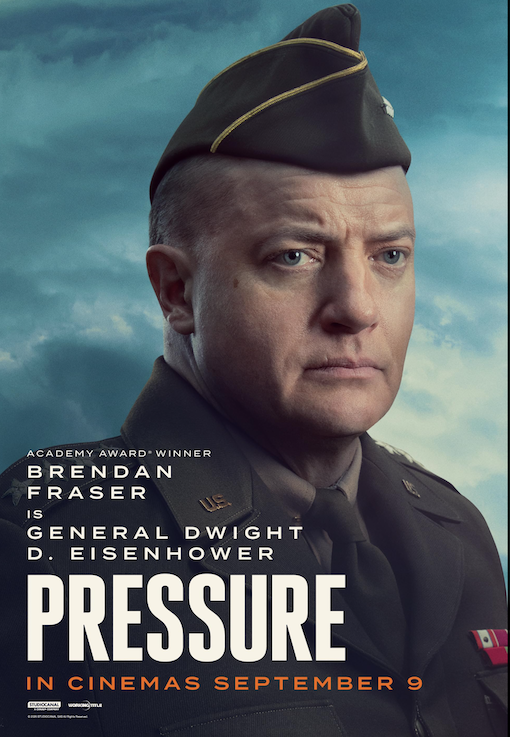
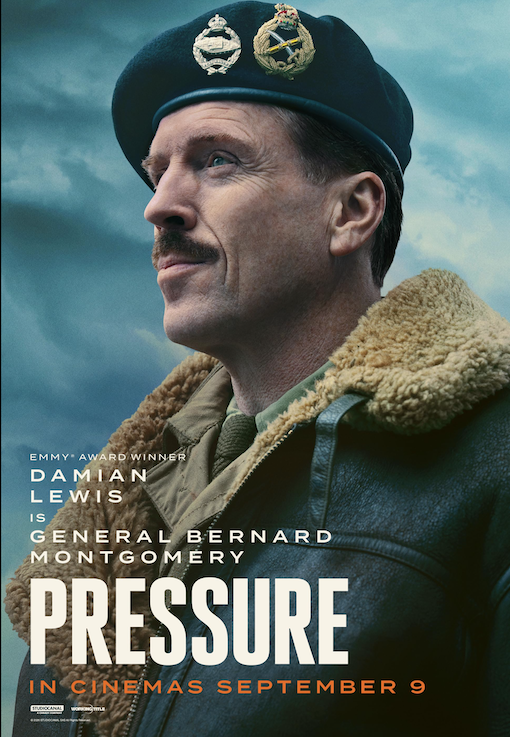
Andrew Scott- Group Captain James Stagg
Brendan Fraser – General Dwight ‘Ike’ Eisenhower
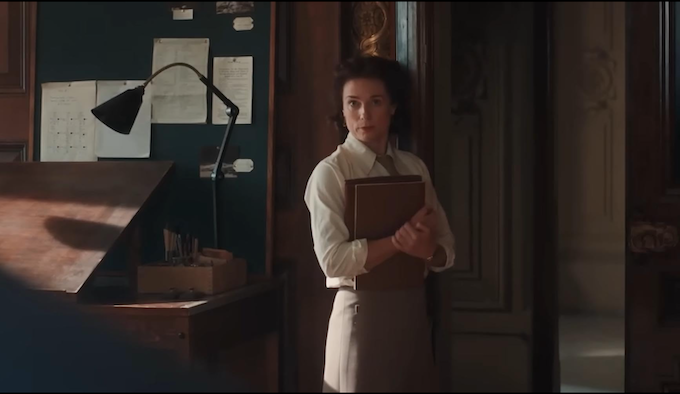
Kerry Condon – Lieutenant Kay Summersby
Damian Lewis – General Bernard ‘Monty’ Montgomery
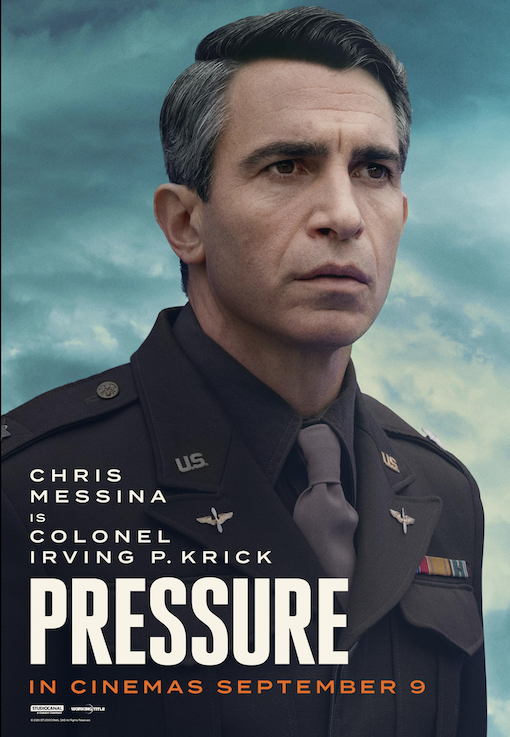
Chris Messina- Colonel Irving Krick
Tamsin Topolski- Liz Stagg
Jojo Macari- Andrew Carter
Con O’Neill – Air Marshall Leigh-Mallory
Alexander Hanson – General Omar Bradley
Robert Portal – Admiral Bertram Ramsey
Joshua Hill- Casey
Toby Williams – Bryant
Richard Clothier- Flight Officer Murrat
Michael Ben – Flight Officer Hamilton
Crispin Letta – Reverend Draper
On the face of it, the story does not sound exciting. It’s an argument between two meteorologists about weather patterns. They were however, crucial weather patterns. D-Day, the invasion of Europe by sea, was set for 5th June 1944. The allies had to be sure that it was a viable day for weather. They needed high tides to beach the landing craft, and moonlight to guide the planes. They had a choice of June 5th, then the next favourable conjunction of tide and moon was June 18th. Decoy inflatable tanks and planes and rows of tents and campfires had been established in Kent to make the Germans think the invasion would be at the narrowest point, around Calais, so they would concentrate defences there. In fact the allies were going for the much longer crossing to Normandy. The trouble with 18th June was keeping the growing number of army units in Hampshire and Dorset hidden, and the chance grew of Germany discovering the decoys were fake.
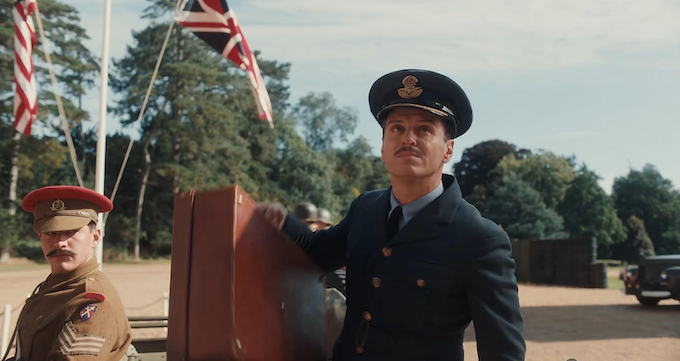
We start with a domestic touch, Stagg at home, about to leave for the headquarters in a mansion. I looked Stagg up. Apparently Group Captain was a semi-honorary rank, as he was a meteorologist, not a professional military officer. The mansion is surrounded by tents, as they were. When he gets there, he orders people to stop singing, and orders Lieutenant Summersby to leave the office she was using. He is not aware how important she is as Eisenhower’s trusted assistant. He gets up everyone’s noses. Later, when he speaks to the assembled military leaders he starts, ‘I know none of you like me, but …’
Group Captain James Stagg was the head of the British meteorology office, and trusted by Churchill. Dwight D. Eisenhower (Ike) was Commander-in-chief, and he had his own meteorologist, Colonel Krick. Stagg outranked Krick. Krick studied archived weather maps for 5th June and was convinced weather would be fine, and seas calm. Stagg disagreed and was early in studying the influence of the jetstream. He sought data over a wider area, had weather balloons sent up hundreds of miles away.
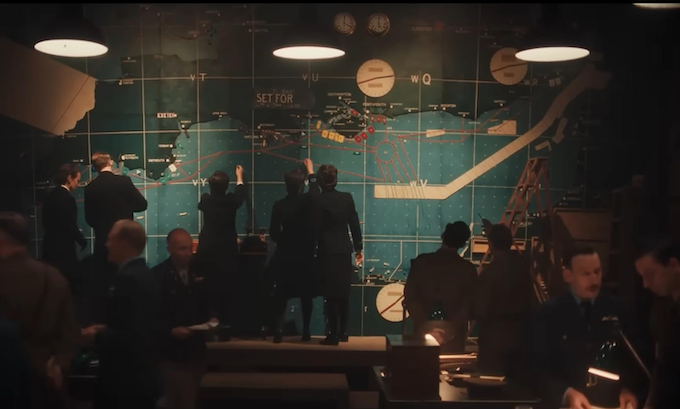
As Krick boasted of his predictions for filming in California, then the North African campaign, the dour Scot, Stagg, insisted that Northern Europe was too unpredictable. Stagg studies patterns from live sources, not archive ones, and predicts storms and high waves,
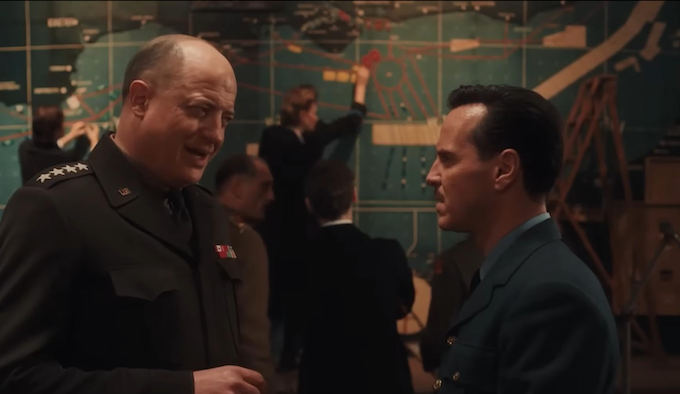
So they each need to convince Eisenhower that their forecast is correct. Add the belligerent General Montgomery who was all for getting up and at ’em as soon as possible. Stagg and Krick have to present their cases to Montgomery and the Chiefs of Staff.
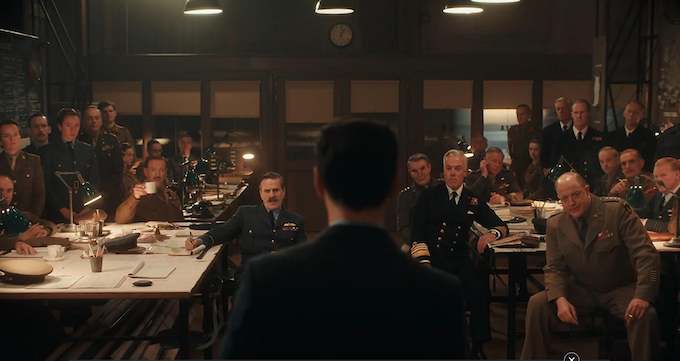
That’s the story. Stagg then saw that there would be a calm gap the next day June 6th, seas were still rough, but not too rough. They could use the gap. Fortuitously, the Germans predicted two weeks bad weather (they didn’t concur with Colonel Krick either) and the high command went off on a jaunt. In 1961, Eisenhower said they won at D-Day because ‘we had better meteorologists than the Germans.’
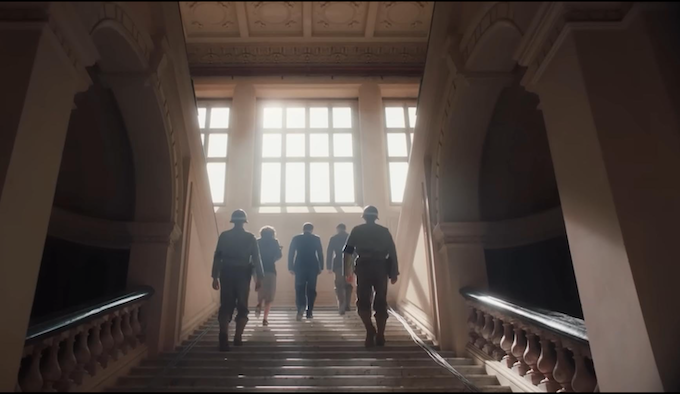
THIS IS A TRUE STORY is emblazoned at the start. I’ll testify to that. My dad was in a landing craft with the BBC radio unit reporting off the beach, and the waves were still high enough to make him feel seasick even if he walked onto Bournemouth pier in later years. He also used to point out where American and Canadian units were camped in the New Forest. All road signs were removed in 1940, but as he’d worked delivering motor parts pre-war, he knew the area thoroughly. He spent a few weeks as a dispatch rider on a motorbike between the units. He landed on the third or fourth day, and described French farmers chopping up German bodies for fertiliser. They had to stop them (respect the enemy dead). He would never eat French vegetables after that.
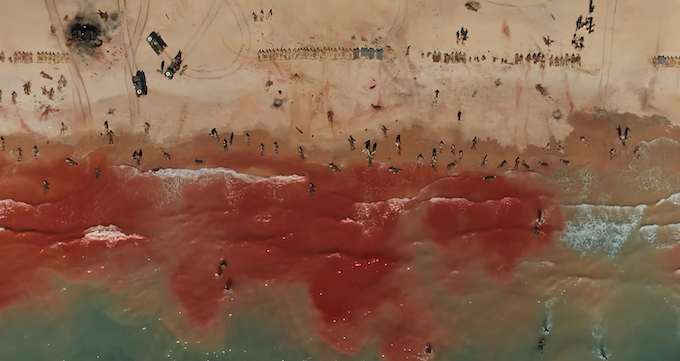
That’s all in the play. This is the film, so it’s different. First, they add action, and it’s important action. A few weeks before D-Day there was an American rehearsal at Slapton Sands on Lyme Bay, and they were using real naval guns to make it realistic. There was poor co-ordination, the soldiers landed on the beach under naval bombardment. 943 (the figure is debated) were killed. We see Eisenhower reviewing that situation. So it’s in his mind what could happen if they get D-Day wrong.
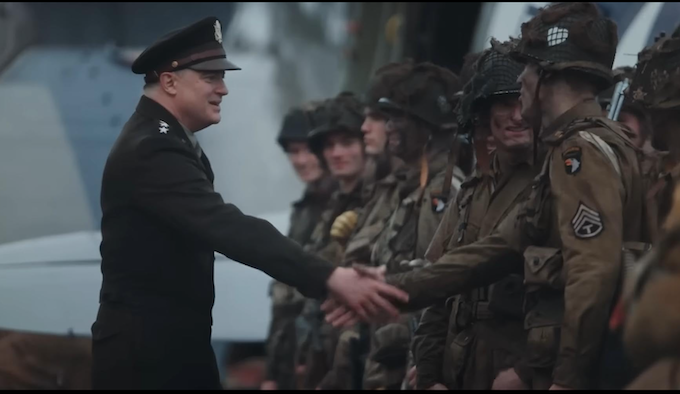
Then it’s bookended, because later we see the D-Day embarkation and landings (superbly done on film), and it’s personalised to two soldiers we saw joshing about in camp and having fun.
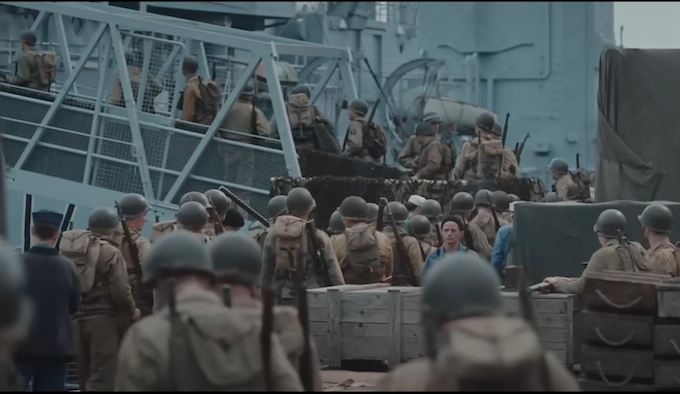
The thing is, brilliant as the military action is, the play worked without it, and the film probably would too (maybe not in box office receipts though). The intensity of the lead actors is what makes it.
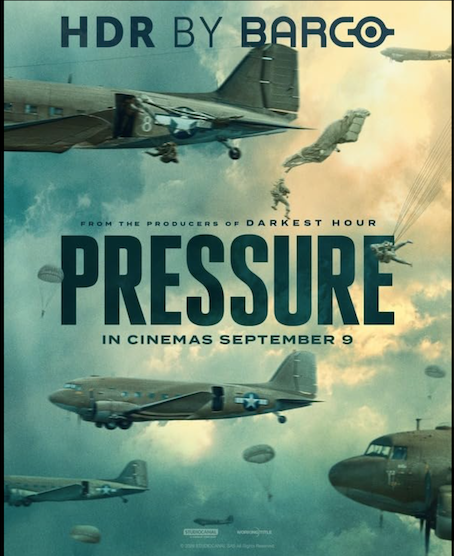
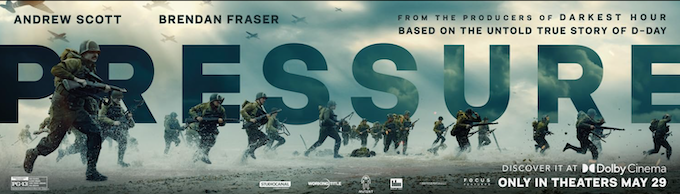
Looks good? Yes, but the action shots are not the best thing
The personal interaction sections are the ones that will stick most strongly in your memory.
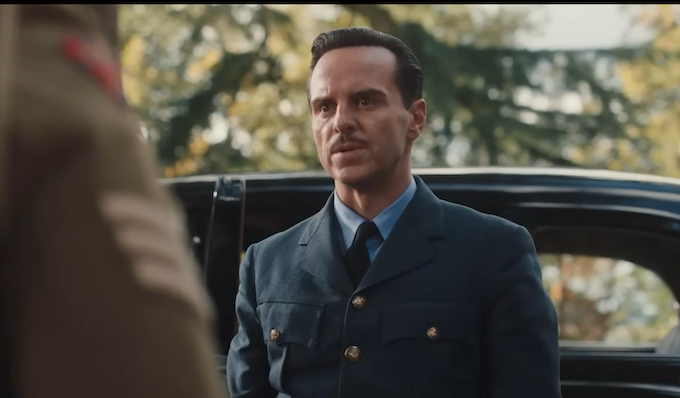
Andrew Scott plays Stagg. Like David Haig on stage, he is impassioned, but while Haigh stressed himself desperately trying to convince, Scott is colder yet incredibly intense. Academy Award for best actor for me.
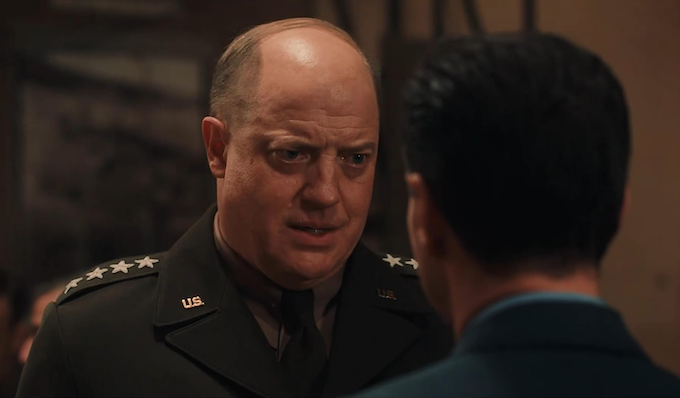
Then we have Brendan Fraser as Eisenhower. I think of Eisenhower circa 1960 as a genial, amiable old buffer who was fond of golf. Fifteen years earlier, he must have had a powerful personality. Brendan Fraser is much larger physically (Eisenhower was 5’10” so not small, as in my imagination). He’s fiercer, not quite George C. Scott as General Patton, but definitely a powerful man in a rage. In the context, though he looks nothing like Eisenhower, I thought it worked better than a lookalike. Incidentally, the real General Patton was assigned to be highly visible in Kent as a major decoy. Best supporting actor for Fraser? Or is it a co-lead role?
Colonel Krick is Chris Messina. He gets called a moron by Stagg, who has the piano Krick and others were enjoying removed on arrival. Krick is proud of predicting good weather for the Burning of Atlanta in Gone With The Wind. A tight-lipped Stagg knows South California is predictable. At the end, Krick and Stagg finally shake hands. Karen was puzzled. Why did they shake the left hand?
Damian Lewis is General Montgomery, complete with speech impediment, and is permanently bellicose and overstepping his position. My dad met the real one later in 1945. Montgomery watched him teaching motor vehicle maintenance, and told him it was the first time he’d understood how a combustion engine worked. My dad was flattered. Montgomery wrote a commendation. My dad found his service in Germany extended by six months to teach motor mechanics. He told me, ‘That’s what you get for showing off you’re smart.’ Why is my dad relevant to the film? Because the film feels so relevant to my generation.
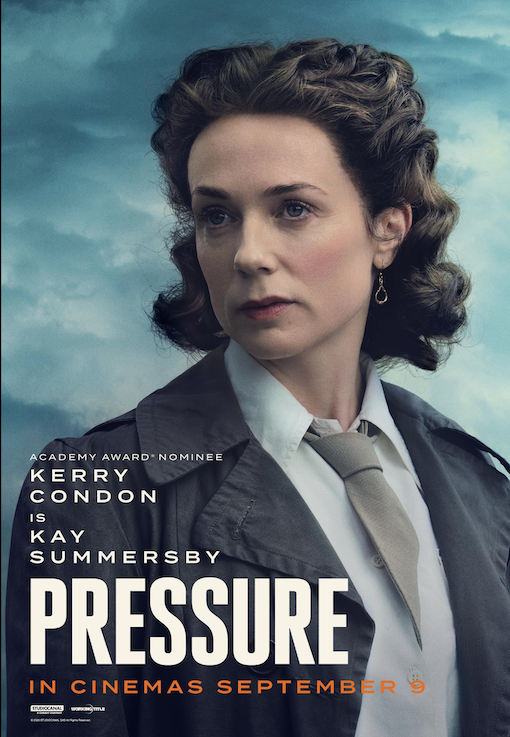
Kerry Condon is Lieutenant Kay Summersby, Ike’s assigned British driver for a long time and also his close confidante. (Possibly more). She is the enabler and organiser and not afraid to speak up.
The clever British v clodhopper Americans is a potential sub-theme, but they’re careful to balance it. When Stagg spots the potential weather gap, he enlists Frick to help him out. Eisenhower blusters, but Montgomery blusters with much less effect. The Air Force and Navy chiefs are more sternly formal.
THIS IS A TRUE STORY again. Well, not entirely. They’ve also added a dab your eyes with your hankie sub-plot to the play. Stagg’s nine month pregnant wife has gone into a hospital that got bombed. He doesn’t know if she survived. June 2nd? The “mini blitz” in early 1944 was a last gasp revenge series of German raids, which fizzled out in May. The first V1 jet bomb raid was 13th June. So it seems extremely unlikely that a hospital was bombed on June 2nd. The film was preceded by an advert for Ancestry.com with clips from the film. Ah. Wikipedia tells me that James Stagg had two children, Peter (1941) and Alexander (1944). So his wife WAS pregnant. But a cursory check on Ancestry suggests Alexander was born in October 1944. So THIS IS (NEARLY) A TRUE STORY.
Some reviews annoyed me. It’s age. ‘They don’t know the half,’ as my dad would have said. The Sunday Times gave it four star but called it a comfy Waitrose movie. Bollocks. I grew up with my dad and uncle who were there, as were neighbours. D-Day loomed over our childhoods. At my dad’s funeral in 1966, four men his age turned up. I’d never met them. They were from his platoon and all had travelled a long way. They had tears in their eyes. Poole still has some rusting American landing craft in the harbour. Many Americans left from Poole. I ran into American veterans at Paris airport on the 50th anniversary. I spoke with them, flights were delayed, we had a drink together. These men were teared up about their fallen comrades.
This film is even an old-fashioned optimum length- 100 minutes. I approve.
Rating? I rate movies as forget / stream / DVD / blu ray / 24K. I’ll buy this one when it comes out. 24K.
LINKS ON THIS BLOG
DAVID HAIG
writer and actor:
Magic by David Haigh, Chichester 2026
Pressure, by David Haig, London 2018
actor:
King Lear, Bath Theatre Royal, 2013
Rosencrantz & Guildenstern Are Dead, Old Vic, 2017
Racing Demon, Bath Theatre Royal 2017
ANDREW SCOTT
Present Laughter by Noël Coward, Old Vic 2019, Andrew Scott
Hamlet, Almeida & broadcast 2017
BRENDAN FRASER
Furry Vengeance
DAMIAN LEWIS
American Buffalo, London 2015
Wolf Hall, TV series (Henry VIII)
KERRY CONDON
The Banshees of Inisherin (film)
The Lieutenant of Inishmore, Stratford 2001
ALEXANDER HANSON
Farewell Mister Haffman, Bath 2023
The Truth by Florian Zeller, Menier Chocolate Factory 2016
The Lie by Florian Zeller, Menier Chocolate Factory, 2017
Wars of The Roses: Richard III, Rose Kingston (Buckingham)
Wars of The Roses: Edward IV Rose Kingston (Richard, D. of York)
Wars of The Roses: Henry VI Rose Kingston (Richard, D. of York)


Slapton Sands – that disaster was because German E-boats happened to come across the exercise.
LikeLike