Directed by Bryan Forbes
From the novel by Lynne Reid Banks
Screenplay by Bryan Forbes
Produced by Richard Attenborough.
CAST:
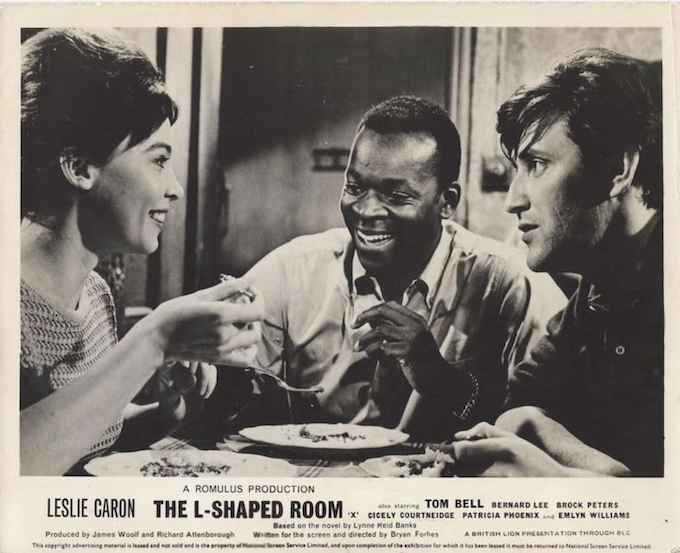
Leslie Caron – Jane Fosset
Tom Bell- Toby, a would-be writer
Brock Peters – Johnny, a jazz trumpeter
Pat Phoenix – Sonia, a prostitute
Cicely Courtneidge – Mavis, retired thespian
Avis Bunnage – Doris, the landlady
Emlyn Williams – Dr Weaver
Gerald Sim – hospital doctor
Bernard Lee- Charlie, Doris’s “friend”
Mark Eden – Terry, father of the child
Nanette Newman- new occupant of the room
Verity Edmett – Jane, works for Sonia
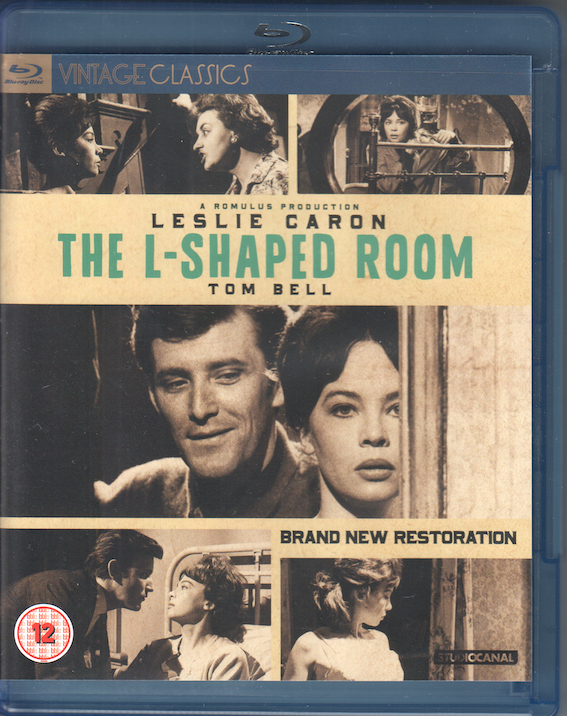
This was another we watched in the BFI Vintage Classics blu-ray restored version. It makes a massive difference.
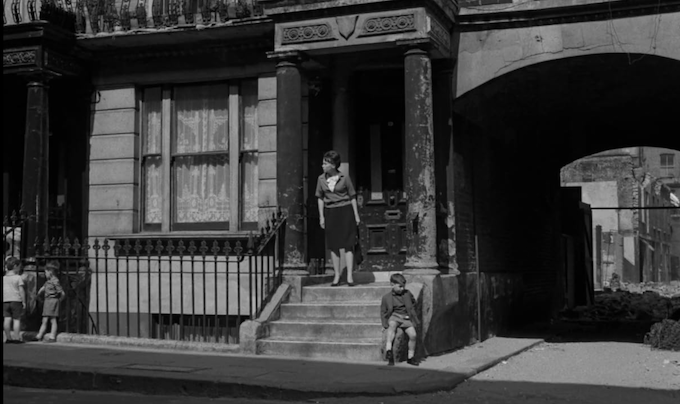
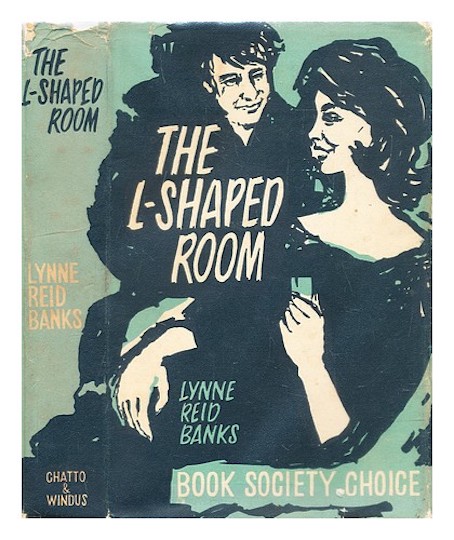
Mostly kitchen-sink is, ‘It’s grim up North.’ This one counters, ‘It’s even grimmer down South in London.’ It’s from a 1960 novel by Lynne Reid Bankes, and scripted by Bryan Forbes who also directed.
Kitchen Sink plays tend to revolve around unexpected pregnancy, current or past, and you wait for the announcement. This one beats the others because she’s pregnant before it even starts.
Leslie Caron plays the central figure, Jane. Jane? I have never met a French woman named Jane. It’s Jeanne. Why change it? So she is cast as French. In the original novel her name is Jane Graham and she is English. So Forbes changed her surname to Fosset, but left her first name as Jane. It’s odd. I don’t go to France and say ‘Call me Pierre,’ then move into Spain and say, ‘My name’s Pedro.’ Leslie Caron was born in France. Her mother was American, her father French. She worked in the USA for years. Whatever she got a BAFTA Best Actress, a Golden Globe Best Actress and an Oscar nomination for this role.
Much of the interest is in the denizens of the seedy flats. Toby (Tom Bell) is intrigued by her. He’s supposed to have been a full-time writer for ten years with five rejected novels. He’s 28, so started at 18. This stretches credulity beyond belief. That’s a hobby, not a job.
There is a trio of great female character actors: Pat Phoenix, Cicely Courtneidge, Avis Bunnage.
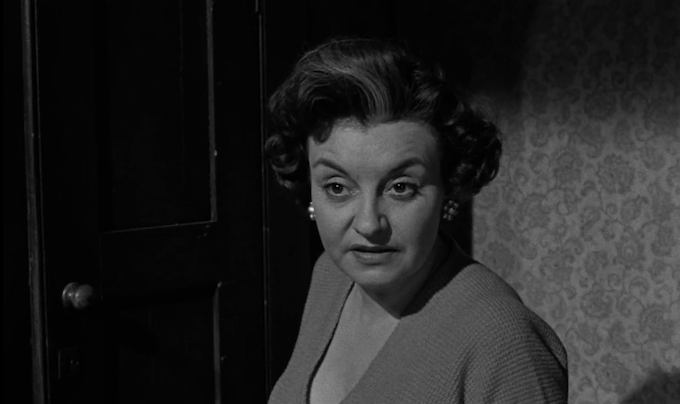
Doris (Avis Bunnage) is the landlady and has a live in friend, Charlie, who is usefully a pianist too. Avis Bunnage was 39 in 1962 and a Theatre Workshop graduate, but seemed to specialize in playing characters older than she actually was.
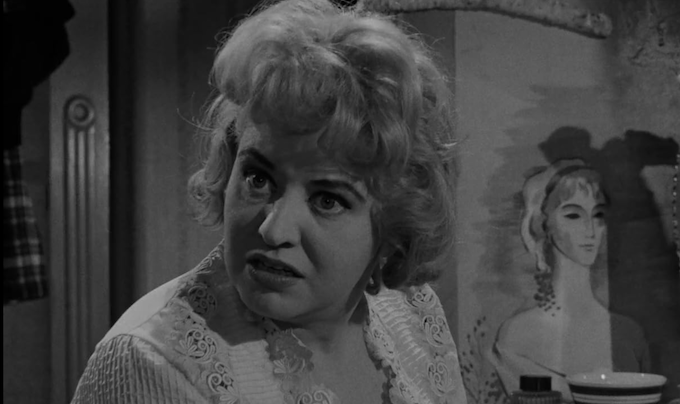
Pat Phoenix in the basement is Sonia, a prostitute, or even a madame as she employs a younger prostitute, also called Jane. Was Pat Phoenix supposed to carry the aura of Elsie Tanner in Coronation Street with her? Not that Elsie Tanner was ever a tart. However, she was already famous.
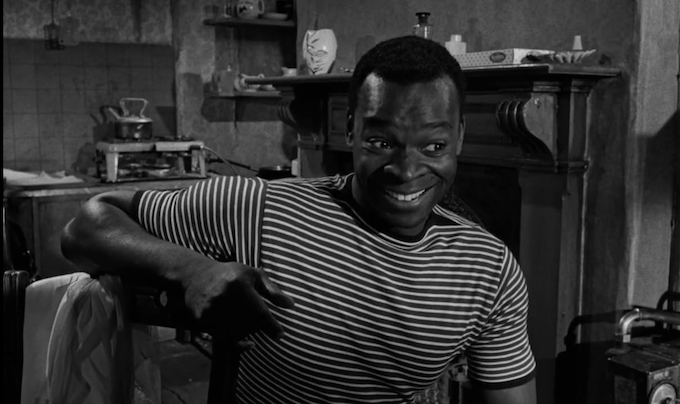
There are two gay characters, Johnny (Brock Peters), the black trumpet player, and Mavis the retired pantomime and variety show performer. They avoid being specific. Johnny does look most upset at Toby and Jane’s affair, and one senses it’s disappointment to discover that Toby is heterosexual, but it’s not explicit. However, he can cook, which in 1962 may have been an indicator. He’s also a gentle and concerned man, which in 1962 may have been another indicator. And a musician! Brock Peters was American, but worked ion a few British films, here as a West Indian.
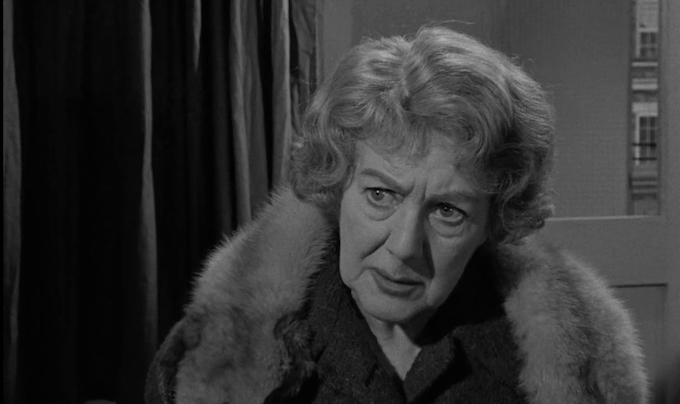
Mavis (Cicely Courtneidge) talks about her partner, who she lived with, and says there’s a photograph. We don’t see it, but Jane picks it up and looks surprised. ‘It takes all sorts,’ says Mavis, making it clear her partner was a woman. I think they were fudging it by avoiding stating anything. Most viewers would get the point. Still, they escaped the censors and got a 15 rating.
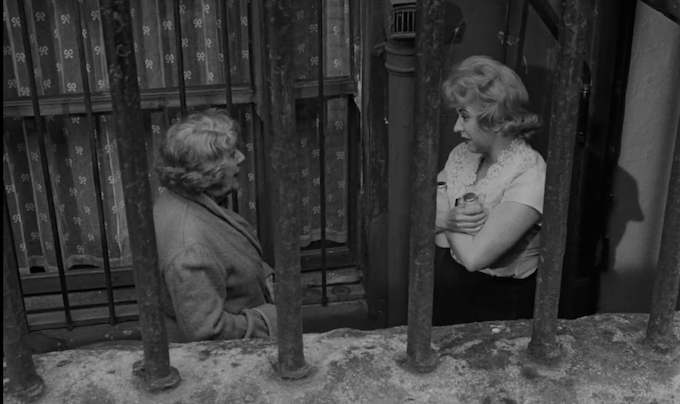
Mavis knows everyone and is completely non-judgmental about Sonia’s basement business.
The story starts with Jane taking the flat and meeting the tenants.
A major scene is when she goes to see Dr Weaver (Emlyn Williams).
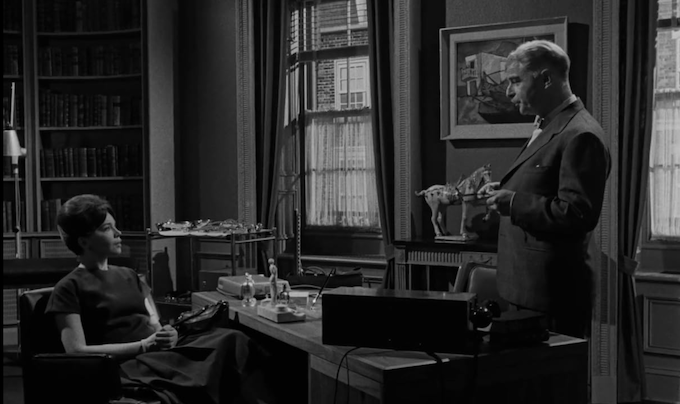
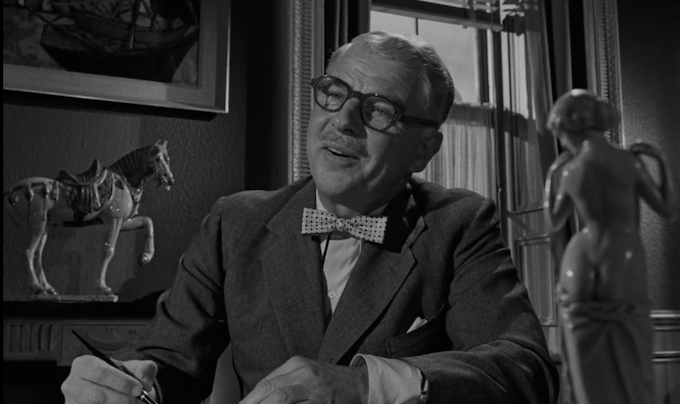
She wants to know first whether she’s pregnant, and then wants advice on her pregnancy. Dr Weaver is immediately into sending her to another doctor so they can get the required two signatures for an abortion on psychological (or medical grounds). He doesn’t examine her or even ask why she’s come. Abortion was illegal, but for those who could afford Harley Street doctors it was not a problem. His attitude makes her determined to have the baby.
At the flat she discovers that her bed is crawling with large bugs. No, bedbugs are 1mm to 7mm in size, which is why they’re a problem. These are monster bed bugs.
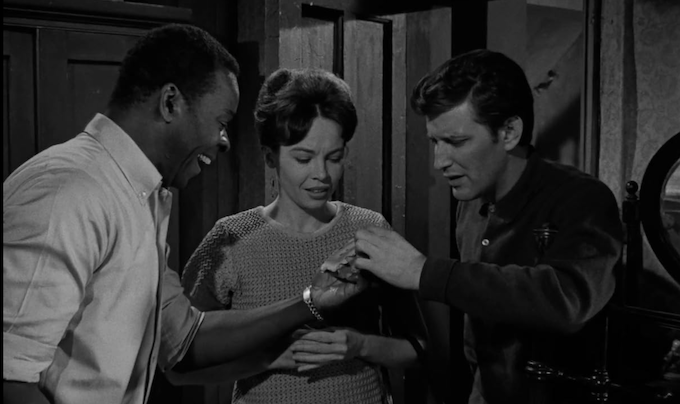
Johnny captures a sample with a large bar of soap, so they can prove they were there. I can see why a small bar of soap wouldn’t have been enough.
Johnny and Tom get Doris to give her a new mattress. Later Mavis says she arranged the new mattress which we don’t see happening, so I suspect there was a cut and they didn’t notice the consequential line issue.
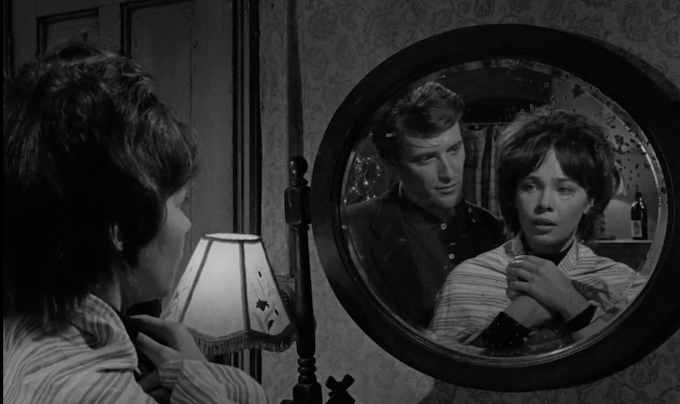
Tom helps her out when she tries to cut her own hair. Cinematographers loved the mirror shot. They still did thirty years later when we were filming. Give them a mirror, and they’ll shoot a character in it. It is technically hard (to avoid seeing the camera crew or lights) , so a show off. The scriptwriter won’t have written it in the screenplay. The director hadn’t thought of it, but inevitably the camera operator spots a mirror and says, ‘I’ve got an idea …’
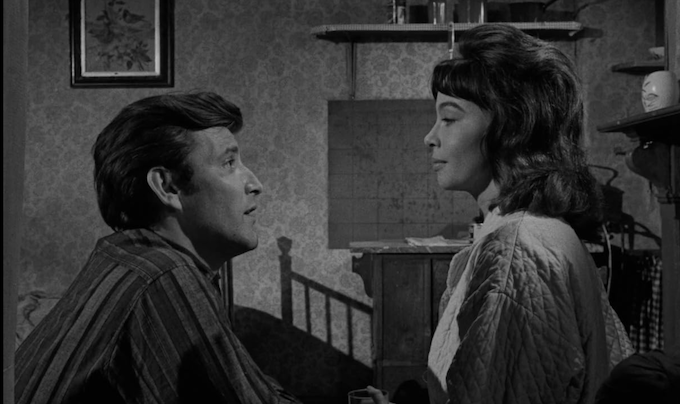
She is drawing closer to Tom and Johnny. They go to see Johnny play, Johnny cooks them dinner.
The film music uses BrahmsPiano Concerto No 1 effectively throughout, except for the two jazz pieces in Johnny’s club, which are by John Barry. They are extremely good, much more soul jazz (so many 1962 films did either meandering avant-garde jazz, or raucous trad). These pieces are more like the Cannonball Adderley Quintet.
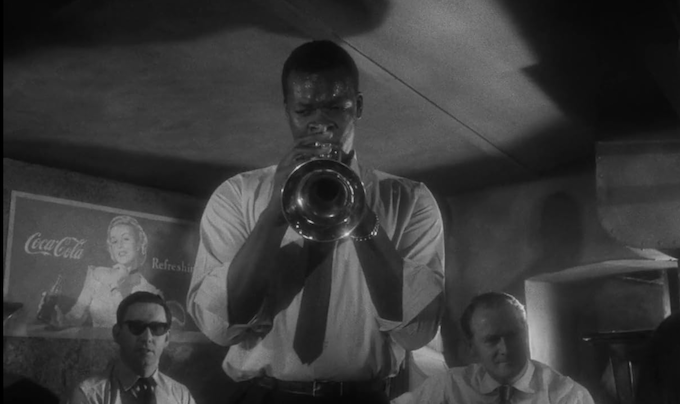
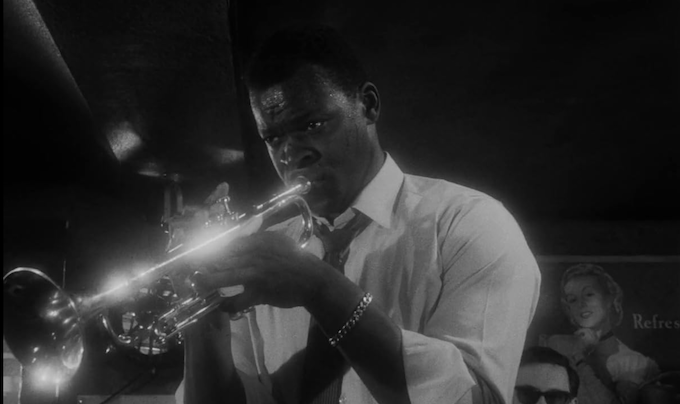
She starts a sexual relationship with Tom (to Johnny’s horror), but just the once. Poor Johnny has to listen through the paper thin walls to their love-making.
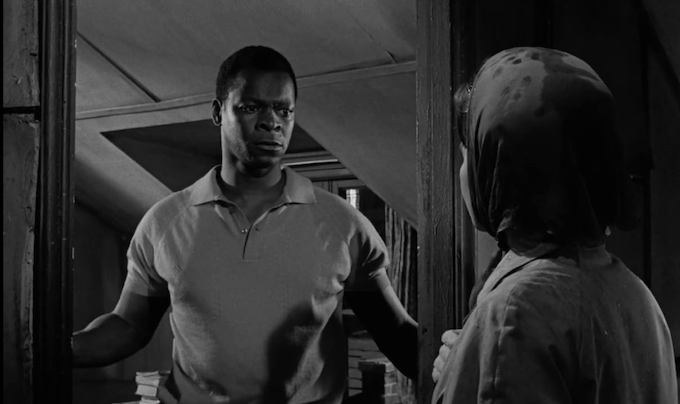
Johnny is hurt and angry. He has spent ages making a baby crib for her too.
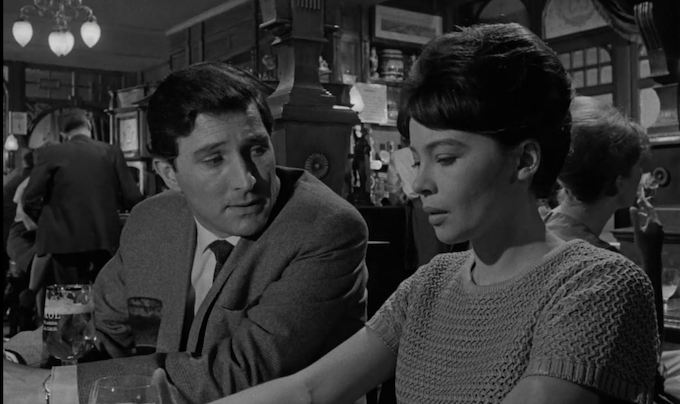
Jane goes to meet Terry, the father of the child. Tom is sent away while they talk
When Tom finds out she was pregnant all the time he calls her a whore. She tearfully explains that she’s only slept with two men and only had sex twice. Yet we hear earlier that she had a week (or was it a weekend) in Cornwall with Terry which is where she got pregnant. They went to Cornwall to sleep together and they only had sex once? Not for the first time, I wondered about script editing.
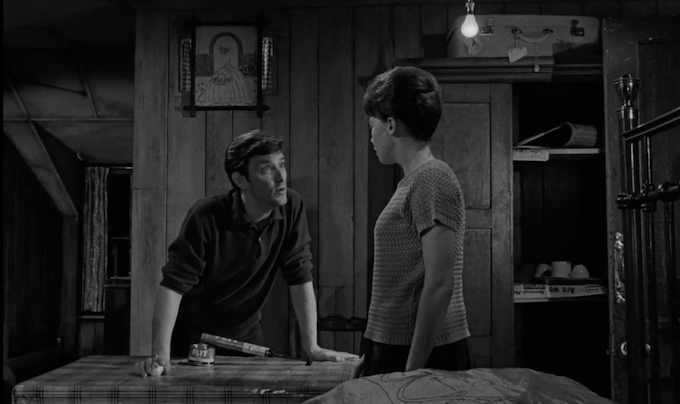
Anyway the result is that Tom breaks up with her. Have you noticed how Bryan Forbes likes two shot confrontations?
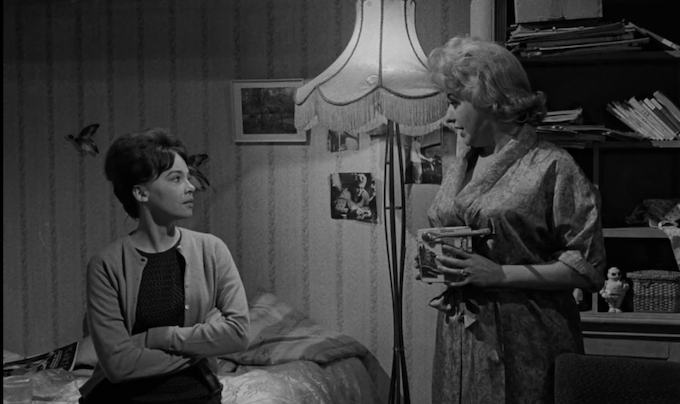
She goes to Sonia for advice. There is a set design in joke above. The flying mallard ducks on the wall were a Coronation Street trademark image! Sonia has a Hungarian girl, also called Jane, working for her.
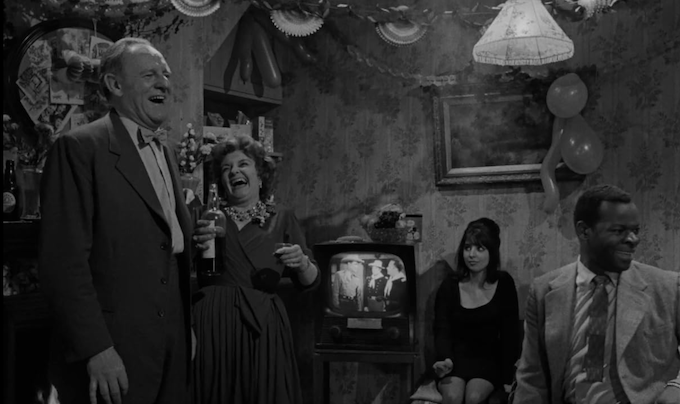
L to R: Charlie, Doris, the ‘other Jane’. Johnny
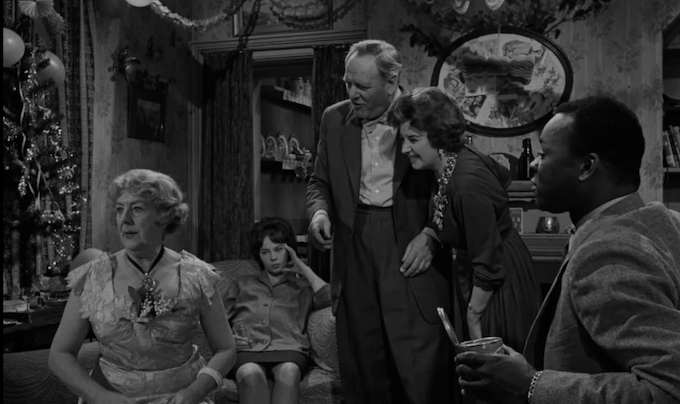
Persuading Mavis to do a song
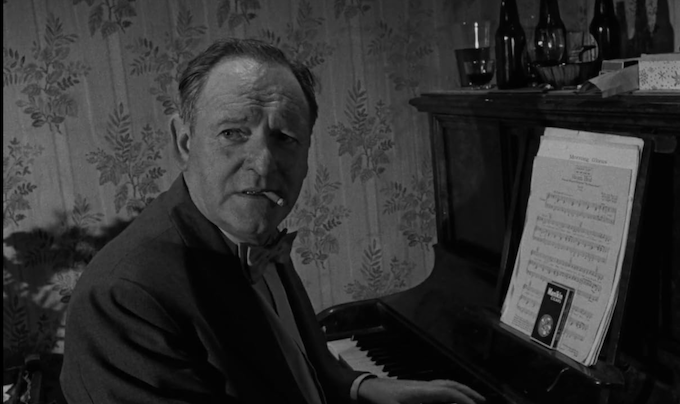
One of the highlights of the film is Doris’s Christmas Party. This has Mavis donning her stage army uniform to song Take Me Back To Old Blighty at the party. Charlie plays piano. The Manikin cigars are a nice period touch. Bernard Lee gets fourth billing on most posters and DVDs. It’s a pretty minor cameo, most often seen in the half open door behind Doris.
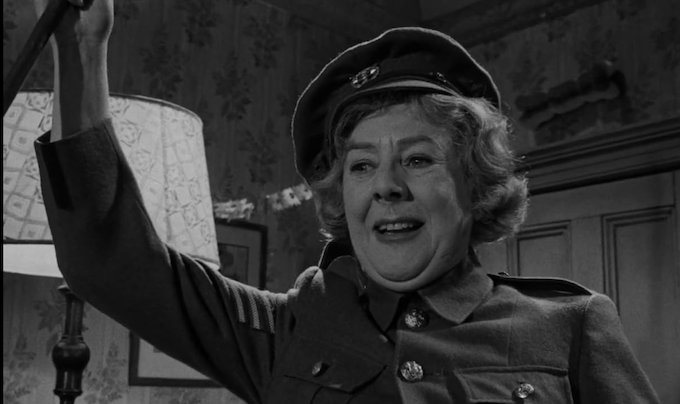
This jaunty music hall rendition apparently sends Jane into labour.
At the hospital the doctor (Gerald Sims) comes to see her before commencing delivery smoking a cigarette.
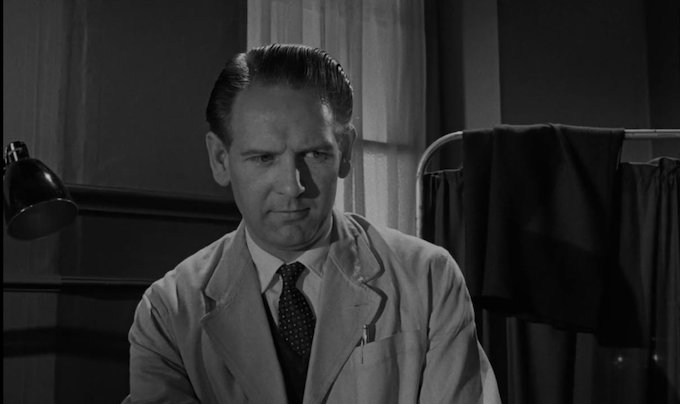
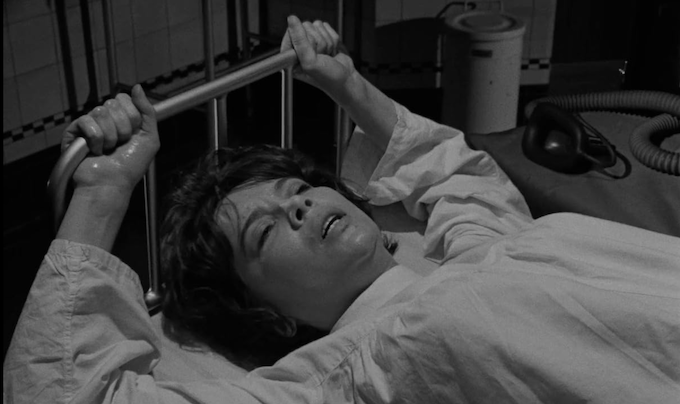
When Toby arrives at the maternity hospital, much too late, he says meekly, ‘Hello.’
I realised how much Karen was into the film before Jane got to respond, she exclaimed, ‘Fuck off! That’s what I would have said!
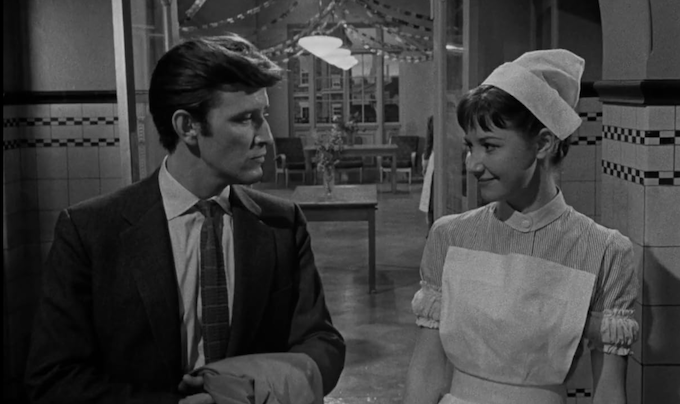
I noted that Jane tells Toby he can’t smoke in the maternity ward. It didn’t stop the doctor. Even sixteen years later half the maternity ward were smokers.
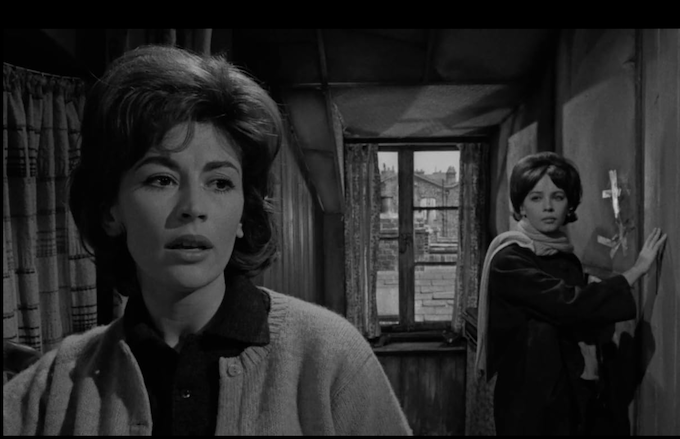
She has the baby. The tenants are supportive. She will return to France but goes to take a last look at the L-Shaped room. She was happy there.
Wikipedia quotes the contemporary Monthly Film Bulletin:
Although it is full of the trappings of contemporary frustration.. the film has nothing specific to say about life in a London bedsitter in 1962. Despite his cogently amusing dialogue, Bryan Forbes’ rather capricious direction makes this only too clear quite early on, for after a brilliantly authentic piece of scene setting, with the unseen landlady’s spine-chilling small talk on the stairs and the lights going out on each landing of the hideous house, he disappointingly spills over into melodrama – bugs in the bed, bangings on the wall, black face at the window… Moreover, neither direction nor script is ever tough enough to succeed in suggesting loneliness, and Forbes’ obvious talent (and preference) for drawing likeable performances from his actors tends to work against him. Avis Bunnage’s unpredictable landlady, Cicely Courtneidge’s self-contained old trouper, Patricia Phoenix’s gregarious prostitute are all “Character”. Emlyn Williams unprincipled gynaecologist is a cardboard villain. On the other hand, Leslie Caron has never been more appealing … and Tom Bell exactly hits off frustrated attitudes of a would-be intellectual who cannot afford a bottle of non-vintage wine, let alone a wife with child. Indeed, when the film is soberly engaged in telling a simple, romantic story, it does achieve a certain assurance as well as considerable charm.
Cicely Courtneidge later said that Mavis was her finest screen role. Tom Bell blotted his copybook but getting pissed at the premiere and yelling ‘Tell us a funny story!’ at the Duke of Edinburgh. It is said that Bryan Forbes and Richard Attenborough were not amused, which may be why that in spite if getting star billing it was a few years before his career took off properly.
Forbes’ cast his wife Nanette Newman as the new tenant of Jane’s flat at the end. She has several photos in the IMDB photo gallery despite a tiny cameo. This was British Film at the time. Gerald Sim who played the hospital doctor was producer Richard Attenborough’s brother-in-law. At the time Leslie Caron was married to director Peter Hall.
Cinematically, Bryan Forbes is not in the same class as John Schlesinger or Tony Richardson. The overall effect is always strongly “stage play.” I would class him as ‘an actor’s director’ as ex-actors tend to be. Yet he got to be the studio executive employing everyone else. However, Leslie Caron got the awards for her performance. Compared to the gritty industrial landscapes I suppose London was simply less cinematic.
THE 60s REVISITED REVIEWS …

The Six Five Special (1958)
Separate Tables (1958)
Our Man in Havana (1959)
Saturday Night and Sunday Morning (1960)
A Taste of Honey (1961)
The Frightened City (1961)
The Young Ones (1962
The Loneliness of The Long Distance Runner (1962)
A Kind of Loving (1962)
The L-Shaped Room (1962)
Some People (1962)
Play It Cool (1962)
Summer Holiday (1963)
Sparrows Can’t Sing (1963)
The Small World of Sammy Lee (1963)
Tom Jones (1963)
The Fast Lady (1963)
What A Crazy World (1963)
Live It Up! (1963)
Just For You (1964)
The Chalk Garden (1964)
The Carpetbaggers (1964)
Wonderful Life (1964)
A Hard Day’s Night (1964)
Rattle of A Simple Man (1964)
The Yellow Rolls-Royce (1965)
Gonks Go Beat (1965)
The Party’s Over (1965)
Be My Guest (1965)
Cat Ballou (1965)
The Ipcress File (1965)
Darling (1965)
The Knack (1965)
Catch Us If You Can (1965)
Help! (1965)
Doctor Zhivago (1965)
Ten Little Indians (1965)
Morgan – A Suitable Case For Treatment (1966)
Alfie (1966)
Harper (aka The Moving Target) 1966
The Chase (1966)
The Trap (1966)
Georgy Girl (1966)
Fahrenheit 451 (1966)
Nevada Smith (1966)
Modesty Blaise (1966)
The White Bus (1967)
The Family Way (1967)
Privilege (1967)
Blow-up (1967)
Accident (1967)
Bonnie and Clyde (1967)
I’ll Never Forget What’s ‘Is Name (1967)
How I Won The War (1967)
Far From The Madding Crowd (1967)
Poor Cow (1967)
Custer of The West (1967)
Here We Go Round The Mulberry Bush (1968)
The Magus (1968)
If …. (1968)
Girl On A Motorcycle (1968)
The Bofors Gun (1968)
The Devil Rides Out (aka The Devil’s Bride) (1968)
Work Is A Four Letter Word (1968)
The Party (1968)
Petulia (1968)
Barbarella (1968)
The Thomas Crown Affair (1968)
Bullitt (1968)
Deadfall (1968)
The Swimmer (1968)
Theorem (Teorema) (1968)
Medium Cool (1969)
The Magic Christian (1969)
The Rise and Rise of Michael Rimmer (1970)
Little Fauss and Big Halsy (1970)
Take A Girl Like You (1970)
Performance (1970)
Oh, Lucky Man! (1973)


Leave a Reply