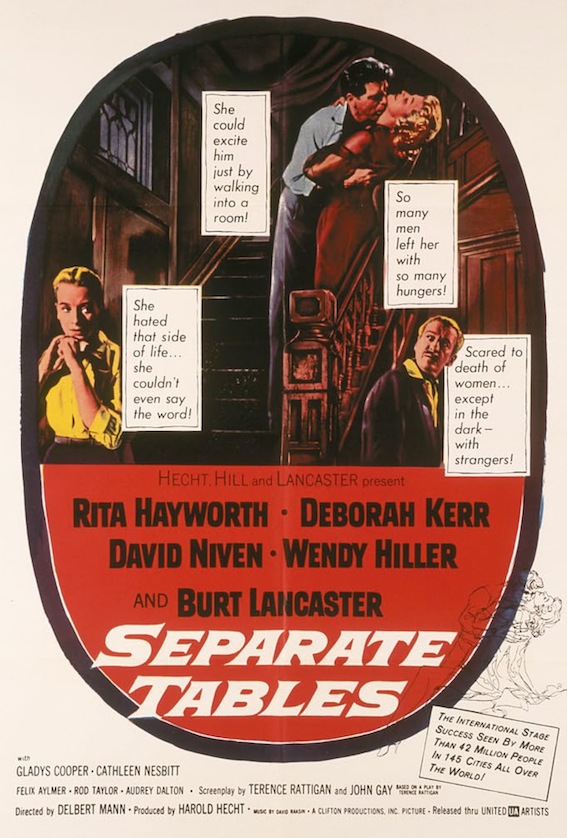
1958
Based on the two one act plays by Terence Rattigan
Screenplay by Terence Rattigan & John Gay
Directed by Delbert Mann
Produced by Harold Hecht
Cinematography by Charles Lang
CAST
David Niven – Major Pollock
Rita Hayworth – Anne Shankland
Burt Lancaster – John Malcolm
Deborah Kerr – Sibyl Railton-Bell
Wendy Hiller – Miss Cooper
Gladys Cooper- Maud Railton-Belle
Cathleen Nesbit- Lady Matheson
Rod Taylor- Charles
Audrey Dalron- Jean
May Hallet – Miss Meacham
Priscilla Morgan – Doreen
ACADEMY AWARDS
David Niven – Best Actor
Wendy Hillier- Best Supporting Actress
GOLDEN GLOBES, NEW YORK CRITICS AWARD
David Niven – Best Actor
David Niven’s award was the shortest performance in screen minutes to have won the Best Actor Award.
It’s my favourite Rattigan play. Go back to the basic concept in 1955 as a stage play. There are two separate one act plays, which are related. You have one set, a Bournemouth hotel dining room. You have the same support cast of long term hotel residents sitting at the other tables. In those days, residential hotels fulfilled part of the role that care homes / retirement flats do today.
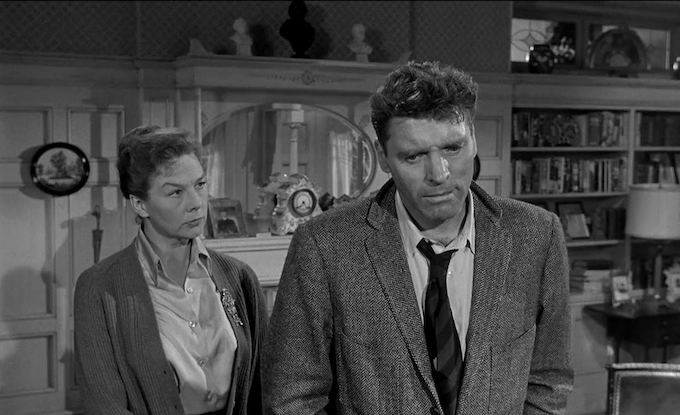
The first one act play (The Table By The Window) is set in 1952. It is the story of John Malcolm a disgraced MP, and junior Labour minister who was in the news after beating up his wife. He is living in the hotel.
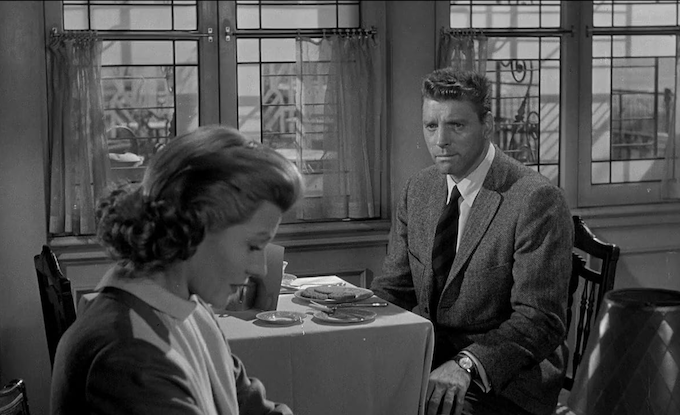
The now ex-wife, Anne, comes to stay at the hotel. It seems to be coincidence (but it’s not). She was a posh successful model, but past her peak. John is a working class trade union chap. She doesn’t know that John Malcolm is having an affair with the hotel manager, Miss Cooper. He is also a drunk, and tends to walk about in the rain getting dishevelled.
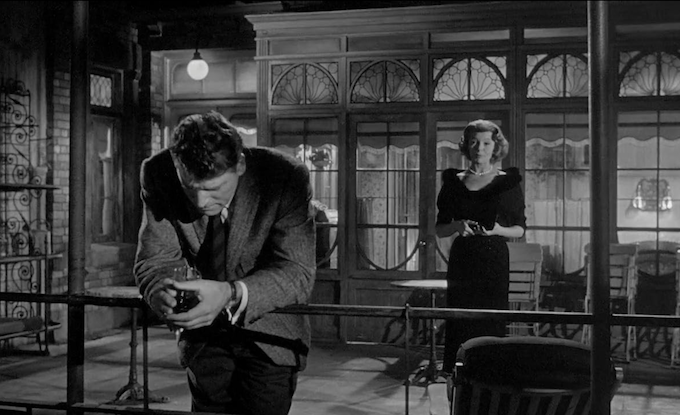
His problem is he still finds her devastatingly attractive.
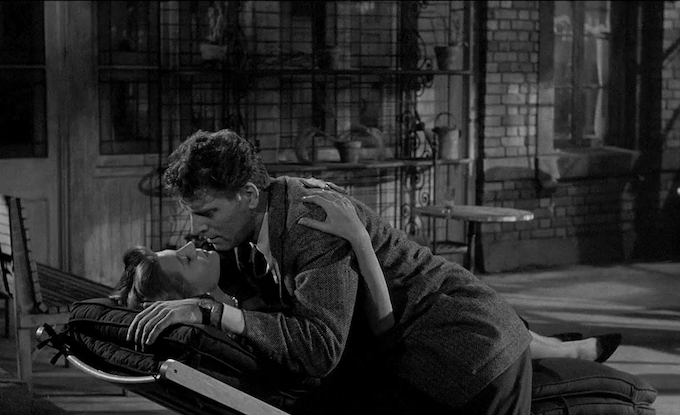
Then the second one act play is a new story, (Table Number Seven), but on stage the actors who had played John and Anne, would now play Major Pollock and Sibyl Railton-Bell. It is set two years later in 1954, but the residents are still there. Major Pollock isn’t a major at all, and is in the local newspaper after groping a woman in the cinema.
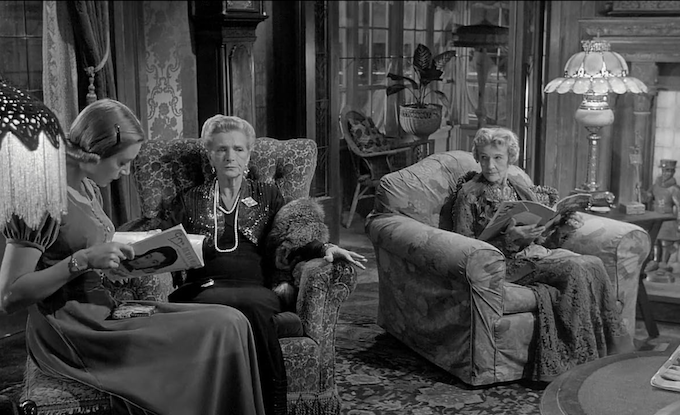
Sibyl is the downtrodden daughter of a haughty bullying mother, and she has grown to like Major Pollock. Her mother wants Pollock expelled from the hotel. The residents all take sides. Her leading opponent is Charles, one of the young couple staying there. The change of the lead acting roles is the big USP.
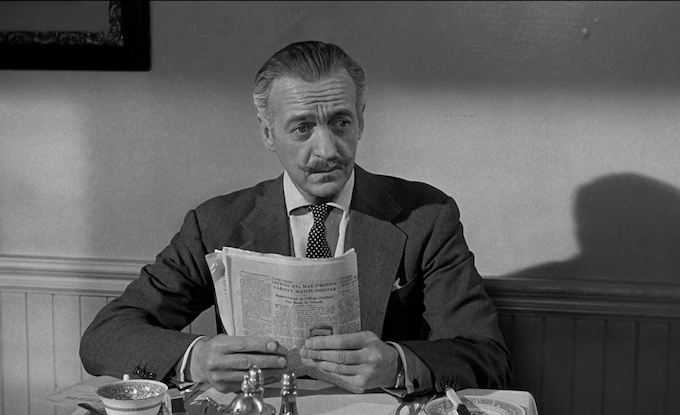
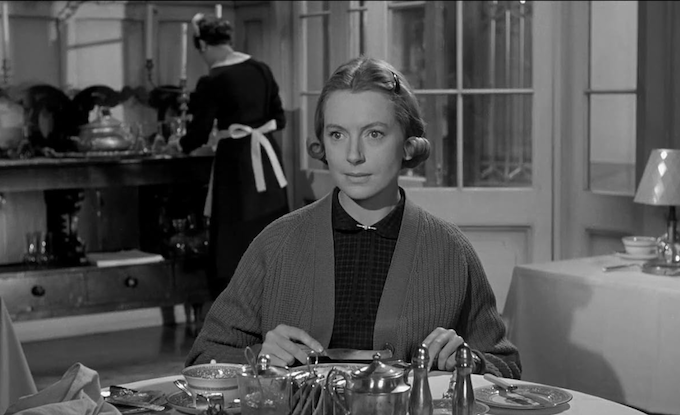
Not here. They have four actors not two, and interweave the stories, so they’re all in the hotel at the same time. The script needs a bit of tweaking – we have a John Malcolm / Major Pollock conversation after all. Impossible in the original!
For me the major minus is Burt Lancaster. He doesn’t work. Great preacher, great circus acrobat. Here he’s just ‘an American.’ Maybe he doesn’t do accents. Maybe he can’t. Sean Connery can’t either. He may be Lancaster by name, but not by accent. The whole class dimension, gritty Northern MP versus posh RP model has gone. There’s no character left. It’s just another Hollywood film couple arguing. Tennessee Williams did that sort of thing much better. I can see you can intertwine the storylines, but in this case you needed to have kept Rattigan’s original characters.
Two Hollywood stars don’t work against fine British character actors. Lancaster is fine at being Lancaster. Hayworth is fine at being Hayworth. Yet they sold the film on their impassioned embrace. They are the least interesting bit of the entire story, but they got on the film posters. If you look at IMDB, they get the lions share of publicity photos.
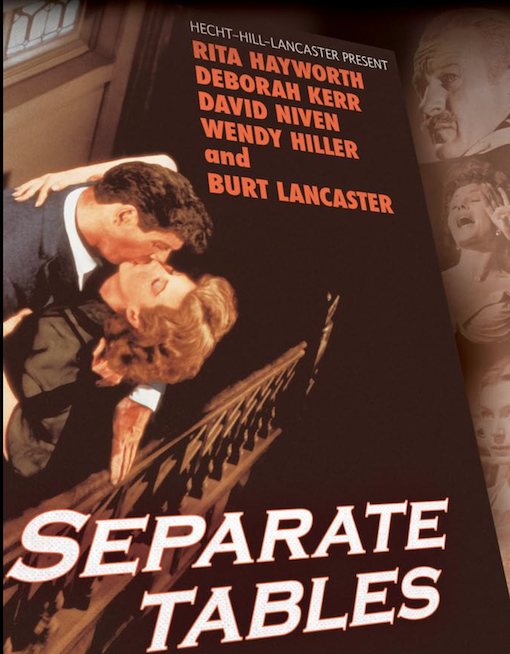
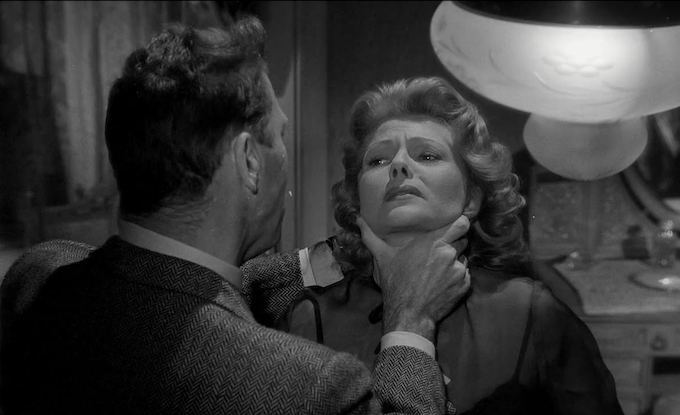
The second play was always far more interesting than the first. I found myself yawning through the Lancaster / Hayworth bits, even when this dramatic.
Then we come to the serial groper and fake major, Major Pollock played by David Niven. He gets the subtlety, but is hampered by a preposterous moustache, even if 1958 was a time of silly taches (see Terry Thomas).
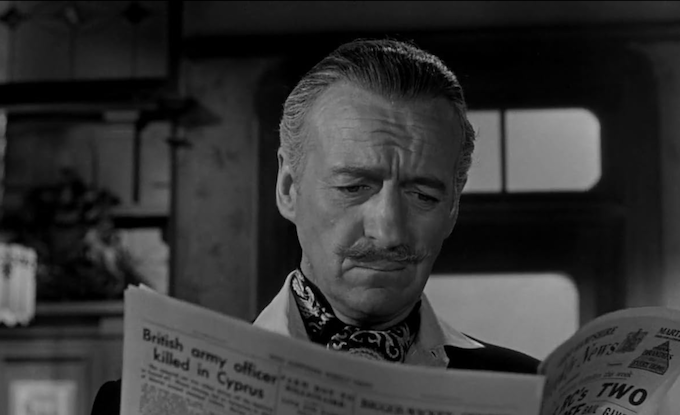
The story revolves around the West Hampshire Gazette which has his court case in it. He tries to get rid of Mrs Railton-Bell’s copy, but at last everyone reads it. Sybil, who has befriended him, is horrified.
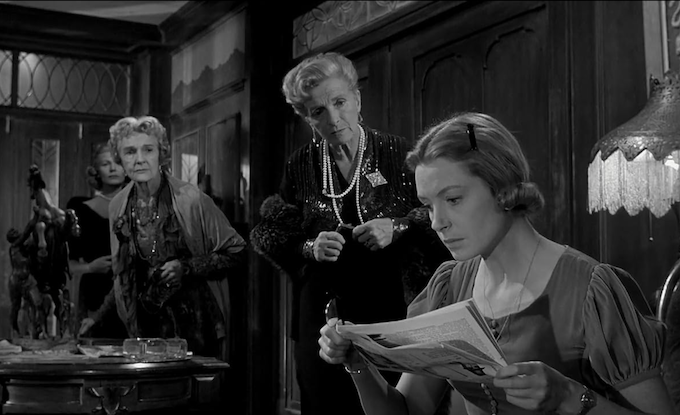
Sibyl has to come to terms with the knowledge that the friendly avucular major likes touching up strangers in the dark. They are both terrified of the same thing: sex.
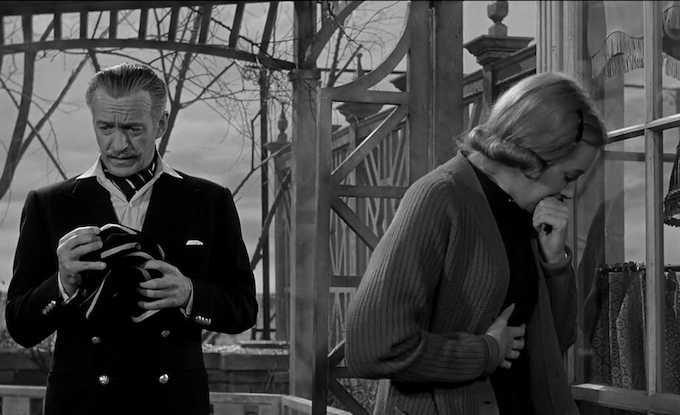
SIBYL: Why have you told so many awful lies?
POLLOCK: Because I don’t like myself the way I am, i suppose. I had to invent someone else… It’s not harmful really. We all have our daydreams. Mine have just gone a step further than most people. Sometimes I just manage to believe in the Major myself.
The 1955 stage play, 1958 film and the 1970 BBC TV series all avoid the Major’s problem in Rattigan’s first script, where he was importuning young men on the promenade rather than groping women in the cinema. They couldn’t do that until the recent versions, which restore the script as he first wrote it. The first version is the better one. It is ironic that his co-screenwriter was named John Gay.
The two roles that can’t fail are Mrs Railton-Bell (Gladys Cooper) and her shy, awkward daughter Sibyl (Deborah Kerr). They are roles that British female actors know how to do, and Deborah Kerr, unlike her counterpart, Rita Hayworth is happy to play dowdy and unattractive. I’d have given her the best supporting actress award.
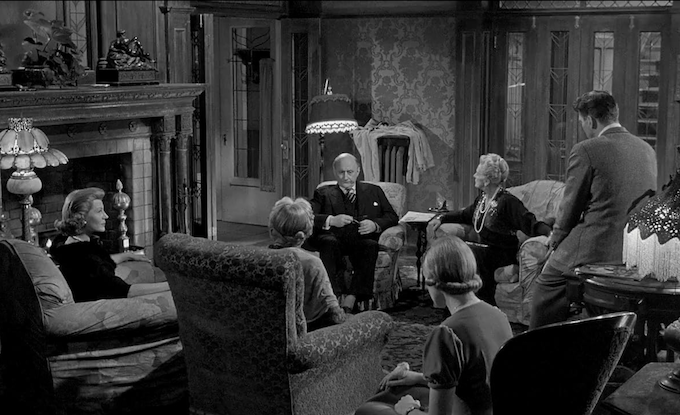
The scene where Mrs Railton-Bell tries to persuade the other residents to demand the major’s expulsion is a classic ‘trial’ though not in court. One by one, the others opt for forgiveness. Burt Lancaster takes over the ‘defence’ role.
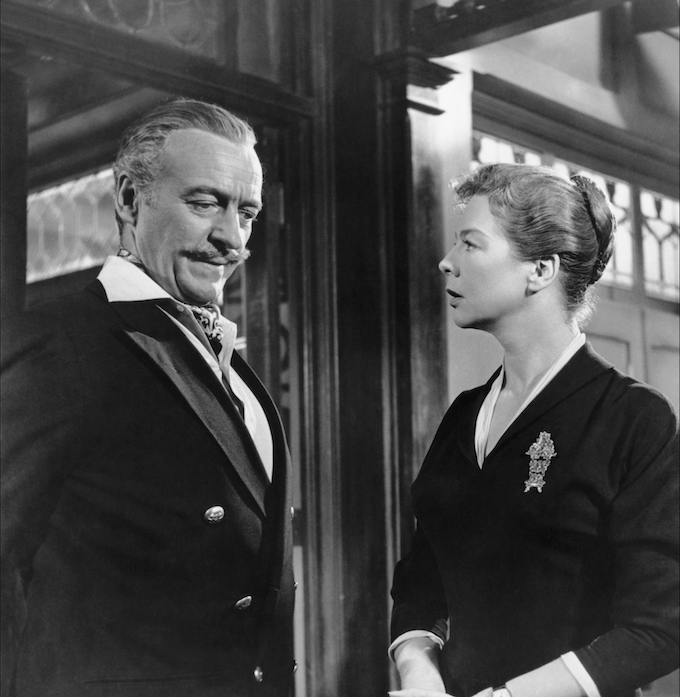
Wendy Hilliard is Miss Cooper the manageress. In the first play she was the love interest. In the second she is the one who is sympathetic to the major and wants him to stay. She does the two with ease.
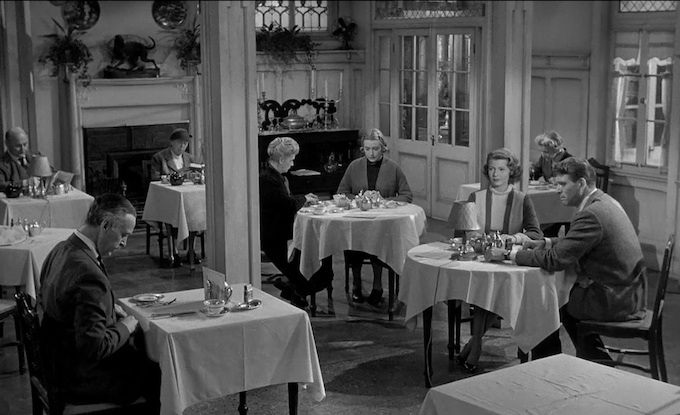
At breakfast the next morning, the major stays (even though we now know he was a 2nd lieutenant and never saw action) and one by one the other guests acknowledge him with trivial chat about the weather. He is accepted. For Rattigan, it was a parable about coming out of the closet and finding people still accepted you as you are.
Mainly all the three other versions I’ve reviewed, two stage, one BBC TV, were better than the film. Burt Lancaster and Rita Hayworth kill it for me. Nevertheless, it looks very good. Crisp cinematography and fine setting and costume help the film. Niven’s nuanced angst deserved an award.
David Niven: Terence Rattigan is an actor’s playwright. To perform the characters he has invented is a joy because they are so well drawn and the plays that present them are so well-constructed that so long as you can remember your lines, and don’t bump into the furniture, you can’t go wrong. Separate Tables is one of Rattigan’s best plays and “The Major” is one of his best-written characters.
David Niven The Moon’s A Balloon, 1971
LINKS ON THIS BLOG:
TERENCE RATTIGAN
After The Dance by Terence Rattigan, BBC TV play 1992
All On Her Own by Terence Rattigan, Kenneth Branagh Company 2015
Flare Path, by Terence Rattigan, 2015 Tour, at Salisbury Playhouse
Harlequinade by Terence Rattigan, Kenneth Branagh Company 2015
Man & Boy, by Terence Rattigan,National Theatre 2026
Ross by Terence Rattigan, Chichester Festival Theatre 2016
Separate Tables by Terence Rattigan, Salisbury Playhouse 2014
Separate Tables, by Terence Rattigan, BBC TV version 1970
Separate Tables by Terence Rattigan (Table Number 7, Summer 1954) Bath 2024
Summer 1954 by Terence Rattigan (Table Number 7 / The Browning Version), Bath 2024
Separate Tables by Terence Rattigan, film 1958
While The Sun Shines by Terence Rattigan, Bath, 2016
French Without Tears, by Terence Rattigan, English Touring Theatre 2016
French Without Tears, by Terence Rattigan, BBC Play of The Month 1976
The Deep Blue Sea by Terence Rattigan (FILM VERSION)
The Deep Blue Sea by Terence Rattigan, BBC TV Play, 1994
The Deep Blue Sea, by Terence Rattigan, Chichester Minerva, 2019
The Deep Blue Sea, by Terence Rattigan, National 2016, NT Live 2020
The Deep Blue Sea, by Terence Rattigan, Bath Ustinov 2024
The Winslow Boy, by Terence Rattigan, BBC Play of The Month, 1977
The Browning Version, by Terence Rattigan, BBC TV play 1985
The Browning Version by Terence Rattigan (as Summer 1954), Bath 2024
THE 60s REVISITED REVIEWS …

The Six Five Special (1958)
Separate Tables (1958)
Our Man in Havana (1959)
A Taste of Honey (1961)
The Frightened City (1961)
The Young Ones (1962
Some People (1962)
Play It Cool (1962)
Summer Holiday (1963)
Sparrows Can’t Sing (1963)
The Small World of Sammy Lee (1963)
Tom Jones (1963)
The Fast Lady (1963)
What A Crazy World (1963)
Live It Up! (1963)
Just For You (1964)
The Chalk Garden (1964)
The Carpetbaggers (1964)
Wonderful Life (1964)
A Hard Day’s Night (1964)
Rattle of A Simple Man (1964)
The Yellow Rolls-Royce (1965)
Gonks Go Beat (1965)
The Party’s Over (1965)
Be My Guest (1965)
Cat Ballou (1965)
The Ipcress File (1965)
Darling (1965)
The Knack (1965)
Catch Us If You Can (1965)
Help! (1965)
Doctor Zhivago (1965)
Ten Little Indians (1965)
Morgan – A Suitable Case For Treatment (1966)
Alfie (1966)
Harper (aka The Moving Target) 1966
The Chase (1966)
The Trap (1966)
Georgy Girl (1966)
Fahrenheit 451 (1966)
Nevada Smith (1966)
Modesty Blaise (1966)
The White Bus (1967)
The Family Way (1967)
Privilege (1967)
Blow-up (1967)
Accident (1967)
Bonnie and Clyde (1967)
I’ll Never Forget What’s ‘Is Name (1967)
How I Won The War (1967)
Far From The Madding Crowd (1967)
Poor Cow (1967)
Custer of The West (1967)
Here We Go Round The Mulberry Bush (1968)
The Magus (1968)
If …. (1968)
Girl On A Motorcycle (1968)
The Bofors Gun (1968)
The Devil Rides Out (aka The Devil’s Bride) (1968)
Work Is A Four Letter Word (1968)
The Party (1968)
Petulia (1968)
Barbarella (1968)The Thomas Crown Affair (1968)
Bullitt (1968)Deadfall (1968)
The Swimmer (1968)
Theorem (Teorema) (1968)
Medium Cool (1969)
The Magic Christian (1969)
The Rise and Rise of Michael Rimmer (1970)
Little Fauss and Big Halsy (1970)
Take A Girl Like You (1970)
Performance (1970)
Oh, Lucky Man! (1973)

