1963
The 60s retrospective series
Directed by Lindsay Anderson
Produced by Karel Reisz
Original novel and screenplay by David Storey.
Director of photography Denys Coop
Music composed by Roberto Gerhard
Released February 1963
134 minutes
CAST
Frank Machin – Richard Harris
Mrs Hammond- Rachel Roberts
Mr Weaver- Alan Badel
Johnson- William Hartnell
Maurice Braithwaite- Colin Blakely
Mrs Weaver- Vanda Godsell
Judith- Anne Cunningham
Len Miller- Jack Watson
Slomer- Arthur Lowe
Wade- Harry Markham
Jeff- George Sewell
Phillips – Leonard Rossiter
Mrs Farrer- Katherine Parr
Lynda- Bernadette Benson
Ian – Andrew Nolan
Doctor- Peter Dugud
Waiter- Wallis Eaton
Head waiter- Anthony Woodruff
Riley- Michael Logan
Hooker- Murray Evans
Gower- Tom Clegg
Trainer- Ken Trall
Dentist- Frank Windsor
Cameron – John Gill
Karel Reisz was originally asked to direct it, but he declined because he felt it would be too close to his work on Saturday Night and Sunday Morning. I guess both feature Rachel Roberts as the older woman in a relationship. Instead he agreed to produce, and recommended Lindsay Anderson as director, who had done adverts and short films, but not a full length film. As with Alan Sillitoe and John Osborne, David Storey was able to write the screenplay of his novel himself. This is a mark of the genre.
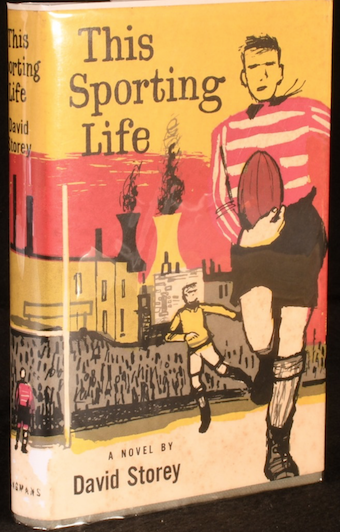
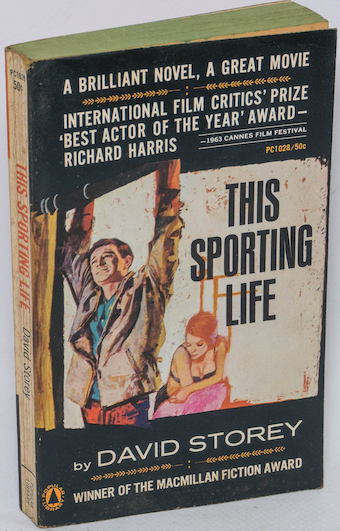
It’s generally described as the last of the British new Wave / Kitchen Sink films. 1963. Had they run out of novels and plays? Had the writers moved on after success? Or had Britain changed? 1963. The year The Beatles took off. Summer Holiday was on constant rotation in cinemas for weeks. The world seemed in colour now, not grim black and white. It was a watershed year. Tom Jones pointed to the 60s. Would you rather have spent your 1/9d on Tom Jones or This Sporting Life?
It lost money at the box office. The Chairman of The Rank Organization announced that the company would not venture further with ‘kitchen sink’ film projects, nor would his company make such a “squalid” film again. This Sporting Life has been seen more generally as ending producers’ willingness to back such British New Wave films. They were right. A genre had run its course. Squalid is the appropriate word.
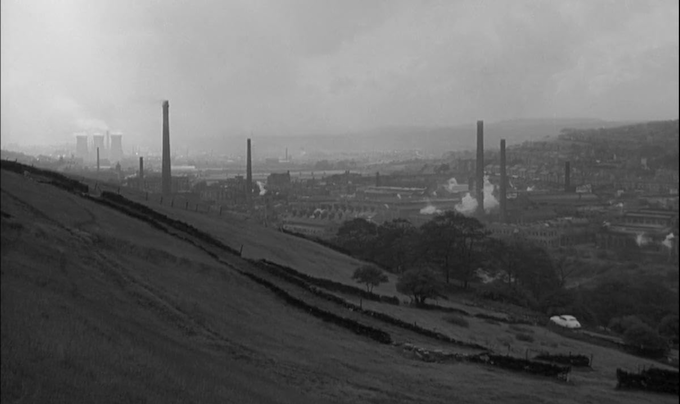
In Anderson’s defence, I think he only uses the essential setting shot of industrial gloom above once or twice. We also see a lot of wet street scenes. It is essential to kitchen sink films. Keith Waterhouse complained that it was impossible to walk on a Northern slagheap without tripping over camera cables. I expect Andy Burnham has a box set of the lot in the Northern No 10.
It was filmed in Wakefield, using Wakefield Trinity Rugby League team and ground. The street where they live is in Leeds. They play another game in Halifax. David Storey was born in Wakefield and stuck to the original idea.
There are three parts to any discussion. Actors, Plot and Filming.
Actors.
Like the other British New Wave films, it’s a case of spot the future star. Richard Harris was the lead. Rachel Roberts was up for more awards. William Hartnell was just about to shoot to fame as Dr Who. Then we had Arthur Lowe, Leonard Rossiter, Alan Badel, Colin Blakeley, Frank Windsor.
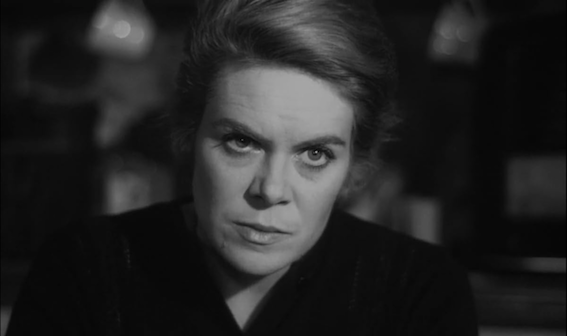
Rachel Roberts had already won a BAFTA dor Saturday Night Sunday Morning in 1960 and received another for this. Karen describes her performance in this as “Same role. Different headscarf.”
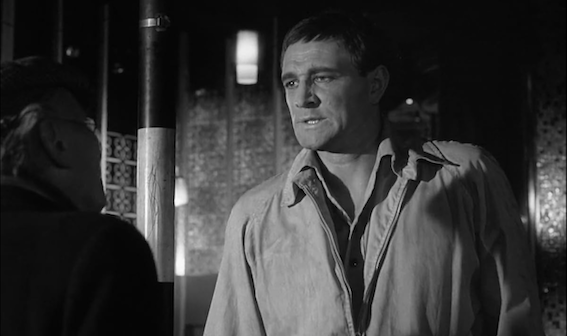
Richard Harris? It made him a star. Lindsay Anderson says he couldn’t take the camera off him. It shows.
Malcolm McDowell (If … / O Lucky Man) said:
I know that (LindsayAnderson) was in love with Richard Harris. I am sure that it was the same with me and Albert (Finney) and the rest. It wasn’t a physical thing. But I suppose he always fell in love with his leading men. He would always pick someone who was unattainable because he was heterosexual.
November 2006
There is an undercurrent in the way both Mr Weaver, and the old Talent Scout Johnson react to Harris’s character in the film.
Anderson also lingers on high jinks and naked rolling about in the communal bath tub in the rugby team dressing room. We see a lot of bums but no cocks.
The DVD booklet quotes Arthur Marwick in the Sixties:
The amount of male flesh on view was something of an innovation for the time.
The censor was around and active. Apparently there were full-frontal shots filmed that had to be removed. I was reminded of a gay colleague assuring me that there were more gays in the average rugby team than in the average ballet troupe. It was just that the rugby ones either didn’t know it, or sublimated it. When I expressed surprise he said, ‘Just think about what they do to form a scrum.’
Harris plays a big ape (her description and one he uses himself). A thug. I thought Harris had spent far too much time watching Marlon Brando in On The Waterfront and perfecting gum chewing, looking thick, and mumbling.
Lindsay Anderson: Machin is a man of extraordinary power and aggressiveness, both temperamental and physical, but at the same time with great innate sensitivity and a need for love of which he is hardly aware.
Films & Filming 1963, quoted in DVD booklet
I don’t see any sensitivity. However Anderson exploits the inarticulate nature of both Frank and Margaret to tell the tale visually through expressions and reactions – this is one of the major reasons why it is considered a major film. Anderson rehearsed them for ten days before filming started. Harris had not been the first choice … they had tried to get Stanley Baker, Sean Connery and Albert Finney before casting him.
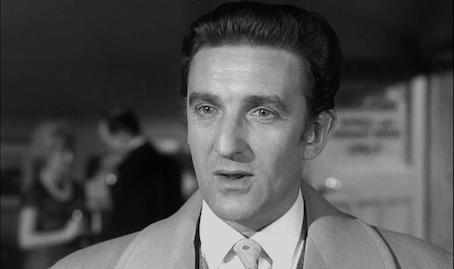
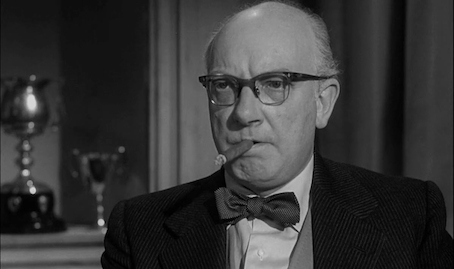
Alan Badel is sleek and snooty, and lets that essential rich man camel overcoat aid the role. Arthur Lowe shifts from Lancashire to Yorkshire and adds a limp. Always add a physical characteristic to differentiate similar film roles. Lindsay Anderson was to keep on casting him too, and so would I. In this he’s a co-owner of the team.
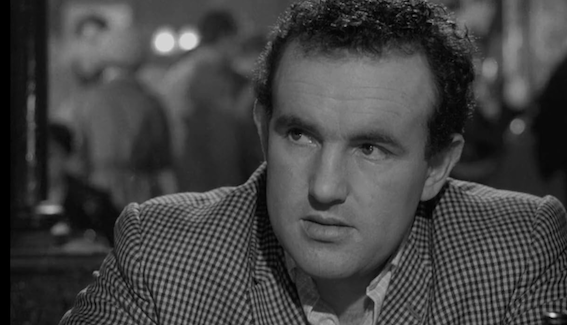
Leonard Rossiter so looks the seedy local paper journalist that his sneer does the job unaided (he doesn’t get a film still), Colin Blakeley convinces as best friend, but always looks a most unlikely Rugby League star. That’s not acting. It’s height and build.
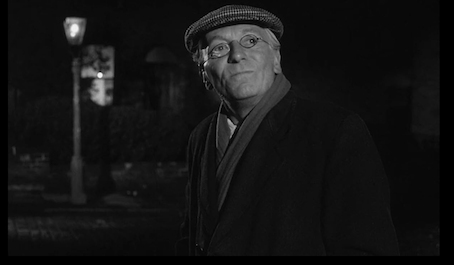
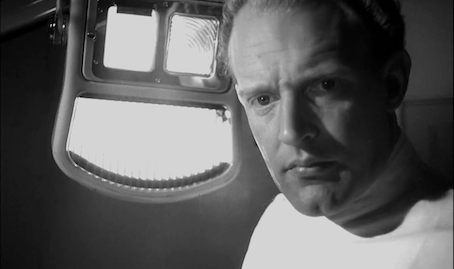
William Hartnell plays the ageing rugby team scout. According to IMDB his name is ‘Johnson’ but Frank addresses him as ‘dad’. Frank Windsor is playing a dentist, not a police officer for a change, though Z Cars had already started, so like Arthur Lowe he was a TV regular.
Plot
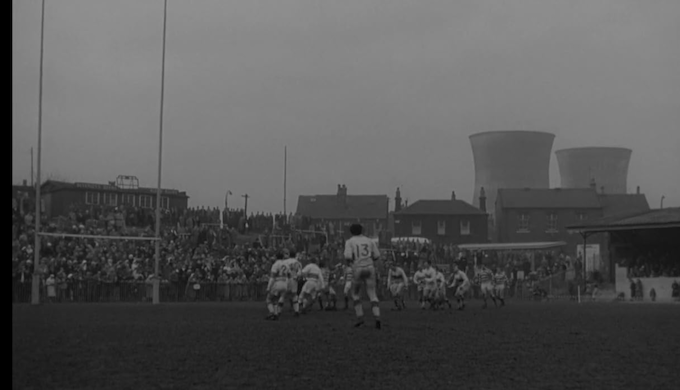
Rugby League was the professional form of rugby with thirteen players and largely confined to the North of England. Rugby Union the (originally) amateur / international / public school sport has teams of fifteen.
Football is a game for gentlemen played by hooligans.
Rugby Union is a game for hooligans played by gentlemen.
In that case:
Rugby League is a game for hooligans played by hooligans.
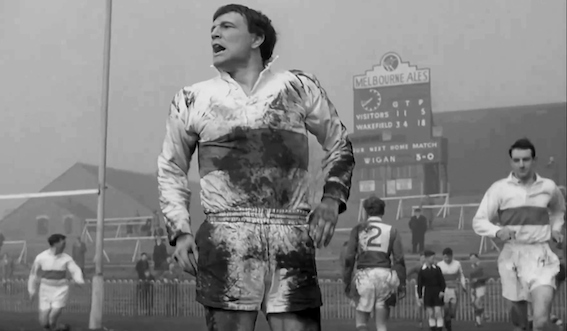
Frank Machin (Richard Harris) is a coal miner. We see a brief cutaway to mining during the initial rugby sequence. He is a lodger with a widow, Mrs Margaret Hammond (Rachel Roberts). She has two children. Her husband, Eric, died recently, and she polishes his boots daily and keeps them by the kitchen range. She has a range as well as the essential Belfast style kitchen sink.
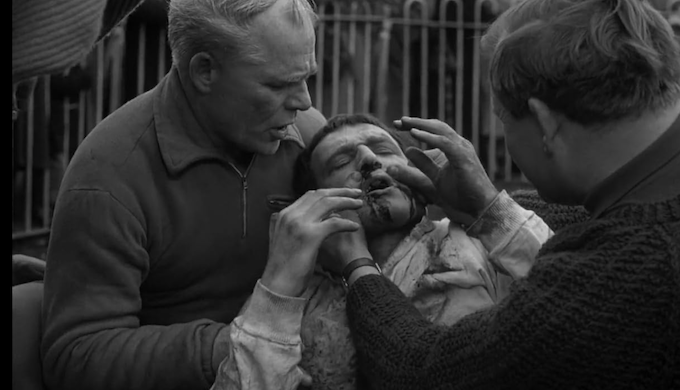
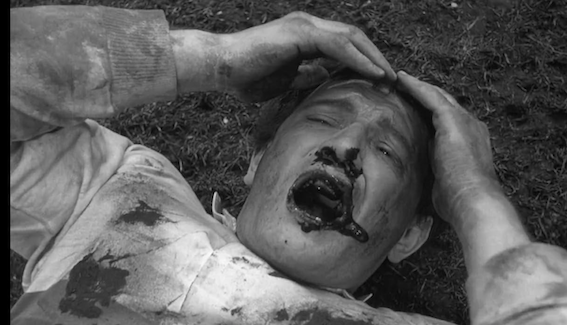
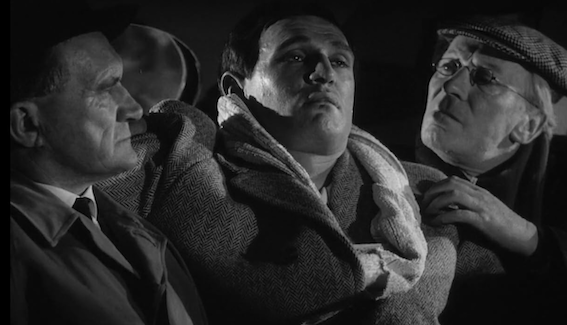
That’s a kick in the teeth! They drive him to the dentist.
The story has a professional rugby match near the start, where Frank is kicked in the teeth (probably in revenge) and taken to an emergency dentist (Frank Windsor) who will charge ten guineas to remove six smashed teeth. It was the days of gas, not local anaesthetic, and the first half of the story is a series of flashbacks showing how he got there, filmed as cutaways from him in the dentist’s chair.
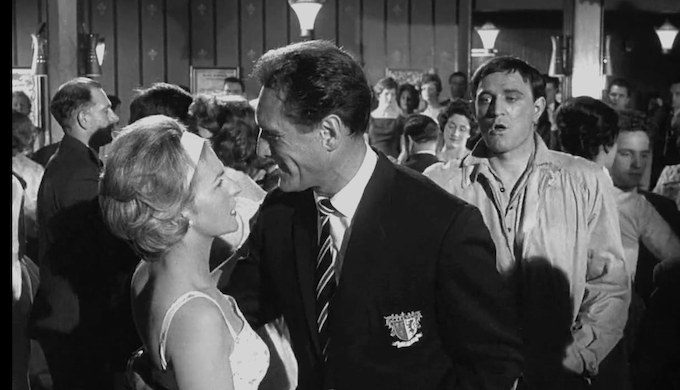
Frank goes to a dance at the local ballrooms, and watches from the balcony above as the local Rugby League team are applauded and welcomed. He gets into an altercation when he tries to cut in on the captain’s dance. Fists fly.
Frank reckons it would be a good life for him. He’s already an amateur player, so he asks the team scout (William Hartnell to get him a trial).
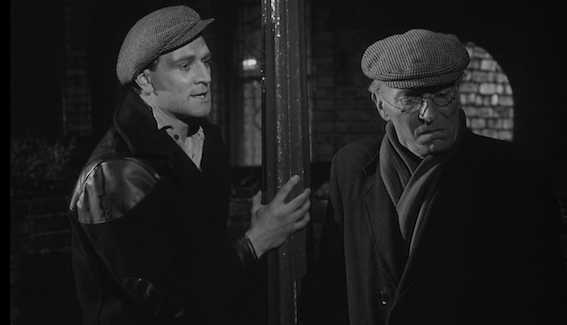
Frank impresses in the trial match. He is a really dirty player. In the scrum, he punches one of his own side in the face, and the referee assumes it was a player on the opposing team and sends that player off.
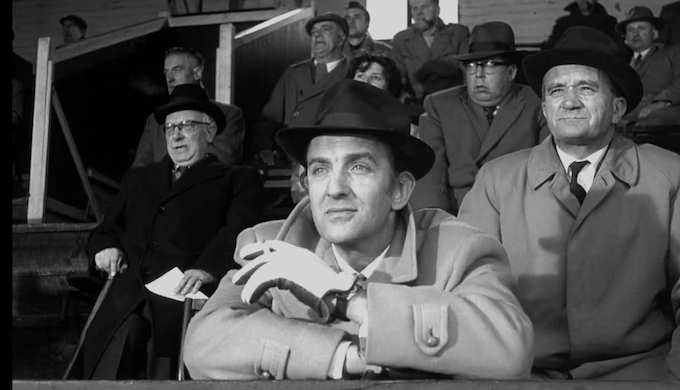
The directors watch. Slomer (Arthur Lowe) realises what happened. So does the chief director, Mr Weaver (Alan Badel) but he is impressed by his sheer brutality, the violent play and by the ability to cheat outrageously and get away with it. Frank gets a positive local newspaper write up, which he tears out and puts on his mirror.
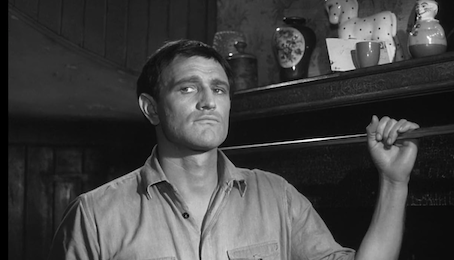
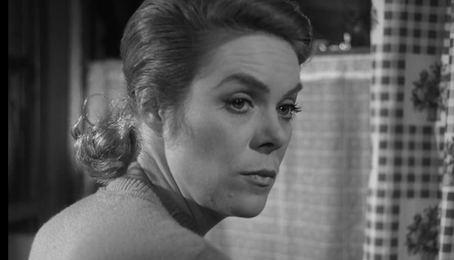
Back at the house, Frank is constantly making suggestive remarks to his widowed landlady Mrs Hammond (Rachel Roberts). Constant images of Frank in his room reinforce the aggression in him as well as that he’s not the brightest.
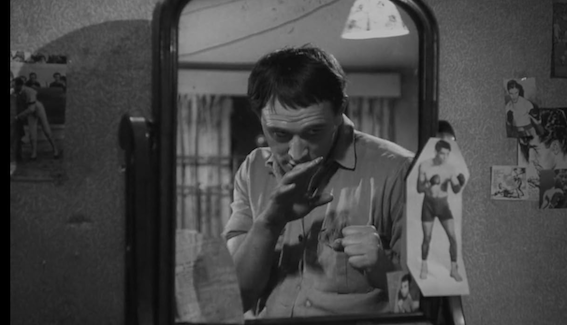
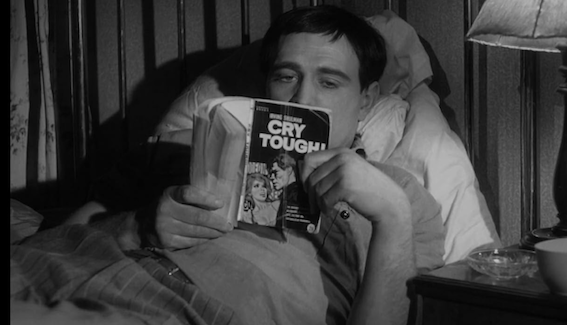
Frank negotiates a signing fee with the directors, and demands £1000 and sticks to it. He gets it. It’s about £27,000 in modern terms. Nothing as a sports signing on fee, but it really was a lot for a sportsman in 1963. We see him play in front of large crowds and he is extremely aggressive.
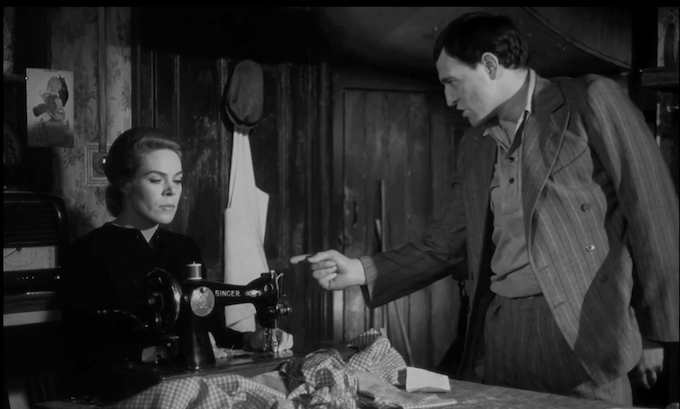
Frank boasts of the £1000 cheque (signed by Weaver) and shows it to Margaret to impress her. It doesn’t work. Her husband died in a lathe accident at Weaver’s factory and she got no compensation.
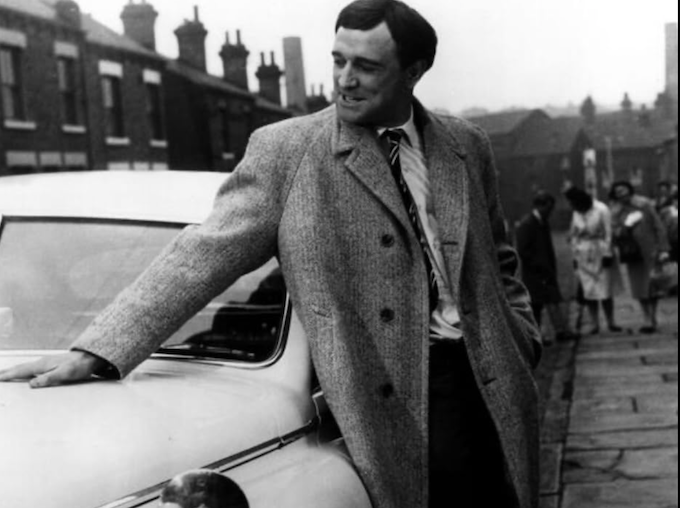
Frank buys a Jaguar (I think it was a Mark VII, so second hand)- a new Mark IX was about £2000 then. It’s still flashy enough for the neighbours to stare at disapprovingly. A friend had an old one. You could change the colour of the dashboard lighting.
His life style has changed. He’s part of the team of young local sports stars. They gate-crash a nightclub with their star status.
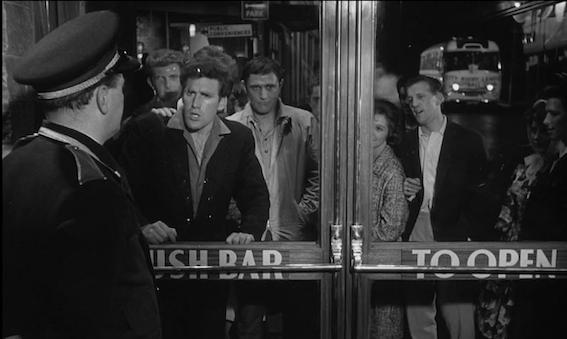
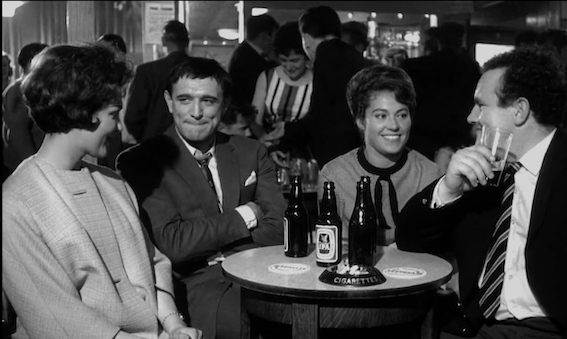
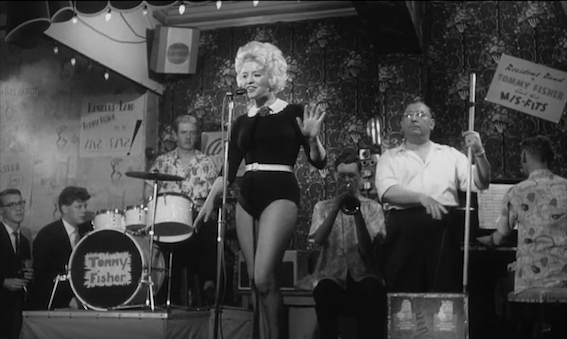
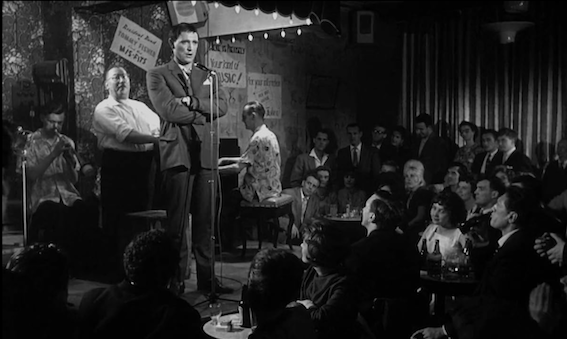
The singer (Kim Leslie) does the Helen Shapiro hit Walking Back To Happiness dressed in a leotard and fish nets. The song was eighteen months old then, but had been a major hit. Frank gets up and warbles a drunken ballad. His singing hadn’t improved by Camelot in 1967.
I really am not convinced, OK, I simply do not believe, that any 1963 night club act used a tea chest one string bass. That’s skiffle a good seven years earlier. I never saw one. Still, with a girl singer in a leotard I don’t expect anyone was looking at the bass player.
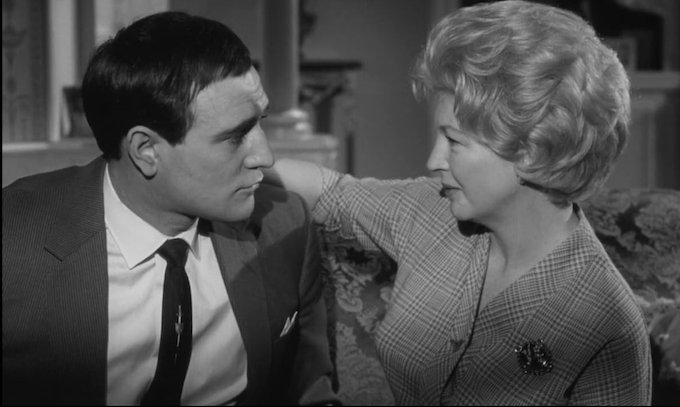
The new lifestyle is shown when Mr Weaver’s swinging wife invites him to the mansion mid afternoon and tries to seduce him as a ‘bit of rough.’ He declines because of Mr Weaver. Then there had been an earlier scene in Weaver’s Bentley where Mr Weaver had put his hand on Frank’s thigh. Frank being true working class had no conception of these sophisticated and seedy upper middle class folks goings on. He doesn’t connect the hand on his thigh to her need for a bit of afternoon delight. The DVD booklet points out that in the original book Mrs Weaver’s affairs with players are motivated by Weaver’s homosexuality. The book also states that Weaver was supposed to be a fairy by the players. Mind you, anyone wearing a smart camel coat up north would have attracted the same comment.
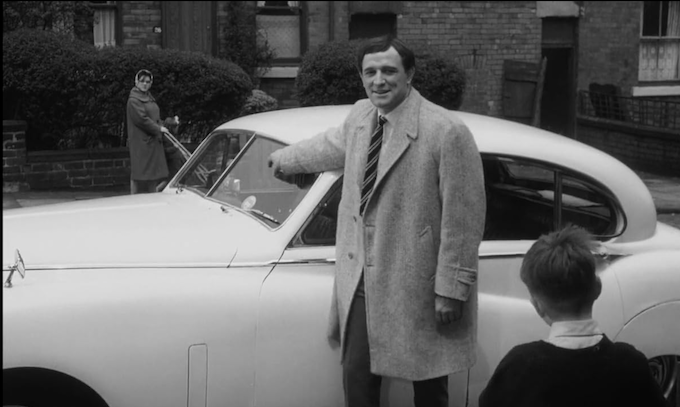
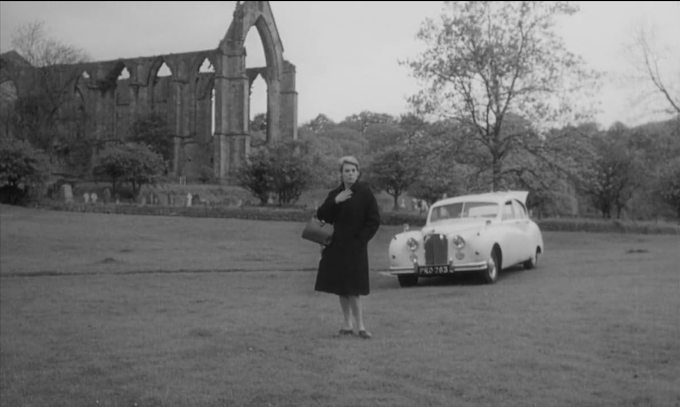
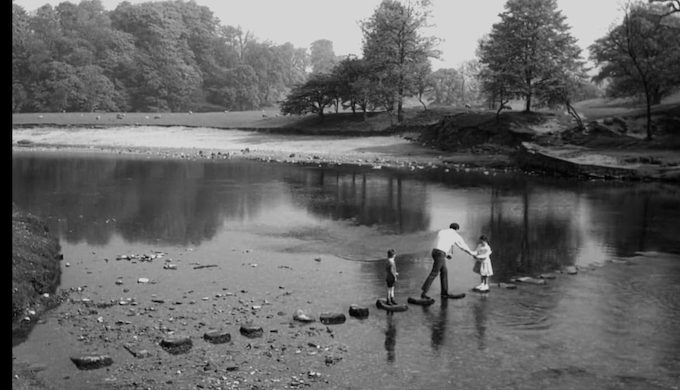
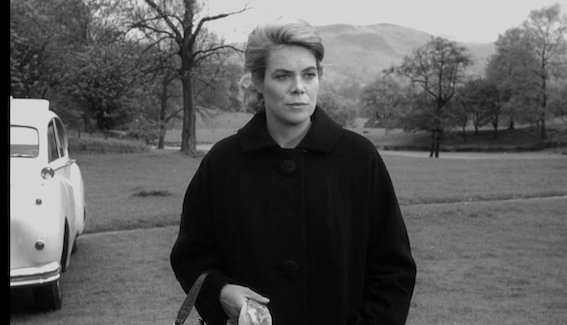
Frank’s aim is Margaret Hammond, and he tries to endear himself by being nice to her kids, playing with them. He insists on taking the boy for a ride in the Jaguar. At last he persuades the whole family to go on a trip to Bolton Priory, and Frank is a physical surrogate dad playing vigorously with the children.
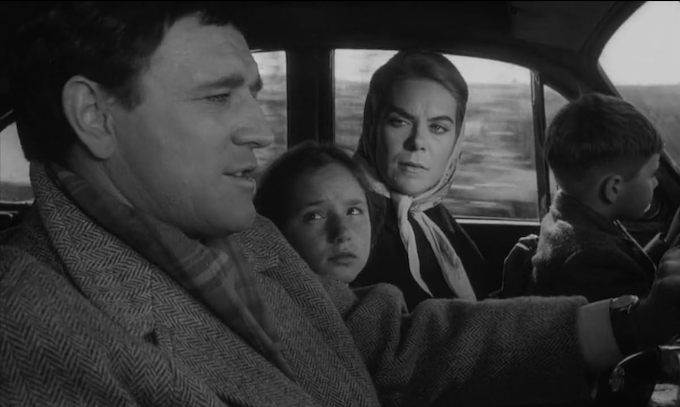
I noted the four in the front seat (bench seats in those days) with no seatbelts. My dad was promoting seat belts in 1963. Even then it would it have been seen as a bit careless with the little boy standing up? She looks more kindly at him. The ingratiation process continues.
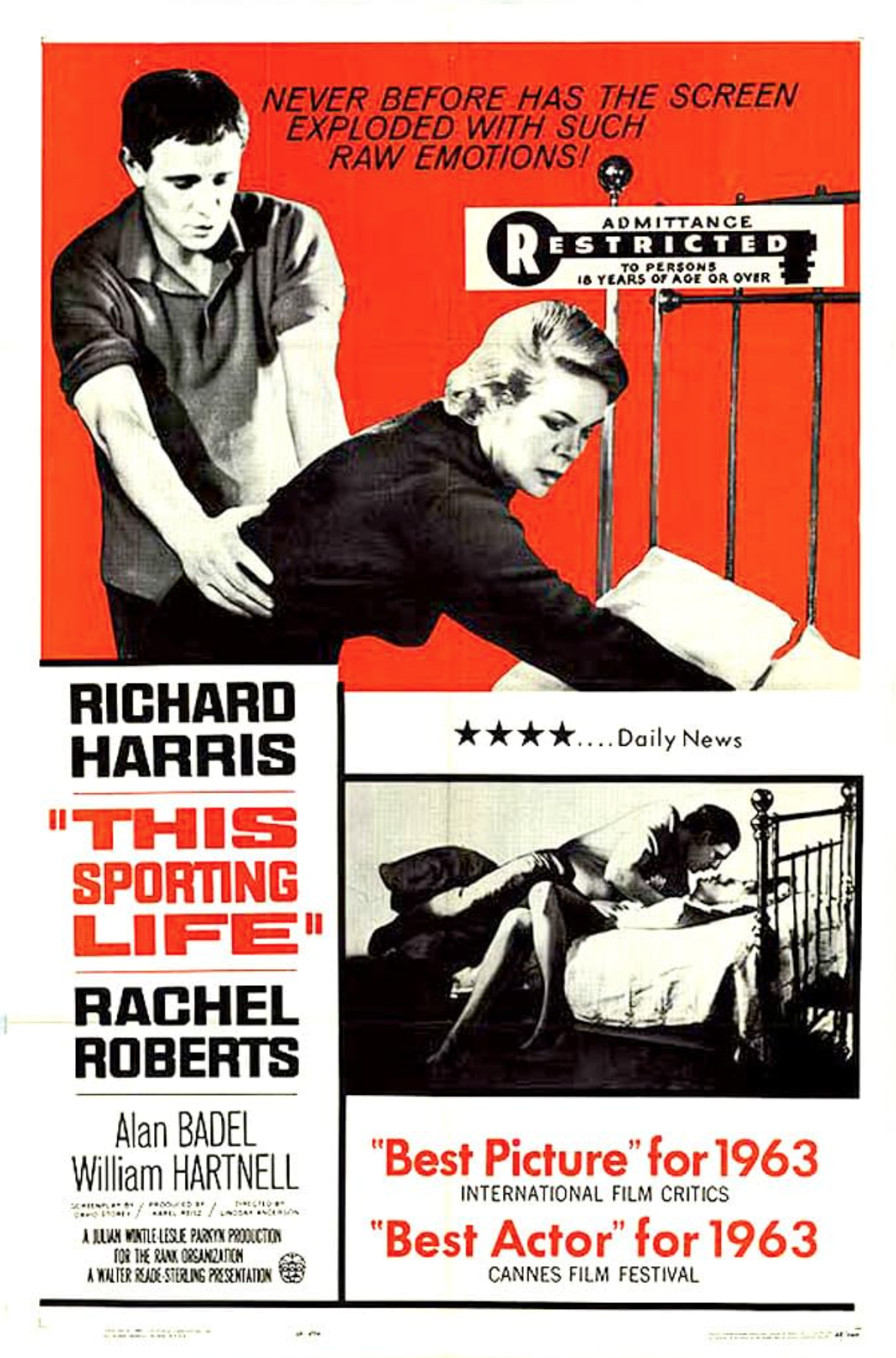
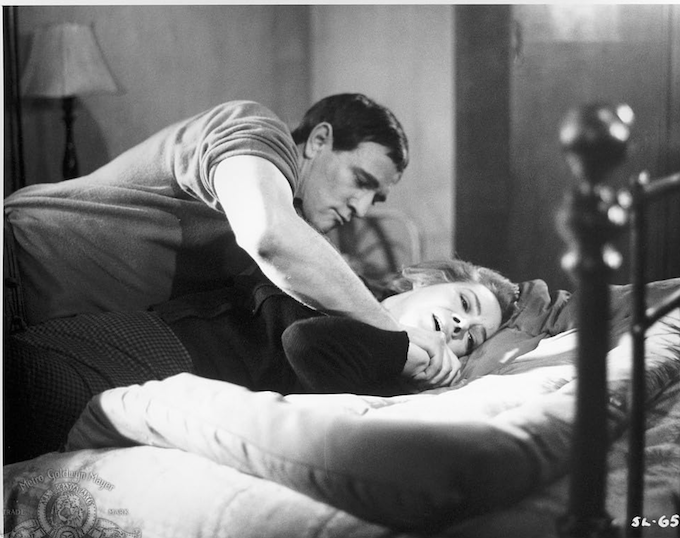
Then we get the scene they used in publicity. Frank finally gets rough after coming home drunk. The next morning he’s still in his room, a surprise for Margaret who has come in with the daily landlady task of bed-making. The plot summary says “he forces her onto the bed and she acquiesces”. Given his size and strength, we agreed that in 21st century terms this is rape. R-A-P-E. Rape. Film publicity in 1963 apparently didn’t think so.
A sexual relationship does develop from there.
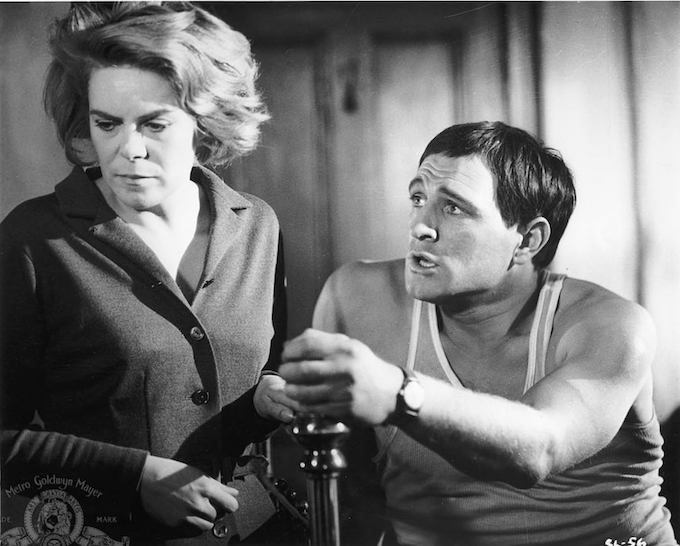
Frank is coming round from the anaesthetic and we’re coming out of flashback.
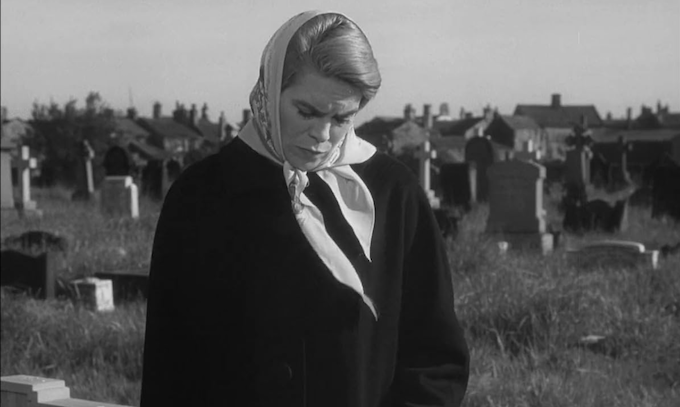
Margaret visits the cemetery, she has moved her husband’s boots from the hearth to a cupboard.
The second half takes over in real time from the point Frank comes round from the anaesthetic and stumbles along to the club owner’s Christmas party. He is in a bad way, towel round his face, drinking beer. He stumbles into a room with Mr and Mrs Weaver and Slomer. It’s clear now that he is no longer in favour, though Slomer has come round to his side.
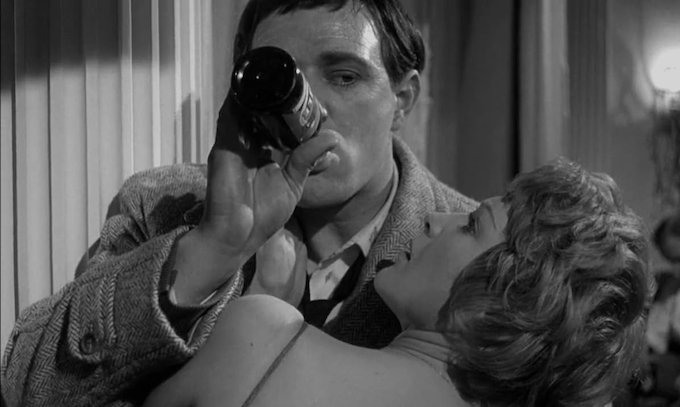
Amazingly a woman snogs him! What? He’s just had six teeth out and a mouth full of blood. Then she invites him upstairs. Instead, he gets drunk.
He has been looking after a carrier bag with presents for the kids and Margaret, takes it home, and watches her put them in their Christmas stockings while they’re asleep (This was before the era of Christmas large sacks).
Margaret feels sorry for him and agrees to share his bed to keep him warm, but only seeing as it’s Christmas.
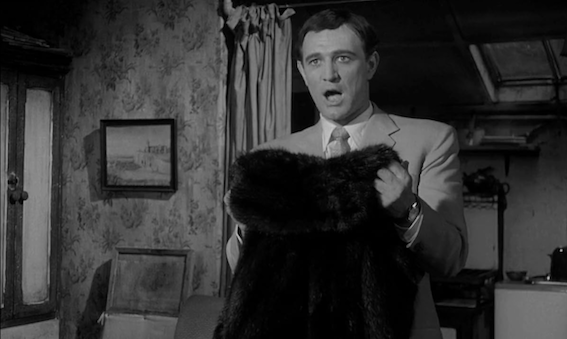
They get a neighbour to babysit and embark on their first date. He presents her with a fur coat, to the disgust of the babysitter. The fur coat clearly shouts they’re sleeping together.
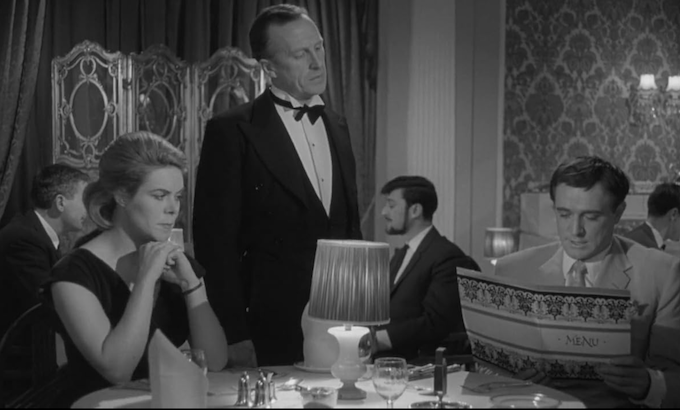
Off they go to a posh restaurant and take over someone else’s reserved table.
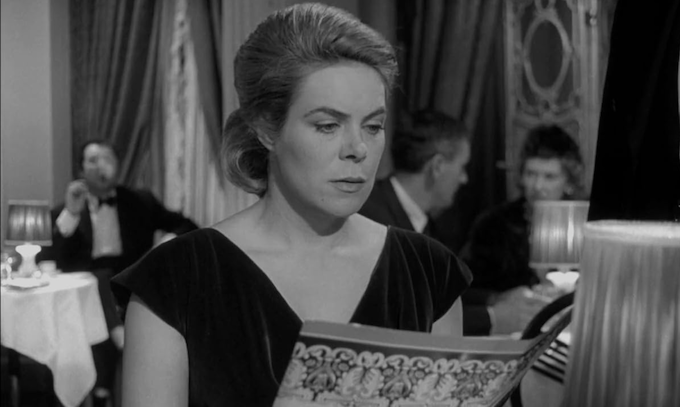
She wants to order roast beef, so basically her idea of a nice Sunday dinner, so not posh restaurant fare. He wants a bloody steak. Frank’s behaviour is at the extreme end of boorish, shouting at other tables, grabbing an upholstered chair to put his feet on. Margaret gets up to leave. He showers money onto the waiter’s tray though they haven’t eaten.
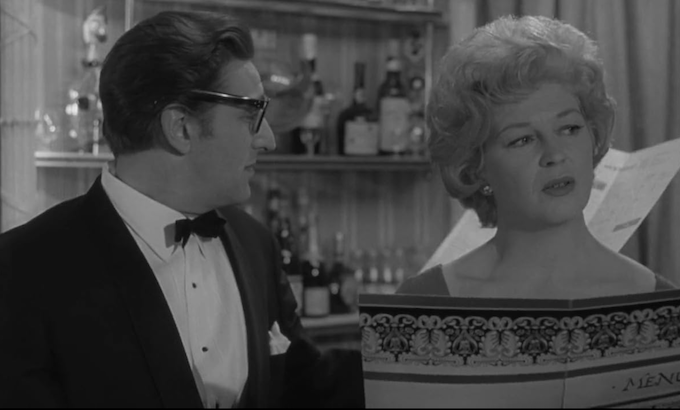
The Weavers arrive with friends and merely nod in passing. They shun him.
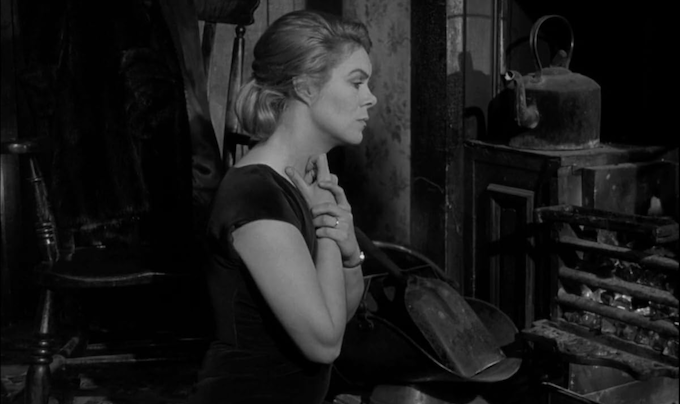
They attend his team-mate Maurice’s wedding (Colin Blakeley) and while Margaret wears the fur coat, she is deeply embarrassed.
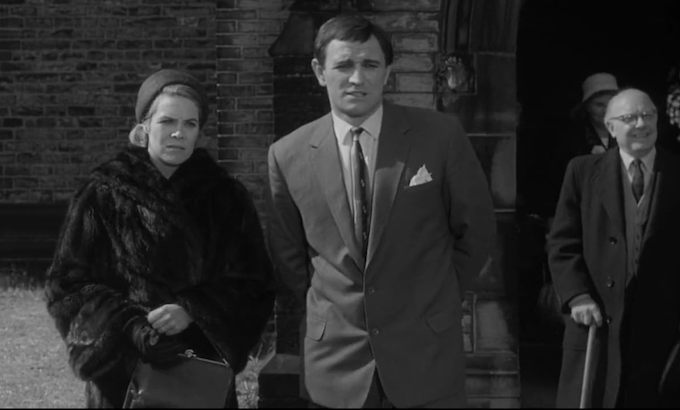
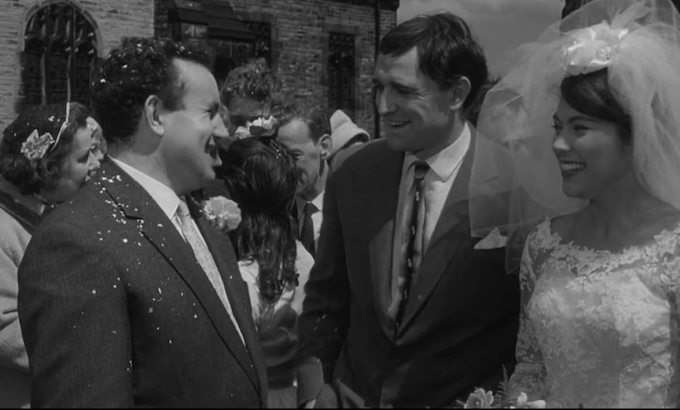
She walks over to the graveyard, where her husband is buried. The wedding shows up that she is now seen by all as ‘a kept woman.’ The neighbours have called her a slut.
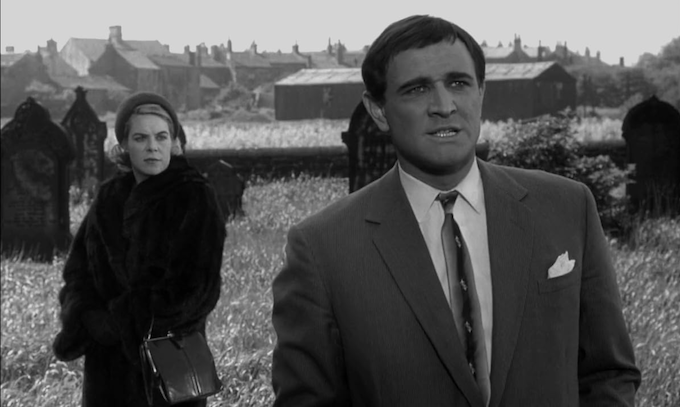
She has lost her self-respect. That’s when he smacks her hard across the face. Will that be a plot hinge for what is to follow?
Frank goes out drinking. He returns and there is a row. Frank repeats a rumour he’s heard, that her husband actually committed suicide which is why she got no compensation. She throws him out.
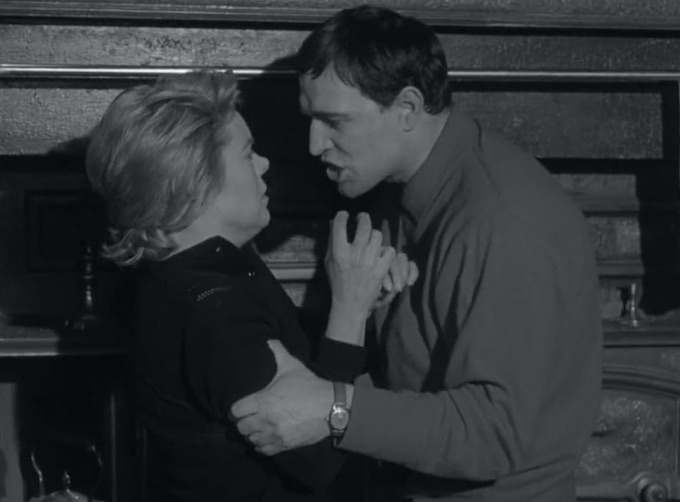
He goes to sleep at Dad’s cheap boarding place with down and outs. (One wonders why with his flash car and loads of money he didn’t just go to a hotel, but then he is pretty stupid). Local kids try to vandalise his Jaguar, parked on a bomb site.
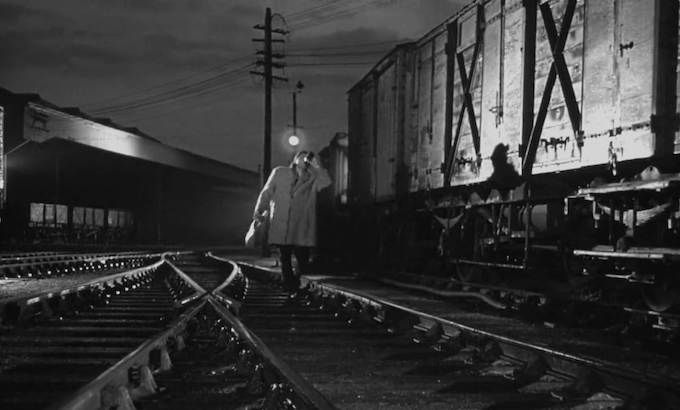
Frank stumbles along a railway track drinking. We hear a train. Will it hit him? No, but we hear it on the other track. We don’t see it though, missing the night shot of steam trains kitchen sink directors loved. They had probably run out of budget, though that is really expensive night lighting.
Frank returns to the house to seek forgiveness, only to be told that she is in hospital with a brain haemorrhage. The neighbour is looking after the kids.
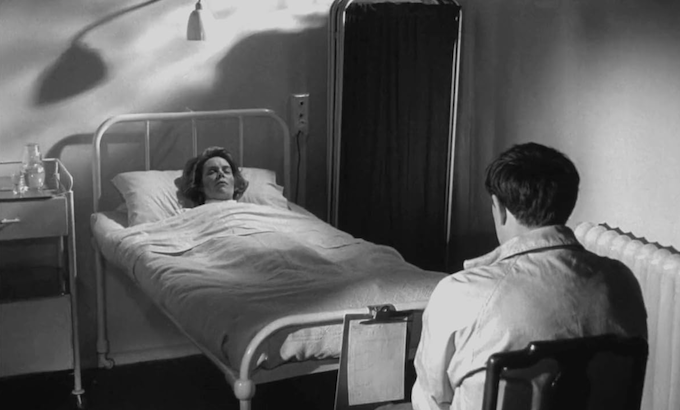
She is in a coma. However, they have carefully backcombed and sprayed her hair for the shot.
He goes to the hospital and entwines hands, but blood trickles from her mouth and she dies.
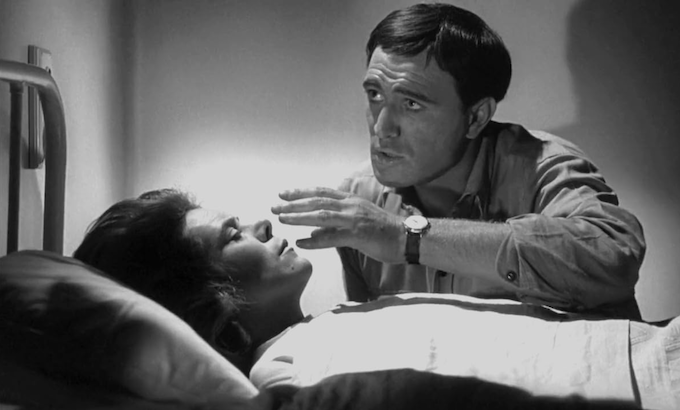
There’s some symbolic stuff about a spider on the wall. He smashes it into the wall. Still the toy shop will have more.
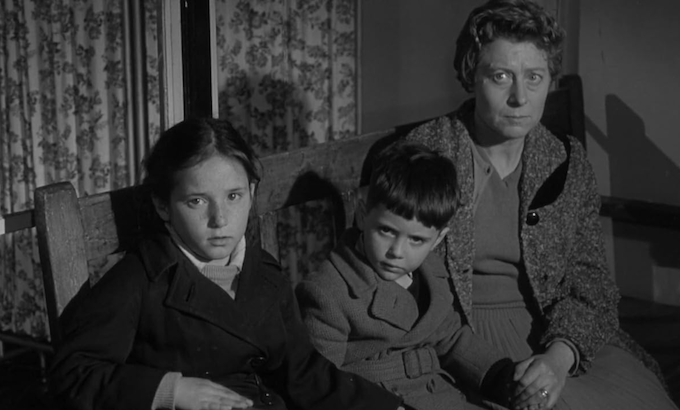
He walks away, ignoring her children in the corridor with the neighbour. They just stare at him. He doesn’t tell them what’s happened..
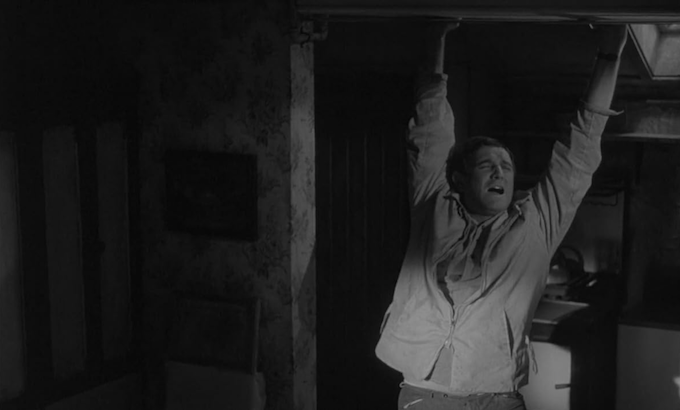
He smashes his way into the house and collapses in tears.
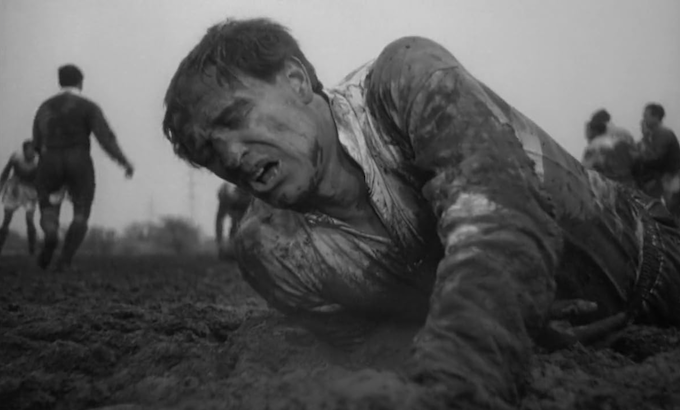
It ends with him exhausted on the rugby field, unable to keep up with his team any more, eventually lying in the mud.
Film
The British Film Institute placed it 52nd in its list of 100 Best British Films in 1999.
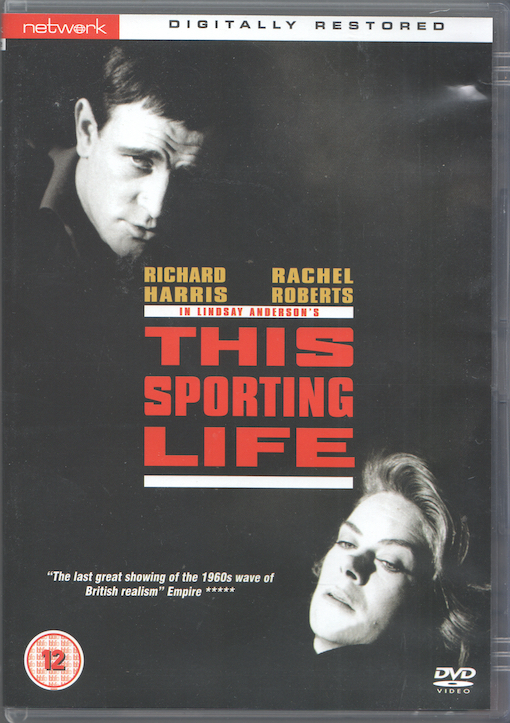
The Granada / Network DVD we watched is digitally restored and the pictures are pristine. There is an excellent booklet with it. However, they didn’t put subtitles on and there’s a great deal of mumbling and galloped-through dialogue. I would say they worked hard on the picture but not on the soundtrack.
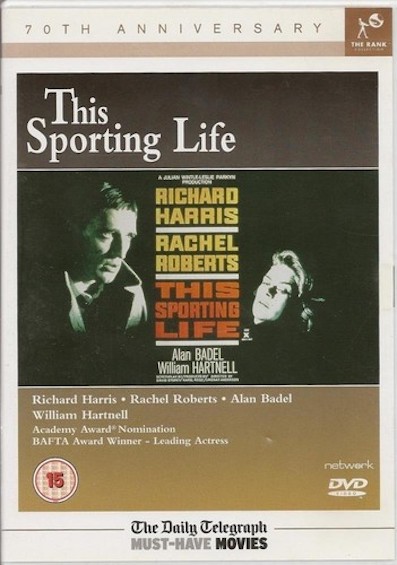
There is a 60th Anniversary Edition from Rank, which is not the one we watched. It’s labelled 70th Anniversary. My maths is weak, but 1963 to 2023 works out at sixty to me. I also really really know 1963 was not 70 years ago. If they’re that careless with the sleeve, what are the contents like?
The music by Roberto Gerhard is often the (bad) ‘avant garde jazzy New Wave Cinema cliché’ and I hate the music pointing dramatic moments so obviously.
134 minutes long. We both thought it at least twenty minutes too long for its genre and too repetitious. The film editing is regarded as a masterclass, but it also needed some plot editing.
The camera spends way too much time on close-ups of Harris’s mug. Lindsay Anderson thought it attractive.
Yet the rugby sequences close up are really good, as good as I’ve seen in a film about sports. I don’t see anything that leads me to his direction of my all-time favourite film, If ….
Wiki has two quotes:
From the start, Lindsay Anderson and his editor Peter Taylor show a determination to pursue a flashback-based narrative using bold-cut transitions. … Cut-transitions link these plangent and understated images together in way that seems to demand that their meanings be understood. It is an important restatement of the way that image-driven filmmaking engages the spectator.
Don Fairacre, Film Editing: Looking At The Invisible 2001
By 1963 the British New Wave had beached, and Peter Taylor edited the superb This Sporting Life, the début feature of the cine-literate director Lindsay Anderson. It is a remarkable study of working class angst, with a cutting style like no other British feature before it, an ever-underrated achievement by Taylor.
The Independent, 6 January 1998.
OTHER LINDSAY ANDERSON FILMS
The White Bus (1967)
If …. (1968)
Oh, Lucky Man! (1973)
THE 60s REVISITED REVIEWS …

The Six Five Special (1958)
Separate Tables (1958)
Our Man in Havana (1959)
Saturday Night and Sunday Morning (1960)
A Taste of Honey (1961)
The Frightened City (1961)
The Young Ones (1962
The Loneliness of The Long Distance Runner (1962)
A Kind of Loving (1962)
The L-Shaped Room (1962)
Some People (1962)
Play It Cool (1962)
Summer Holiday (1963)
This Sporting Life (1963)
Sparrows Can’t Sing (1963)
The Small World of Sammy Lee (1963)
Tom Jones (1963)
The Fast Lady (1963)
What A Crazy World (1963)
Live It Up! (1963)
Just For You (1964)
The Chalk Garden (1964)
The Carpetbaggers (1964)
Wonderful Life (1964)
A Hard Day’s Night (1964)
Rattle of A Simple Man (1964)
The Yellow Rolls-Royce (1965)
Gonks Go Beat (1965)
The Party’s Over (1965)
Be My Guest (1965)
Cat Ballou (1965)
The Ipcress File (1965)
Darling (1965)
The Knack (1965)
Catch Us If You Can (1965)
Help! (1965)
Doctor Zhivago (1965)
Ten Little Indians (1965)
Morgan – A Suitable Case For Treatment (1966)
Alfie (1966)
Harper (aka The Moving Target) 1966
The Chase (1966)
The Trap (1966)
Georgy Girl (1966)
Fahrenheit 451 (1966)
Nevada Smith (1966)
Modesty Blaise (1966)
The White Bus (1967)
The Family Way (1967)
Privilege (1967)
Blow-up (1967)
Accident (1967)
Bonnie and Clyde (1967)
I’ll Never Forget What’s ‘Is Name (1967)
How I Won The War (1967)
Far From The Madding Crowd (1967)
Poor Cow (1967)
Custer of The West (1967)
Here We Go Round The Mulberry Bush (1968)
The Magus (1968)
If …. (1968)
Girl On A Motorcycle (1968)
The Bofors Gun (1968)
The Devil Rides Out (aka The Devil’s Bride) (1968)
Work Is A Four Letter Word (1968)
The Party (1968)
Petulia (1968)
Barbarella (1968)
The Thomas Crown Affair (1968)
Bullitt (1968)
Deadfall (1968)
The Swimmer (1968)
Theorem (Teorema) (1968)
Medium Cool (1969)
The Magic Christian (1969)
The Rise and Rise of Michael Rimmer (1970)
Little Fauss and Big Halsy (1970)
Take A Girl Like You (1970)
Performance (1970)
Oh, Lucky Man! (1973)


Leave a Reply