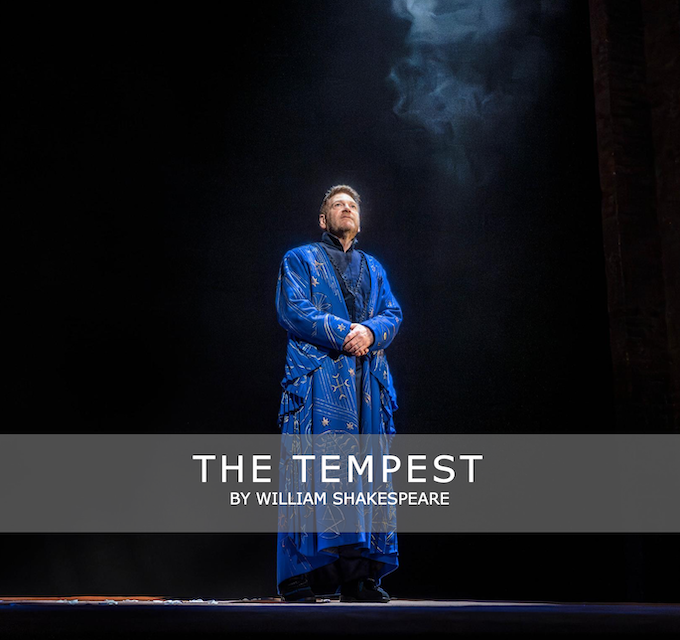
By William Shakespeare
Directed by Richard Eyre
Set Design by Bob Crowley
Costume design Fotino Dimou
Video design Akhila Krishnan
Composers Stephen Warbeck / Akintayo Akinbode
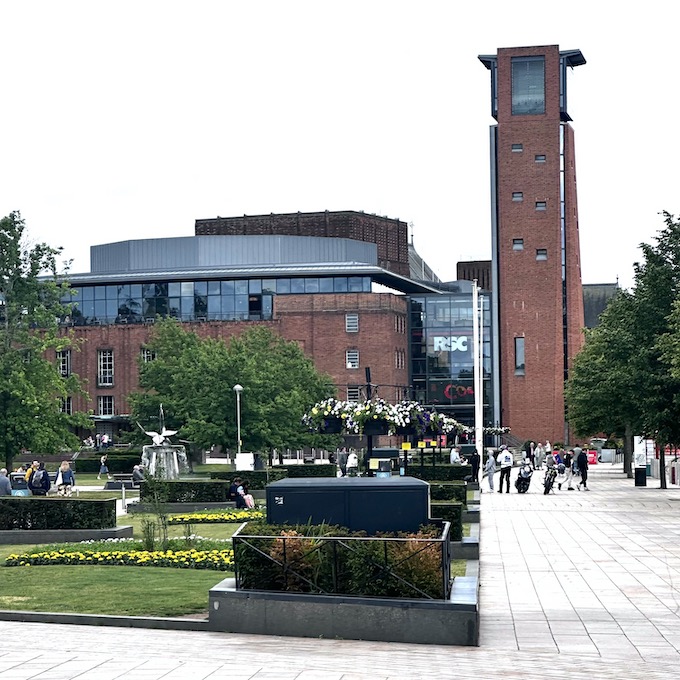
Royal Shakespeare Company
Royal Shakespeare Theatre
Stratford-upon-Avon
Friday 5th June 2026, 19.15
CAST
Kenneth Branagh- Prospero, rightful Duke of Milan
Ruby Stokes – Miranda, his daughter
Amara Okereke- Aerial, a spirit
Ashley Zhangazha- Caliban, indigenous to the island
Fred Woodley-Evans – Ferdinand, son of the King of Naples
Paul Jesson – Gonzalo, Prime Minister of Naples
(Programme: He rescued Prospero and Miranda, so surely Prime Minister of Milan)
David Bark-Jones- Alonso, King of Naples
Henry Pettigrew – Sebastian his brother
Mark Meadows – Antonio, Prospero’s brother wrongful Duke of Milan
Keir Charles – Trinculo, a servant
Guy Henry- Stephano, a butler
Philip Childs – Master of the Ship
Darrel Brockis – Boatswain
Halle Brown – Spirit
Amber Sylvia Edwards – Spirit / Venus
Razak Osman – Spirit
MUSIC
Joseph Roberts- guitar, guembri
Kadialy Koutyate – kora
Sidike Dembele – djembe, kamale ngoni
Sola Akingbola – percussion
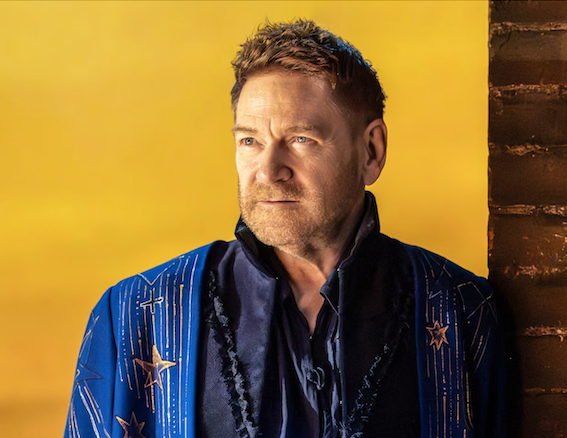
It’s completely sold out for Kenneth Branagh’s return to the RSC after thirty years away (an era in which he’s voiced criticisms). The new artistic directors Daniel Evans and Tamara Harvey have attracted him back. The programmes have gone up from £6 to £7. I mentioned it. Apparently that’s just for the Branagh plays. It’s Richard Eyre’s first RSC production at the age of 83. There is hope for us all. Eyre’s programme introduction is essential reading. Sold out? Some reviewers hope it will go to London. Will Sir Kenneth Branagh want to devote that much of his life to it? I hope they filmed it.
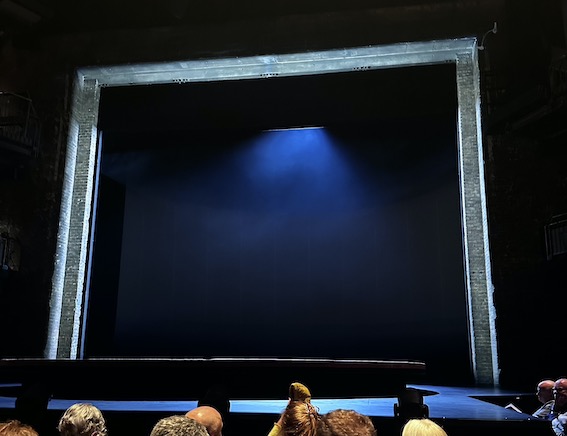
It has the best start to this play I’ve seen. Branagh as Prospero walks on stage and goes to a conductor’s podium, takes up a baton and conducts the tempest at sea, with those on the ship on the tilting circular inner stage with loud music and stormy sea back projection.
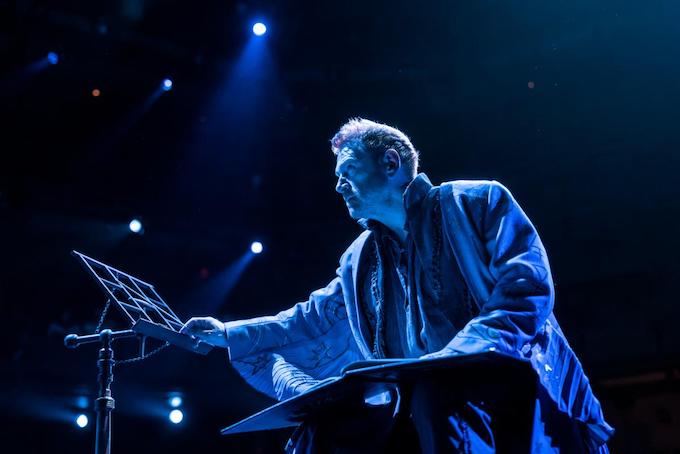
The baton replaces the staff and Prospero’s cloak is a marvel to behold. Ah. A podium and a conductor with a baton, like Stowkowski. A sorcerer in a blue cloak with wide sleeves. Walt Disney’s Fantasia. The Sorcerer’s Apprentice. We even get lots of water here too!
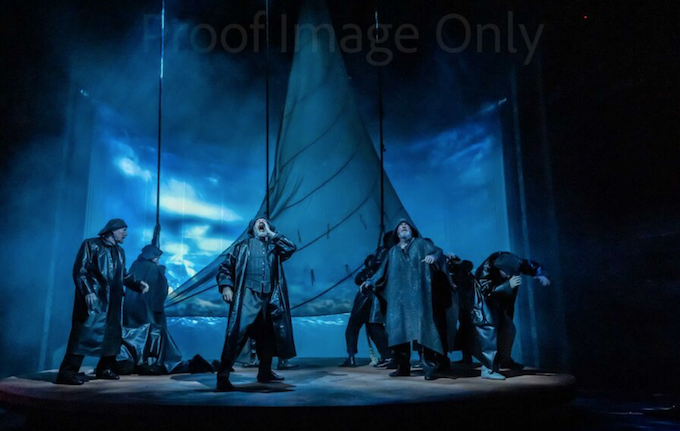
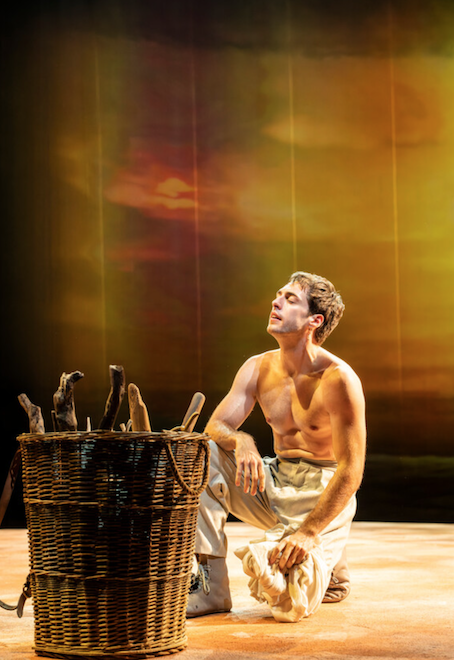
The circular stage is rarely stepped off, except by Prospero. It is minimalist. There are almost no props, no furniture, no cave, no books, scenery is all projected: starry skies, a vibrant Gauguin jungle, a yellowish circular series of panels. There is a sail for the ship, which folds away in the scene. Ferdinand has a basket of wood. The magical feast appears. There’s a chess set. There’s a bit of sailcloth over Stephano and Trincolo. That’s about it. It’s extremely colourful but via costume and projection. The bare stage is oddly purist.
The concept of Prospero is different, a gentler, kinder Prospero. That’s not unprecedented. The first half of the 20th century saw Prospero played as more benign than later.
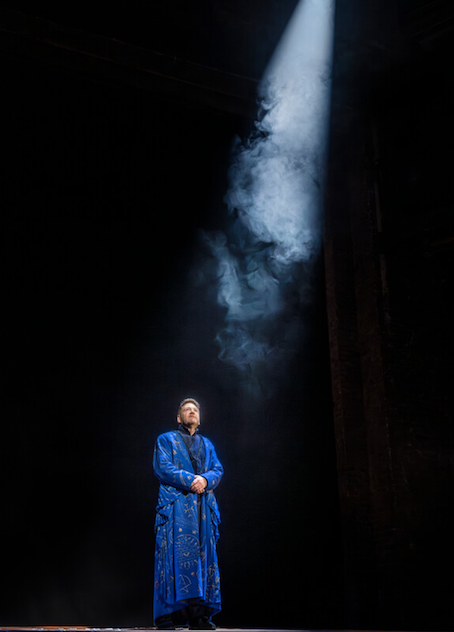
While he controls events, it is power not sclerotic anger. I’ve praised Branagh’s ability to go from a bellow to a whisper but be heard in every corner of the theatre. It’s still apparent. He can also play with lines, rapid delivery, then. stopping and playing with a single word. Often rapid speech is harder to understand. Not with Branagh.
Richard Eyre: I agree that Prospero is vengeful, irascible, impatient and wilful but he also embodies benign paradoxes: he’s consumed by the occult, but renounces his magical powers, he’s a colonist who frees those he’s enslaved and he’s a pursuer after revenge who learns how to forgive. Through Ariel’s empathy and wsatching his daughter fall in love, he discovers something like resignation if not redemption.
(Programme introduction)
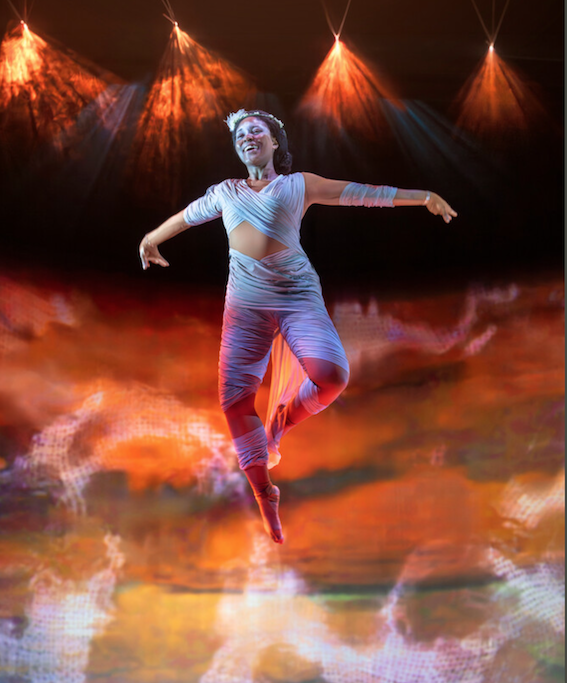
Aerial (Amara Okereke) flies on wires the whole way through until the very end where she is released and staggers, unsteady on the ground. Prospero unclips her to release her. Just two small clips too. Aerial, Caliban (Ashley Zhangazha) and the three spirits are all people of colour. The Milanese and Neapolitans are all white. A crystal clear line. Then Caliban is a handsome Afro-Caribbean man, not a monster. The three spirits are two female, one male, though in one of their several costumes he sports a beard and breasts. In the next appearance he’s bar chested and male. The trio are important.
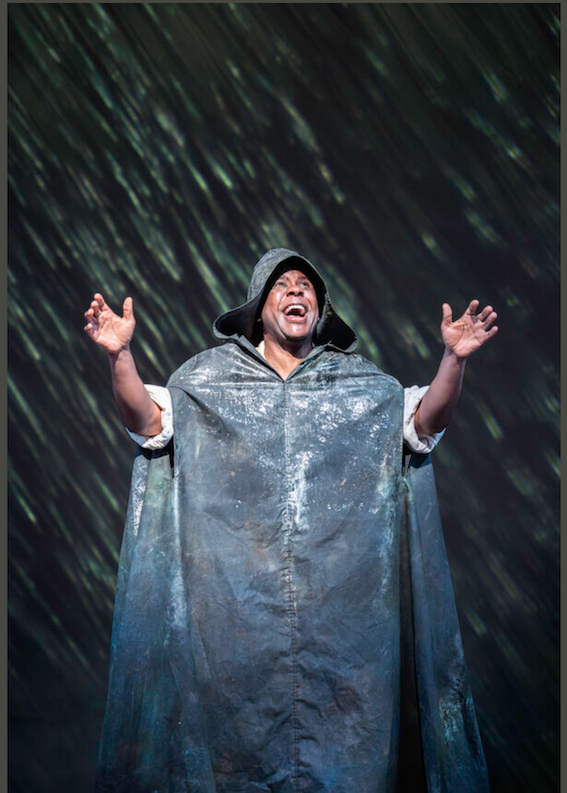
In the last fifty years, everyone seeks out the colonialism theme in The Tempest. I doubt Shakespeare ever considered it. Choosing to make Caliban a normal intelligent chap here is supposed to underline it. Instead of Caliban thinking of the butler and cook as gods, this Caliban acts as a puppet master and pulls their strings, bending them to his will. That’s a hefty shift from the barely articulate monster who has tried to assault or even rape Miranda, a point glossed over completely here. Emphasising the noble and eradicating the savage loses a major dimension. Would Prospero shrug off this man assaulting his fifteen year old daughter? In the theatre of 2026, I suppose casting a black or Arab actor as a savage would-be rapist (his mother, the witch, was Algerian) is not possible. Bath Ustinov’s production got around it by having a white Caliban, but then you lose that prized colonialism add-on. In the late 19th and early 20th centuries, actor managers cast themselves as Caliban. Villains have more fun.
A ‘normal’ Caliban creates havoc with the plot. Why does Miranda find Ferdinand and then at the end the nobles so wondrous to behold? Caliban’s a good looking bloke. Why does Caliban think Stephano and Trinculo look like gods, when they look like him but paler? But then he’s used to a white Prospero.
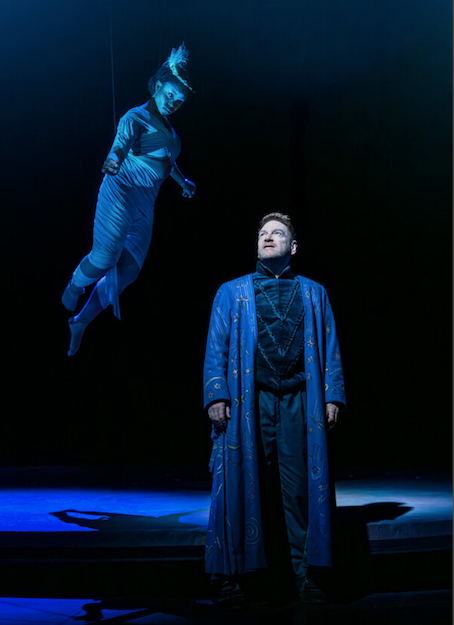
I interpret Prospero as having an anima (Aerial) and an animus (Caliban) representing the male and female aspects of his personality. 17th Century Schizoid Man. In some productions Aerial disappears when Prospero abandons the occult. In others, Aerial dies. Caliban inherits the island. Here the bare stage after Prospero departs has Caliban and Aerial looking at each other as if about to walk off into the sunset hand in hand. Is that his reconciliation of his different psychological aspects? Or is it a happy ending when the European colonists bugger off back to where they came from?
There is a lot of music, the percussion is especially good, and Aerial is a fine singer, even when she is upside down on the wires. Last time we saw her was in Oklahoma! It reminds how powerful and important live music is at the RSC, at a point where budget constraints are said to be reducing the music department.
Miranda and Ferdinand are both well cast. They shine in spite of (for me anyway) having insufficient focus. If you want the colonial focus – and I’m not convinced that I do- then Ferdinand, forced to gather wood, becomes the white indentured servant, banished and transported for stealing a rabbit, or for being in the wrong Scots or Irish army. But that’s a good hundred plus years AFTER Shakespeare.
Her ‘O Brave New world’ speech has power, humour and that recognition tingle too.
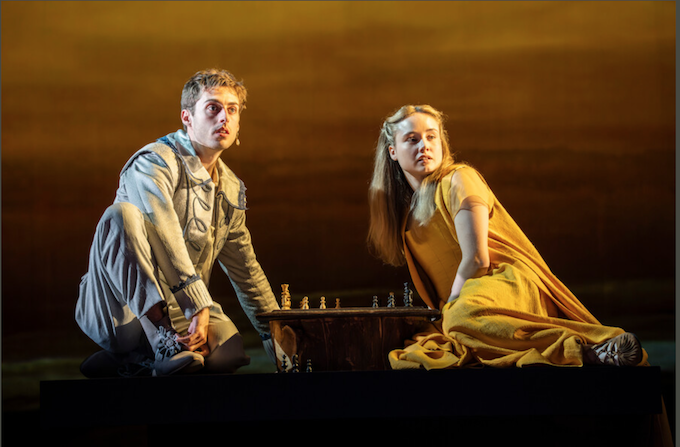
“Sweet Lord, you play me false.”
We see them playing chess. I’m not sure I’d have discovered them playing chess. It references the Ford Madox Brown painting, which in turn illustrates the scene in the play, with the double meaning of ‘play me false.’ So much was left out that I wouldn’t have thought this that important. (Was there a chess set with the books Gonzalo put in the boat?) However pass notes have reams on the significance.
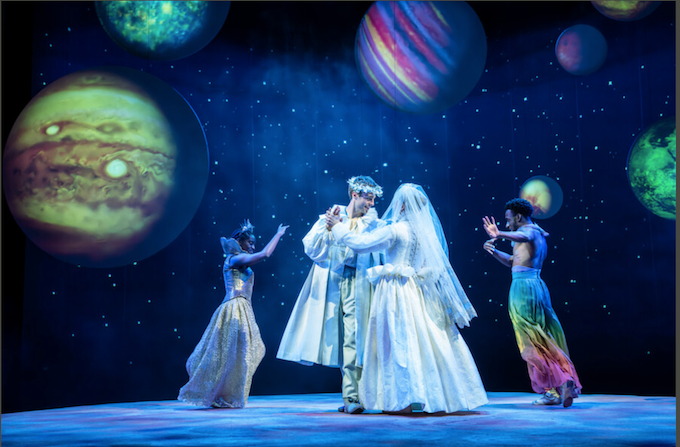
The wedding scene is a triumph of video projection.
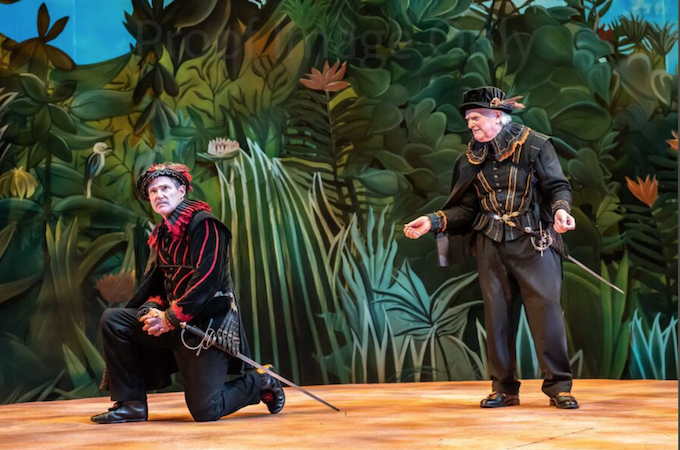
The four ‘lords’ Gonzalo (who saved Prospero and Miranda), Sebastian, Alonso King of Naples and Antonio, the usurping Duke of Milan are all in black Jacobean costumes, but have colour coded patterning on the front.
They appear as a group of four, often standing in line across the stage as four with swords. I wondered if they were previewing the RSC’s Christmas Three Musketeers + D’Artagnan.
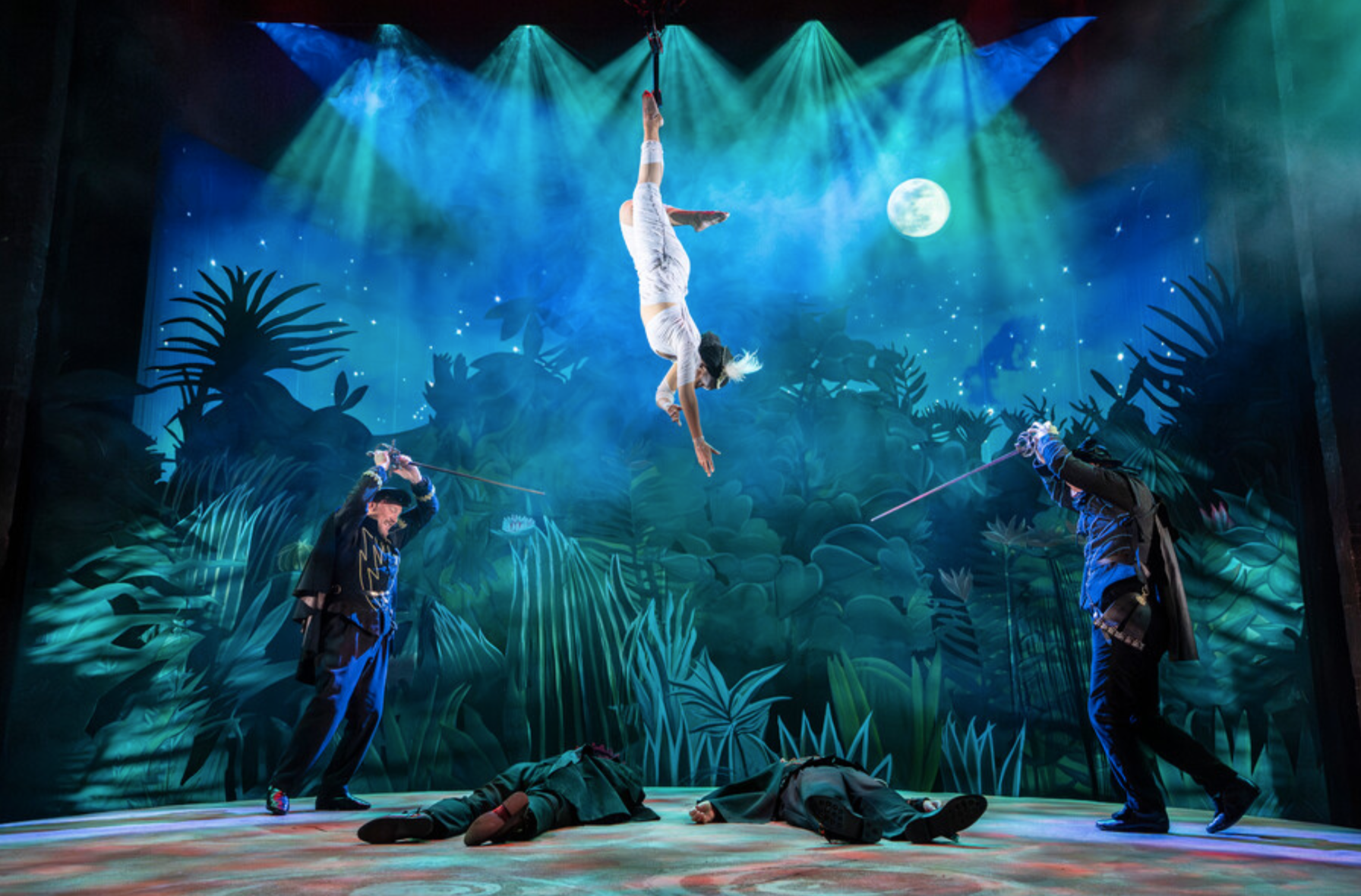
Mark Meadows as Antonio’s expressions at the end are a seething mass of loathing for Prospero, now clad in a gold cloak. There is no brotherly reunion on his part.
I say in every review, but I find the Millun pronunciation favoured by Ben Crystal as authentic is both pretentious and silly. Here we get about half the current Milan, a few Millun, and a couple in between the two. Milan, but without the modern stress. Stick to one. But definitely not ‘Millun.’
I found it hard to judge it. Branagh’s charisma fills the room, but there’s an absence, a vacuum even, when he’s not on stage. I felt a lack of cohesive flow too. That was particularly in part one.
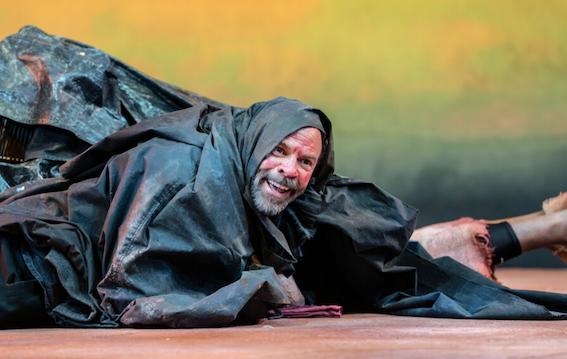
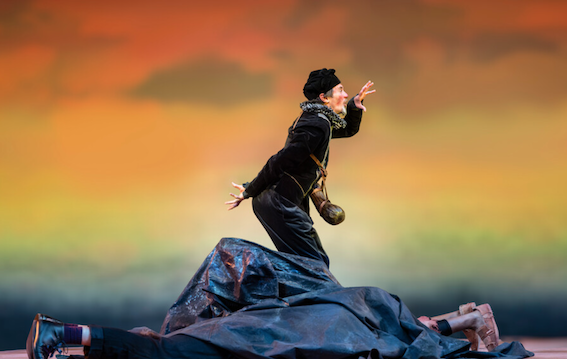
Stephano and Trinculo do what it says on the page very well, both are fine actors, yet I expect them to be more hilarious and add business, and they don’t. Well acted, but I wanted it funnier, I wanted a bit of improvisation, I guess. I wanted it a bit of crudity even. I’m way out on a limb here. Every other review loved them. Their roles are undermined though because we never believe they’ll think Caliban sees them as gods. The fault is the interpretation of Caliban.
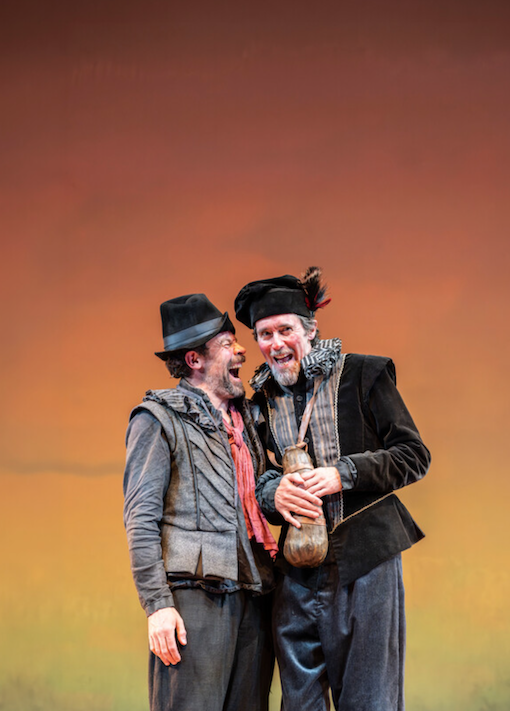
Maybe it added something. It was different. It eschewed gimmicks, or lots of playing around. Some reviews welcomed the lack of modern additions to the comedy. Karen thought they brought new light and liked the fact that they didn’t totally alter the mood, which can happen. Me? I missed the comedy.
It’s very short. Heavily cut. Part one is 58 minutes. Part two is 52 minutes. I think they skipped and glossed over to many plot points.
Throughout every actor had remarkable clarity of diction and projection. There were no strong accents, just RP, which is hugely unusual, and it helps. In retrospect, after years of pick ‘n’ mix accents, I hadn’t realised how much it helps. Going home, Karen said that’s where her old drama teacher would have started. First get the speech clear, precise and articulate. Then worry about acting and blocking.
Our reaction was mixed, probably because we expected it to be a full five star before it started, and the first few minutes certainly were five star. Branagh’s five star. But we knew that in advance.
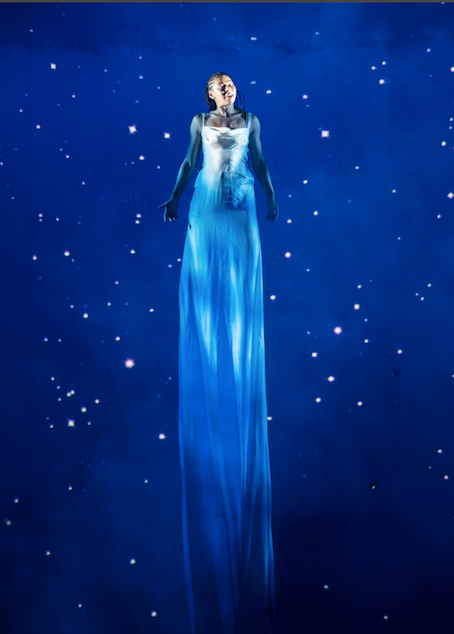
The video design projection is five star. Yet, no, it’s not that level as an overall production. I have seen better Tempests. I have seen better Prosperos too. More engaging ones, certainly better comedy sections in the play.
We both thought of Branagh’s Lear in 2023. I called it ‘Lear: The graphic novel.’ It fits here too. It was cut too heavily for key moments to emerge. ‘The Tempest Readers Digest Cndnsd bk?’ It looks fabulous. It sounds fabulous. The acting and clarity are absolutely top level, but something has gone. The cuts muddy the theme. They really do get Caliban wrong, so wrong that it should knock off a star.
I waver between four and three, but such is the four consensus, I daren’t deviate!
****
WHAT THE CRITICS SAID
four star
Arifa Akbar, The Guardian ****
Domenic Cavendish, Telegraph ****
Financial Times, ****
Daily Mail, ****
Clive Davis, The Times ****
Gary Naylor, The Arts Desk ****
Raphael Kohn, All That Dazzles ****
Graham Wyles, Stage Talk ****
The Real Chrisparkle ****
three star
Roni, Theatre & Tonic ***
LINKS ON THIS BLOG
The Tempest RSC 2012 (Jonathan Slinger)
The Tempest, Wanamaker Playhouse, 2016
The Tempest, RSC 2016 (Simon Russell-Beale)
The Tempest, Bath Ustinov 2022
The Tempest, RSC 2023 (Alex Kingston)
The Tempest, RSC 2026 (Kenneth Branagh)
KENNETH BRANAGH
King Lear, 2023 (Lear), Wyndham’s London
The Entertainer
The Winter’s Tale
All On Her Own & Harlequinade by Terence Rattigan
The Painkiller, by Francis Veber
Romeo & Juliet (director)
Death On The Nile
Belfast (FILM)(director, writer)
Dunkirk (FILM)
Fortunes of War (TV series)
RICHARD EYRE (director)
8 Hotels, Chichester 2019
Long Day’s Journey Into Night, Eugene O’Neill, West End 2018
Mary Poppins, Norwich, 2016
Quatermaine’s Terms by Simon Gray, Brighton 2013
Blithe Spirit, Bath 2019
RUBY STOKES
Till The Stars Come Down by Beth Steel, NT at Home 2024
AMARA OKEREKE
Oklahoma! Chichester 2019
PAUL JESSON
As You Like It, Fiennes Season, Bath 2025
Copenhagen by Michael Frayn, Chichester 2018
Coriolanus, RSC 2017
Wolf Hall, RSC
Mr Turner (FILM)
MARK MEADOWS
The Constant Wife, RSC 2025
Alfred Hitchcock Presents: The Musical, Bath 2025
Quiz by James Graham, Chichester 2017
The Magna Carta Plays, Salisbury 2015
King John Globe 2015
Richard III, Trafalgar Studios 2014
The Spire, Salisbury 2012
HENRY PETTIGREW
Edward II, RSC 2025
Quiz, by James Graham, Chichester 2017
DAVID BARK-JONES
Hedda Gabler, Salisbury, 2016
KEIR CHARLES
Hamlet, Chichester 2025 (Polonius)
South Pacific, Chichester 2021
Quiz by James Graham, Chichester Minerva 2017 (Chris Tarrant)
The White Devil, by Webster, RSC 2014
The Roaring Girl by Dekker RSC 2014
Arden of Faversham, RSC 2014


Leave a comment