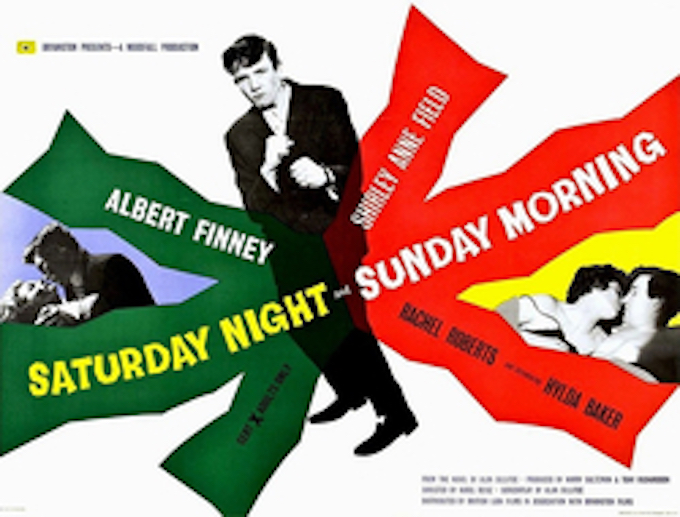
1960
Produced by Tony Richardson
Directed by Karel Reisz
Screenplay by Alan Sillitoe
Based on the 1958 novel by Alan Sillitoe
Soundtrack by Johnny Dankworth
CAST
Albert Finney- Arthur Seaton
Shirley Ann Field- Doreen
Rachel Roberts – Brenda
Norman Rossington – Bert
Hylda Baker – Aunt Ada
Bryan Pringle- Jack
Robert Cawdron – Robboe
Edna Morris- Mrs Bull
Elsie Wagstaffe- Mrs Seaton
Frank Pettit- Mr Seaton
Avis Bunnage – Blousy Woman
Colin Blakeley- Loudmouth
Irene Richmond- Doreen’s mother
Louise Dunn – Betty
Anne Blake- Civil Defence Officer
Peter Madden- drunken man
Cameron Hall- Mr Bull
Alister Williamson- Policeman
Uncredited: Peter Sallis
The 60s Revisted Reviews series
We had just watched The Loneliness of The Long Distance Runner, and I remembered we had the other Alan Sillitoe book and film, Saturday Night and Sunday Morning, so I thought we’d go for a minor Sillitoe binge. We watched it last a few years ago. At that time the Daily Telegraph and Daily Mail sought to attract readers by offering free cover-mount DVDs.
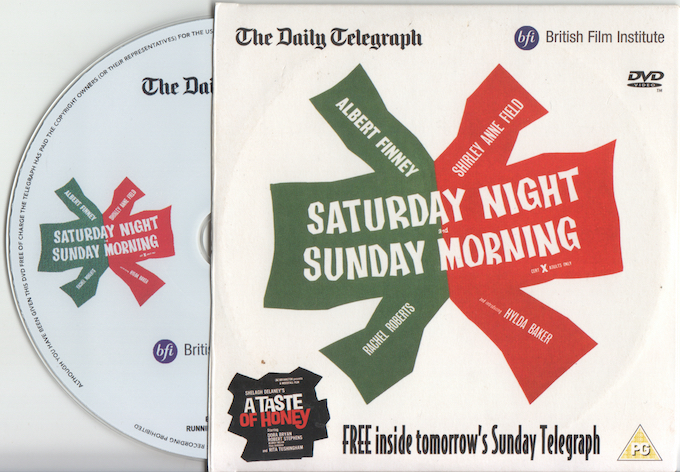
We’d buy the Telegraph for the DVDs, though it never tempted us to become Daily Telegraph readers. That’s our copy above. Annoyingly, the free DVD no subtitles and some dialogue is a tad hard to follow.
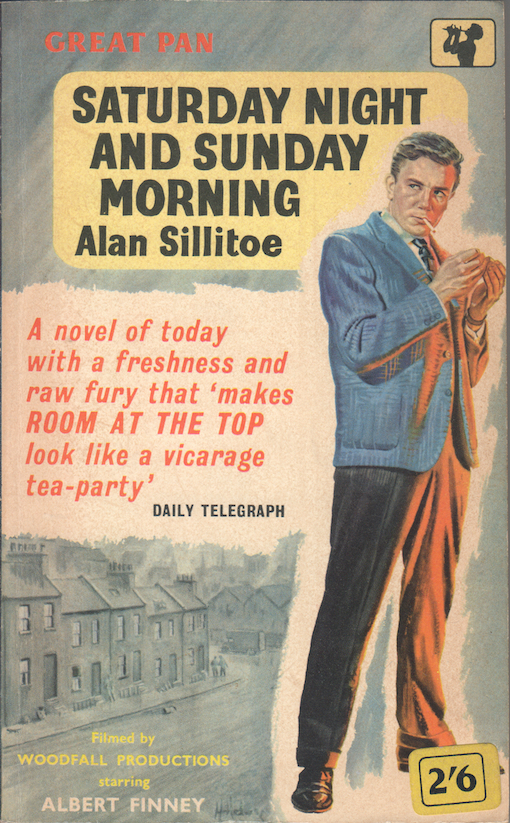
It’s also the Daily Telegraph that was quoted on my 1960 film tie-in copy of the novel.
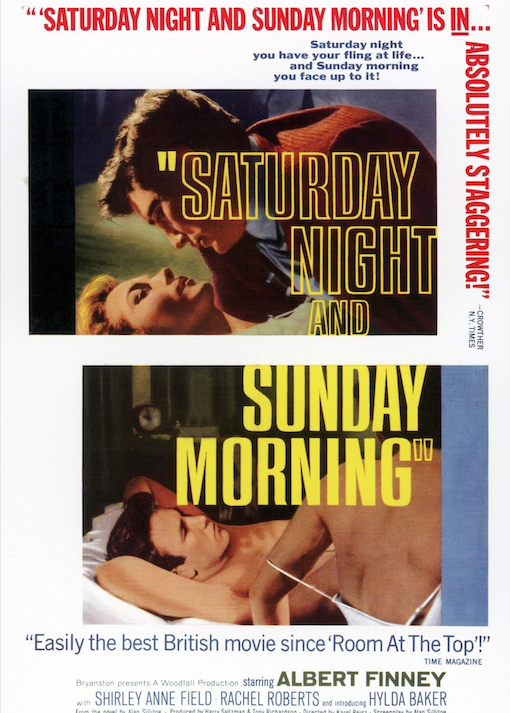
The film, and the blurb for the re-published novel, focussed heavily on just one early five minute bedroom scene, which by later standards was mild. Bare shoulders, back and a petticoat strap was as explicit as it got. That’s the shot they colourized for the poister too. The shade of D.H.Lawrence was invoked.
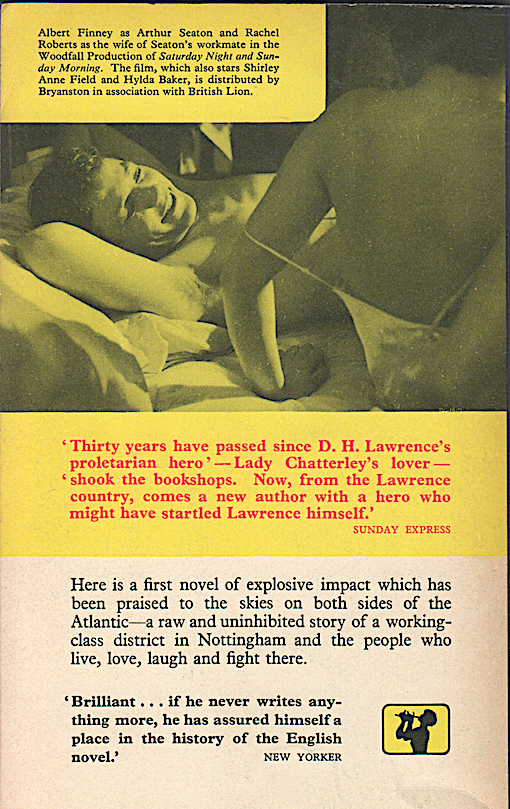
There must have been a few disappointed cinema goers. I remember when Lady Chatterley’s Lover was passed around the school playground. I really don’t think there anything to “startle” Lawrence in the story.
Here Tony Richardson is the producer, with Karel Reisz as director. Much of the appeal of the film is the gritty realistic portrayal of the streets and factories of industrial Nottingham. You can almost smell the smoke of factories and coal fires in houses just by watching the screen. I compared it with the pictures of similar streets in Belfast by Kenneth Branagh. Much of the street scenes of that were filmed in Lancashire, but you just don’t get that haze of smoky air nowadays. In 1960, they couldn’t eradicate it. The air hung with it.
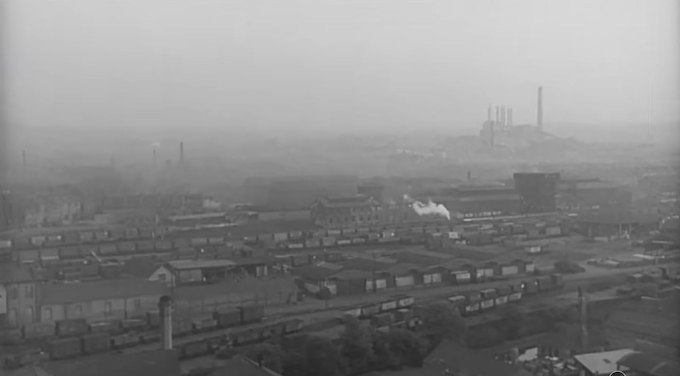
The director loved the back passages behind terraced houses, and had a camera position on a higher building or a roof top which was used a lot.
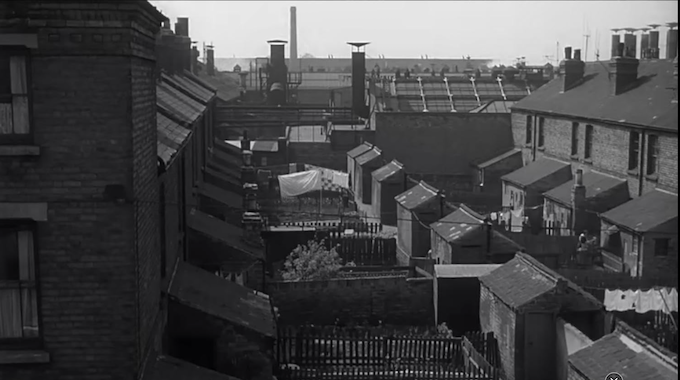
It’s crisp B&W even though they used colour for one of the film posters. That’s where it starts.
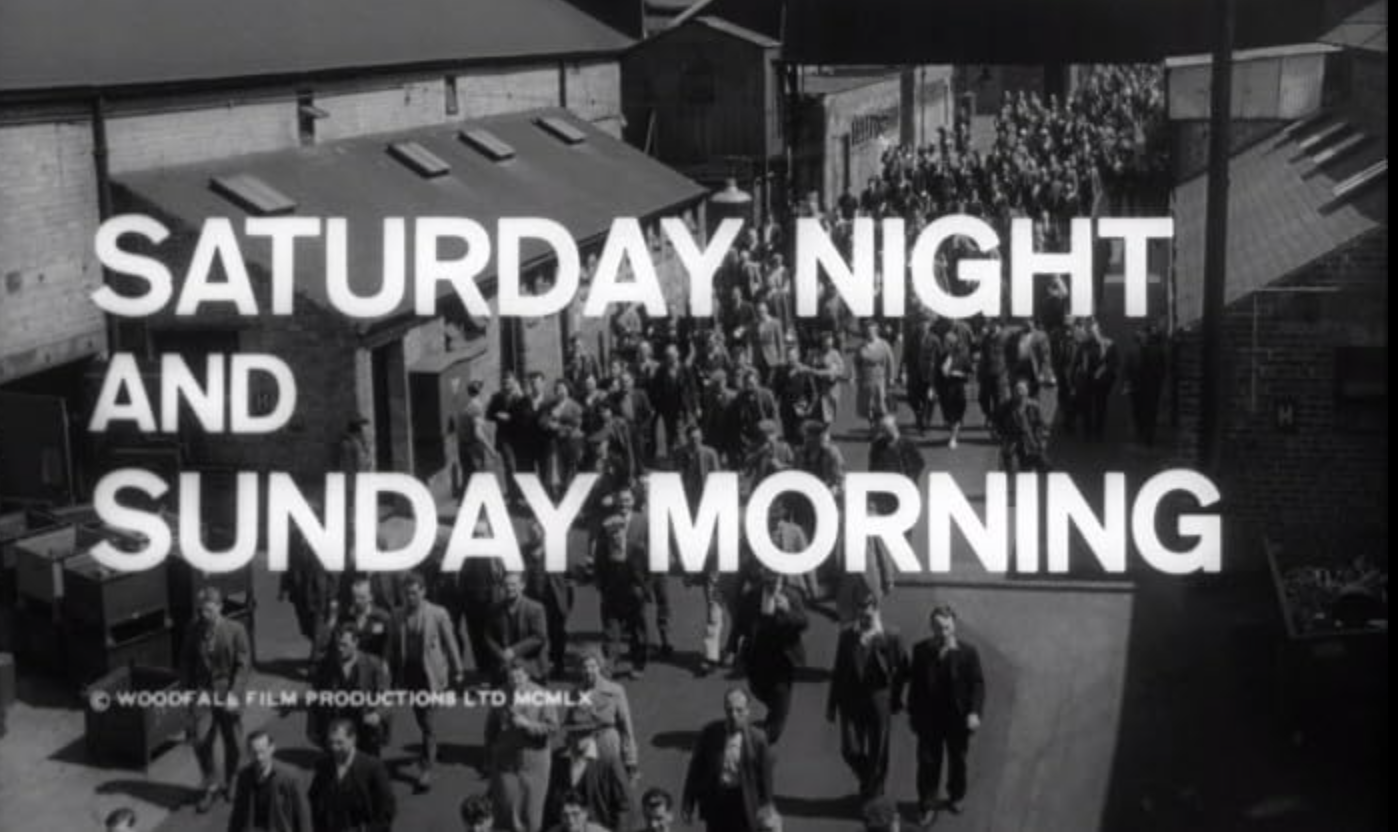
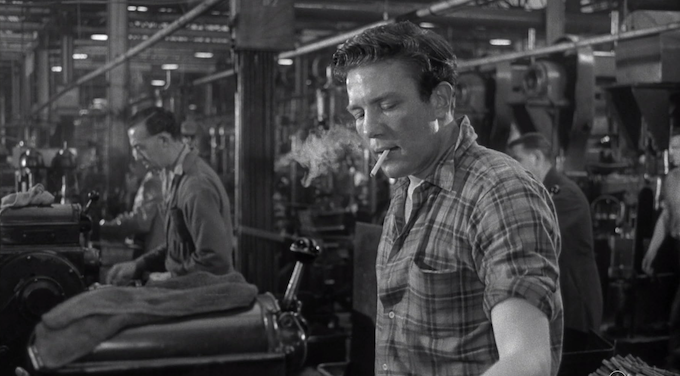
The factory is Raleigh, the largest British bicycle manufacturer. The metal bits we see being manufactured look like some kind of bike spindle. While similar in shape, they’re definitely not cigarettes- the other major Nottingham manufacturer was Players cigarettes. Also at the end of the street we see RALE- on a half-seen sign, and the tray brought round the factory with wages has RAL- on the side. I wonder why they eschewed the whole name. We all had Raleigh bikes in 1960, and it’s this that makes it hard to spell Sir Walter Ralegh correctly.
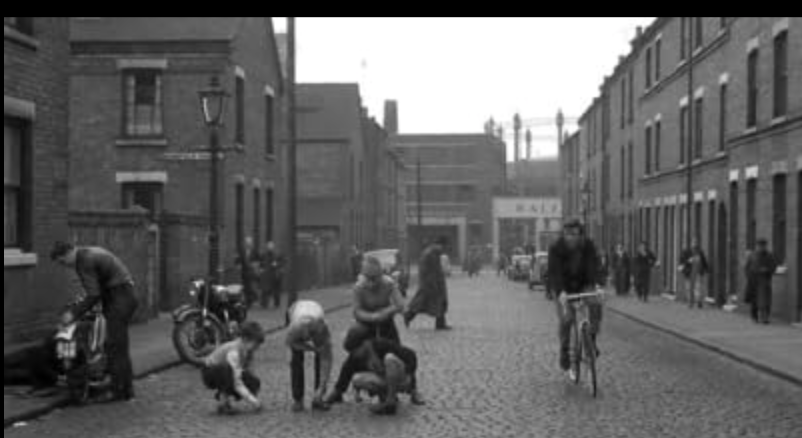
THE PLOT
Arthur Seaton (Albert Finney) works as a machinist. The factory is huge and noisy and he can work with a fag hanging out of his mouth. We discover he earns £14 a week, I checked, exactly the average male industrial wage in 1960. We see him hand banknotes to his mum for board, but as a single bloke living with his parents he would have been reasonably well off for the time. Most of his co-workers were supporting families.
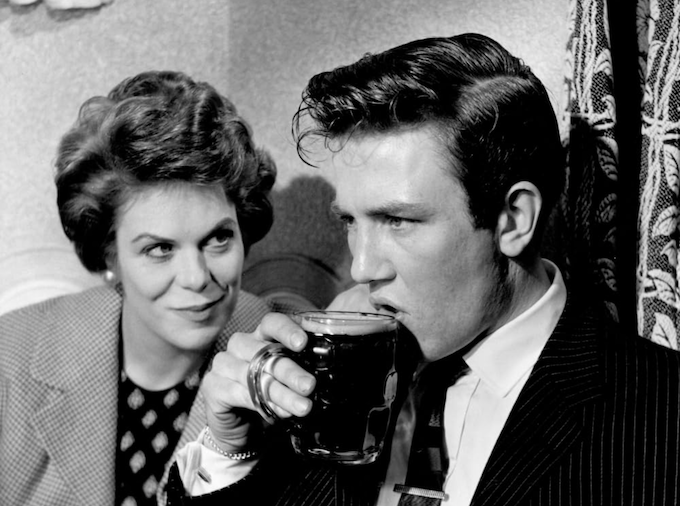
At weekends Arthur drinks heavily, falls down stairs and has a good time. His best mate is his cousin Bert (Norman Rossington). Arthur describes his parents and co-workers as ‘dead from the neck up.’
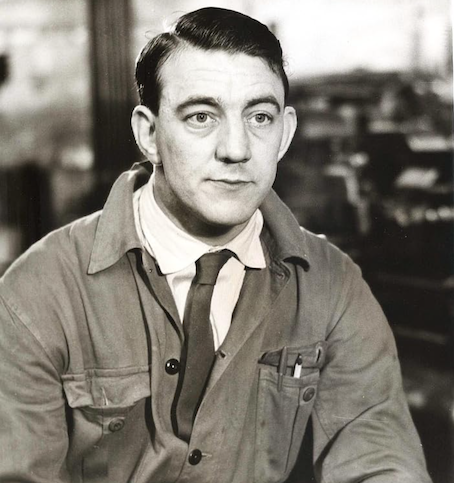
Arthur is having a long standing affair with Brenda (Rachel Roberts), who is married to Jack (Bryan Pringle), who works at the same factory. Jack works nights for the extra money, which allows Arthur to spend the evening in bed with her.
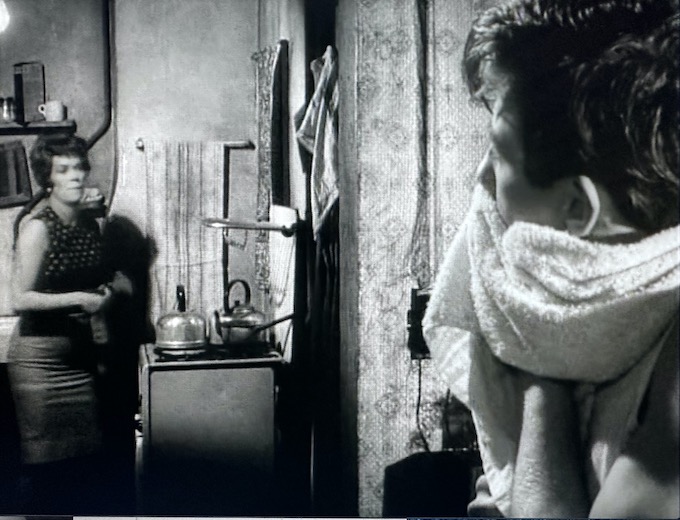
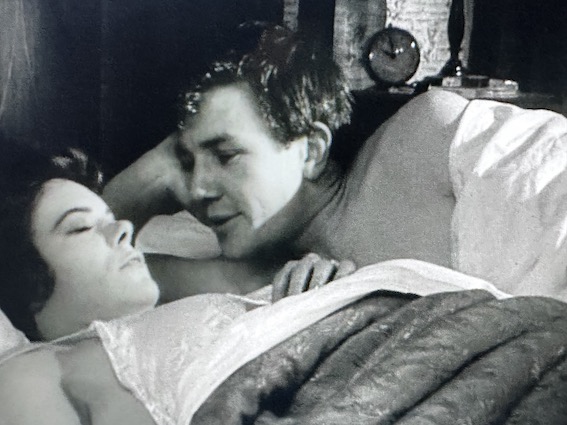
On this one Saturday evening though Jack has gone off overnight on his motorbike and sidecar to fetch their son back from ‘Skeggy’ or Skegness. Arthur wishes he did that every week because he can stay the whole night. I noted that you literally have to see a kitchen sink several times in kitchen sink dramas. They oversleep and embrace in bed on the Sunday morning. (Hence the film title). This is the scene all the film publicity was based on.
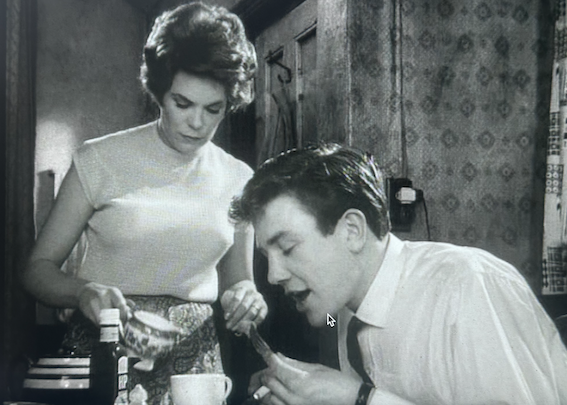
Being the North, Brenda makes him a nice fry up for breakfast at the kitchen table. That’s what women did in kitchen sink films. Men sat at the table and waited for it to be served. The women poured tea, but rarely joined the bloke at the table. Arthur can eat breakfast while smoking. I knew a bloke who used to eat and smoke simultaneously. It’s a lost skill. Fortunately.
They hear Jack’s motorbike and sidecar and Arthur only just manages to get out without Jack seeing him.
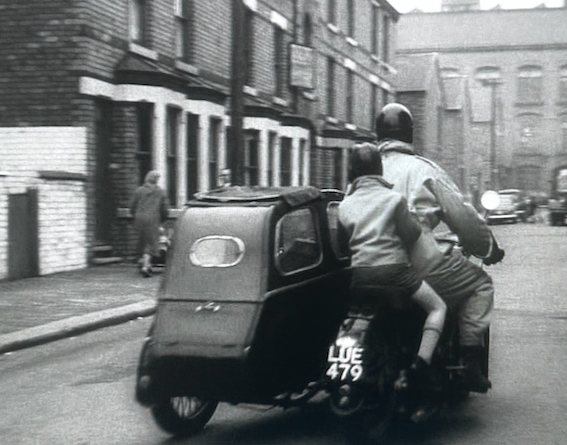
Jack is lugubrious and unexciting. Bryan Pringle can hold the perfect facial expressions for the character.
Arthur prefers married women – he doesn’t have to take precautions, he says at one point.
We see that Arthur is a practical joker. The factory cat has brought in a dead rat. Arthur puts it under his shirt and deposits it where the women are working. Funny? To him, but pretty nasty, let alone unhygienic. Rats have fleas.
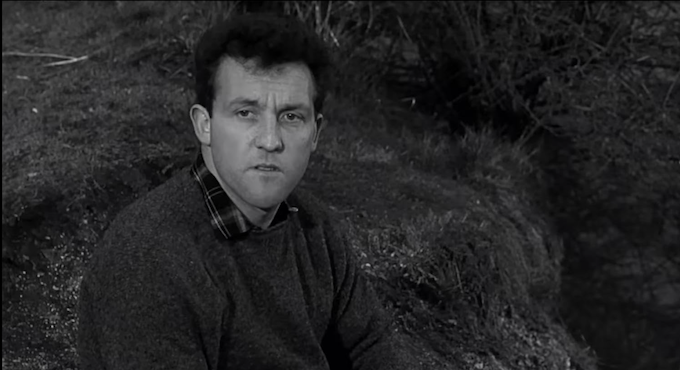
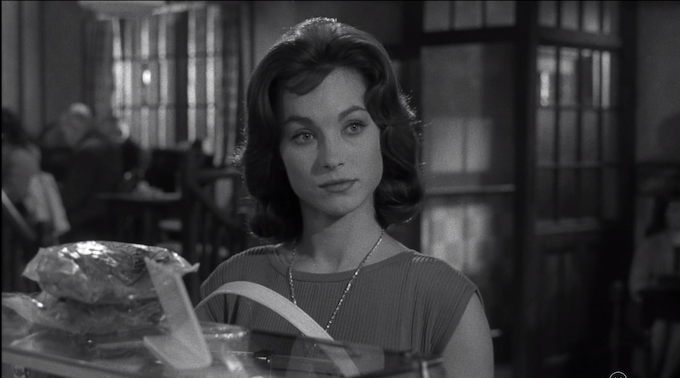
Then in the pub another time, Jack sees Doreen (Shirley Anne Field) who’s there with female friends for her mum’s anniversary. She’s younger, single, dare I say prettier?
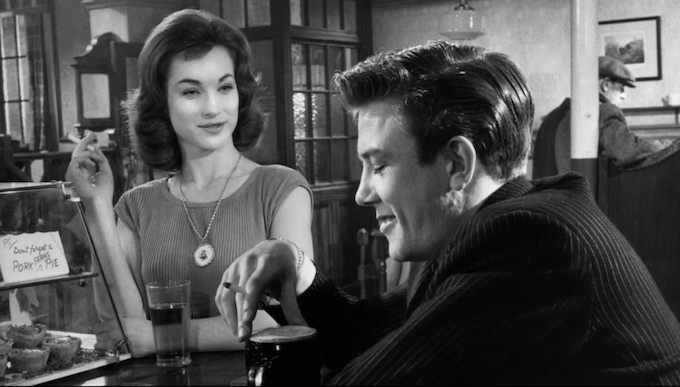
He offers her a drink, a small shandy is the choice, she’s standoffish (as girls tried to be in 1960) but finally agrees to a drink, then takes the previously declined cigarette (No thanks, I don’t smoke … alright, I will have a fag). Arthur is very good ‘on the pull.’ It’s a well-written chat up scene, and takes you back to ‘Have you got a light?’ being as popular an intro line as ‘Do you come here often?’ She gives it back well. He invites her to the pictures the next Wednesday and she accepts, but points out she wants to see the film, so not in the back row. I’ve been told that too
Arthur: I’ll see you on Wednesday then.
Doreen: Alright.
Arthur: Don’t be late.
Doreen: I won’t be, but if I am, you’ll just have to wait, won’t you?
It becomes a regular Wednesday date. He sees her home, but the door gets closed before a goodnight kiss.
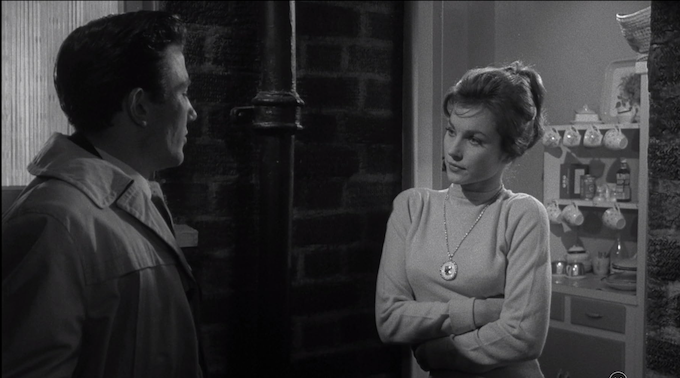
She’s keeping him at a distance, but so what, Brenda is always available.
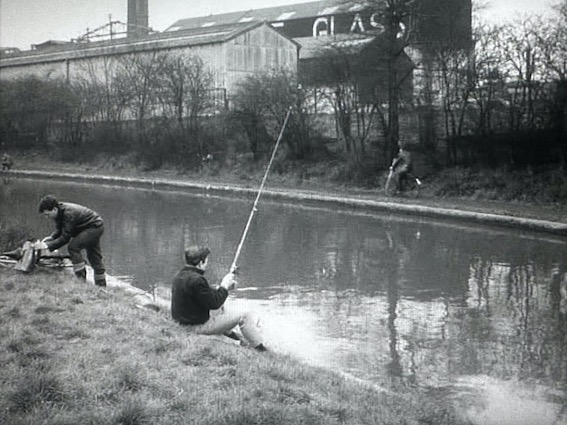
There are several fishing sequences with Bert at the canal. These match some long musings in the book, but I don’t think they enlighten us much. The book is full of descriptions of Arthur’s thought processes and they try a couple as voice over in the film, but they don’t work particularly well.
It’s hard covering his tracks with Brenda despite the convenience of Jack working nights. Another evening he’s out with Brenda and they see Jack’s bike and sidecar outside a pub in the distance.
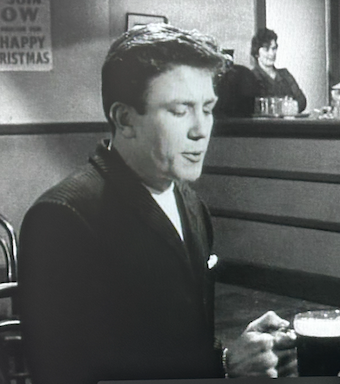
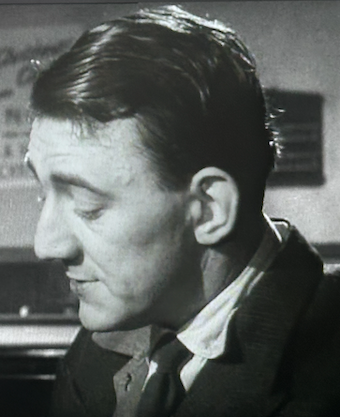
Brenda slips off home (she was supposed to be at her sisters) and Arthur goes into the pub and has a drink with Jack. He doesn’t show any hint of remorse or embarrassment.
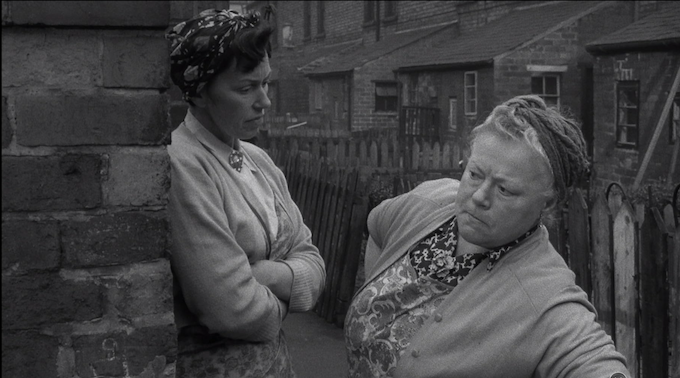
There’s a sequence (here or later) revealing more about Arthur. Mrs Bull (Edna Morris) and her friend stand at the end of the back passage behind the terraced houses gossiping and make disparaging comments about Arthur when he passes by. Mrs Bull is not a subtle name choice. They run into each other in the corner shop where Arthur barges into her.
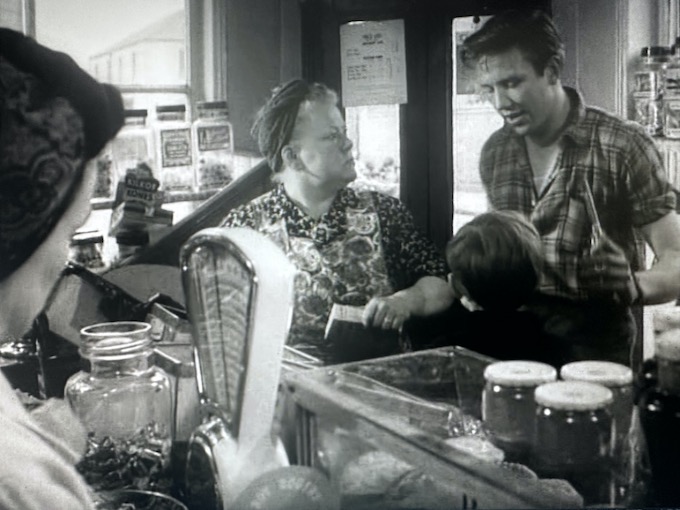
Mrs Bull: You think you own the place, you young bleeder.
Arthur: What you talkin’ about? You’re daft.
Mrs Bull: I’m not so daft that I don’t know about your games. I’ve seen you going about with them as you shouldn’t. Not the first time either.
I checked that dialogue against the novel. Completely different except for ‘you young bleeder.’ I looked at a couple more memorable interchanges. I’d say Sillitoe rewrote most of the dialogue from scratch.
There’s a scene (more cool jazz for dancing) with Arthur and Doreen jiving, and Bert and his girlfriend Betty. They’re at Doreen’s house.
The trouble is that Brenda reveals she’s pregnant and it’s definitely Arthur’s. Poor Jack hasn’t been near her in months. Arthur goes to see Aunt Ada (Hylda Baker). Ada has had lots of children and reputedly got rid of a few more.
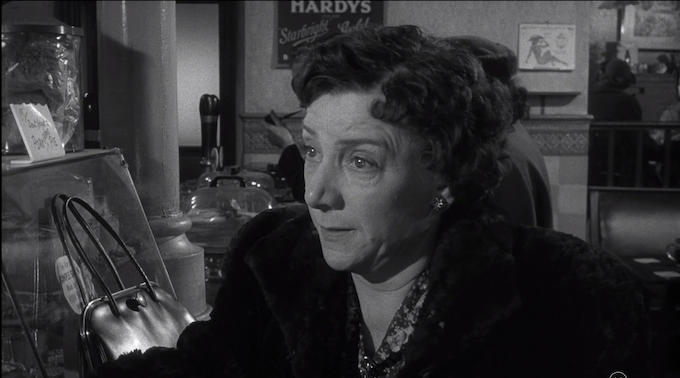
He says a friend has got a girl into trouble, but Ada instantly guesses it’s him. It always is. She tells him she’ll see the girl and help, and Brenda is waiting right outside. There’s a church and music in the distance and two young schoolgirls walk past chattering innocently as she waits. We get the point.
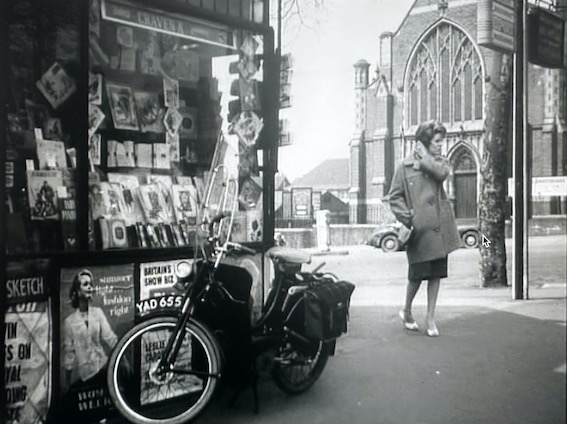
In she goes, Ada chats to her about how men always get away with it, and Arthur is shoved out. Backstreet abortions were common in 1960. There is incidentally no comparison to the graphic abortion situation in Alfie a few years later in 1966, just before it was legalised. We see nothing.
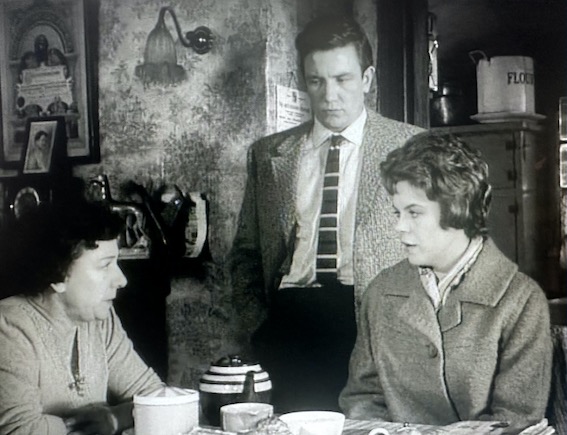
As he leaves Norman arrives and Arthur can’t let him go in, so grabs him and asks him to go for a walk. It’s a very long walk lasting into the evening.
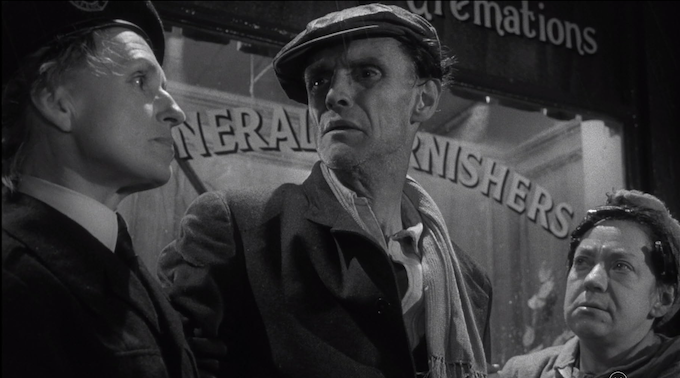
As Arthur and Bert walk, there’s a street scene with a drunk who breaks a window. He’s surrounded by a crowd, a sort of citizen’s arrest, and Arthur tells him to run away from it. Important. Run away from what you’ve done. Don’t hang about and face the consequences.
Then Arthur is in his bedroom with an airgun. He looks down at the back alley, and shoots Mrs Bull in the bum with a pellet which he thinks is hilarious. She knows who did it and turns up with her mild mannered husband in the evening.
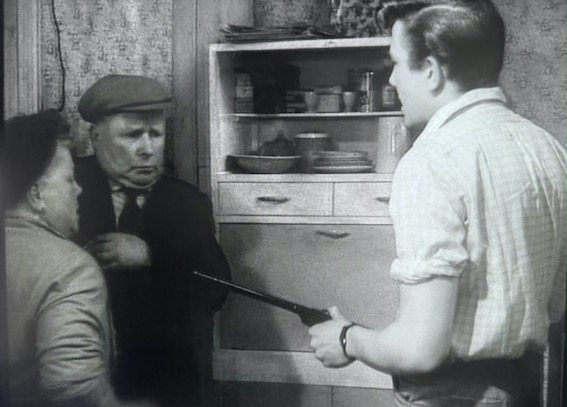
Arthur and Bert are playing cards. He threatens them with the airgun and sees them off. We’re stressing what a bastard he is.
He meets Brenda. Brenda reports that she had to sit in a hot bath for hours and drink a pint of gin (an old folk remedy) but nothing happened. Brenda has been told about him being seen with Doreen too. She asks Arthur for £40 to see a doctor who would deal with it.
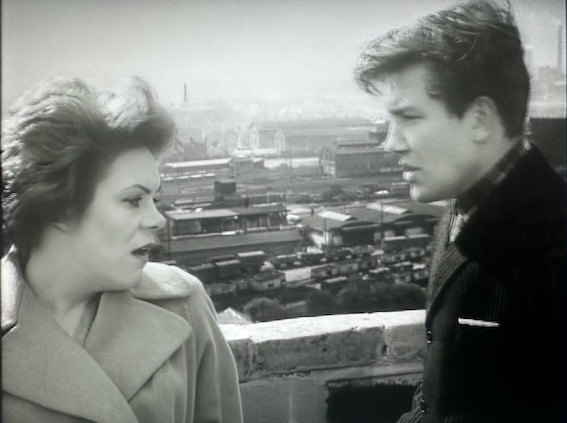
By now Doreen is complaining that Arthur never takes her anywhere. In fact, he’s afraid of running into Brenda. So Arthur agrees to take her to the fun fair. Did Nottingham have fair weeks? Hull did when I was there.
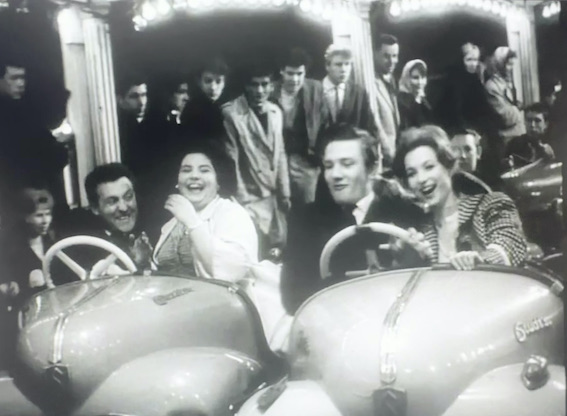
The fair is where Karel Reisz is allowed to go to town on some superb fairground sequences with dodgems (we called them bumper cars) and roller coasters. These are the cinematic highlight of the film.
Arthur sees Brenda in the distance. She’s with Jack, their son, and his soldier brother and his friend. They’re both large soldiers. Does Arthur remember a tale Jack told him at the factory? His brother and his mate had found someone messing around with the wife of a friend and had beaten him to a pulp. Was it a warning? Had Jack guessed? Jack has told Brenda that the brother will be coming to stay for two weeks. That will mess up plans.
Arthur manages to get Brenda alone between some fairground tents, and she reveals that she has decided to have the child, and then leaves Arthur to go back to her family before she is missed. Arthur follows her onto an amusement ride and gets in a car with her. Given how jerky and fast the car is, I wondered if he had ulterior motives.
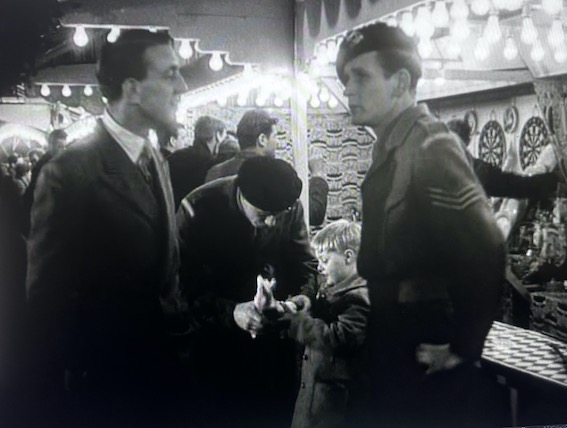
Jack and his brother don’t know where Brenda is. They start searching the fair. The brother and the other soldier see them on the ride, and Arthur has his arm around Brenda. They stand at the side waiting as the roller coast car flashes past (a great piece of cinematography).
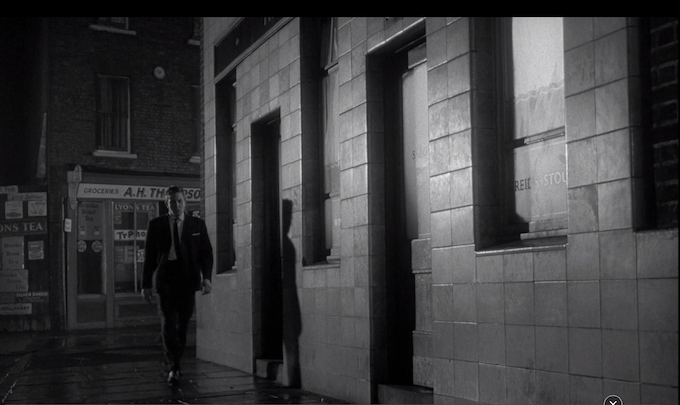
Arthur manages to slip away, but they give chase, catch him and beat him up badly. This is done in mainly near darkness so you can’t see the violence. So in the end, not as much sex as expected (advertised?) nor much violence.
Arthur has contusions on his cheek, but I would have expected black eyes, broken teeth and a cracked rib or three. Still, maybe the make up department couldn’t do it or maybe they didn’t want Albert Finney to look too unappealing.
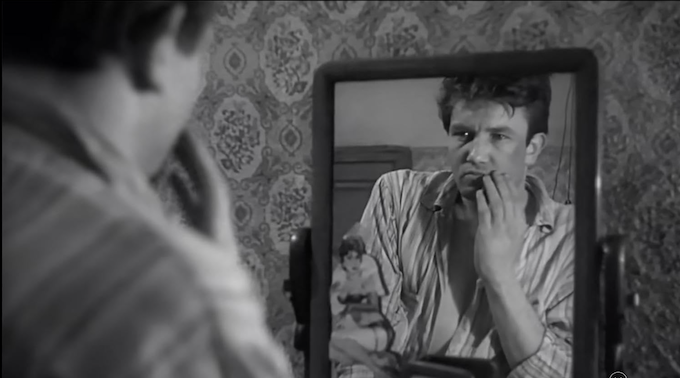
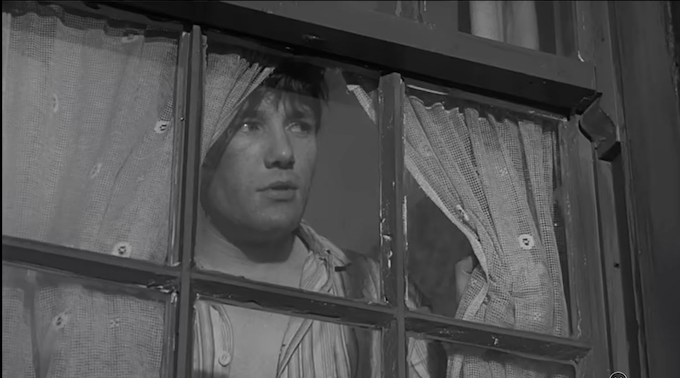
Arthur is off work in bed for a week with his injuries and Doreen comes to visit him. He tries a few fibs then admits he was beaten up for playing around with a married woman.
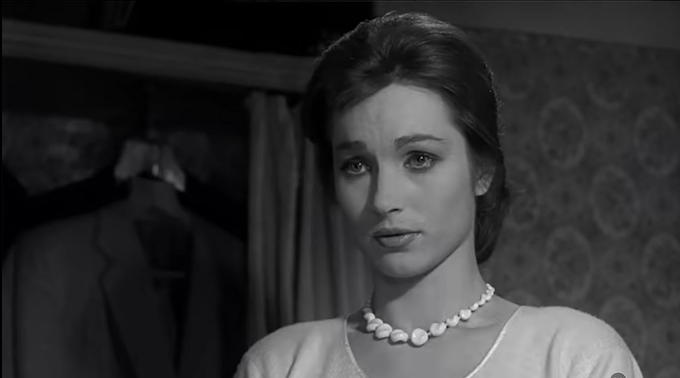
They are in deep embrace, but cousin Bert turns up and interrupts. Later at her house they sit up till her mum goes to bed (Sillitoe cuts out the mum’s Indian friend who is in the book). Arthur pretends to leave, banging the door and shouting goodnight but slips back in and they grapple and fall onto the floor … cut away.
Back at Raleigh, Arthur runs into Jack who warns him off, and says he’s going to stand by Brenda.
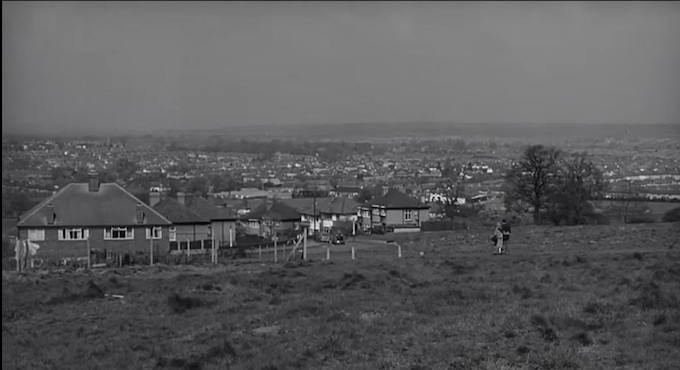
The film finishes with Arthur and Doreen on a hill gazing down at a new housing estate. They are going to get married and she wants a new house with an indoor bathroom.
The end.
First impression: The Loneliness of The Long Distance Runner is the better film, or rather better story. The character of Arthur (Albert Finney) in Saturday Night Sunday Morning is too one dimensional, too easily summed up as ‘an utter bastard.’ He’s less interesting than Colin Smith as played by Tom Courtenay in the film two years later, where the flashbacks to the back story allow us to empathize. Partly we lose Arthur’s thought sequences from the novel which limits him.
Both are high quality film making, but I think Alan Sillitoe improved his screen writing skills as a result of doing the earlier film. The BFI rate this 14th in its list of 100 Greatest British Films. The Loneliness of The Long Distance Runner is 61st. But I disagree with the order.
Albert Finney went on to star in Tom Jones which was ranked 51st. It’s way the best of the three.
MUSIC
John(ny) Dankworth, and very good it is. 1958 to 1963 saw so many directors obsessed with cool jazz soundtracks.
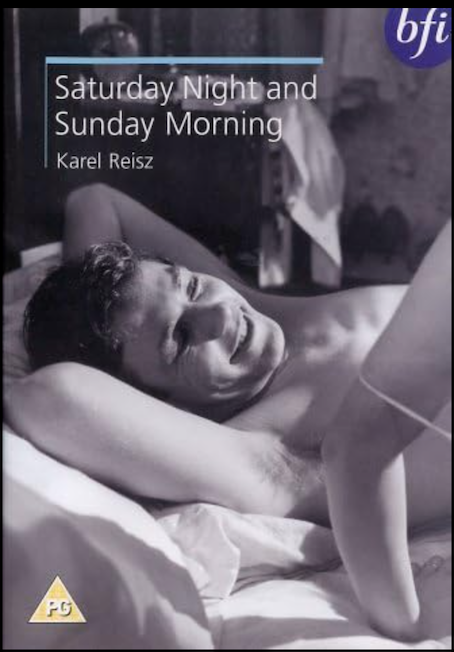
I was looking for a better DVD. On Amazon a secondhand BFI one came up at £85! It has the petticoat strap shot on the cover yet again. I’ll stick with the cover mount DVD then.
THE 60s REVISITED REVIEWS …

The Six Five Special (1958)
Separate Tables (1958)
Our Man in Havana (1959)
Saturday Night & Sunday Morning (1960)
A Taste of Honey (1961)
The Frightened City (1961)
The Young Ones (1962
The Loneliness of The Long Distance Runner (1962)
Some People (1962)
Play It Cool (1962)
Summer Holiday (1963)
Sparrows Can’t Sing (1963)
The Small World of Sammy Lee (1963)
Tom Jones (1963)
The Fast Lady (1963)
What A Crazy World (1963)
Live It Up! (1963)
Just For You (1964)
The Chalk Garden (1964)
The Carpetbaggers (1964)
Wonderful Life (1964)
A Hard Day’s Night (1964)
Rattle of A Simple Man (1964)
The Yellow Rolls-Royce (1965)
Gonks Go Beat (1965)
The Party’s Over (1965)
Be My Guest (1965)
Cat Ballou (1965)
The Ipcress File (1965)
Darling (1965)
The Knack (1965)
Catch Us If You Can (1965)
Help! (1965)
Doctor Zhivago (1965)
Ten Little Indians (1965)
Morgan – A Suitable Case For Treatment (1966)
Alfie (1966)
Harper (aka The Moving Target) 1966
The Chase (1966)
The Trap (1966)
Georgy Girl (1966)
Fahrenheit 451 (1966)
Nevada Smith (1966)
Modesty Blaise (1966)
The White Bus (1967)
The Family Way (1967)
Privilege (1967)
Blow-up (1967)
Accident (1967)
Bonnie and Clyde (1967)
I’ll Never Forget What’s ‘Is Name (1967)
How I Won The War (1967)
Far From The Madding Crowd (1967)
Poor Cow (1967)
Custer of The West (1967)
Here We Go Round The Mulberry Bush (1968)
The Magus (1968)
If …. (1968)
Girl On A Motorcycle (1968)
The Bofors Gun (1968)
The Devil Rides Out (aka The Devil’s Bride) (1968)
Work Is A Four Letter Word (1968)
The Party (1968)
Petulia (1968)
Barbarella (1968)
The Thomas Crown Affair (1968)
Bullitt (1968)
Deadfall (1968)
The Swimmer (1968)
Theorem (Teorema) (1968)
Medium Cool (1969)
The Magic Christian (1969)
The Rise and Rise of Michael Rimmer (1970)
Little Fauss and Big Halsy (1970)
Take A Girl Like You (1970)
Performance (1970)
Oh, Lucky Man! (1973)


Leave a Reply