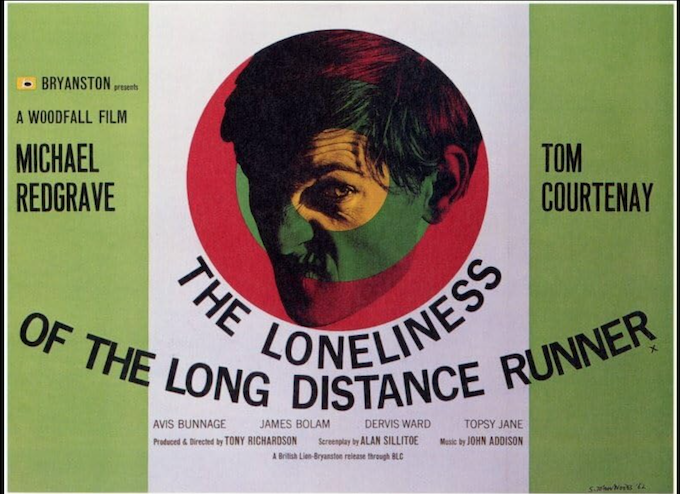
1962
104 minutes
Produced and Directed by Tony Richardson
Screenplay by Alan Sillitoe
Based on a short story by Alan Sillitoe
Director of Photography Walter Lassally
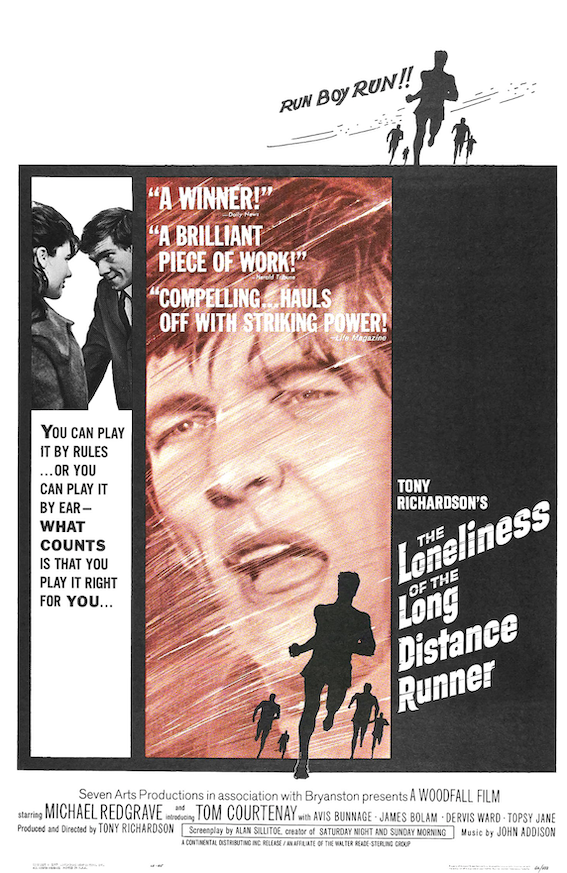
MAIN CAST
Colin Smith – Tom Courtenay
Borstal Governor- Michael Redgrave
Mike, best friend- James Bolam
Mrs Smith- Avis Bunnage
Brown, a new housemaster- Alex MCowen
Roach- Joe Robinson
Audrey – Topsy Jane
Gladys – Julia Foster
Detective- Dervis Ward
Gunthorpe- James Fox
UNCREDITED IMPORTANT ROLES
Gordon, Mrs Smith’s boyfriend – Charles Dyer
Stacy, leader of the house – Philip Martin
Chief officer- Arthur Mullard
Uncredited minor roles included , Corin Redgrave, John Thaw, Frank Finlay, Peter Madden, Edward Fox
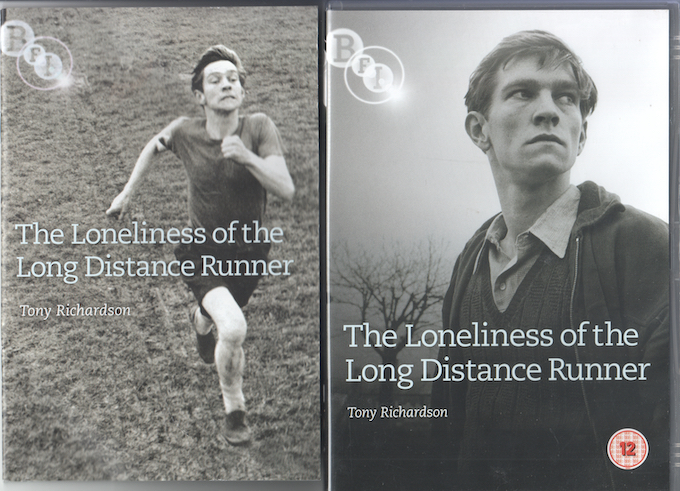
This is a return to the 60s Retrospective reviews. I was in a charity shop, feeling depressed that they were changing the sign from three DVDs for £1 to four DVD’s for £1. There in the locked glass case, at a whopping £3 for the shop, was the BFI Classics DVD of this film (above). BFI (British Film Institute) DVDs are beautifully remastered. I bought it. The B & W picture quality is crisp, clear and a tribute to the original filming in 1962.
Tony Richardson had established himself as the main ‘new wave’ or in theatrical terms, kitchen sink, director. He had directed Look Back in Anger, The Entertainer, both by John Osborne, Saturday Night & Sunday Morning by Alan Sillitoe and A Taste of Honey by Shelagh Delaney.
The Loneliness of The Long Distance Runner completed a series, and next up was to be a leap into widescreen technicolour with Tom Jones in 1964. This was his second Alan Sillitoe film, following on from Saturday Night & Sunday Morning. In Tom Jones, he cast both his Sillitoe stars, Albert Finney from Saturday Night, Sunday Morning and Tom Courtenay from The Loneliness of The Long Distance Runner. The Tom Jones screenplay was by John Osborne.
The plot comes from a 1959 short story by Alan Sillitoe. The earlier film was from a novel. It reminded me that Hemingway for one found it more lucrative to write short stories suitable for film, than to go to Hollywood to wrote screenplays, or sell novels. Directors may prefer expanding a short story to compressing a novel. In this case, for the film, Sillitoe added the girlfriends subplot and delved further into the effect of the death of Colin’s dad.
Tony Richardson insisted on filming in outside locations from A Taste of Honey onward. It was filmed where it was set, in Nottingham.
Water Lassally (Director of Photography): (The movie financiers) were afraid that a lack of sunlight would delay the shooting interminably. It was impossible to convince them that for greater realism, it was actually desirable to shoot exteriors without sun.
They couldn’t get a real Borstal to allow them to film, certainly not after they saw the script, so it was filmed at Ruxley Towers, in Surrey. The extras included real Borstal lads:
Walter Lassally: The mix was so good that you couldn’t-, unless you knew that this is an actor and this is an extra and this is a Borstal boy, you couldn’t tell. The only time you could tell was at lunchtime, because they were absolutely ravenous. It looked like in the Borstal they were never properly fed because they were always looking. If you’d finished your dinner and you’d left something on your plate, they’d say, can I have that? They participated with great glee in the riot
There are some then unusual technical points. The film starts “now” with flashbacks to the story of how Colin Smith ended up in Borstal. There are no markers between now and flashback, just a normal cut. That makes you momentarily puzzled. There are several sections of a few seconds of total silence on sound. There are a couple of very, very brief speeded up sequences (I thought those were too short to work). Then when Mrs Smith (Colin’s mum) goes on a spending spree a large white star fills the screen between shops. Then the last section, the end of Colin’s run has a sound collage, and a visual / sound collage of memories from earlier in the story. I’m going to call him ‘Colin’ though in the film it’s mainly ‘Smith.’
THE PLOT
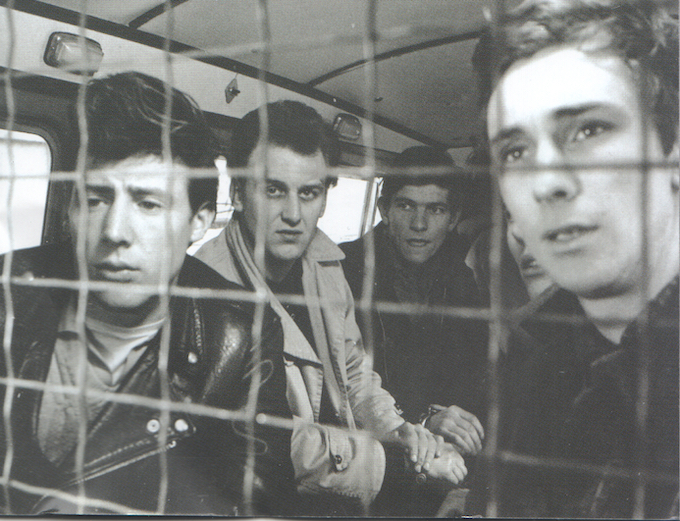
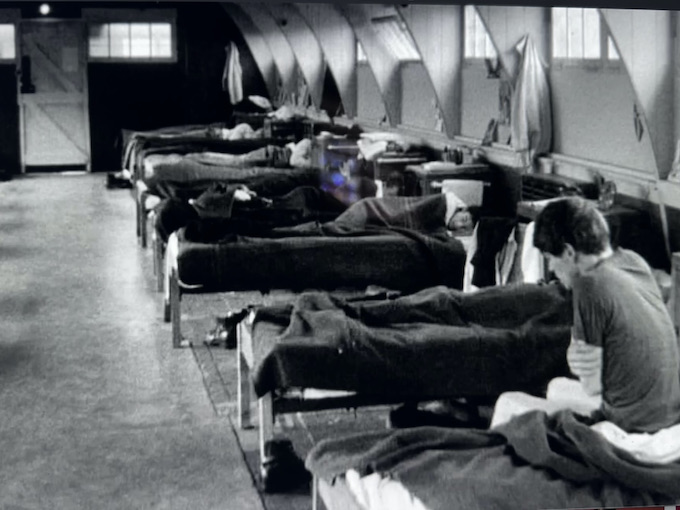
Colin Smith (Tom Courtenay) arrives at Borstal, a reformatory prison designed to rehabilitate young offenders (under 21) with strict military discipline, sport and gymnastics and learning basic workshop skills. He is handcuffed, and part of a group of six. They have to strip, change, and are put into large Nissan huts for twenty or thirty boys. Colin is surly, stroppy, rebellious and a smart arse verbally.
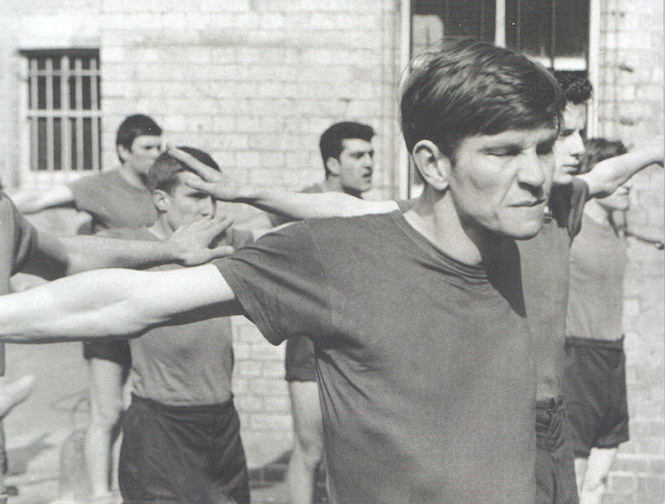
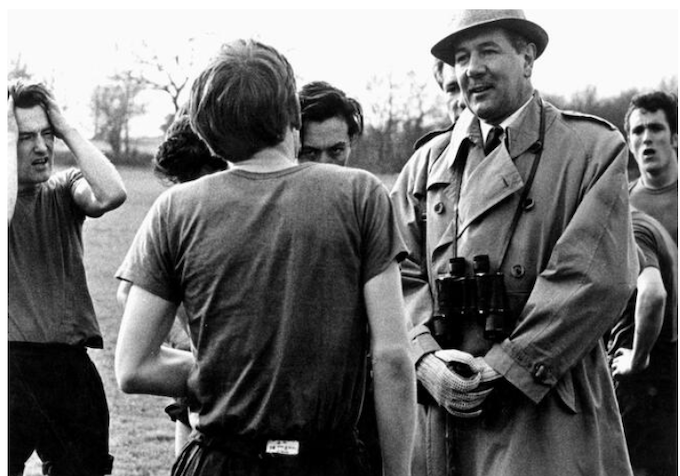
The governor (Michael Redgrave) is given to pompous talks (If you play ball with me, I’ll play ball with you) and is surrounded by a tough and burly staff, plus one newcomer to the system, Brown (Alex McCowan) as housemaster. The governor points to the example of Stacy (Philip Martin) the fastest runner in the house and in a semi-trustee position as house leader. The governor is an ex-runner and has arranged a forthcoming athletics contest with Ranley, a public school. He knows the head and chairman of the governors. He is particularly obsessed with winning a challenge cup for a 5 mile cross country race. Stacy is the hope.
Colin has an interview with Brown, who is into psychiatry rather than the regime of discipline and work. He switches on a tape recorder and does word association with a puzzled Colin, who announces his father is dead. When? The other week.
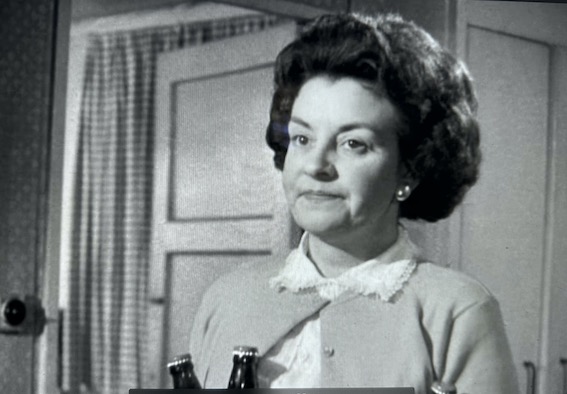
Back in time to a post-war prefab in Nottingham. Colin lives with his mum (Avis Bunnage) and younger siblings, and his dad is terminally ill. His dad refuses pills or medication, he doesn’t trust the doctor, preferring a herbal painkiller.
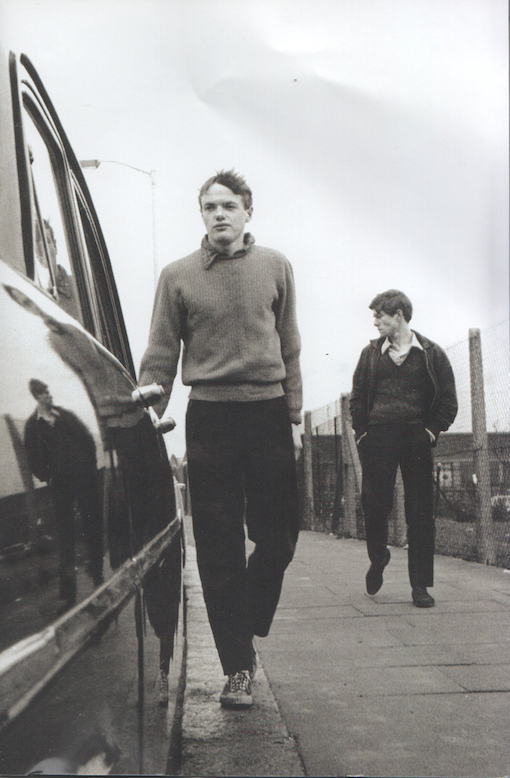
Colin hangs out with his pal Mike (James Bolam). We see them trying car doors until they find one open with keys in the ignition (1962? Maybe). They drive off and persuade two girls, Audrey (Topsy Jane) and Gladys (Julia Foster) to come for a drive to what looks like a deserted quarry.
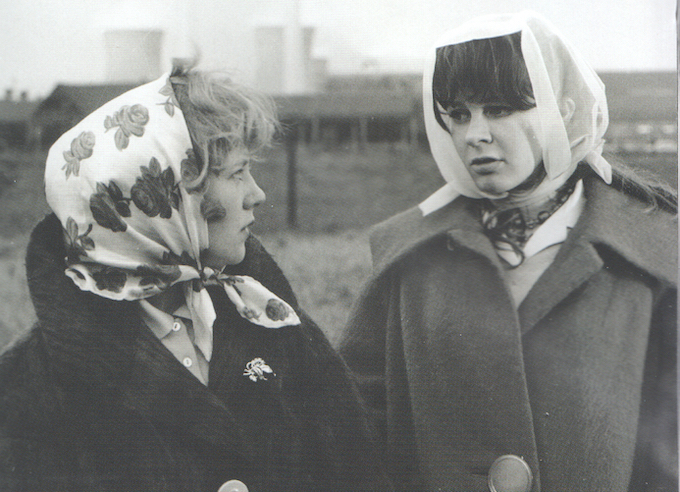
Colin fancies Audrey and Mike fancies Gladys, but the girls make their excuses and leave. They put the car back.
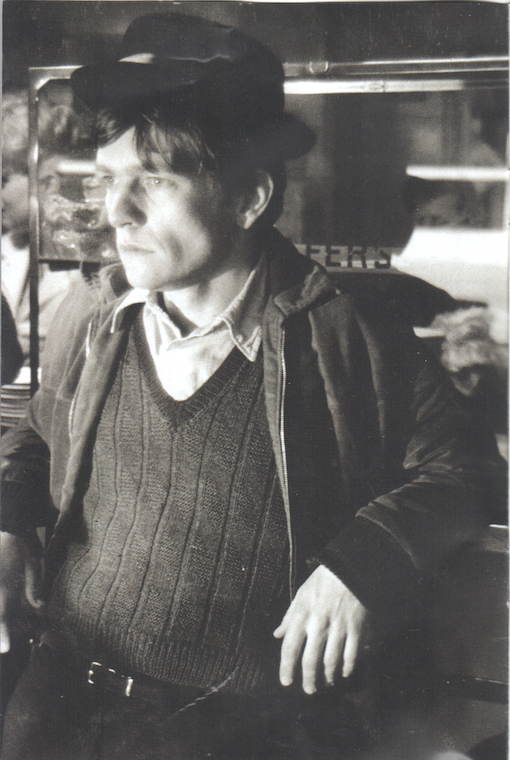
Colin keeps the hat and coat from the back seat.
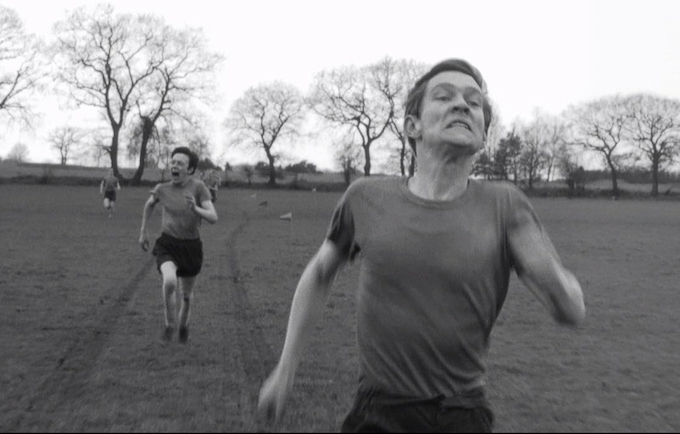
I may not have the switches in time right, but back to the Borstal, and Colin is on a run where he overtakes Stacy, the best runner and wins. The Governor takes notice, and decides to favour Colin. He gets moved from the workshop (probably symbolic) task of dismantling WW2 gas masks to the more pleasant work in the garden. Stacy hates him.
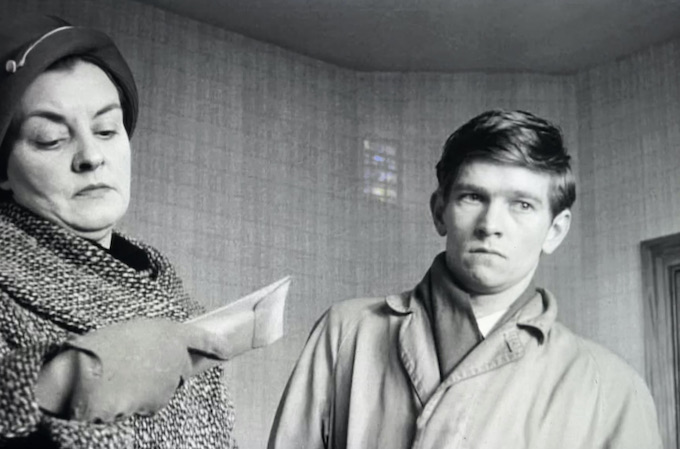
Back to Nottingham, where his dad has died. Mrs Smith and Colin go to the factory, where the insurance is paid to them in cash, £500. His dad earned £9 a week so it’s a small fortune. In modern terms it’s £14,000, but the other way of calculating it is ‘more than a year’s wages,’ so probably double that. Mrs Smith is just as stroppy as Colin. She reckons the insurance, which is probably compensation, should have been paid when her husband was still alive,
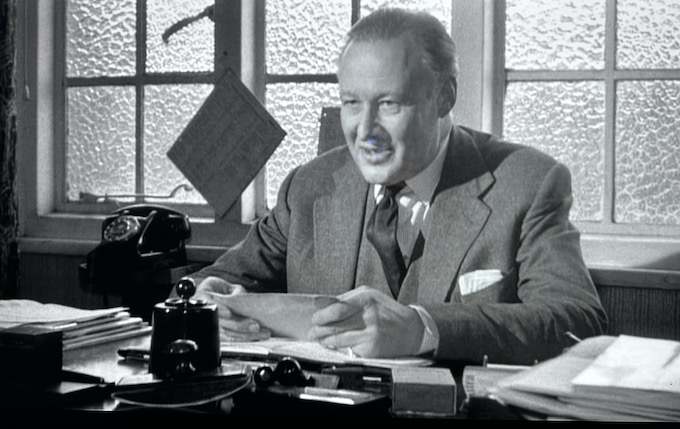
Colin is offered a job, but blames the capitalist system for his dad’s death. He says he’d burn the money.
At the Borstal, Colin gets into a vicious fight with Stacy. Stacy, by fighting, loses his ‘trusted’ status. The result is Stacy absconds. He is brought back and taken to a cell for a beating with a chain.
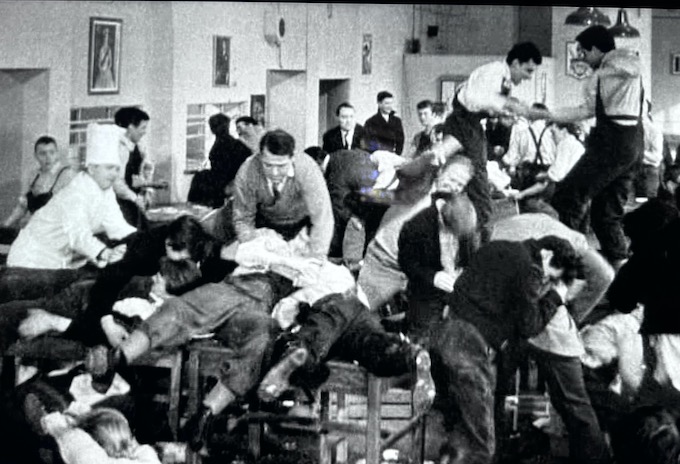
Over dinner, a riot breaks out. Even so, the avuncular governor decides to let the evening concert go on. Comic birdsong and dreadful Advanced RP singers. Colin is now taking over as ‘the runner’ which means getting up before everyone else for training runs.
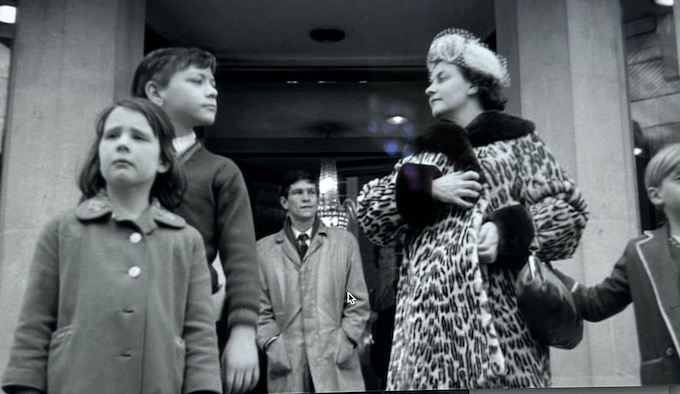
Back at home, Mrs Smith’s greasy boyfriend, Gordon is trying his luck ‘before his dad’s body is cold’ and he is succeeding. Mrs Smith goes out on a wild spending spree buying everything in sight. (We had lottery winners buy a new house around the corner. They bought three new Mercedes, a sports car, an S type saloon and an SUV. They lasted two years. They’d spent the lot.) The shopping spree is accompanied by cheerful jaunty music with whistling.
Back at the house, Gordon has arrived with a TV, one that can get ITV as well as BBC (You have to remember the era!). There is a mock advert for ‘Roller Roy’ with a song, which is hilarious, and it must be some kind of roll-on corset.
Mrs Smith gives Colin a roll of pound notes. He burns one.
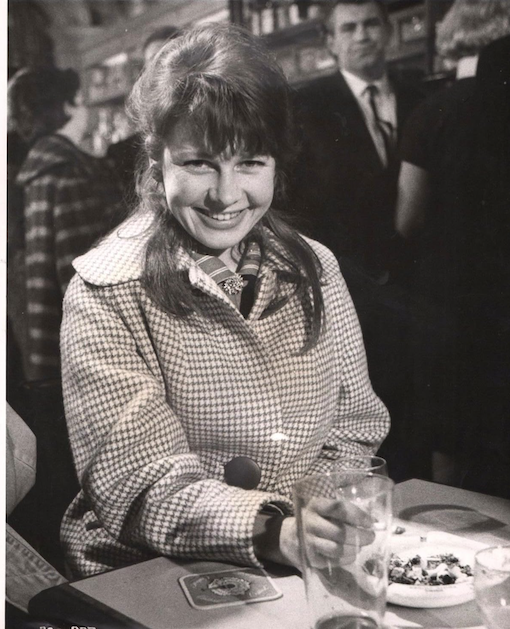
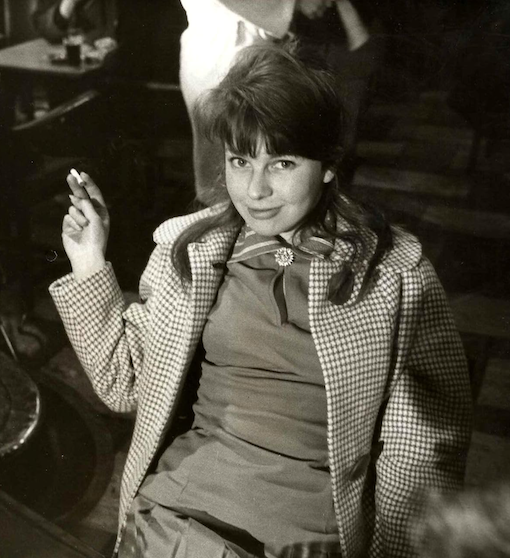
Topsy Jane as Audrey
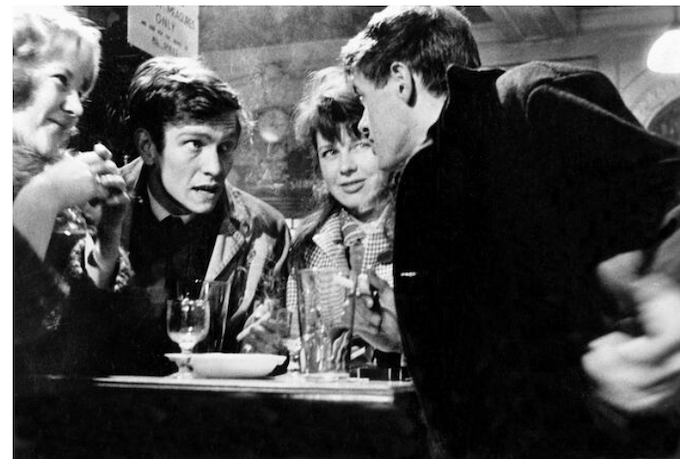
They’re with the girls in a pub, Mike nearly got refused service for looking under age, a pointer to how old they are. It’s pre-arranged. Colin and Mike have persuaded Audrey and Gladys to go to Skegness with them overnight. At the station, Colin buys the tickets. The film is laden with uncredited cameos. This is one.
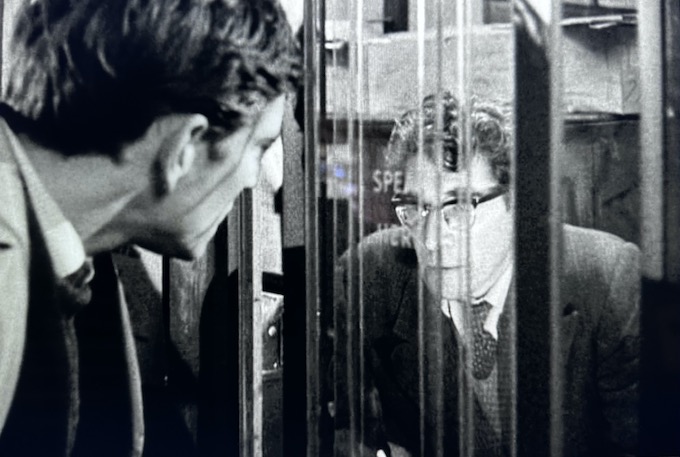
They catch the train, pull down the blinds, A snogging session starts, then Gladys switches on her transistor radio and they dance in the compartment to jazz. I think in 1962 it would have been pop, but it shows them young and having fun. They’re staying in a boarding house at £1 a room.
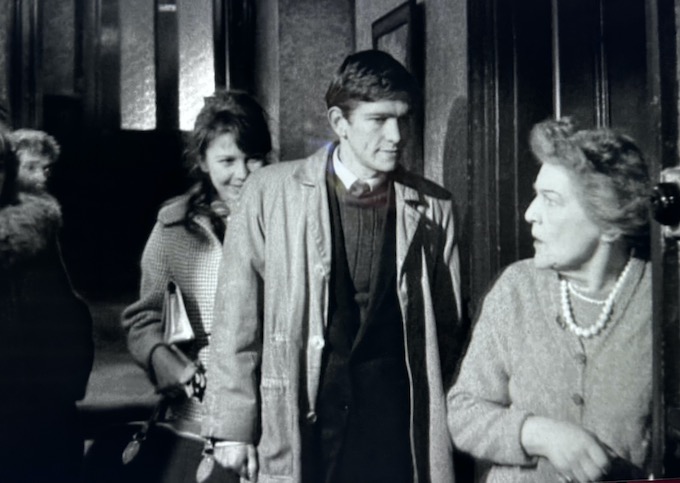
Landlady: Yer married are you?
Mike: People get married young nowadays.
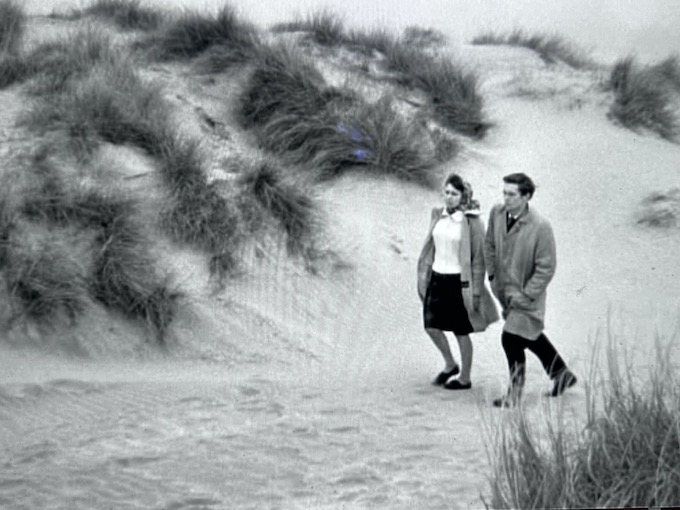
The desolate dunes at Skegness look even less appealing than industrial Nottingham but for Colin and Audrey it is a magic time, even if you need overcoats to fend off the North Sea winds on the beach.
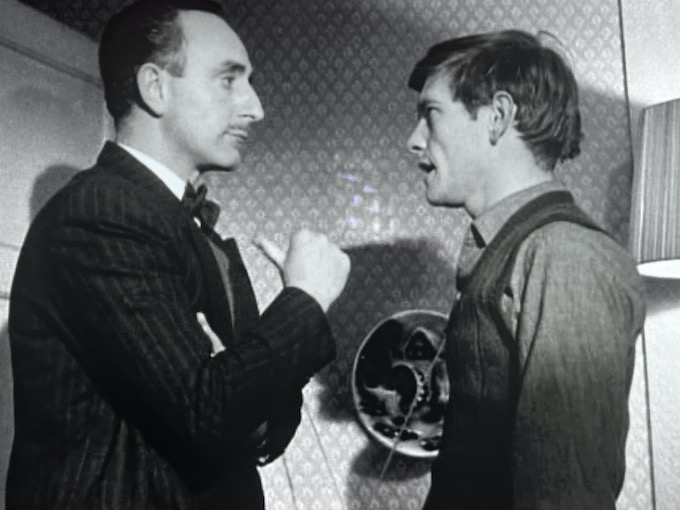
Nottingham again. Gordon has got his feet under the table and his bum in the bed. Colin and Mike are watching a classc 1962 politician pontificating on TV and laughing about him. Gordon comes in to tell them to turn the TV off. Gordon has an argument with Colin about who is “man of the house” or “gaffer.’ Colin gets told to get out and get some money.
Colin and Mike go out for a walk after the row, with a line which sums up Colin’s character.
Mike: If you won £75,000, what would you do first?
Colin: Count it.
£75,000 was the weekly top football pools win. It was a life-changing sum of money. It would be equivalent to around £2,000,000 now.
Colin and Mike saw an open window at the back of a bakery. They climbed in and stole the cashbox, which contained about £70. That looks like just under £2000 in 2026 ‘purchasing power.’
Mike thinks they could go to Skegness again with the girls, but Colin advises hiding it and waiting till any fuss blows over. He hides the cash in the drainpipe and puts the metal box under his mum’s aspidistra.
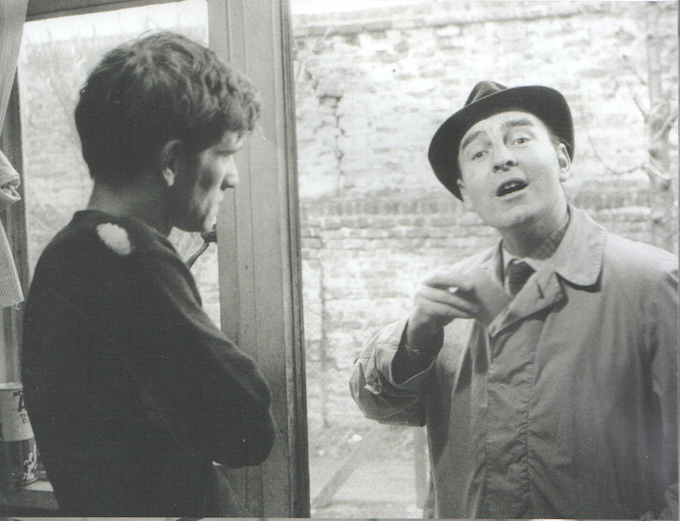
A detective arrives questioning Colin about his whereabouts, and they search the house and find nothing, leaving to V signs from Mrs Smith. At this point, I had a niggling irritation. No reason is given for suspecting Colin. Something should have been built in to give reason. Anyway, the detective comes back in pouring rain, now he says Colin was seen by a woman (really, we should have had that pointed, easy a single shot cut in as they leave the robbery).
As they argue on the doorstep, the cash is flushed out of the drainpipe. I had spotted that coming when he put it there, as birds kept building nests in our drainpipe tops, only to be flushed through to block them in heavy rain. Now we have wire over the top.
Back to Borstal. Mike arrives to join then after stealing a car, and is dismayed to find that Colin is the governor’s favourite.
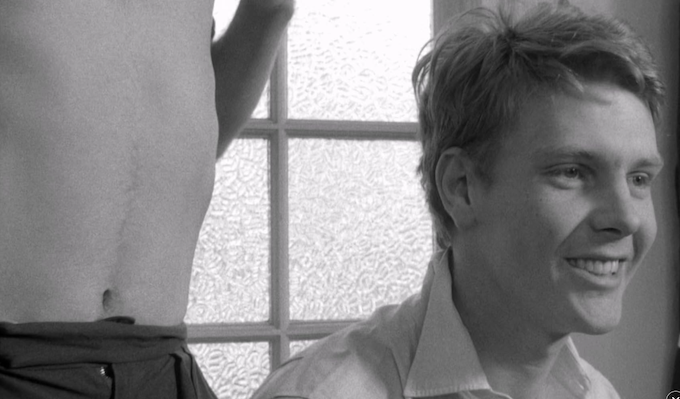
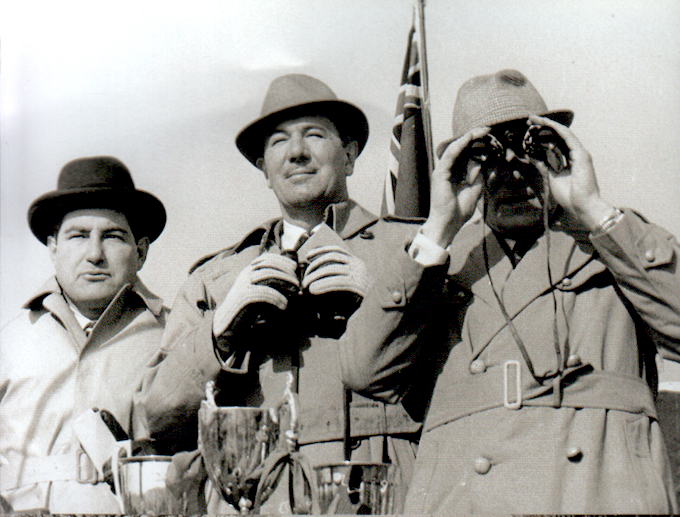
The public school boys arrive with Gunthorpe (James Fox) as the favourite to win. Colin passes him and is easily ahead.
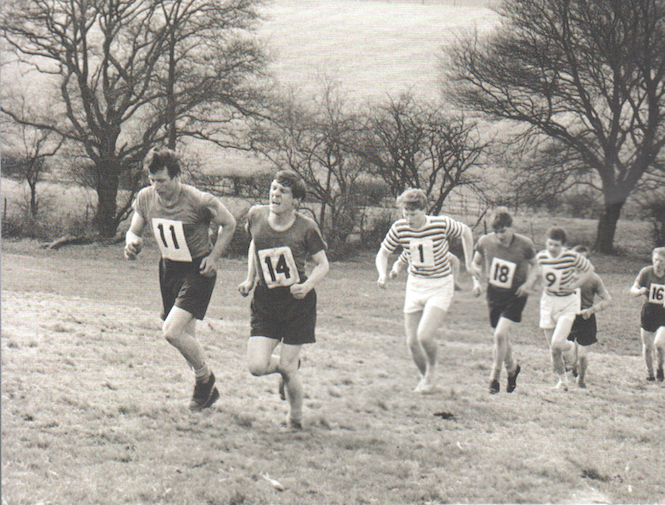
But as Colin approaches the final few hundred yards, the imagery that has been flashing through his mind takes over. He remembers his mother’s neglect, greasy Gordon, his father’s dead body, the taunts of his fellow inmates, the beating of Stacy, interrogation from the detective, the Governor, and Audrey. Just yards from the finish line, Colin stops, unmoved by the calls and protests of the his fellow inmates. He smiles defiantly at the Governor as Gunthorpe passes him and crosses the finish line to victory.
Colin is back to dismantling gas masks, now ignored by the Governor.
WHAT’S IT ABOUT?
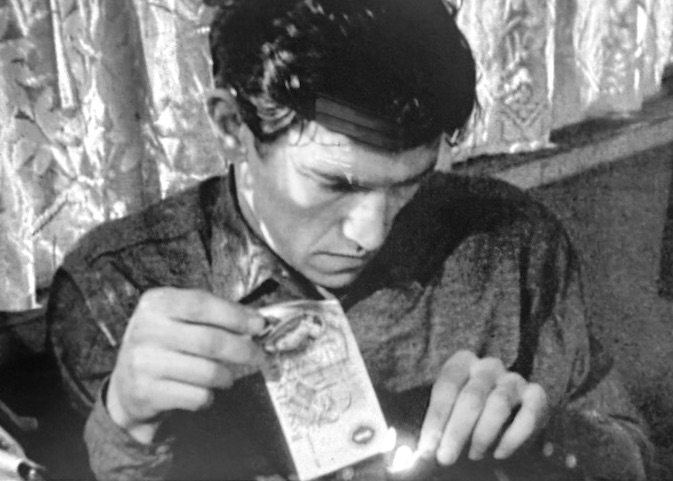
At one level, Colin’s refusal to win the race is cutting off your nose to spite your face. We’ve been prepared for it by Colin’s father’s death, refusing pills from the doctor, and by his mum splurging the insurance money in a binge. Then when Mum gives Colin a handful of pound notes he slowly and deliberately burns one.
It struck a chord. Colin’s age isn’t given, but at a guess ‘Birth year 1943’ like a whole swathe of rebellious rock stars. Colin represents the coming generation. The Borstal experience was probably not much worse than basic training for the army when conscription was still in force. The last call up was in December 1960, and the last discharge was May 1963. Colin has just missed conscription.
Then much of it is familiar, on a lesser scale, to school in the early 60s. Arbitrary discipline, uniforms, no first names, pompous middle aged men spouting platitudes at you, special treatment for the ‘blue-eyed boys’ who conformed willingly and identified with the system – we called them prefects. To their faces anyway. Cross country runs, PE, communal showers, meaningless tasks, sudden playground violence. A feeling of us v them. Colin decides to step outside that. Screw the system. Screw the privileges that it awards to those who conform and obey. I was never remotely considered for being a prefect at age 17, I would have declined it if offered. Our teachers might have called me ‘chippy’ (a chip on my shoulder). I was. Colin was.
The girls are an important addition. They are more than happy to nip off to Skegness for a night of sex in a boarding house. They’re not conforming to ‘respectable’ convention either. There is no trace of embarrassment about going into a guest house.
The film is an important step on the way to my favourite film of the era, Lindsay Anderson’s If ….
MUSIC
The music by John Addison has some contemporary jazz, and plays around with the tune of Jerusalem, and there is also a full-throated version by the Borstal lads. At the end we had subtitles on and it read ‘chariots of fire.’ Ding! The other most famous movie about runners (in the 1924 Olympics) is Chariots of Fire in 1981, with its hit theme by Vangelis. Was the title inspired by this film? In the early 80s we knew a poet and handyman and self-titled healer called Angus. No other name. He did a few odd jobs for us, never asking a price but saying we could donate what we wanted. Anyway, he heard the Vangelis record in our house, and ever after he’d say, ‘Can you play me the Long Distance Runner?’ by which he meant Chariots of Fire. He loved it. Was he confused or had he spotted an inspiration?
The title was strong in my consciousness. When we were doing ELT shows, we wrote a comedy script called ‘The Loneliness of the Long Distance Piano Player’ about an attempt to win a piano playing marathon. I was the trainer furtively pushing the pianist’s hand on the keys when he fell asleep.
LANGUAGE
The word ‘muppet’ is used. According to internet sources the word was coined by Jim Henson in 1970 to 1971. No, it wasn’t. However it’s not in the Shorter Oxford large two volume dictionary, nor in my three volume Websters. The online Etymology dictionary says it’s a mild British insult meaning ‘fool’. Another source says it existed in British English for decades before the Muppet Show.
I’m mildly surprised at ‘Hi’ as a greeting in England in 1962.
FILMS BY TONY RICHARDSON REVIEWED:
A Taste of Honey
Saturday Night & Sunday Morning (1960)
Tom Jones
THE 60s REVISITED REVIEWS …

The Six Five Special (1958)
Separate Tables (1958)
Our Man in Havana (1959)
Saturday Night & Sunday Morning (1960)
A Taste of Honey (1961)
The Frightened City (1961)
The Young Ones (1962
Some People (1962)
Play It Cool (1962)
Summer Holiday (1963)
Sparrows Can’t Sing (1963)
The Small World of Sammy Lee (1963)
Tom Jones (1963)
The Fast Lady (1963)
What A Crazy World (1963)
Live It Up! (1963)
Just For You (1964)
The Chalk Garden (1964)
The Carpetbaggers (1964)
Wonderful Life (1964)
A Hard Day’s Night (1964)
Rattle of A Simple Man (1964)
The Yellow Rolls-Royce (1965)
Gonks Go Beat (1965)
The Party’s Over (1965)
Be My Guest (1965)
Cat Ballou (1965)
The Ipcress File (1965)
Darling (1965)
The Knack (1965)
Catch Us If You Can (1965)
Help! (1965)
Doctor Zhivago (1965)
Ten Little Indians (1965)
Morgan – A Suitable Case For Treatment (1966)
Alfie (1966)
Harper (aka The Moving Target) 1966
The Chase (1966)
The Trap (1966)
Georgy Girl (1966)
Fahrenheit 451 (1966)
Nevada Smith (1966)
Modesty Blaise (1966)
The White Bus (1967)
The Family Way (1967)
Privilege (1967)
Blow-up (1967)
Accident (1967)
Bonnie and Clyde (1967)
I’ll Never Forget What’s ‘Is Name (1967)
How I Won The War (1967)
Far From The Madding Crowd (1967)
Poor Cow (1967)
Custer of The West (1967)
Here We Go Round The Mulberry Bush (1968)
The Magus (1968)
If …. (1968)
Girl On A Motorcycle (1968)
The Bofors Gun (1968)
The Devil Rides Out (aka The Devil’s Bride) (1968)
Work Is A Four Letter Word (1968)
The Party (1968)
Petulia (1968)
Barbarella (1968)The Thomas Crown Affair (1968)
Bullitt (1968)Deadfall (1968)
The Swimmer (1968)
Theorem (Teorema) (1968)
Medium Cool (1969)
The Magic Christian (1969)
The Rise and Rise of Michael Rimmer (1970)
Little Fauss and Big Halsy (1970)
Take A Girl Like You (1970)
Performance (1970)
Oh, Lucky Man! (1973)


Remember your poet, handyman and self-titled healer called Angus… who heard the Vangelis record in your house and often asked you to “play me the Long Distance Runner,” by which he meant Chariots of Fire?
The lyrics of the hymnal Jerusalem (sung by the Borsal lads in Assembly at the end of the Long Distance movie) contain the following verse:
Bring me my Bow of burning gold,
Bring me my Arrows of desire,
Bring me my Spear: O clouds unfold;
Bring me my Chariot of Fire!
LikeLike