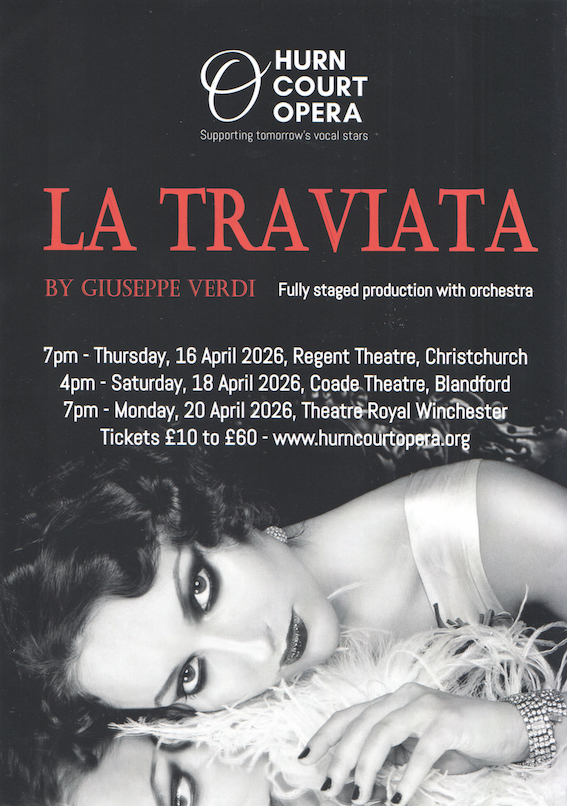
by Giuseppe Verdi
Libretto: Francesco Piave
Sung in Italian with English surtitles by Simon Rees
Directed by Joy Robinsoin
Conducted by Lyton Atkinson with the Hurn Court Opera Orchestra
Hurn Court Opera are a local secret. A friend alerted us to them, and told us that they sold out productions almost immediately. They were right, we got two of the last seats in a sold out house at the Regent, Christchurch. This is local, but it is NOT amateur:
Hurn Court Opera exists to provide quality- and crucially, paid – performance opportunities for emerging young singers.
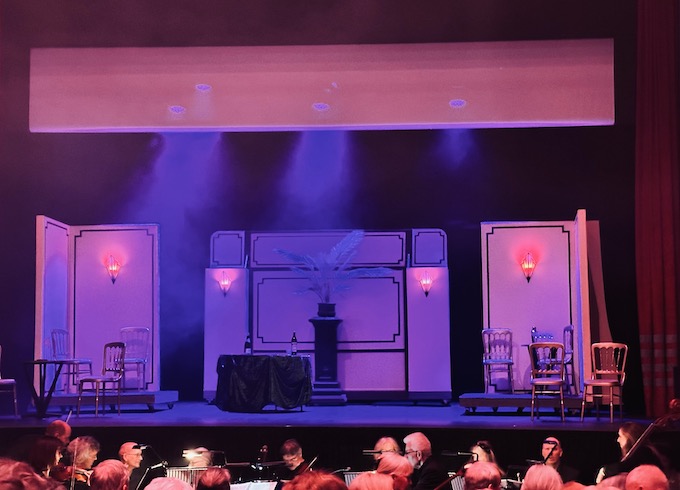
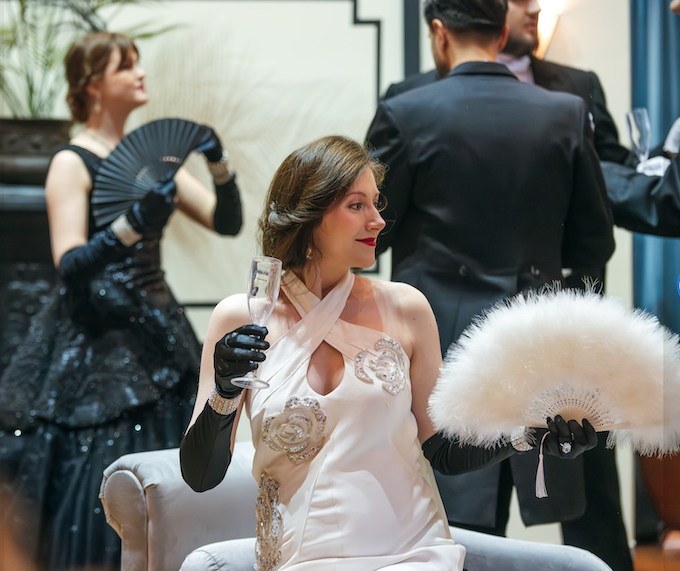
So it is professional. Full quality professional. They collaborate with Bournemouth Arts University, so that the Art Deco costumes were designed and made by the Costume degree course students. The setting is the 1930s with a revolving set.
La Traviata (The Fallen Woman) was first produced in 1853, and is based on an 1848 novel and an 1852 stage play, the Lady of The Caemelias by Alexandre Dumas. Verdi changed the names but maintained the French setting.
Violetta is a high class Parisian courtesan with TB (or in crude terms a tart with a heart). She commences a passionate and genuine love affair with Alfredo, a young aristocrat. They leave Paris and live in bliss in the country. Alfredo doesn’t know that Violetta is selling all her possessions to support them. His father appears, and orders her to give up Alfredo, as their affair is scandalous and will prevent his angelic daughter, Alfredo’s sister, from marrying. Violetta leaves Alfredo for his own sake, and returns to Paris and embarks on her old life, taking up with an unpleasant Baron. Alfredo appears and the men confront each other at a party. The entire last scene is her dying and her joy at Alfredo returning and his father forgiving her and embracing her as his daughter. Then she dies.
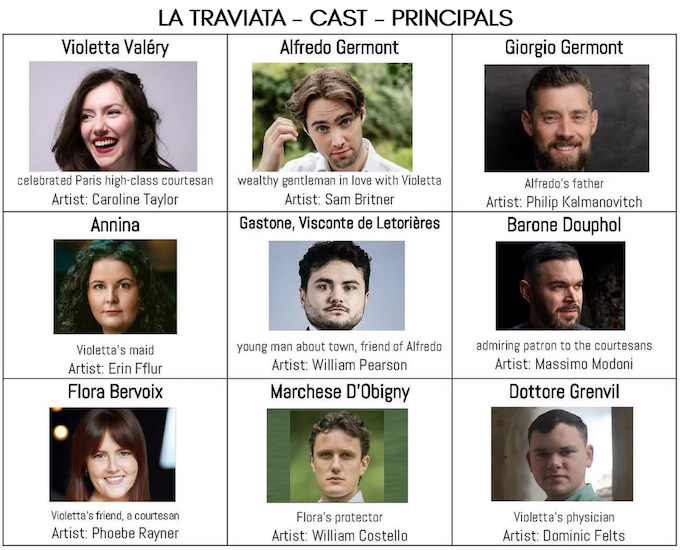
Caroline Taylor, in the lead role of Violetta, has a long list of prizes and awards to her name, and was praised in the Times for her ‘glittering soprano.’ She was phenomenal. One of the points I have to make is that Hurn Court Opera’s cast are the ages Verdi intended them to be. We are not going to see a statuesque international star in her fifties playing a young woman!
All the better for it. Sam Britner plays Alfredo, and Philip Kalmanovich plays his father. Those are the three lead roles, and all of them command the stage and sing flawlessly. The confrontation with the father has particularly powerful singing.
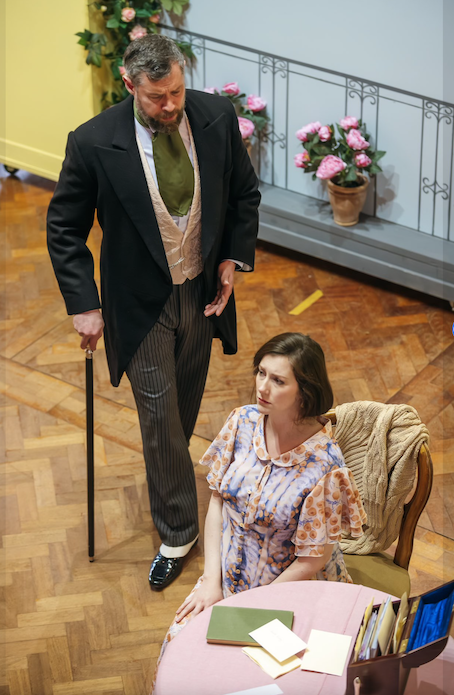
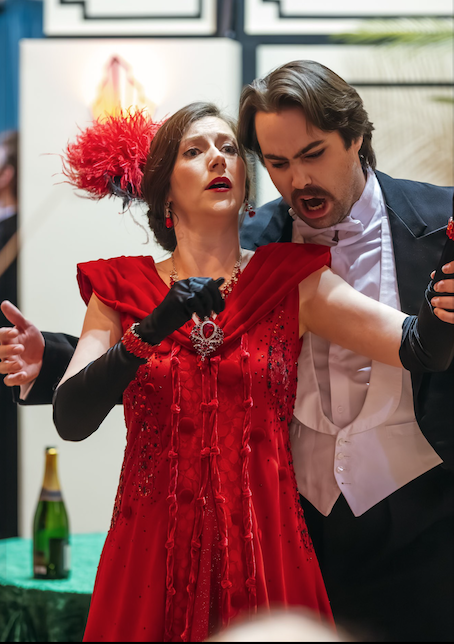
LEFT: Philip Kalmanovich as Alfredo’s stern father with Violetta (rehearsal photo)
RIGHT: Sam Britner as Alfredo with Violetta (rehearsal photo)
The melodies are strong, and many sections are familiar, even to me. The small orchestra worked perfectly, and so much is integrated with the singing on stage, particularly ausing.
As readers will know, I review over twenty plays and musicals a year, I review rock, jazz and classical music too. Until now I have never done opera. First off, I can’t afford it in London. Then it’s not a musical area I’m usually drawn to. I blame my dad who took me to every light opera / Gilbert & Sullivan production he could. It gave me a love of stage, costume, set and lights, but not a love of the music.
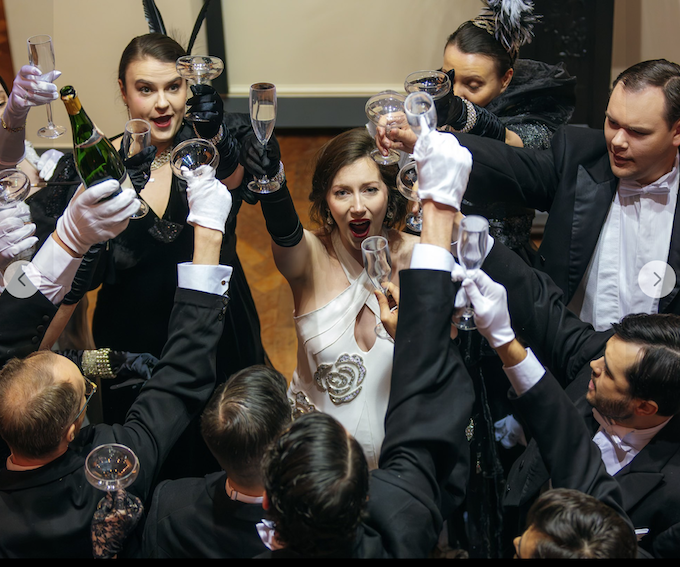
I was converted tonight. I will add that I will try to see their every production, yet it doesn’t lead me to want to hear opera on record or to watch it on DVD or TV. It’s so very much a live experience. The combination of skills is the thing: singing, acting, dancing, and doing it all in Italian too. Then they had a brilliant cameo by the gypsy dancer (Aimee Williams, a dancer, not a singer).
To us, the style adjustment was quick. Acting is a totally different style to theatre. It can only be played “large” and totally impassioned. We were grateful for the sur-titles scrolling above, and a thought was at the full soprano end of vocals, we would probably have needed them even if it had been in English. The issue with opera is that the plot and actual text, the book, is “operatic” – it is not great writing, and lines like ‘God gave me remorse’ sound better in Italian than in English.
I wondered why both major set changes were done on an open stage as the Regent is proscenium and the curtains are there. However, I guess the other theatres will be open stage and it’s best to be consistent. Also, the audience can get restless or stand up when curtains close, assuming it’s an interval.
Even the programme is excellent.
AN ASIDE
Why I was always wary of La Traviata.
Back to the origins of La Traviata based on the Lady of the Camelias. In the novel, the courtesan with TB is called Marguerite Gautier, which was changed to Violetta Valéry in the opera. In the 1970s, we did an ELT sketch show every week, but once a month we did a play. Twice a year we did just Act One of Peter Barnes The Ruling Class (I think it works well with Act Two simply deleted!) In the play the raving mad Earl of Gurney (played by me) thinks he is betrothed to Marguerite Gautier from the novel. His uncle, Charles, decides to marry him off to Grace, an actress and singer (courtesan?) who happens to be Charles’ mistress. Grace first appears in costume:
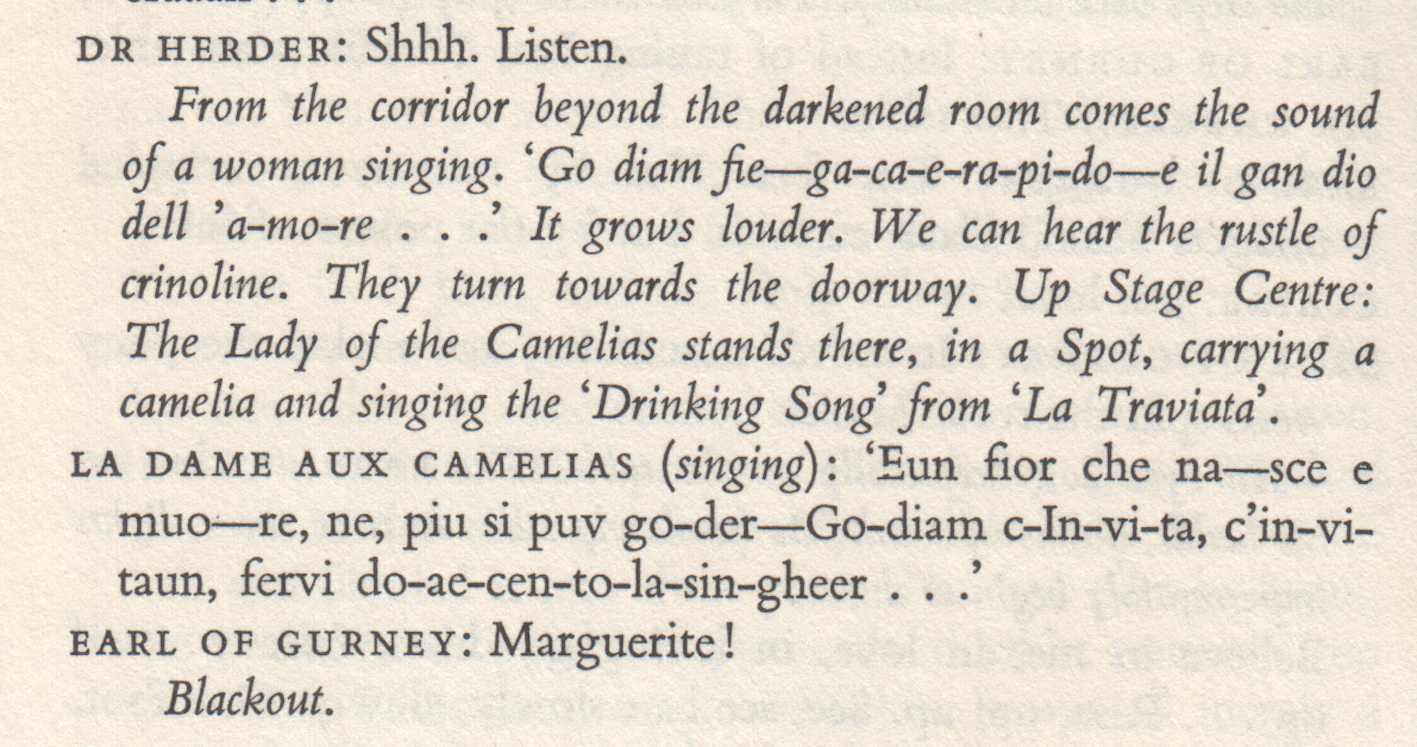
Thus Barnes combines the play and the opera. It gave us a major problem. While Karen (as Grace) could manage Wouldn’t It Be Lovely in her role as Aladdin in one annual pantomime, she had no chance of singing opera. Solution. John Curtin, playing the surly butler, Tucker, had a partner who was a (retired) Brazilian opera singer. So John played piano, and she sang in the wings, and then Karen emerged in the Lady of the Camelias costume. She sang a far longer part than Peter Barnes intended too (quite possibly a different one) and the top note to me was slightly off and might have cracked a wine glass. She insisted on spoiling the illusion by emerging to take a bow. And another. And another. The orchestra sounds vastly better than piano too.
Fortunately tonight restored la Traviata. I won’t have to avoid it anymore.

