1962
Directed by John Schlesinger
Script by Keith Waterhouse & Willis Hall
Based on the novel by Stan Barstow (1960)
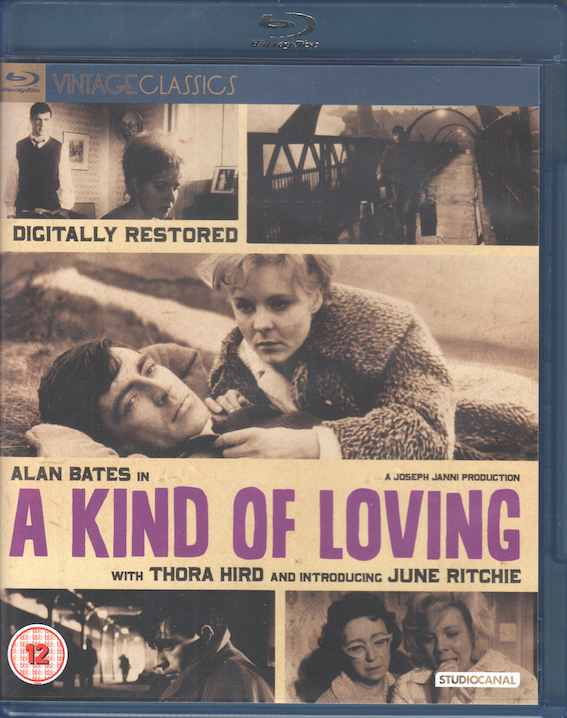
CAST
Alan Bates – Vic Brown, a draughtsman
June Ritchie – Ingrid Rothwell
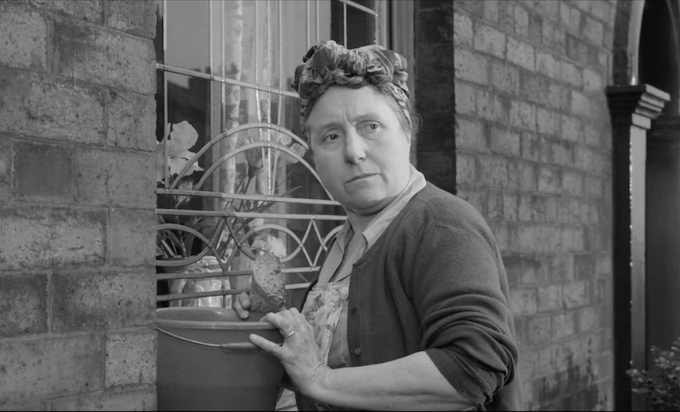
Thora Hird – Mrs Rothwell, Ingrid’s mum
with
Bert Palmer – Geoffrey Brown, Vic’s dad
Gwen Nelson – Mrs Brown
Patsy Rowlands – Dorothy
Pat Keen – Christine Harris, Vic’s sister
David Mahlowe – David Harris, Vic’s brother-in-law
Jack Smethurst- Conroy
James Bolam – Jeff, a pal
Fred Harris- Althorp, the boss
Leonard Rossiter – Whymper, head of draughtsman office
Peter Madden – Registrar
These 60s retrospectives really need to be seen where possible in the BFI (British Film Institute) restored series. We had a newspaper cover-mount DVD from 20 odd years ago, but the clarity of the BFI digital restorations on Blu-ray is stunning. You can see the lighting, the reflections, the crispness in a way that was absent when I first saw it as a TV re-run or on the DVD.
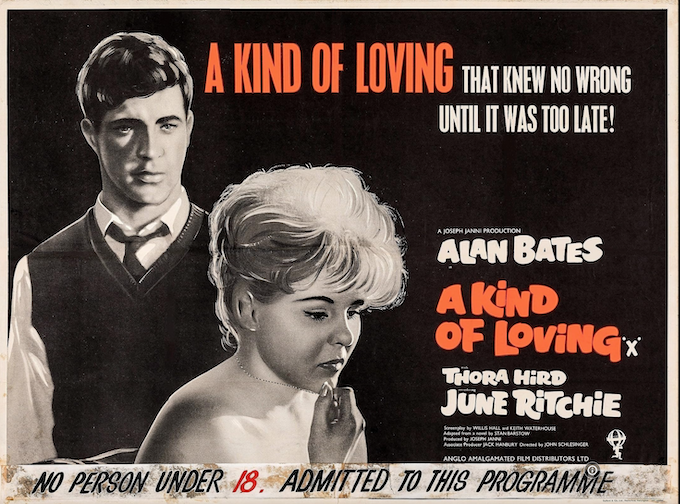
This defines the late 50s / early 60s kitchen sink film, though it’s near the end of the genre. It was X-rated. Over-18 only. I was too young to see it at the time, but we knew what happened up north in kitchen sink films. We read the books. Yes, she will get pregnant. That’s a given. It was a dire warning to us all. There were so many films where pregnancy was the plot hinge, potentially leading to misery, that it’s a wonder anyone had sex at all. The makers were so aware that it was edgy that they invited the head of censorship to visit the set and preview shots, so it could be shown uncut.
It cost £165,000 to make and grossed three times that in Britain. They had to pay to extract Alan Bates from a Broadway production of The Caretaker.
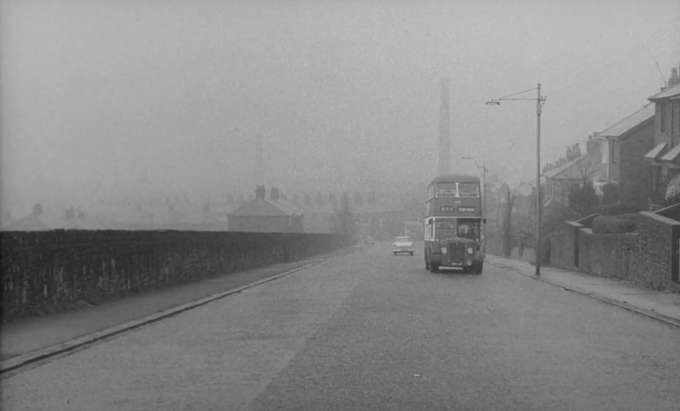
It was filmed in Bolton, Preston (the arcade we see several times is in Preston) and Greater Manchester with an excursion to St Anne’s-on-Sea for the honeymoon. Studio shots were done at Shepperton, so I guess that means all the interiors. It’s meant to be Bolton, because they go to watch Bolton Wanderers playing.
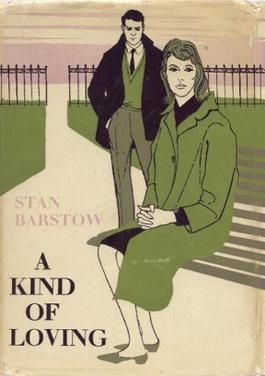
I’m somewhat dubious on the authenticity of accents overall. It’s set in Lancashire. Most are “generic Northern”, with at least a couple of minor RP slips by Alan Bates, though he is from Derby, and that’s East Midlands. Thora Hird, born in Morecambe, stands out as authentic Lancashire, and June Ritchie is from next door, Blackpool. That generic north accent can happen when the setting is Lancashire and the original novelist Stan Barstow was a Yorkshireman (from near Wakefield) and both scriptwriters, Keith Waterhouse and Willis Hall are Yorkshiremen from Leeds. The script is as you would expect, excellent.
In the script, Ingrid is 19. June Ritchie who was 21 at the time looked right. We assume Vic, played by Alan Bates is early 20s, though Alan Bates was 28 and looks it or even older. It’s 1962. I’m a post war baby. My sister was an early war baby, and many of my friends had siblings 6 or 7 years older because of the war intervening. So it’s not my generation, but one from the era just before and one I recognise.
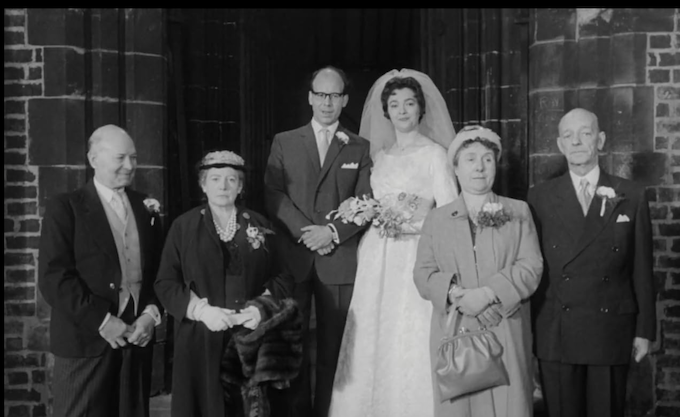
It starts with a wedding, Vic’s sister Christine is getting married in the full white wedding with a glorious sequence of realistic film of those gathered to watch. She is doing it properly. Note her husband’s family on the left in morning dress, and her and Vic’s mum and dad on the right. Her new husband David has (gasp!) an RP accent, so is posh. They are moving straight into a new flat.
We know Vic isn’t conventionally proper because a very early scene shows him with a “girlie” magazine from Paris. He carries it around with him. IMDB points out that the magazine was filled with shots of topless models. This is one of the first instances in British cinema of showing bare breasts.
The mill setting rings bells. I worked in the summer holidays in a large motor wholesalers when I was fifteen. Yes, the typing pool was shut away with doors to keep out passing blokes. They were not to be chatted to by the lads in brown dustcoats working in the warehouse. The singer in our teen band a couple of years later was an apprentice draughtsman in a large drawing office and proud that he went to work in a shirt and tie, not overalls.
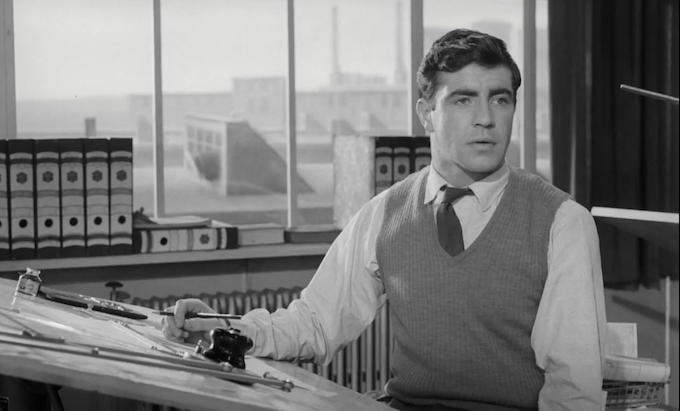
Class will rear its head. It’s set in the North with a capital N.
So Vic lives with his mum, dad and younger brother in a terraced house (though one with an elaborate front door and front window). His dad is an engine driver. So was my grandad. They weren’t elite and highly-paid in 1962, but they were skilled. Vic has stepped up by getting a white collar job. So did my dad. These Northern streets in all these films have young kids filling the background of shots playing games on the cobbles.
Ingrid is a typist, and there’s a whole hierarchy there I remember from the girls at youth club. The punch card operators left school at 15, and dreamed of being typists who left at 16. The pool typists in serried rows of desks dreamed of being shorthand-typists who probably left at 17 or 18, or just had better GCEs. Secretaries were an elite. In the late 60s you needed higher A level grades to do the one year secretarial course at our local college than you did to go to teacher training college. Ingrid lives with her mum in a 1930s semi-detached house with bay windows up on the hill. This is clearly a social step up from the turn of century terraces. Fine lines were drawn. (That was not only in the North).
I said that Ingrid lived up on the hill. 1962 was a year for running and runners. Poor Alan Bates has long runs up and down hills, terrifying runs and leaps down very steep slippery stone steps in the rain. He had long runs over wet cobbles and up park slopes in the rain and mist (yes, well, it was filmed in Lancashire where rain and mist prevails). I’d have thought it a stunt double job, and hoped for his sake there weren’t too many retakes. The Loneliness of The Long Distance Runner (link to review) was also about running in 1962. James Bolam plays “The best mate” in both films, to Tom Courtenay and to Alan Bates.
Vic’s had his eye on Ingrid for some time. There’s the pantomime of catching her bus, then asking to borrow 3d for the fare to start a conversation. It’s fascinating to see how tentative are the moves he makes before eventually asking out, as are the rituals she follows to avoid looking ‘forward.’
Sexual intercourse began in nineteen sixty-three
(Which was rather late for me)
between the end of the Chatterley ban
and the Beatles’ first LP.
Philip Larkin
But it’s 1962. The world did change around 1964. The Pill arrived on the scene for starters. Vic and Ingrid edge towards each other so slowly, a brush of the hand picking up her glove … yes, gloves were there, but it is colder up north.
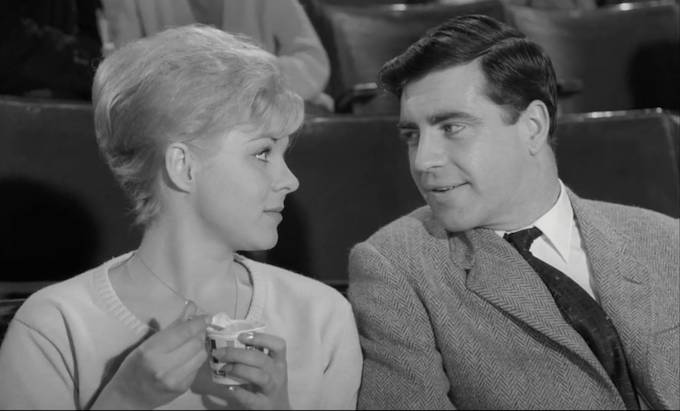
Starting to put an arm along the back of the seat without quite touching. He even buys her an ice-cream tub in the Plaza cinema.
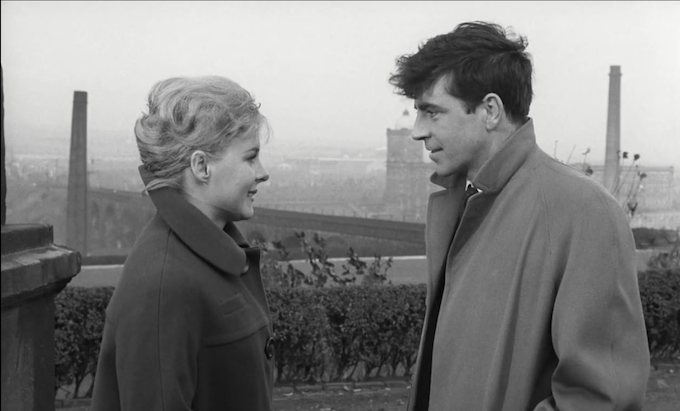
June Ritchie as Ingrid, Alan Bates as Vic
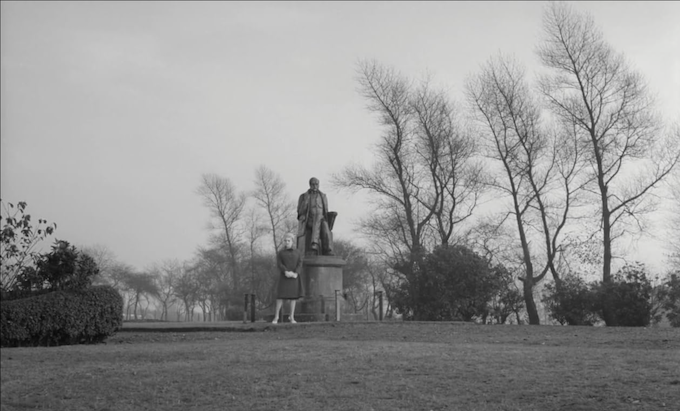
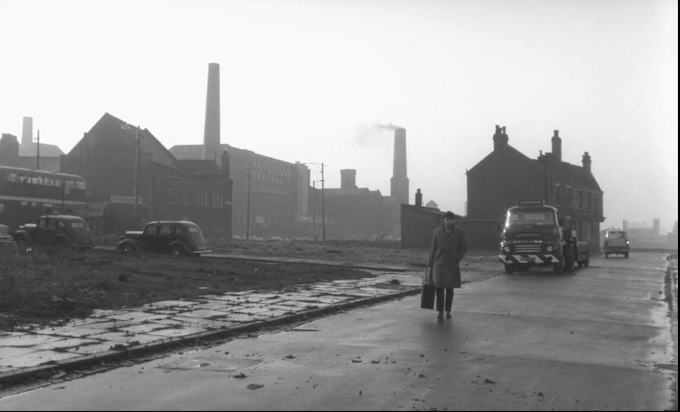
The relationship develops gently. There is the obligatory ‘Romance in an Industrial Landscape’ shot common to all kitchen sink films.
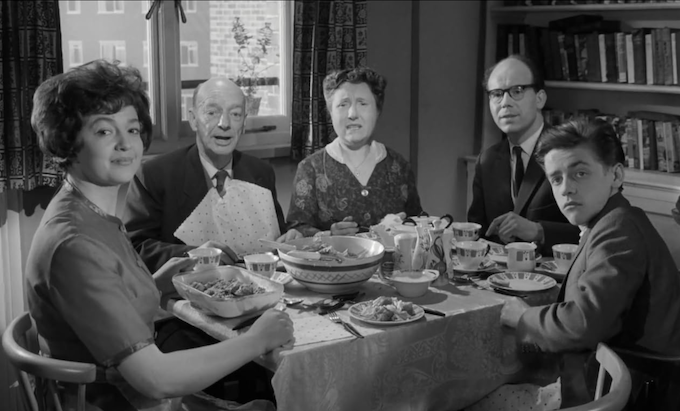
Look at the bookshelf. David (brother-in-law) must be an intellectual
We know it’s getting serious when a gleeful Vic deserts a family Sunday lunch at his sister’s to meet Ingrid in the park.
The other thing was the separation of the sexes. Vic is appalled when she turns up with her best friend Dot for a date, and exasperated when the girls keep stopping to look in shop windows. Dot has tagged along and is mouthy, offering revelations about Ingrid’s past romances. Alan loses his temper.
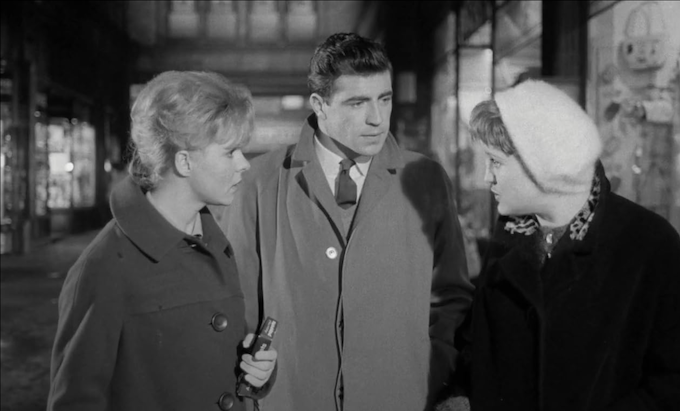
It causes a major row. (I had to laugh because Karen will stop to look in a window without telling me and I find myself addressing remarks to a stranger walking on next to me).
Then in a cafe Ingrid’s chattering away about a TV soap and Vic isn’t listening to a word but looking ruefully at a table of blokes who must be discussing stuff he would be interested in like players from Bolton Wanderers. That had shifted by my era though I guess not for everybody. I was much happier chatting to girls than my male old school friends, though I noted that some seemed uncomfortable with women. Their ideal evening was in the pub with other blokes. Mine was in a theatre, cinema, Chinese restaurant (3 courses for 5/-) or discotheque with a girl. Vic is what they called in the 70s an unreconstructed male. He’s torn between sexual desire and boredom at any female initiated conversation.
When they finally move towards a sexual relationship there’s the condom scene. They were not called condoms in the 1960s, but more likely contraceptives, Durex, johnnies or ‘a packet of three.’ To Ingrid they’re ‘Have you got “something”‘. It is not to be named.
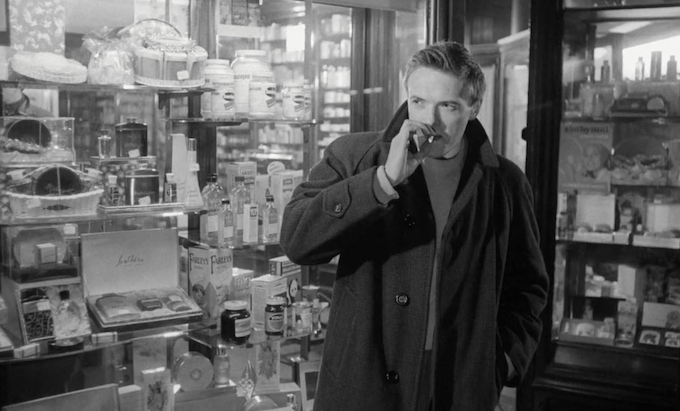
Vic is with his friend Jeff (James Bolam) outside a chemist’s. Jeff points out that a male chemist is serving, so Vic goes in and a woman emerges from the back to serve him. He buys a bottle of Lucozade. My semi-generation was less reticent, I think, but I can remember going into a chemist’s with the same purpose and my headmaster (a couple of years after I left school) was waiting at the counter for a prescription. I bought a comb. Plot point: barbers usually sold them. It was the meaning of ‘Do you want anything for the weekend? as you paid for the haircut. A friend defined Bournemouth gentility by telling me of such a conversation on a Friday. He answered, ‘Yes, a packet of three.’ The hairdresser responded ‘Has sir remembered that Monday is a Bank Holiday?’
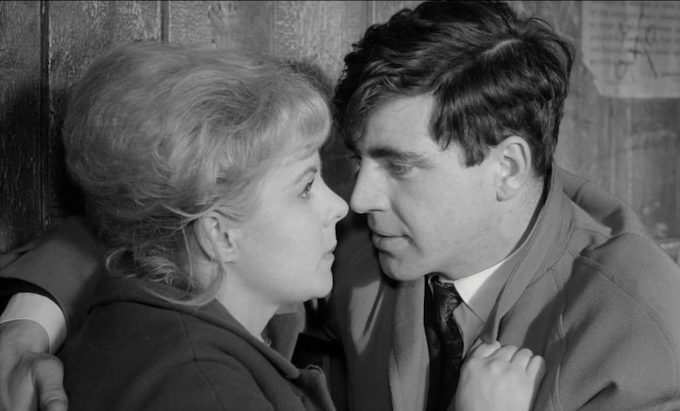
The failure to obtain condoms is a crucial plot point. I had feared the sex scene would be in a shelter in the park in daylight – just looking at it you can smell the dog pee.
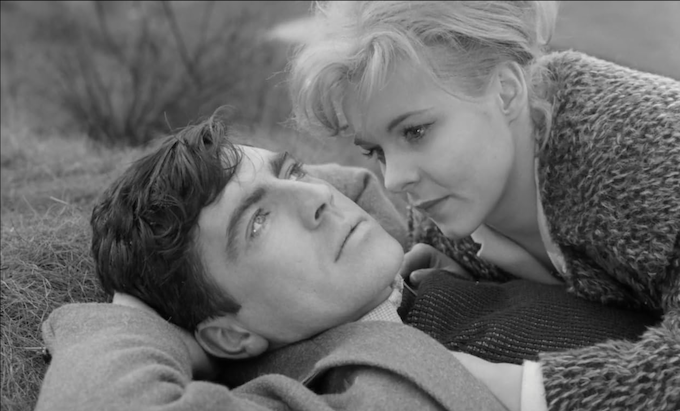
Then you wonder if it’s going to be on the grass in the open air. It doesn’t look very private,
However it’s going to be at home when her mum’s out. That’s in the living room. She decides she is going to ‘do it.’
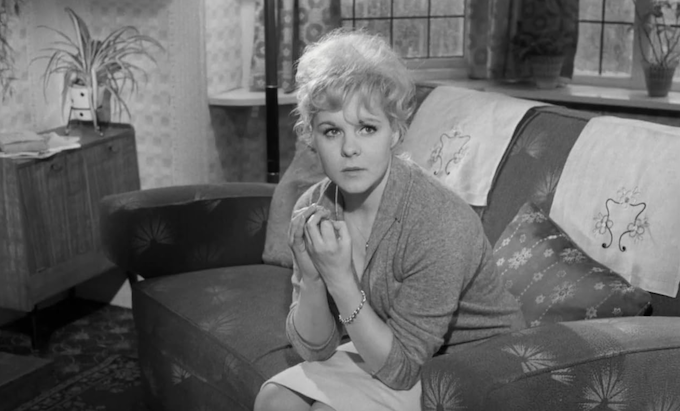
She finds his dirty pictures book and is ‘strangely moved.’
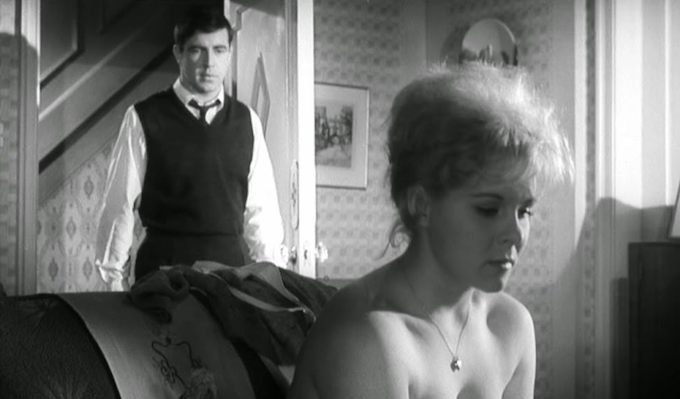
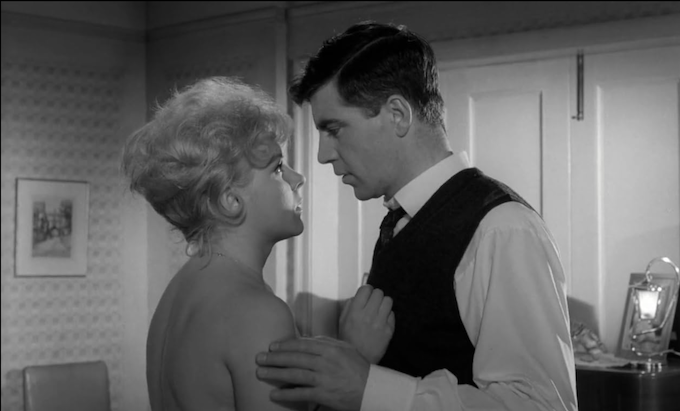
Vic is sent upstairs to wait in the bathroom while she disrobes completely on the sofa. This is why it was X-rated. While she never does a frontal shot, it was highly explicit for 1962. Alan Bates never has to disrobe, but never mind, Women in Love was coming soon where he got to wrestle naked with Oliver Reed. It’s poor etiquette for her to strip off but him not, but then a male frontal would have been a ban.
We wondered why the curtains were left open, but they had net curtains, and we supposed that closing curtains in daylight might alert neighbours. The curtains are closed in the post-coital scene. He’s having a fag (obviously) and they both look miserable.
After that, he stops seeing her so often. It’s fear, no terror, of commitment. she waits to meet him and says ‘Is it because you got what you wanted?’ He denies it. I suspect it was true. They break up. He prefers drinks with the lads.
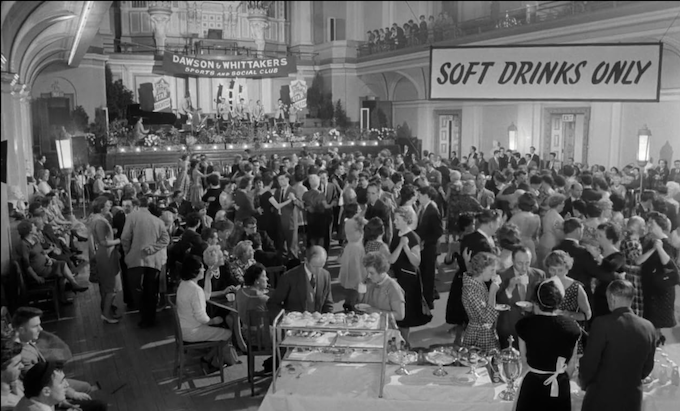
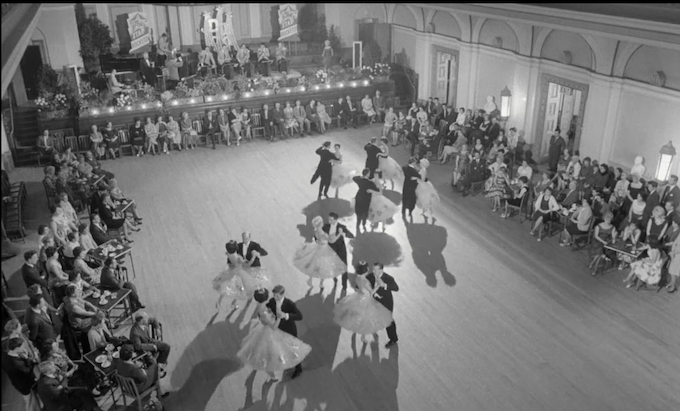
He sees her again at the firm’s dance – a marvellous early 60s recreation, with the firm’s formation dancing team, a director’s shot here with hordes of extras. Also known as ‘A money shot.’ The boss goes round asking everyone if they’re having a good time. The Works Outing, the Works Dance, were features of the period.
She has something she needs to tell him nin private. I don’t think we need avoid plot spoilers here. Everyone watching will have guessed. He will do the “right thing.”
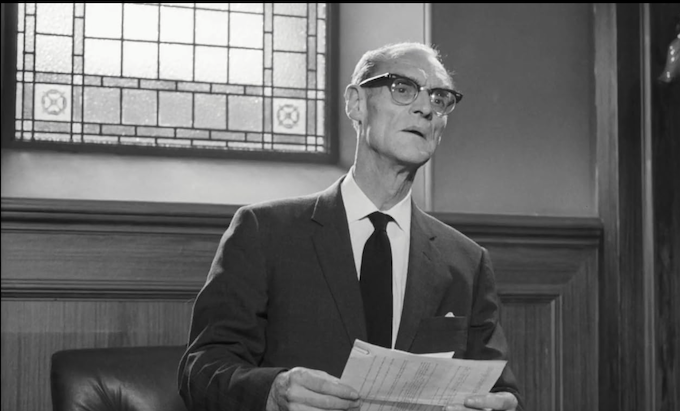
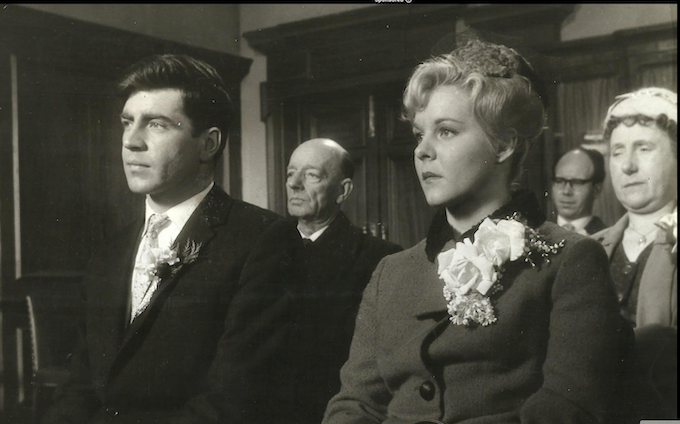
The Registry Office is a scene of misery and angry parents. Her mum, played by Thora Hird is domineering and looks down on him. We were married in Poole Registry Office. A fox hunting painting behind the registrar was slashed and hanging in shreds and the registrar said how nice it was to marry under-65s for a change.
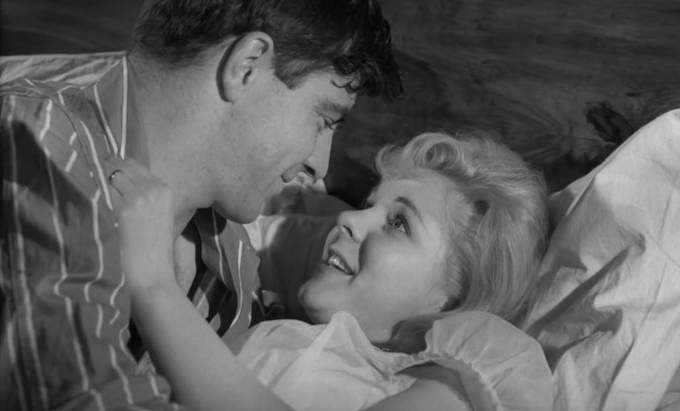
Off they go to a honeymoon in St Anne’s-On-Sea, so only a few miles away. My co-author Bernie Hartley was from Blackpool and said the majority of visitors were from no further away than the rest of Lancashire. I note that he wants her to take off her nightdress (we don’t see it) but resolutely keeps his pyjamas on. He shows her an instruction manual and she encouragingly says she didn’t think he’d need one. Judging by the first time, he does.
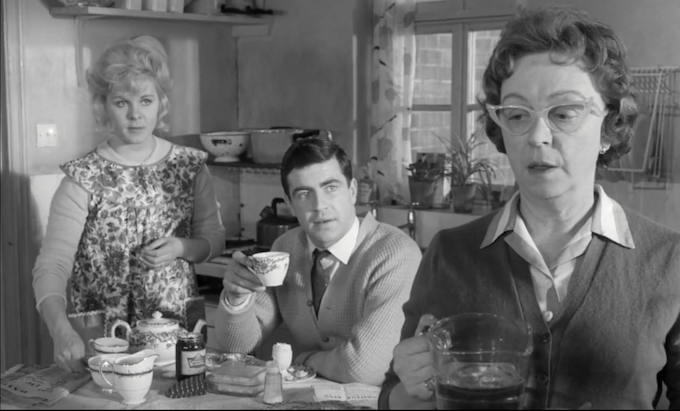
Things do not go well. Mrs Rothwell, the disapproving mum, has her rules and she has a compliant daughter, Vic is incensed at being told he can smoke anywhere in the house but not in the bedroom. Seems fair to me, even over-liberal. Mrs Rothwell makes no secret of her distaste for Vic, not even greeting him at breakfast.
But Vic is champing at the bit. A telling scene is when his dad is playing trombone in his large brass band in the town hall. He is to be a soloist. Ingrid doesn’t want to go to the concert. The camera shows the family in a row watching the concert, then there are two empty seats. Vic and Ingrid’s. We cut to Vic’s evening instead in front of the tellee with Ingrid and her mum.
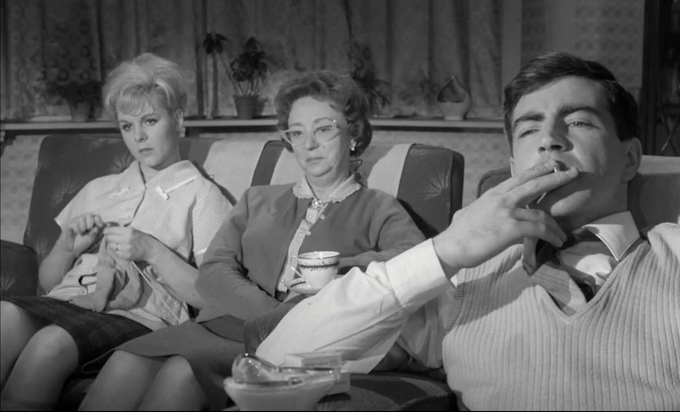
He can’t afford to buy or rent, and they’re stuck with over-bearing Mrs Rothwell.
The climax is when Vic arrives home some days later to find the house empty. He has no key. The neighbour tells him that Ingrid fell down stairs and was taken to hospital. Mrs Rothwell didn’t phone him to tell him. At the hospital, she has miscarried and he is told he can’t see her until visiting hour at 7 pm the next day. Hospitals were like that.
When she gets out of hospital, we fast forward three months. She is still declining to have sex with him.
There is a major row over a new coat, which he’s too mean to pay for. He storms out and goes on a mighty drinking pub crawl binge with the boys.
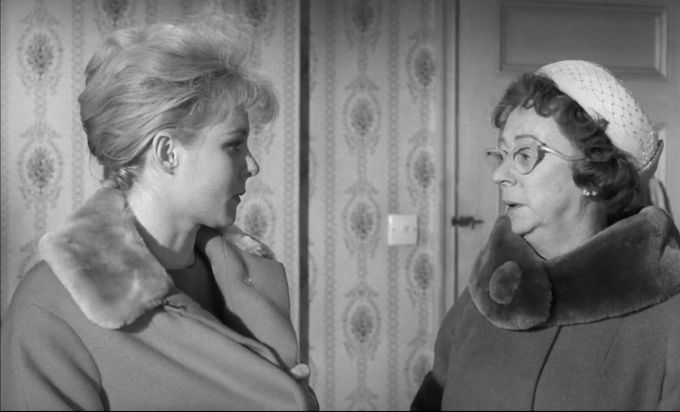
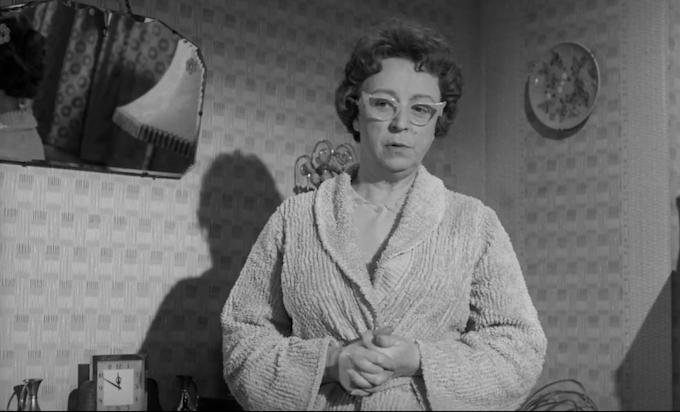
When he gets back Mrs Rothwell opens the door, Ingrid is in bed. Vic vomits over the back of the chair in the neatly kept parlour and finds Ingrid has gone in with Mum and they have locked the door.
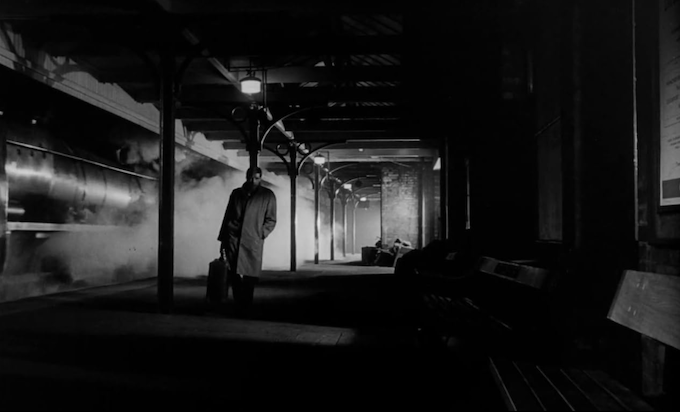
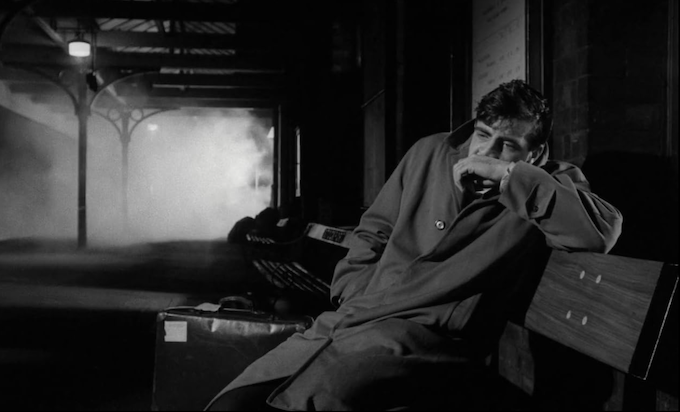
Off he goes with a suitcase, sleeps on the station bench. He had intended to use the waiting room, but it was locked. This a director’s shot scene, beautifully lit and two railway engines shunt through backwards in clouds of steam. Much time would have been invested in filming this sequence. It shows. It’s the sort of shot where the scriptwriter feels more time could be devoted to a dialogue scene and the director explains the cinematic value of a classy silent one..
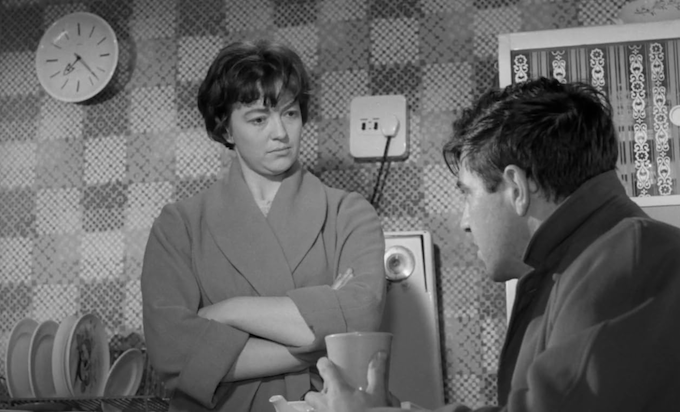
He goes to his sister’s perfect early 60s decor flat, and discovers that both his sister and his mum side entirely with Ingrid. He was in the wrong and it was his fault all together. He continues not to do well with women. The message of condemnation is strong from both. This was a topic where women stuck together.
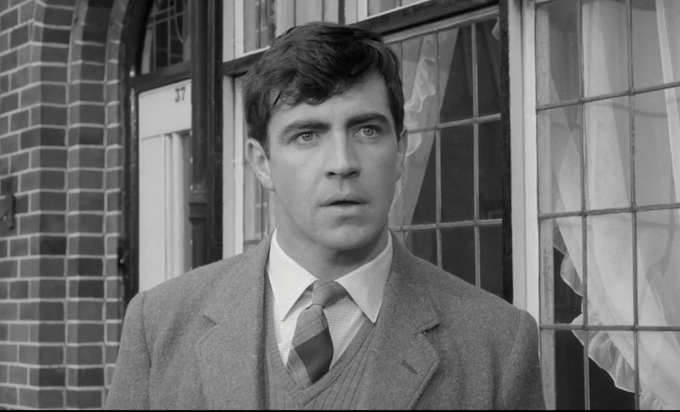
His dad says the choice is clear. Get a divorce or stick it out, and yes, Vic started the problem.
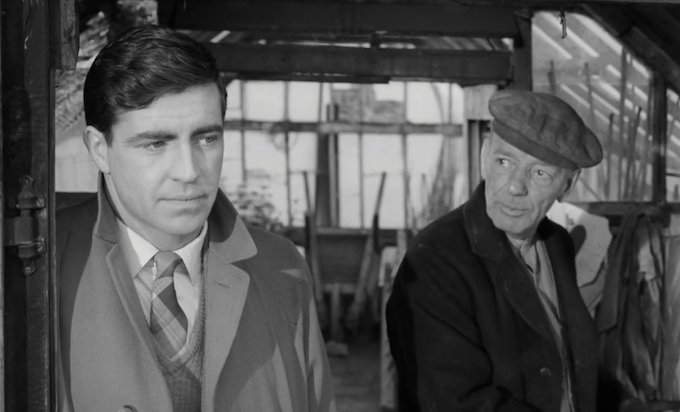
At the end they meet, they look for a rented flat. The flat is incredibly grotty, but they decide to give their marriage a go without mum in the next bedroom. It’s a kind of loving. They head back to the shelter in the park. I do hope it’s not consummated there.
We both thought it at the upper quality end of the genre. June Ritchie and Thora Hird are perfectly cast. Alan Bates acts well, especially in his inability to relate to women.
I will copy a bit from IMDB’s Trivia section:
Victim (1961)is seen on the marquee at the cinema in one scene, was the first British film to openly deal with the subject of homosexuality, which was still illegal and a criminal offence at the time, Alan Bates was bi-sexual and had a number of gay relationships throughout his life, despite being married with children. Director John Schlesinger was also gay, as was ‘Victim’ star Dirk Bogarde.
I think he brings out an ambivalence, an inability to fully relate, and deliberately so.
THE 60s REVISITED REVIEWS …

The Six Five Special (1958)
Separate Tables (1958)
Our Man in Havana (1959)
Saturday Night and Sunday Morning (1960)
A Taste of Honey (1961)
The Frightened City (1961)
The Young Ones (1962
The Loneliness of The Long Distance Runner (1962)
A Kind of Loving (1962)
Some People (1962)
Play It Cool (1962)
Summer Holiday (1963)
Sparrows Can’t Sing (1963)
The Small World of Sammy Lee (1963)
Tom Jones (1963)
The Fast Lady (1963)
What A Crazy World (1963)
Live It Up! (1963)
Just For You (1964)
The Chalk Garden (1964)
The Carpetbaggers (1964)
Wonderful Life (1964)
A Hard Day’s Night (1964)
Rattle of A Simple Man (1964)
The Yellow Rolls-Royce (1965)
Gonks Go Beat (1965)
The Party’s Over (1965)
Be My Guest (1965)
Cat Ballou (1965)
The Ipcress File (1965)
Darling (1965)
The Knack (1965)
Catch Us If You Can (1965)
Help! (1965)
Doctor Zhivago (1965)
Ten Little Indians (1965)
Morgan – A Suitable Case For Treatment (1966)
Alfie (1966)
Harper (aka The Moving Target) 1966
The Chase (1966)
The Trap (1966)
Georgy Girl (1966)
Fahrenheit 451 (1966)
Nevada Smith (1966)
Modesty Blaise (1966)
The White Bus (1967)
The Family Way (1967)
Privilege (1967)
Blow-up (1967)
Accident (1967)
Bonnie and Clyde (1967)
I’ll Never Forget What’s ‘Is Name (1967)
How I Won The War (1967)
Far From The Madding Crowd (1967)
Poor Cow (1967)
Custer of The West (1967)
Here We Go Round The Mulberry Bush (1968)
The Magus (1968)
If …. (1968)
Girl On A Motorcycle (1968)
The Bofors Gun (1968)
The Devil Rides Out (aka The Devil’s Bride) (1968)
Work Is A Four Letter Word (1968)
The Party (1968)
Petulia (1968)
Barbarella (1968)
The Thomas Crown Affair (1968)
Bullitt (1968)
Deadfall (1968)
The Swimmer (1968)
Theorem (Teorema) (1968)
Medium Cool (1969)
The Magic Christian (1969)
The Rise and Rise of Michael Rimmer (1970)
Little Fauss and Big Halsy (1970)
Take A Girl Like You (1970)
Performance (1970)
Oh, Lucky Man! (1973)


Leave a Reply