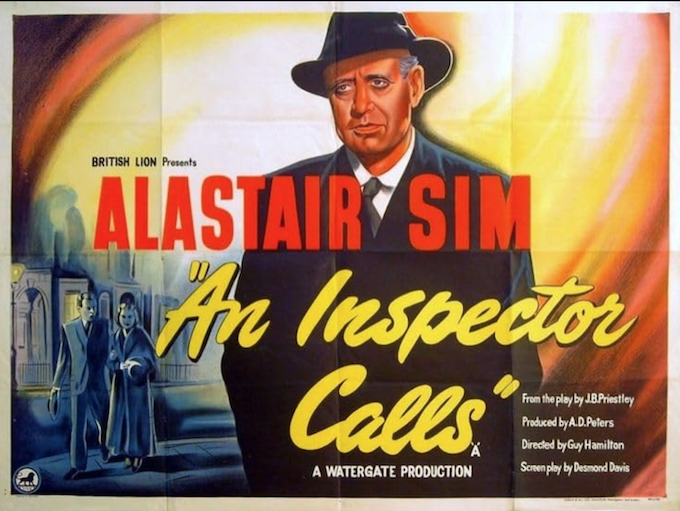
By J.B. Priestley
Screenplay by Desmond Davis
Directed by Guy Hamilton
MAIN CAST
Alastair Sim- Inspector Poole
Olga Lindo- Mrs Birling
Arthur Young – Mr Birling
Brian Worth- Gerald Croft
Eileen Moore – Sheila Birling
Bryan Forbes – Eric Birling
Jane Wenham- Eva Smith
+
Norman Bird – factory foreman
Charles Saynor – Police Sergeant
John Welsh- hat shop manager
Barbara Everest- Mrs Lefson
George Woodbridge- fish ‘n; chip shop owner
George Cole- tram conductor
Olwen Brookes- Miss Francis
This is a companion piece to AN INSPECTOR CALLS (BBC TV 2015). That has a longer plot synopsis, so maybe best to read it first.
We decided to watch this the day after after seeing the BBC version again. It’s on Amazon Prime, £2.99 to rent, in very good UHD transfer.
This introduced the real action flashback sequences. It is set, as written in 1912 with war on the horizon. I am inevitably going to mildly lampoon some aspects, inevitably with a film made three quarters of a century ago. In spite of that we sat transfixed by the story for the second time in two days. We agreed we greatly enjoyed this version (but it’s not as good as the 2015)
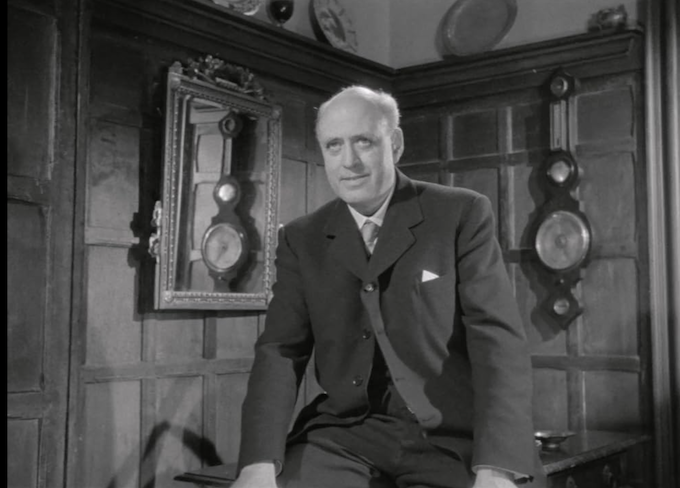
Alistair Sim is the Inspector, with a name change from Goole to Poole. (Why?) He is a master of the enigmatic smile, but the half smile is familiar also from the later St Trinian’s series when he played the headmistress as well as the other later comedy roles. This is not a comedy role and would not have been seen that way in 1954. Now we are less convinced because we identify him with roles years later.
The major difference is that he is more ghostly / less realistic. He is NOT introduced by the maid (as in the play) but just appears in the dining room. We can only assume French Windows were left open. We’ll come to the end, but he simply disappears from a locked and barred room
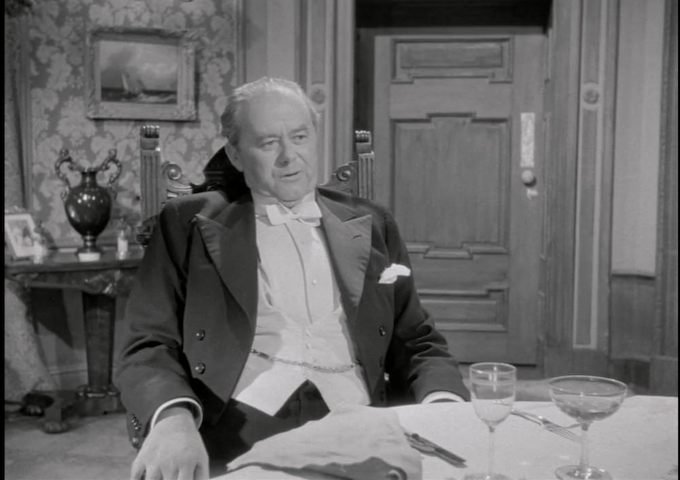
As you will guess, it’s in RP, often Advanced RP accents. This causes an issue mainly for Arthur Young, because he is playing Mr Birling, as a “Trouble at Mill” factory owner in an industrial town. He looks the part splendidly. Most versions see him with a Northern accent and the wife, Sybil Birling with a very haughty and posh Advanced RP accent.
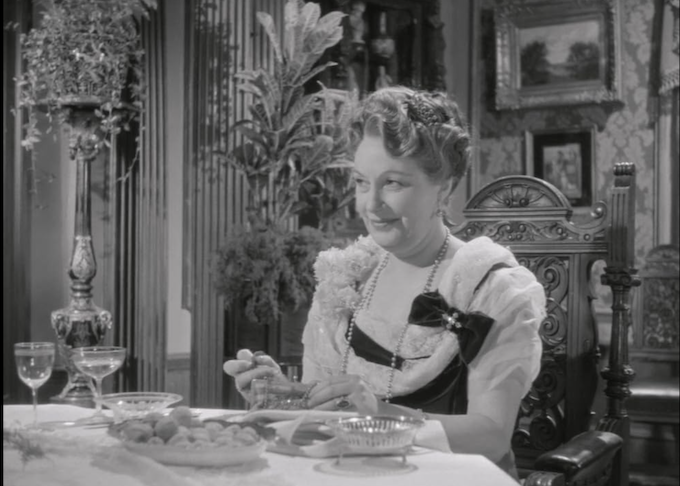
Arthur Young has real problems with the accent. The director must have told him he’s Northern so he must say ‘kant’ not ‘carnt’ and ‘grass’ not ‘grarse.’ But that’s about all he does. At times he gets so thrown that he puts in bits of any accent he’s done. At least a couple of lines are suddenly Welsh.
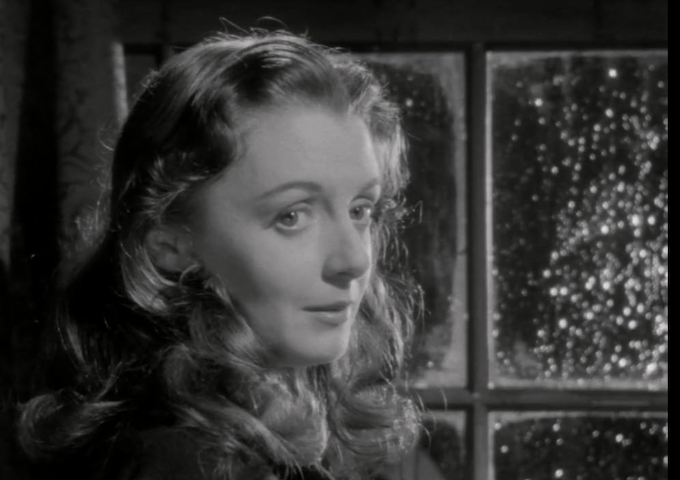
Apart from that everyone in the main cast just does RP, even the poor victim of the play, Eva Smith. She is an extremely well-spoken factory girl. A major difference from the play and later film is that Eva Smith is now clearly the heroine, and her character is pretty uniformly “good” rather than simply ‘sympathetic.’ There is no longer even the slightest hint that she was driven to prostitution.
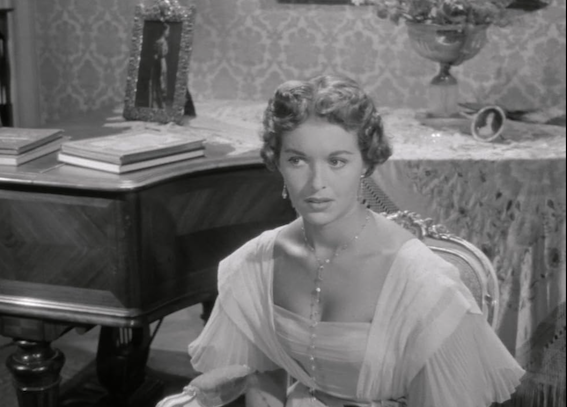
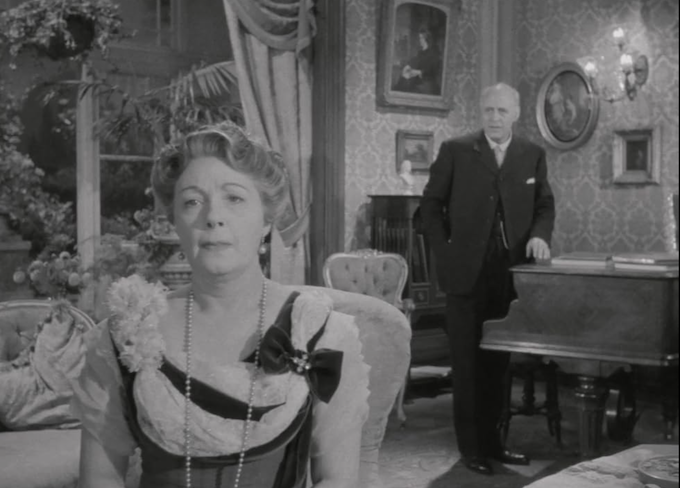
Sheila, the daughter, dresses as if Princess Margaret. She is the one who works out they have no chance as well as the one who feels most guilt.
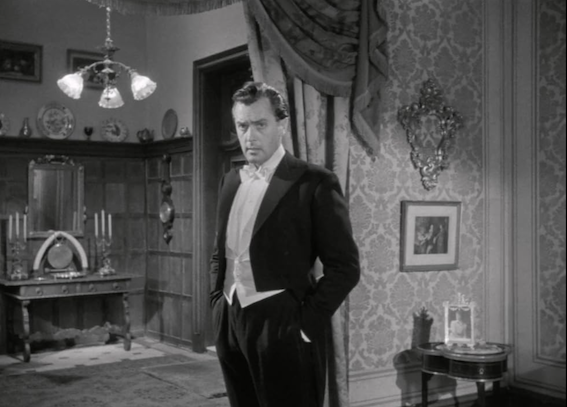
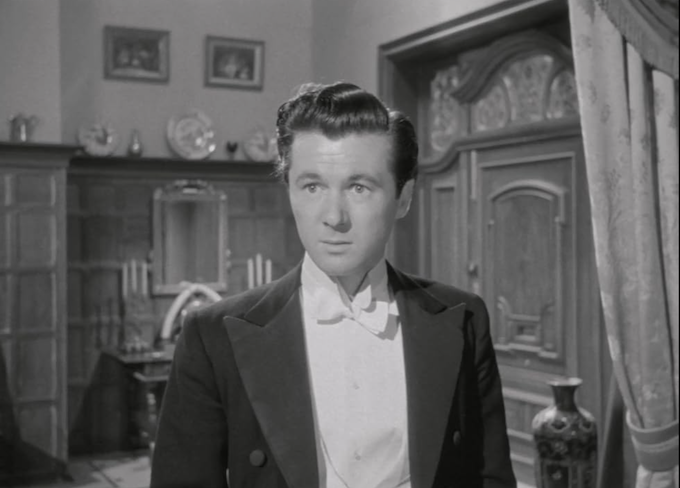
Bryan Forbes plays the heavy-drinking son, Eric. His hair attempts to take over the role. It’s thick and copious indeed, but it’s also gelled or Brycreemed into a style that veers more towards teddy boy 1956 than rich son 1954. Bryan Forbes is the other major star in the production with a career ahead as director, screenwriter, producer and studio boss.
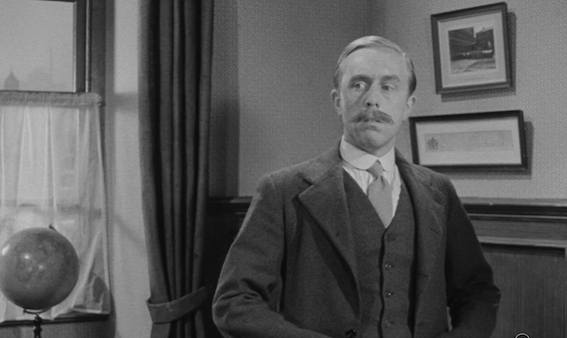
We do have several working class / lower middle class roles in the flashbacks. The factory foreman, the doorman at the Palace theatre, the police sergeant, the tram conductor, the fish shop owner, the randy alderman. These are all marked by moustaches as well as what were called “off accents”. I conclude that the wealthy upper crust family could afford razors, but lower down they economised on the upper lip.
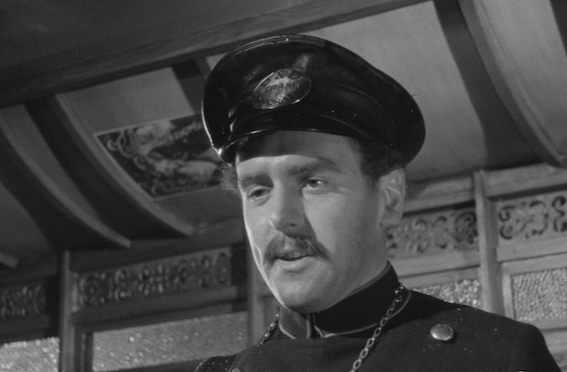
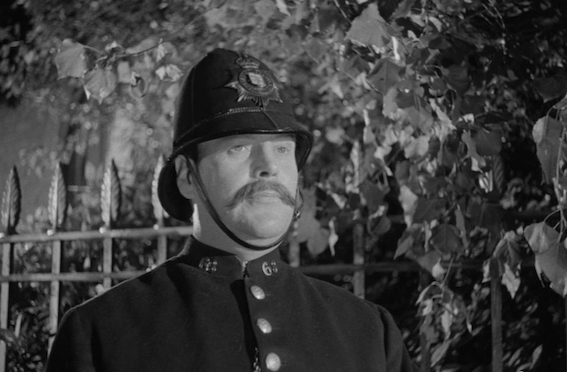
The tram conductor, the police sergeant
The flashback sequences are all longer than the BBC 2015 version. I’ll take them one at a time as each is found to be guilty.
First: Mr Birling
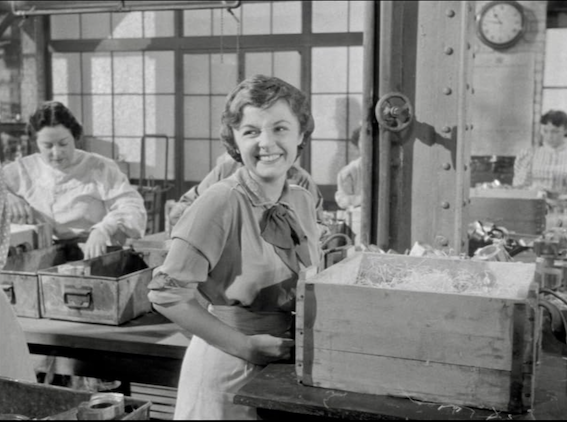
This is the factory sequence where we meet Eva. She looks jolly and full of life. The factory appears to be packaging things. In 2015 the background looks the same but it’s larger and obviously a textile mill. There’s the confrontation about pay. She’s not at the front, but is the one who protests at the end.
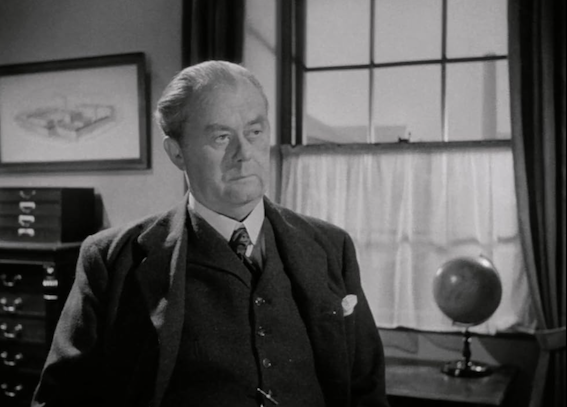
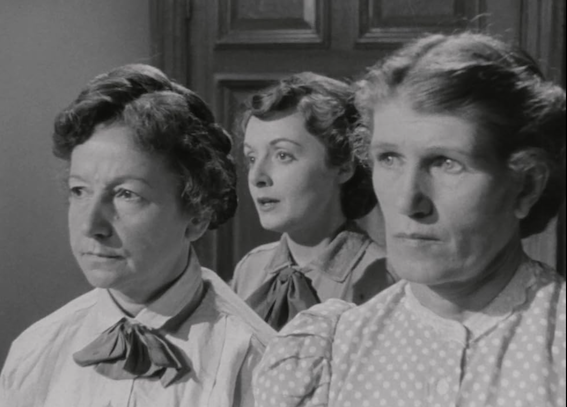
Mr Birling and the protestors. Eva rear centre.
Birling doesn’t wait for their second appearance. He simply instructs the manager to sack her.
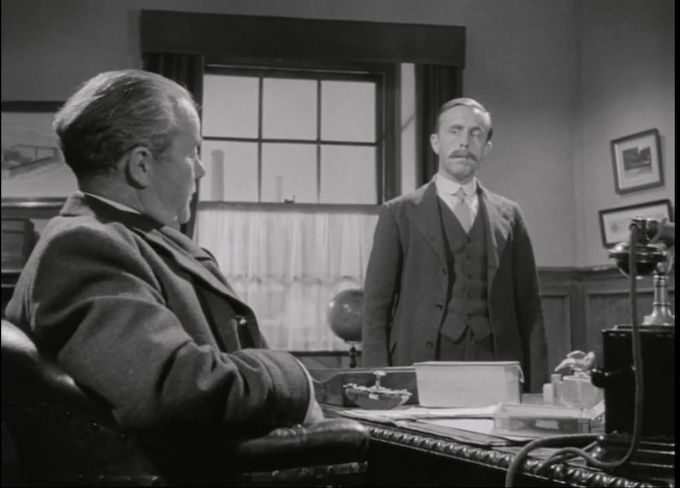
2 Sheila
Sheila’s offence was getting Eva sacked from her next job at a department store. She admits she was in a filthy temper. She went to try something on at the store. This version has a hat, while the text has dress and so did the 2015 film. Her mother said it didn’t suit her and she had it on wrongly. The senior assistant gives it to Eva to demonstrate how to wear it, and who puts it on better.
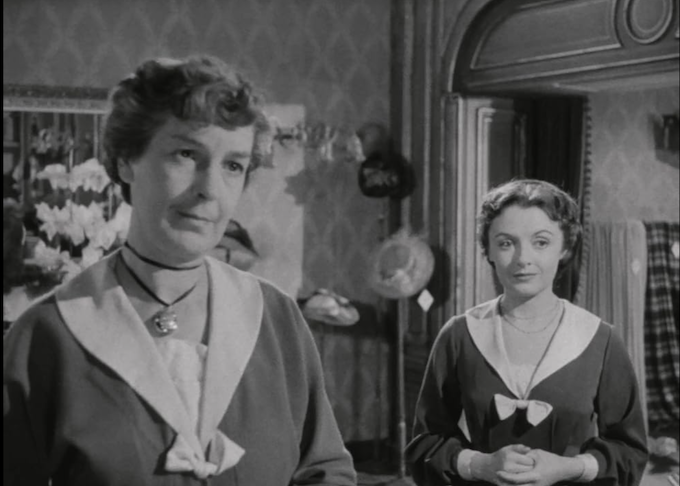
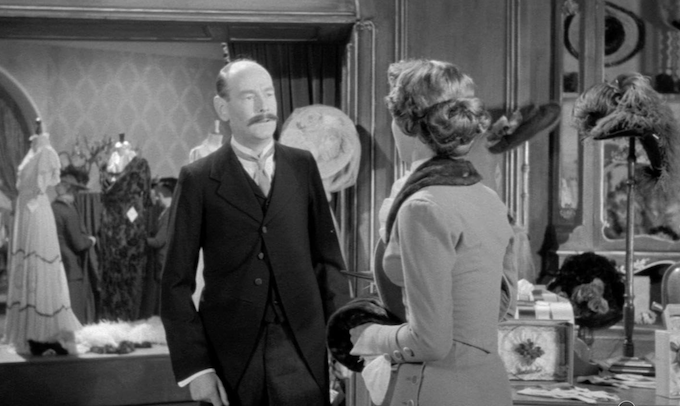
Note the store manager also has a moustache, indicating he is not upper middle class
Sheila thought there was a triumphant smirk. She demanded to see the manager and insisted Eva was fired.
3 Gerald
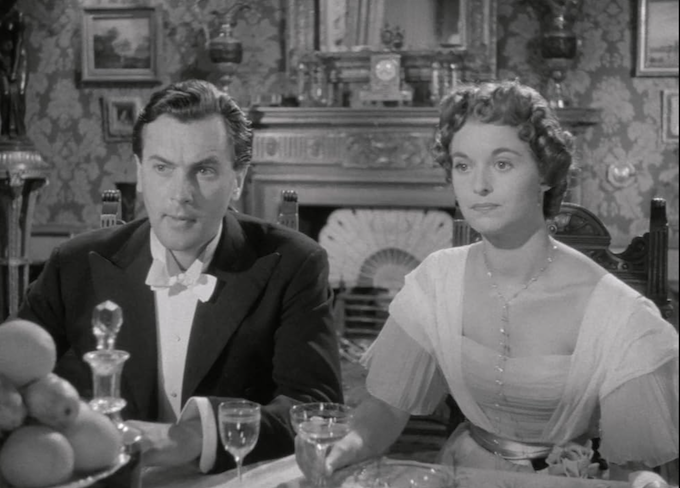
Gerald is caught out next when he recognises the name Daisy Renton, Eva’s new name. This is a much longer sequence in flashback, with a good deal of additional story. It’s a short film in its own right.
Gerald is at the Palace Theatre and goes to the stalls bar. He sees the vile Alderman trying to molest her. He calls for the doorman (who has a moustache obviously) and whispers something. The doorman goes over, speaks, and the Alderman hurries out.
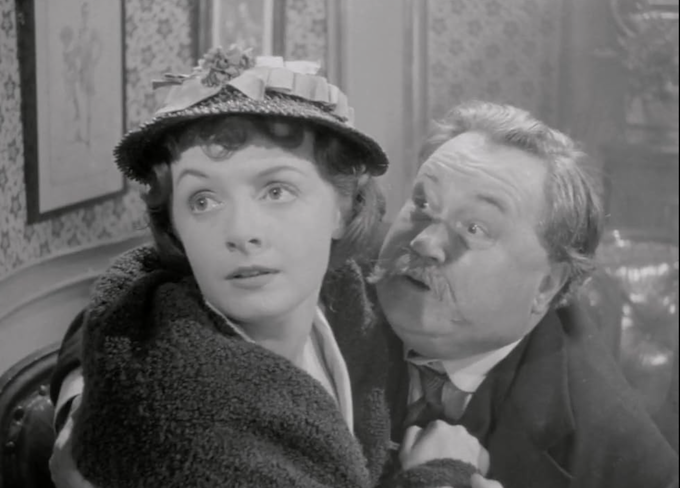
This really looks like a still from a silent film pre-1920
In the other versions the suggestion is that Eva is trying her luck as a “woman of the town.” Not in this one. She explains that she applied for a job selling programmes at the theatre. The manager told her to wait in the bar for an interview and Alderman Meggart got the wrong idea, so she is an innocent.
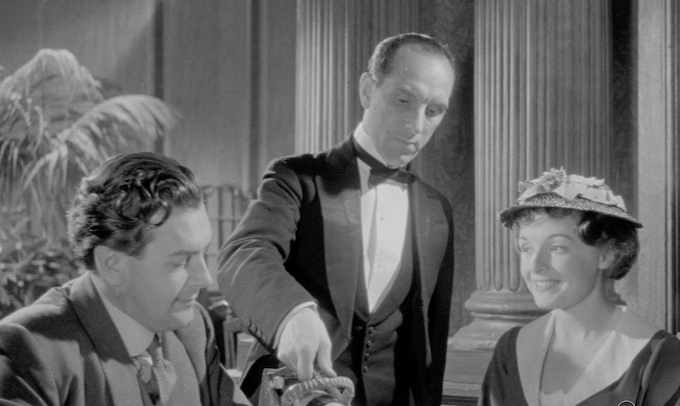
Gerald realises she is faint from lack of food and whisks her off to a posh restaurant. He comes across as gentle and kind. He takes her to her home in a horse-drawn hansom cab. He says he’ll walk her to her door, and to emphasize his good intentions, he tells the cabbie to wait for him. She says it’s round the corner, then when he walks with her, says it’s the next corner, so he checks. She has been evicted.
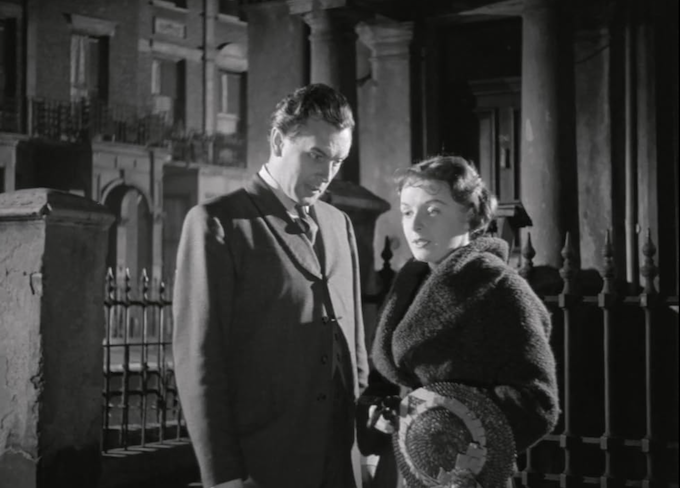
He keeps a flat in town as the stately home is 15 miles away and offers it to her. He comes the next day with a food hamper, only to discover she’s prepared a meal for him.
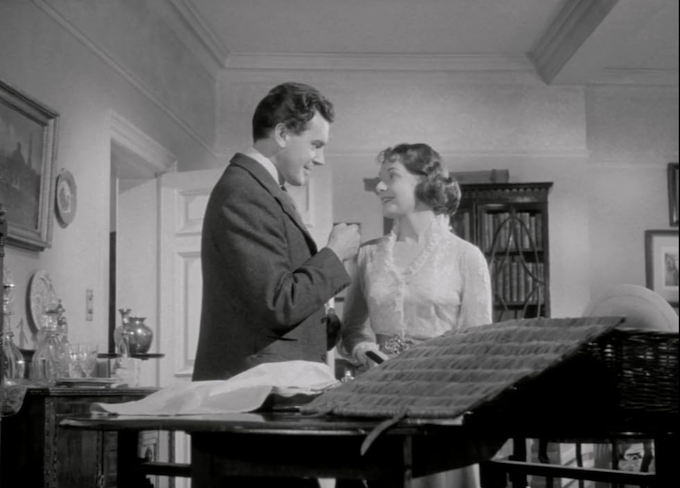
They will hesitantly kiss as he leaves politely. An affair starts, but he never seems predatory. It lasts all Spring and Summer. Sheila reaises that was when she hardly saw him. His guilt was the affair was broken off. They realised that it was pity on his part, gratitude on hers rather than love. They mutually agreed to it. She says she realised the class divide between them was too great. So Gerald seems to have behaved rather decently, so although Sheila returns his ring, the door is open for them to get back together.
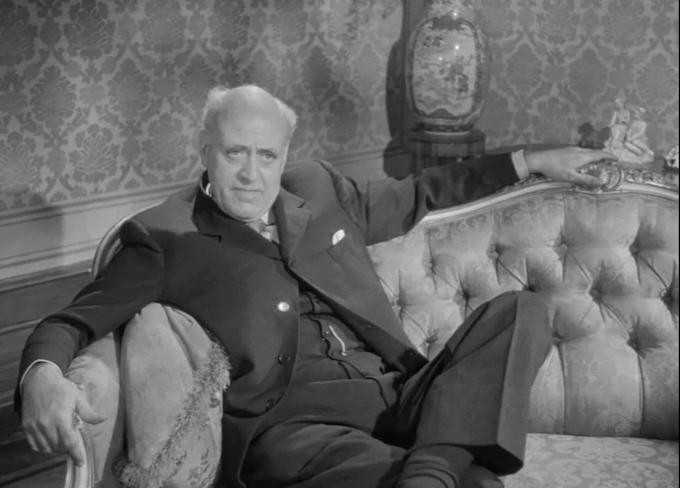
Don’t forget! The inspector is watching them.
4 Sybil
Sybil has been the haughtiest and least willing to own up. When shown the photo, she lies directly and is called out.
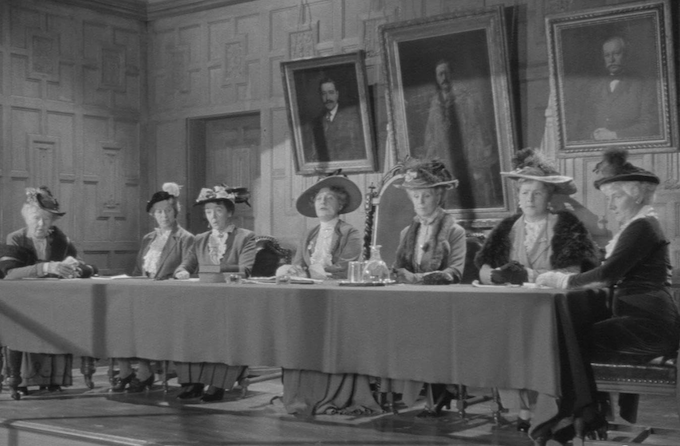
The flashback here is to the charity she chairs for women in need. It’s a committee meeting. Eva had applied for help, using the name Mrs Birling – she says it came to mind because she used to work there. Sybil considers it as grossly impertinent and determines to refuse her.
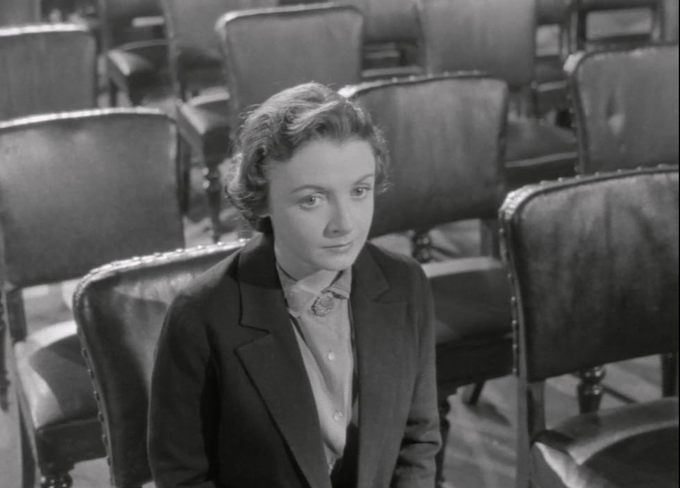
Eva admits she is pregnant. Zero sympathy from Sybil, though the kindly Mrs Lefeson hurries to escort her to a seat.
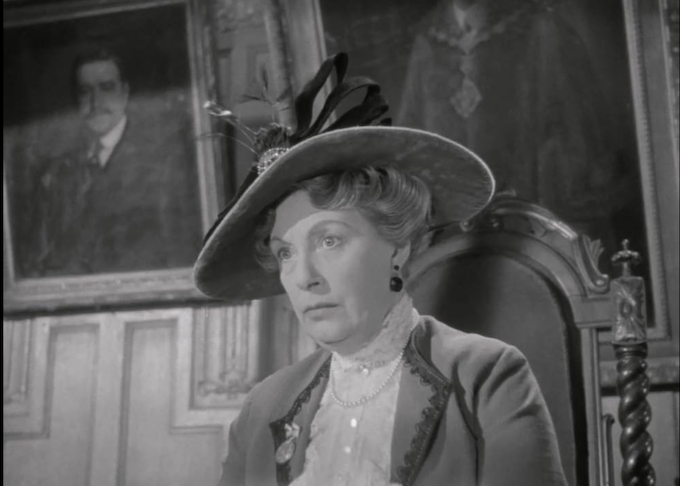
Sybil puts all the blame on the father of the child and says she must ask him for money.
5 Eric
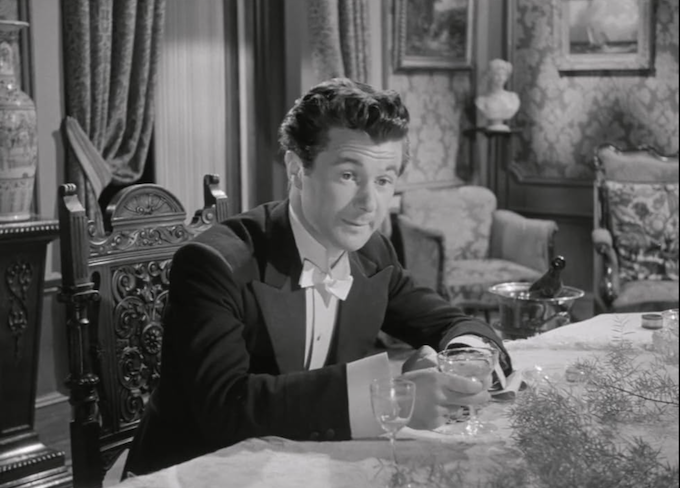
Eric has returned, dishevelled. This is another long flashback veering into a short film. He was drunk and for a lark decides to board a tram. He hasn’t the tuppence for the fair, proffers a sovereign and expects 19/10d back. The conductor has no change, and Eva, sitting nearby, offers to pay the tuppence.
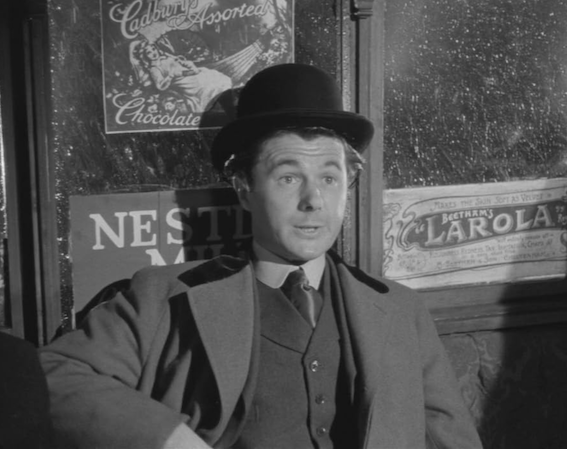
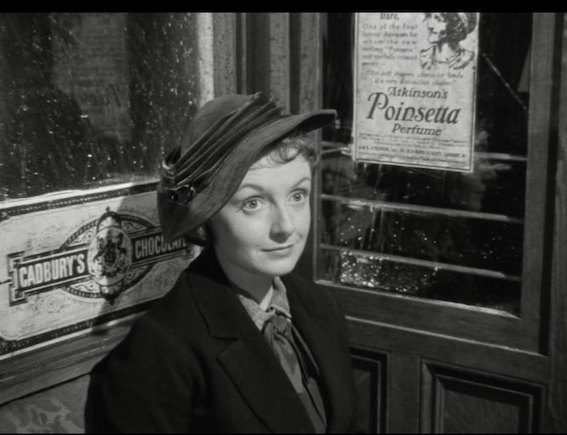
On the tram
They get off the bus and he insists on going to a fish and chip shop so he can get change and repay her.
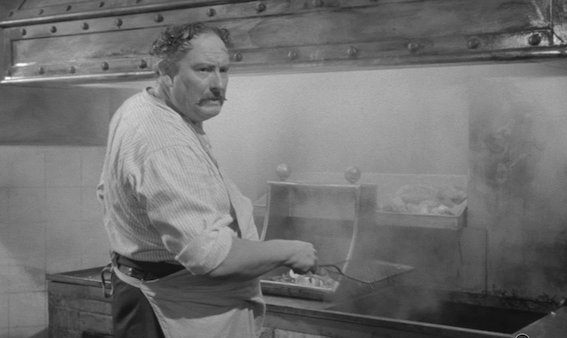
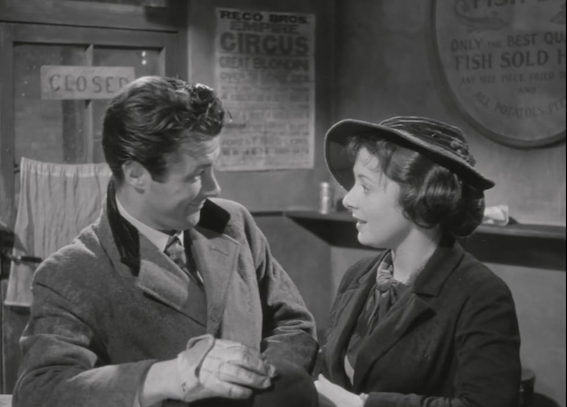
The unsavoury fish shop owner has a moustache to indicate his social class.
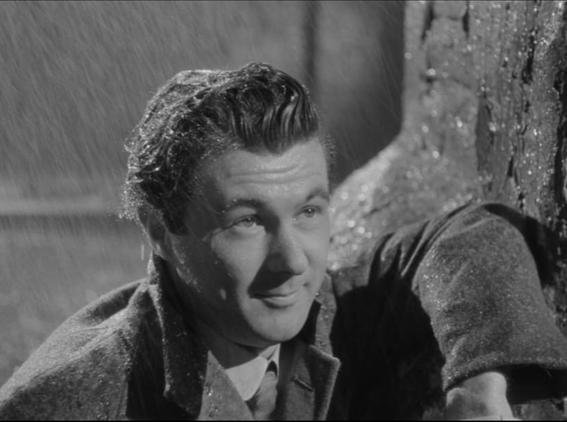
Eric escorts her home and sits in the rain refusing to go home, finally she takes pity and invites him in. The Chaplinesque bowler hat was a daft touch.
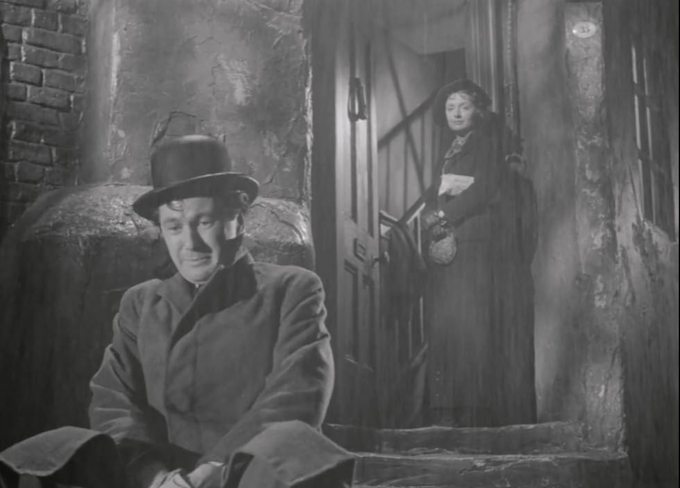
She gets pregnant and he needs money.
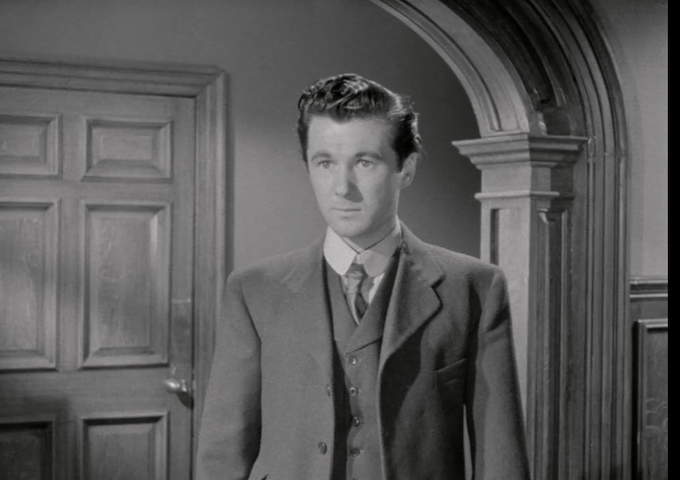
Eric asks his father who refuses, so after trying and failing to open the safe, he changes some invoices to ‘PAID’ and goes to collect the money.himself
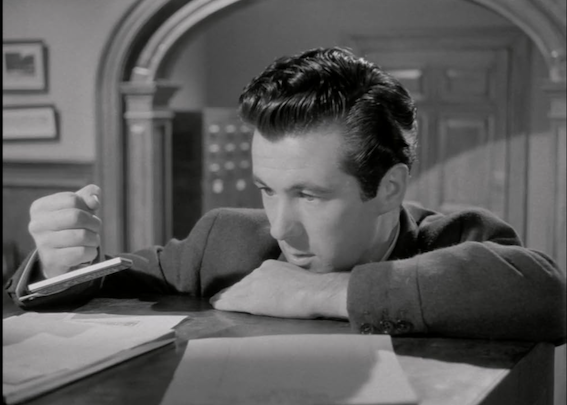
But Eva will not accept stolen money. So Eric is the father and a thief. However, he is not the rapist of other versions. They realise that the woman has died with HIS child.
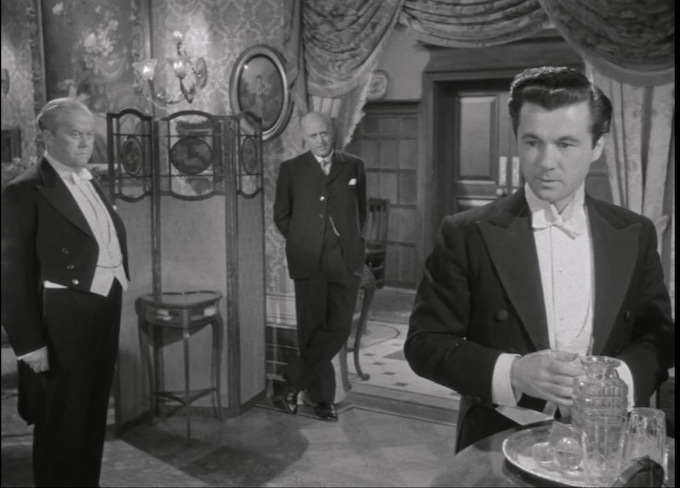
The ending
Gerald had gone out for a walk and bumps into a police sergeant and asks about Inspector Poole. There is no such person. He hurries back with the news. They ask the Inspector to wait in the study while they find no woman has been admitted to the infirmary.
They keep checking back, and the inspector is in a rocking chair each time. As in the play they assume it was a hoax, all are relieved except Eric and Sheila, both feeling genuine guilt. Then there’s the phone call. A young woman has died drinking disinfectant. An inspector is on the way.
They open the study door. The inspector has gone, but the chair is still rocking !!! (I feel that needs three exclamation marks). The window was barred to the study and they were all directly outside the door. Phew! Spooky!
Overall
The balance is changed. I assume it was to get past the censor with a lower rating. Gerald comes across better. Eric much better, but even more stupid. Eva becomes a tragic innocent wistful silent screen style heroine.
The story still works, but they overdid the inspector’s mysterious arrival and departure.
Because the flashback sequences are much longer, I’d class it as a proper film rather than a filmed stage play, though it will be listed here with stage plays.
SEE ALSO: AN INSPECTOR CALLS (BBC TV 2015).
Trivia: George Cole
I didn’t recognize the conductor. Then I discovered he was played by George Cole. The Belles of St Trinians starring Alistair Sim and George Cole (as Flash Harry) was the same year, 1954. An Inspector Calls was released in March, and Belles of St Trinians in September.
Alistair Sim had been Cole’s mentor, and Cole and his mother lived in the Sim home from aged 15 to 27. Cole started in film in 1941. He was the young version of Sim’s character in Scrooge in 1951. He appeared in eleven films with Sim.


Leave a Reply