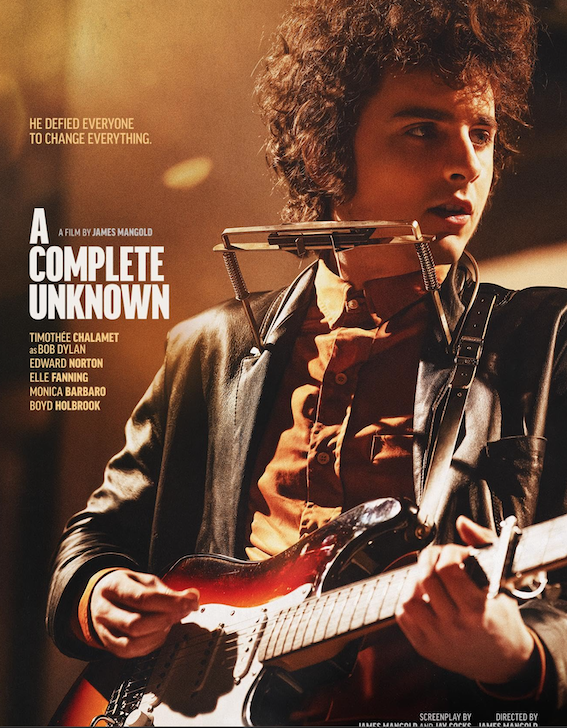
2025
Directed by James Mangold
Written by Jay Cocks and James Mangold
Book by Elijah Wald
CAST
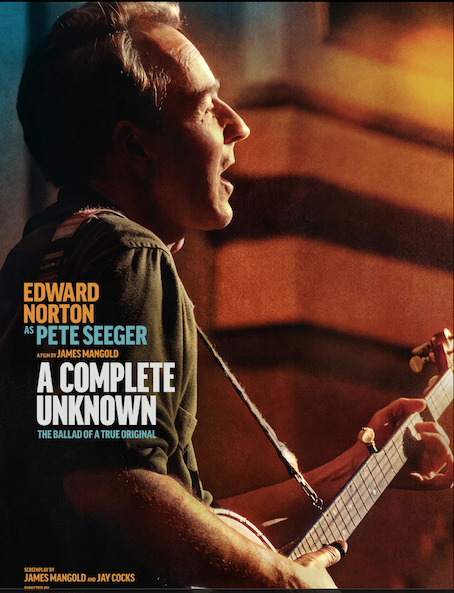
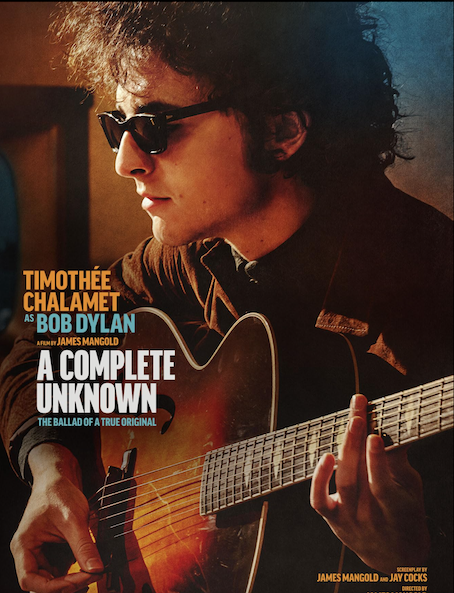
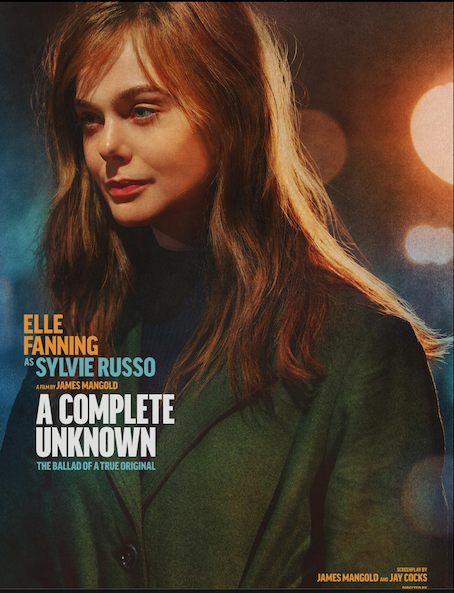
Timothée Chalamet- Bob Dylan
Edward Norton – Pete Seeger
Ellie Fanning – Sylvie Russo
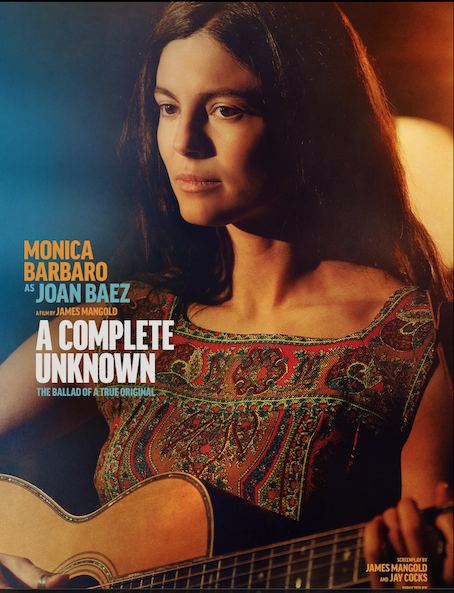
Monica Barbaro – Joan Baez
Scoot McNarry- Woody Guthrie
Boyd Holbrook- Johnny Cash
Dan Fogler- Albert Grossman
Will Harrison – Bobby Neuwirth
Michael Chenus- Theodore Bikel
Eriko Hatsune- Toshi Seeger
Alaina Surgener – Gena Russo
Charlie Tahan – Al Kooper
Elu Brown – Mike Broomfield
David Alan Basche – John Hammond
P.J. Byrne- Harod Leventhal
Big Bill Morganfield – Jesse Moffette
Eric Berryman – Tom Wilson
Nick Pupo- Peter Yarrow
Will Price – Joe Boyd (sound engineer)
Norbert Leo Butz – Alan Lomax
Justine Levin – Barry Goldberg
Mark Whitfield- Sam Lay
Joshua Crimbley – Sam Arnold
Jordan Goodsell- Roy Halee
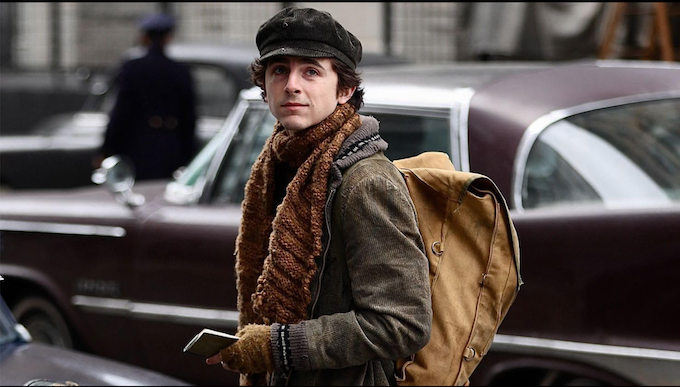
First off, it’s a wonderful biopic. We were transfixed. After several of the songs I wanted to clap, especially when audiences on screen clapped too. At a couple of standing ovations in the film, especially The Times They Are A-Changing in Newport 1964, I had to stop myself getting up out of my cinema seat to applaud. It felt that real. Within a minute or two, certainly when he sings a A Song To Woody in the hospital to Woody Guthrie and Pete Seeger, I accepted that Timothée Chalamet WAS Bob Dylan. He is strong in the early folk sections. He shows the duplicitous side with women, captures the mumble.
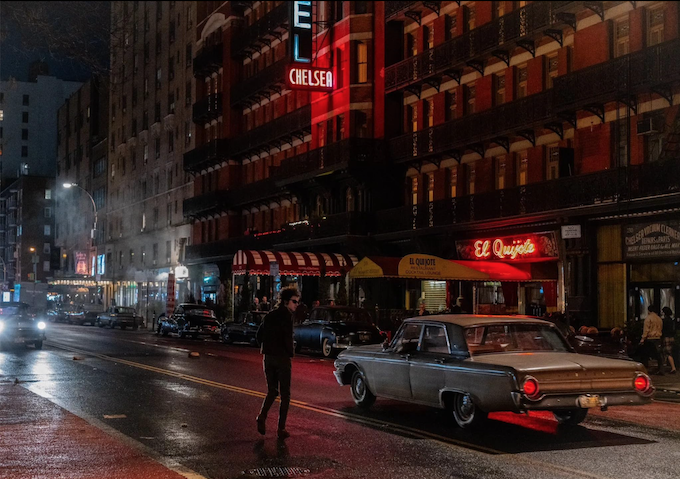
He looks stoned in the later sections. He chain smokes, though there is no suggestion that he is smoking grass (which Dylan most likely was). This might be wise in audience terms.

The other outstanding creation is Edward Norton’s Pete Seeger. He inhabits him, he looks like him, though in reality they are by no means lookalikes. Edward Norton has a much harder journey to become Seeger than Timothée Chalamet who starts off looking right by nature. Edward Norton was in our ELT video series Only in America, and it was just about his first professional job on graduation. He was still ‘Ed.’ His comedy acting was such that he got applause from the hardened crew after some scenes. I remember conversations, where he asked me if I wanted the character visiting New York for the first time to have a generic mid-West accent, or specific Minnesota, and showed me the difference. Then in another story, he was unhappy with his appearance as a college nerd, and hunted around the first aid box, put a sticking plaster on the bridge of his spectacles, and said, ‘There! That’s got it.’ That was thirty years ago. A great regret is that on my last night on location, Ed invited me to come along to the Bottom Line where he was playing and singing. I had a flight the next day and declined. The point is that Edward Norton certainly knew the 1990s folk scene.
Edward Norton’s performance is nuanced and sympathetic. I have previous on Pete Seeger:
I saw Pete Seeger in 1963 on TV live at the London Paladium singing Little Boxes and instantly loathed him. Sorry Pete, I know you didn’t write the song (Malvina Reynolds is guilty), but it’s one of the most superior, sneering, hipper-than-thou ditties ever recorded. Don’t piss on people’s aspirations to own a home. I hated the scoutmaster with banjo image. It was Pete’s only charting single. For years, American friends have told me of his great courage against McCarthyite persecution, and his selfless mentoring of young musicians. I’m sure he was a wholly admirable person and a genuine hero, but I still find his singing and playing horrible. And I believe he did try to shut off the electric Bob Dylan at Newport 1965.
From the article CBS 1962-1966 (linked) on my Around & Around website.

Fortunately he’s playing Wimoweh, not Little Boxes
And let’s be honest, I really don’t like pinkety-plonk banjo playing. In the film, Edward Norton brings out Seeger’s mentoring of Dylan, his bravery in court, his kindness. I’m sure Norton plays banjo too. I know he can play guitar.

1965 – Dylan has changed. Pete Seeger hasn’t
His Seeger is saddened rather than furious at Newport 1965 when Dylan went electric and outraged the folk community, which is what the film builds to. Norton does his optimistic attempt to force a smile throughout beautifully. Theodore Bikel does the full anger and fights Albert Grossman at the Newport 65 event. In fact, it was Alan Lomax and Grossman who fought, and that was earlier in the day regarding the Paul Butterfield Blues Band set. There are tales of Seeger striding with an axe to cut the sound cables to stop the music. In this film, Seeger looks at the axes left by the previous gospel group and moves towards them. His wife, Toshi, touches his arm and stops him. Whatever the truth, this is right for the character created in the film. Joe Boyd was there, running sound, and says the axe story is a myth.
A slurry of names. I recognized who they were in the film mainly too, though the cast list includes others I didn’t note at the time – Dave Van Ronk, and Jimmy Dean. I wonder how my grandkids would get on, not knowing the names or the stories, though Karen, who knows the era and music, but hasn’t read all the books was as transfixed as I was. I have written on Bob Dylan. I’ve reviewed him. I’ve seen him several times. I’ve seen Joan Baez on stage. Joe Boyd sums up the impact of Dylan going electric at the Newport Folk Festival in 1965 in his autobiography, White Bicycles. Boyd was in charge of sound on the night it happened.
The Beatles were still singing love songs in 1965 while the Stones played a sexy brand of blues-rooted pop. This was different. This was the Birth of Rock. So many taste crimes have been committed in rock’s name since then that it might be questionable to count this moment as a triumph, but it certainly felt like one in July 1965.
Joe Boyd, ‘White Bicycles,’ 1988

These are my two shelves of books on Dylan – the larger ones are elsewhere. I have every Dylan album, including all of the Bootleg Series. This film takes its title from Like A Rolling Stone, and I have written a pseudonymous novel which takes its title from the same song, No Secrets to Conceal.
The only fictional names in A Complete Unknown are Sylvie Russo, and her sister Gena. Sylvie is obviously Suzy Rotolo, Dylan’s girlfriend pictured on the cover of Freewheelin’. They show a photo shoot, but I’m surprised they didn’t recreate that iconic photo.
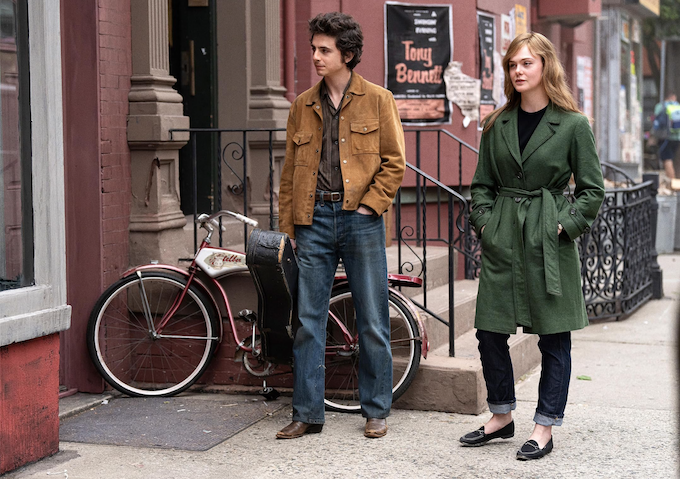
Dylan saw the script in 2023 and asked them not to use Suzy’s name. Dylan’s Ballad of Plain D is transparent:
For the lies that I told her in hope not to lose
The could-be dream-lover of my lifetime
Her sister appears in the film, saying little, but it’s all in the despising looks she gives him. The feeling is mutual. From the same song:
For her parasite sister I had no respect
Bound by her boredom her pride to detect
If you’ve read some background the film is full of references. Bob Dylan used to claim he’d been in a carnival. Sylvie looks dubious. Joan Baez just tells him straight out he’s a bullshitter. Baez had already had three major hit albums when Dylan met her. Then there’s an early scene where Albert Grossman wants to connect Joan Baez with Columbia / CBS . She dismisses him saying she already has a record label, Vanguard (folk specialists). This is all well-informed – the New York folkies were aghast when Dylan signed with Columbia, renowned as it was for easy listening (The Mount Rushmore of record companies, Grossman says, Tony Bennett, Johnny Mathis, Doris Day), rather than a specialist non-corporate label like Vanguard or Folkways … they miss the fact that Seeger went to Columbia at the same time though.

As to the love stories, the film changes things for dramatic effect. We really don’t know whether Joan Baez seized Bob for a passionate snog after she first heard Masters of War. I’m pretty sure the on-stage duo spat with Bob walking off would have been noted by someone somewhere if it had happened.

However, it’s an excellent way of telling the story of the 1965 UK tour briefly- Joan Baez accompanied him, expecting to be invited to join him on stage, but wasn’t. I might have included that, but then it brings it so much more (and that’s in Don’t Look Back).

Ellie Fanning has the task of looking hurt and upset a lot and does it brilliantly. Sylvie Russo susses that Joan is not just a route to fame for Dylan, and a singing partner. The big scene is at Newport where she can’t take Bobbie and Joannie anymore. In this scene they are singing together, with Bob joining Joan’s set in 1965 for It Ain’t Me Babe. That’s been shifted a year- it happened in 1964, but not in 1965. There is another 1964 scene.
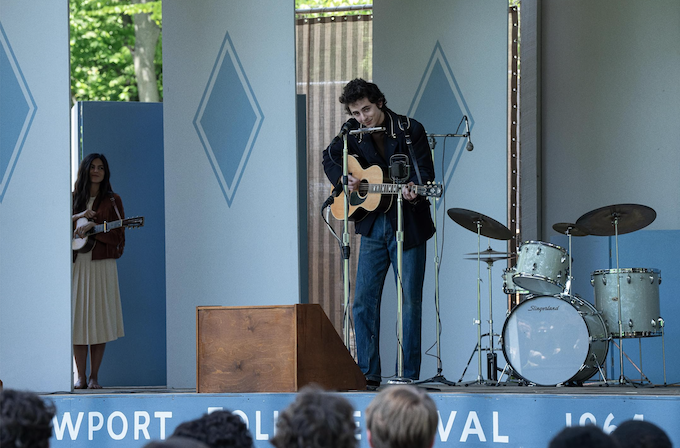
The chronology is dodgy in a few places. From IMDB for instance. We Dylanologists seek this stuff out! (But I had sussed this one myself).
Joan Baez asks Dylan if he’s recorded Blowin’ in the Wind after hearing it for the first time. This scene takes place in October 1962. In reality, he’d been playing the song at Village coffeehouses since at least April 1962. It was published in a May 1962 issue of Broadside, and a June 1962 issue of Sing Out! Dylan recorded it in July 1962. By October of that year, it wouldn’t have been new to Baez or anyone on the folk scene.
If you put in things like Kennedy’s Cuban Missile crisis TV appearance and then the Kennedy assassination, you are fixing dates and therefore chronology in stone for the likes of myself.
I’m sure Johnny Cash’s role has been enlarged (and it’s entertaining). James Mangold should know. He also directed the Cash biopic I Walk The Line. I had never read that Dylan looked at Cash with the Tennessee Three at Newport 1964, and had thinks bubbles about bass and drums, and electric instruments.
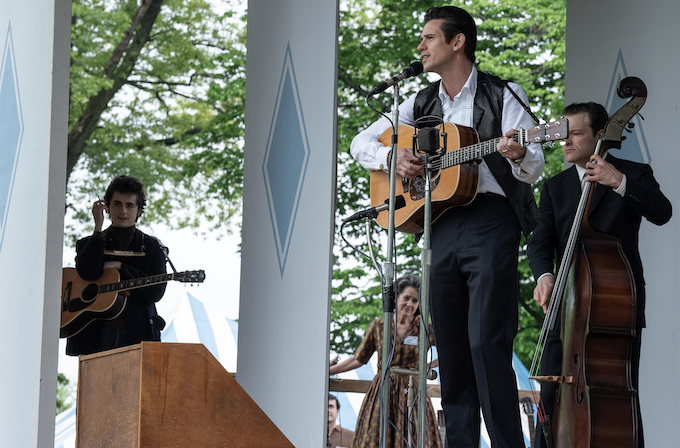
There is no expense spared in recreating 1961 to 1965 street senes and the Newport festivals.
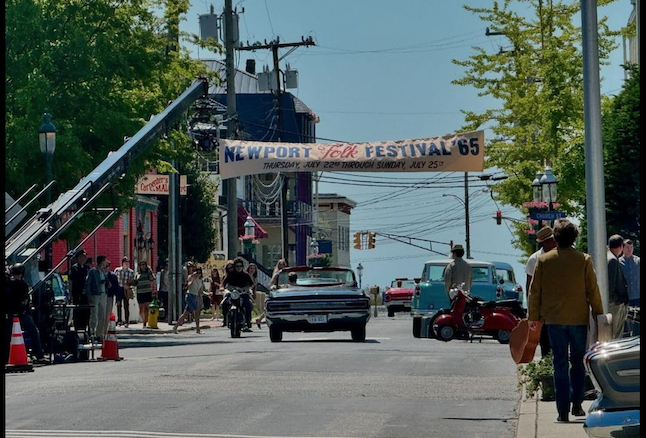
As in any biopic, there is a tendency for viewers to fact check and nit-pick. I’m not immune to that. However, you have to accept that it’s fiction based on real events. We’re quite happy accepting Dylan’s bedroom discussions with Sylvie (as Suzy) or Joan Baez because we know that we can’t know.
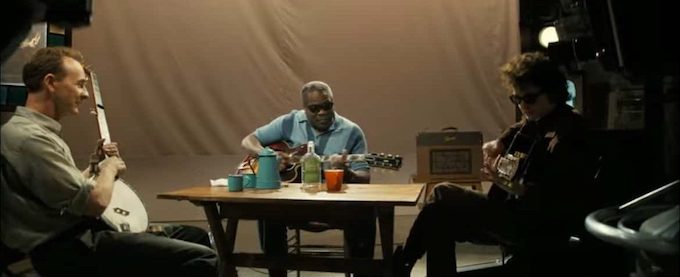
There was not a Pete Seeger TV show where Dylan turned up late and jammed a blues with Jesse Moffette (Big Bill Morganfield). We know that because Jesse is a fictional amalgam of blues singers. He is played by Muddy Waters’ son. It’s a good scene whatever. In reality, the two playing the blues would have stopped when Pete Seeger started adding banjo fills and told him to leave it out. Later, actors playing Sonny Terry and Brownie McGhee appear and sing. However, Seeger really did have a TV show from 1965-66 called Rainbow Quest. It ran to 39 episodes. Just about every folk and folk-blues singer appeared on it, but not Bob Dylan.

But then we can get picky about really tiny things- Al Kooper famously slid himself into the Hammond organ seat when they recorded Like A Rolling Stone, never having played it before. In the film he struggles to switch it on, so Barry Goldberg switches it on for him. In his autobiography Al says that fortunately it had been left on as he didn’t know how to switch it on. It works. it’s funny. I’m not arguing. I re-read Al Kooper before doing this review, and he points out that the Paul Butterfield Blues Band and The Chambers Brothers had already played electric sets at Newport 1965 before they went on. In real life, Kooper also only turned up at the last minute as a spectator to find they’d been trying to call him to play. There are photos of him in the spotted shirt.
They’re very particular about the detail of clothes and microphones. They get them absolutely right. In spite of that, It can get REALLY tricky. Someone notes on IMDB that Mike Bloomfield’s fingers are playing different notes to what we hear on stage. Um, OK, he’s miming. They would not have tried to play it live AND act the original roles in the original positions. On the goofs section on IMDB, someone points out that they would not have had monitors on stage … true, which means they probably couldn’t hear themselves. Joe Boyd pointed out that they had no direct feeds to the sound desk either but had a mic in front of each amp feeding the PA system. Sixty years later, mic’ing small amps into a PA would be a cool way to do it.

It looks exactly the same in A Complete Unknown
We came home and watched Festival, the film of extracts of the Newport 60s folk festivals, including Dylan’s electric Maggie’s Farm. We noted that in A Complete Unknown, it’s Joan Baez who covers Blowing In The Wind and we assume makes it famous. In Festival, we see Peter, Paul & Mary who shared Albert Grossman as manager, and who actually had the hit. If you think of their gentle recorded hit version, it’s a shock to see how much more powerful and different Mary Travers’ live rendition was. Though Peter Yarrow appears in the film, Peter, Paul & Mary don’t, which rewrites history. Yarrow was on the board of the Folk Festival and totally supportive of Dylan. I thought (correct me if I’m wrong) that in A Complete Unknown it’s Johnny Cash who hands Dylan an acoustic guitar to go on and do It’s All Over Now Baby Blue after the crowd booed after the electric set. Al Kooper was there. It was Peter Yarrow in real life. Kooper also explains that of course people were booing. Dylan only did a 15 minute set and that was it. They wanted more, and the band hadn’t rehearsed any more songs, being restricted to a short set. It’s Kooper who points out how apposite the choice of It’s All Over Now, Baby Blue was. He did Mr Tambourine Man first in real life. Not in the film.
For dramatic effect, at Newport 1965 they bring in the ‘Judas!’ shout from the audience (actually Manchester Free Trade Hall, May 1966) as well as Dylan’s instruction from Manchester to his musicians to ‘Play loud!’ except he really said, ‘Play fucking loud!’
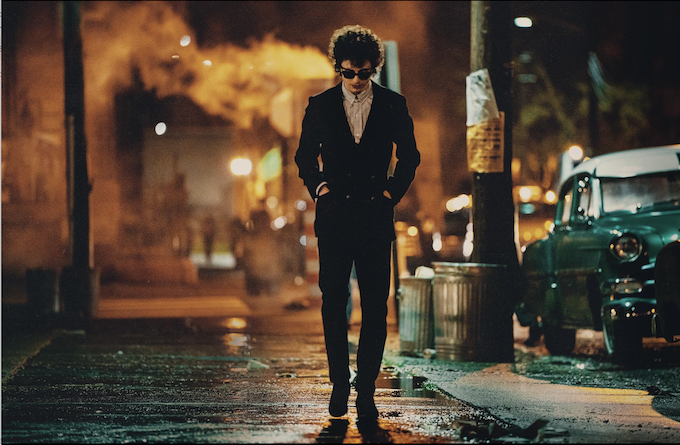
At the end we see Dylan careering off on his motorcycle. Black out. That would lead us to think that the famed (and possibly faked) motorcycle crash of fifteen months later was about to happen.
A five star film. *****
REVIEWS
Tom Shone, Sunday Times *****
Peter Bradshaw, Guardian 2024, *****
Wendy Ide, Guardian 2025, ****
LINKS TO ARTICLES ON AROUND AND AROUND:
CBS 1962-66
Self Portrait- Bob Dylan
Completism (Dylan 1973)
Shadows In The Night – Bob Dylan, review
Bob Dylan 1970- 50th Anniversary Collection
LINKS TO CONCERT REVIEWS HERE:
Joan Baez
Bob Dylan – 2024
Bob Dylan – 2022
Bob Dylan 2017
Bob Dylan 2006
Bob Dylan 2002
PLUS RELATED:
Inside Llewyn Davis
 Peter Viney's Blog
Just one thing on Pete Seeger and banjo: it is not “pinkety-plonk” as Mr. Viney says, the correct term should be “boom-a-chuck-uh”.
LikeLike
Do you have the DVD “The Other Side of the Mirror”?
It features all of Dylan’s Newport performances (1963 to 1965) that were captured by Murray Lerner.
It is not clear from Lerner’s film who hands him the guitar, nor it is clear who hands him a harmonica from the audience. I wonder where that harmonica is now.
LikeLike