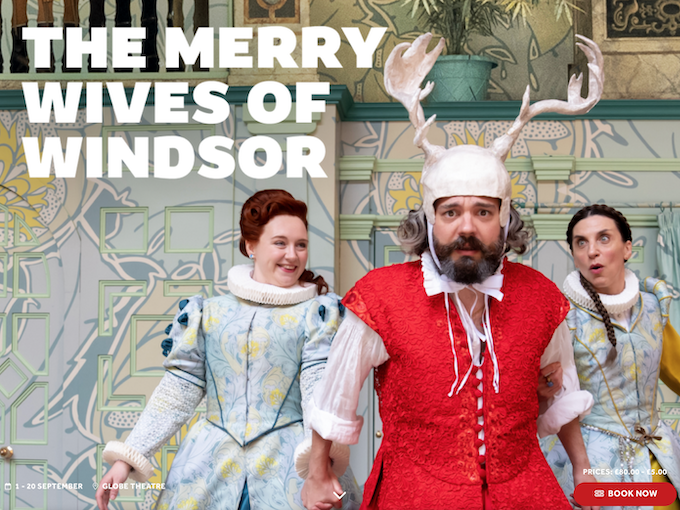
By William Shakespeare
Director Sean Holmes
Set Grace Smart
Costume Jacquie Davies
Composer Frew
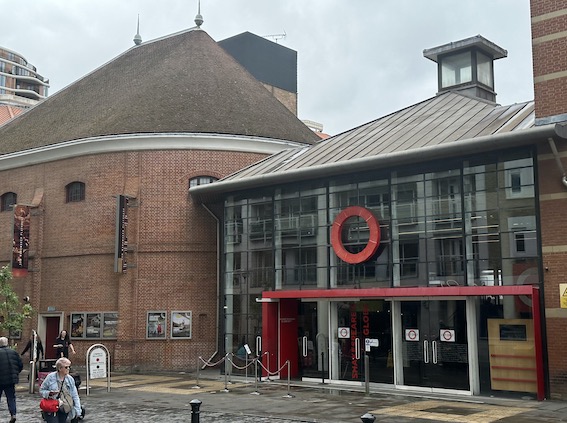
Shakespeare’s Globe
Southwark
Tuesday 2nd September 2025 14.00
CAST
Falstaff – George Fouracres
Page – Christopher Logan
Mistress Page – Emma Pallent
Anne Page / Robin / Bardolph – Danielle Phillips
Ford – Jolyn Coy
Mistress Ford – Katherine Pearce
Shallow / Mistress Quickly – Sophie Russell
Fenton / Nym – Marcus Oale
Hugh Evans – Samuel Creasey
Host / Pistol- LJ Parkinson
Simple – Tre Medley + cover
Doctor Cauis / Slender – Adam Wadsworth
Rugby – Corrina Buchan + cover
William Page – Odhran Riddell or Alexander Shaw
MUSIC
French horn – Alys Jones
Percussion / MD – Zands Duggan
Sousaphone / tuba – Barnaby Slade
Trumpet – Clara Hyder
Trumpet – Tom Harrison
Note I don’t put creatives in alphabetical order with ‘assistant director’ and ‘costume’ before Director. A silly Globe conceit. No, we are not all equal.
I looked at the Reviews Round up before I went. They decide that the consensus of critics is ‘Bad play. But fun.’ Nonsense. It was my mum’s favourite Shakespeare and it’s one of mine. You may call a Shakespeare play ‘a lesser play’ but a ‘bad play’ is very silly. The thing is, on stage, it works. It is rightly called the first sitcom’ AND ‘the first soap.’ That’s why it works so well in modern dress: three times at the RSC in 2012, 2018 and 2024.
Seeing it in Elizabethan costume is a change, but it’s the default. The story is that the Queen asked for a story about Falstaff in love, and Shakespeare obliged. At the end of Henry IV Part 2, Falstaff is banished from court. In Henry V his death is reported. So along with Pistol, Nym and Bardolph, from Henry V, technically it’s early 15th century in setting. I doubt that the Elizabethan audience cared about the time frame. They just wanted the character.
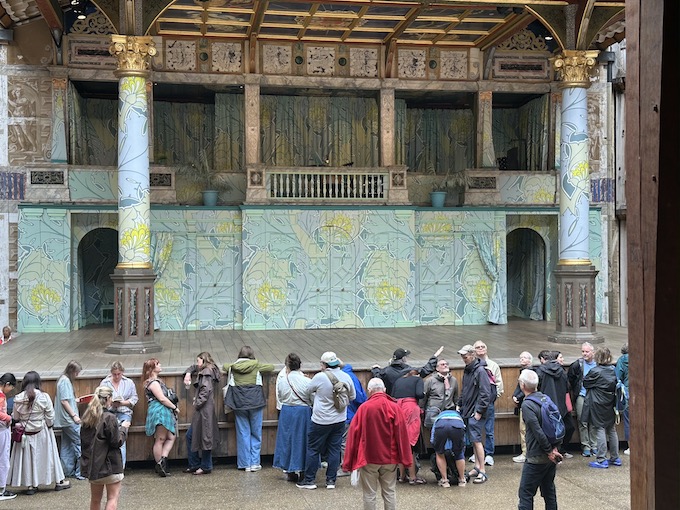
The set puzzles me. The Globe has covered the fabric of the building before, and two Sean Holmes directed plays stand out, Much Ado About Nothing set on a Mexican revolution era train, and Romeo & Juliet set in the Wild West. They both had solid reasons. Here? I can’t see that covering the basic Globe walls has any purpose at all. One review calls it a Liberty print – it’s not. Another calls it a William Morris design. It’s not. A third says specifically it’s Thibaut Windsor Spa wallpaper. That’s certainly very close indeed, though I can’t find the exact colour-way They may have done it for this. It’s a wallpaper pattern and costs £240 per roll. So what do the curtains behind the musicians cost? It’s echoed in the costumes which are colour coded, a good idea. The Pages have yellow, the Fords have light blue, others have green and Falstaff and his supporters and page boy have red. I didn’t like the silly hats on the Pages. However as the costumes are faux-Elizabethan (but much shinier and more subtle colours), I can’t see why they needed to cover the existing building. There is no furniture apart from Dr Caius’ closet (same pattern) and the laundry basket in blue.
A comedy at The Globe is glorious on a sunny day when it’s full. However, it was no more than a third of the normal number standing, with many empty seats in the gallery (including two rows in front of me). It was a dull day, looked like imminent rain which arrived on my walk home to the 381 bus stop to Waterloo, and came down in sheets. That was five minutes after the end. This really affects the impact, though the cast didn’t give less than their all. I always sit in around the same place and it sounded different. With so few in the audience to absorb sound, the actors voices could be divided into shouting and projecting. Samuel Creasey as Sir Hugh Evans shouts at the top of his voice. So do several others. Yet Christopher Logan as Master Page can drop to a quiet voice and be heard clearly everywhere. That is proper projection. Branagh can do it too.
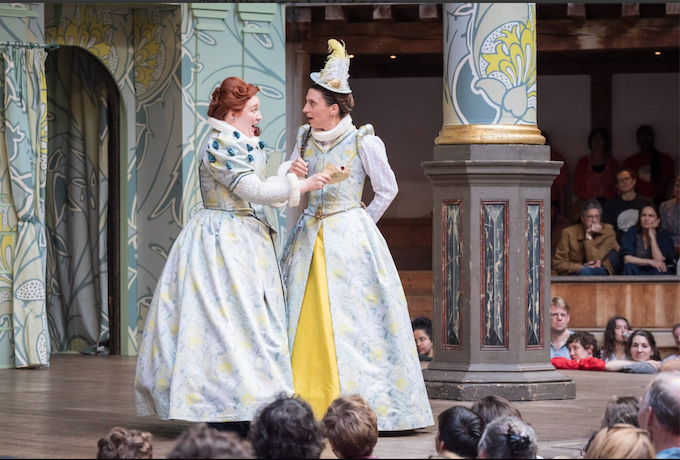
Synopsis: Falstaff and his three lads are in Windsor. Falstaff meets Mistress Page and Mistress Ford, the Merry Wives of the title and sets out to seduce both. He sends them identical love letters and they compare and decide on revenge. Falstaff is invited to the Ford house while Ford is out.
Ford is a jealous husband and finds out. He wants to know whether his wife is faithful so decides to hire Falstaff to test her fidelity.
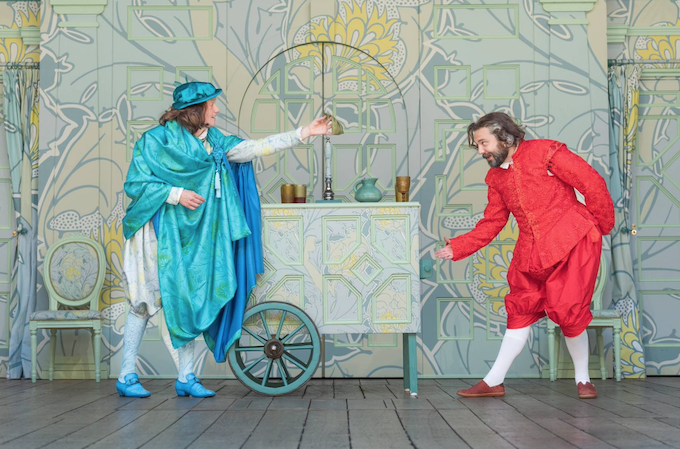
Ford does this in disguise as ‘Brooks.’ This is the central farce plot as Falstaff fails three times and has to escape the vengeful Ford with the people of the town searching for him.
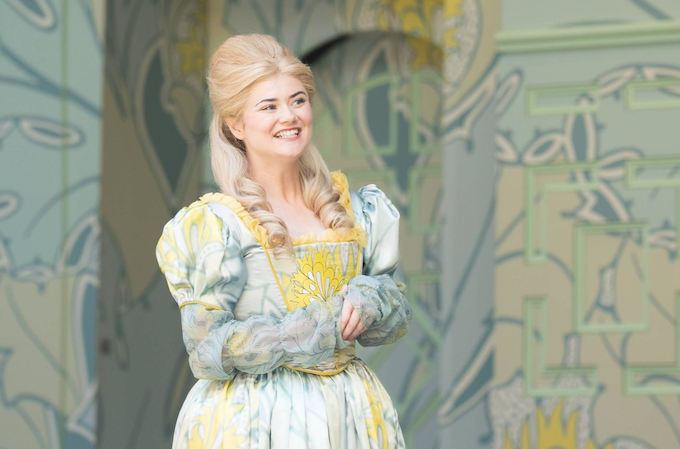
Plot two is Anne Page, the daughter of Master and Mistress Page. She has three suitors. Justice Shallow wants her to marry his daft nephew, Slender. Then the French doctor, Caius, wants her. But she wants Fenton. Her parents divide over Shallow or Caius. Mistress Quickly is Dr Caius’ housekeeper, and takes money from all three suitors to advance their cause.
Amazingly, Adam Wadsworth plays both Caius AND Slender, without me being aware of it apart from the programme!
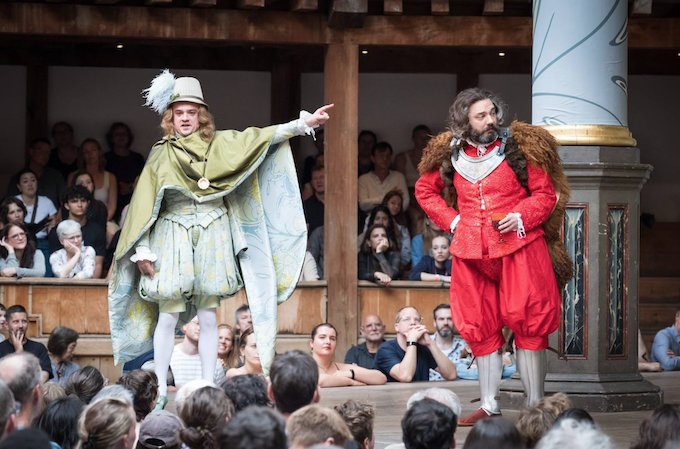
Plot three is the argument and duel between the Welsh parson (and schoolmaster), Sir Hugh Evans and the explosive and fiery Dr Caius. Yes, it has lots of Welsh and French jokes. You can add a German joke, which is a brief interlude in Act IV. One review says ‘xenophobia.’ The English have always found both a source of humour. Shakespeare’s company had a Welsh comedian, marked by ‘Look you’ and we noticed it even in the early play Two Gentlemen of Verona at the RSC a few days before. Singing and teaching are two cliché Welsh characteristics, and they obviously already existed circa 1600. Both are here.

Falstaff has adventures, including hiding in a laundry basket and being thrown in the Thames, then dressing as the Witch of Brentford, both to escape from Ford’s wrath. Act V has him agreeing to meet both women at midnight, dressed as Herne the Hunter.
He is tricked and attacked by the rest of the cast posing as masked fairies. Shallow and Caius are both told that Anne will be dressed in green, or in yellow and they can whisk her away to get married. In fact she is in white and escapes with Fenton. Both suitors discover they have absconded with masked fairies who they think are Anne and then discover they have married men.
That’s the basic play. This has a definite shift which I’ve never seen before. After Mistress Ford snogs Falstaff to make him think he is getting somewhere, she seems ‘oddly moved’ or turned on. This increases until at the end, when he is alone she comes back out and kisses him.
This is the play where women shine. It’s 90% prose, and has four plum female roles: Mistress Page, Mistress Ford, Mistress Quickly, Anne Page. So why did they economise and make Sophie Russell play both Mistress Quickly AND Justice Shallow? She was a first class Mistress Quickly, but as Justice Shallow with a wispy stuck on beard, she was screamingly obviously female.
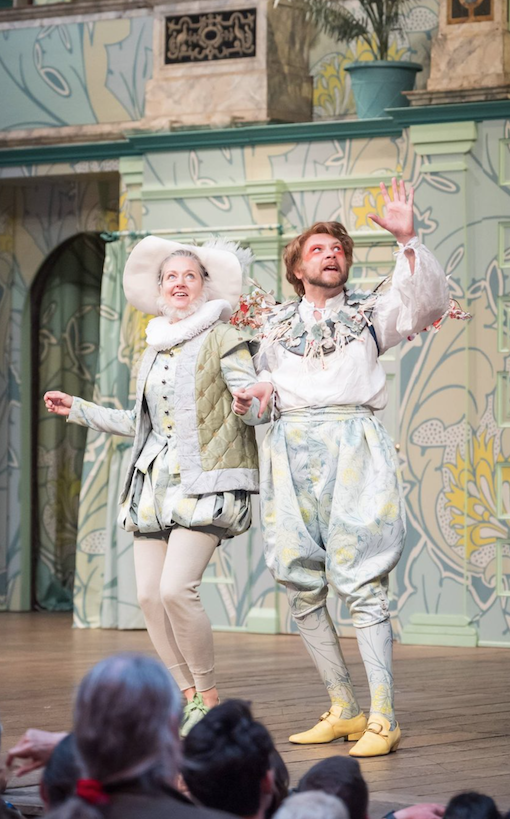
That’s not a reflection on the actor, but upon The Globe’s Artistic Director Michelle Terry, the one who cast herself as Hamlet and Richard III, who insists on balance by women playing male roles. Sigh. You can do 50/50 gender at The National Theatre or Chichester Festival by balancing over a season. At SHAKESPEARE’S Globe, you can only distort plays. It is a problem. As here, when the original text has 16 men and 4 women. In this production, 7 men actors and 6 women, but doubling means more women too. Also some of it daft and unnecessary. LJ Parkinson also works as a drag king, and here does a fine job as The Host of The Garter Inn and as Pistol. In deference to Henry V, Pistol should be male, but it makes no difference whether the publican at the Garter is a landlady or a landlord. So why bother to have a woman playing a man?
One worked brilliantly. That was Danielle Phillips, who played Anne Page and Robin, Falstaff’s page boy. Because of her height (and female pitch) she worked perfectly as a boy. She also had to do Bardolph, and that looked wrong, and I wondered if they’d dispensed with the wall covering, they might have spent the money better on two more actors, a male for Justic Shallow most importantly.
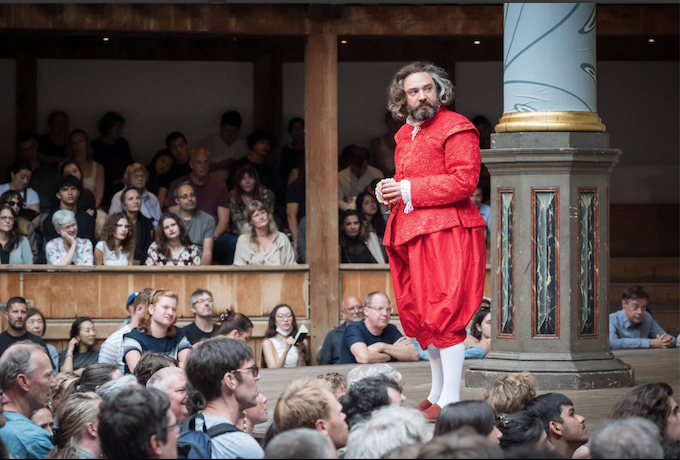
Falstaff? I didn’t totally take to the George Fouracres interpretation, though he acted very well and was one with fine projection. A Mummerset accent seemed out of place, and for a ‘fat knight’ he wasn’t fat enough. On the plus side, he was a younger and more credible wooer and lecher than the usual waddling Falstaff, and played it as less of a blind drunk lecher than usual.
I thought the direction under-did two scenes. The first is when Falstaff has to hide in the laundry basket full of dirty linen. They dropped one white stocking on him. This is an opportunity to cover him with filthy garments. Then at the start of the second half (Act IV) he comes on besmirched and wet from the river. Dark stains on the bottom half of his trousers was a weak way of showing he’d been thrown in the filthy river. Others have had him expel a mouthful of water. He was very good when as Herne he was out in the audience and made everybody crouch down. In fact, everyone had excellent audience interaction, a Globe trademark.

All three lead women were up to these marvellous parts. Emma Pallent as Mistress Page, and Katherine Pearce as Mistress Ford. It requires a female double act that sparks. It did. Add Mistress Quickly as the scoundrel.
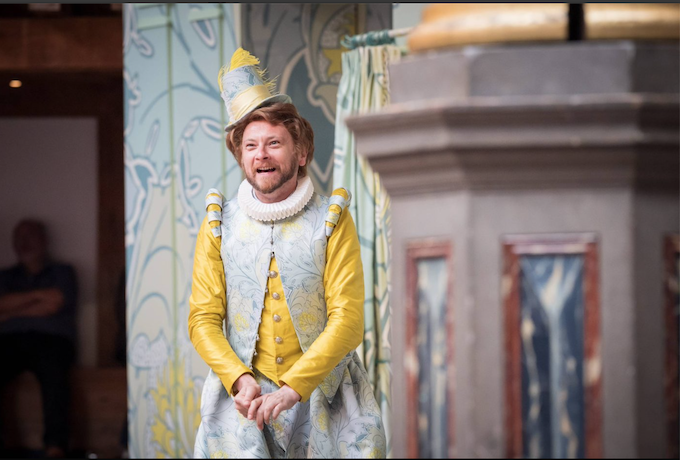
Christopher Logan was Master Page. Where has he been since we last saw him in 2018 in The Rivals. He has been one of our favourite actors for years. Here he skipped around, always funny, importantly always good projection and diction with an Ulster edge.
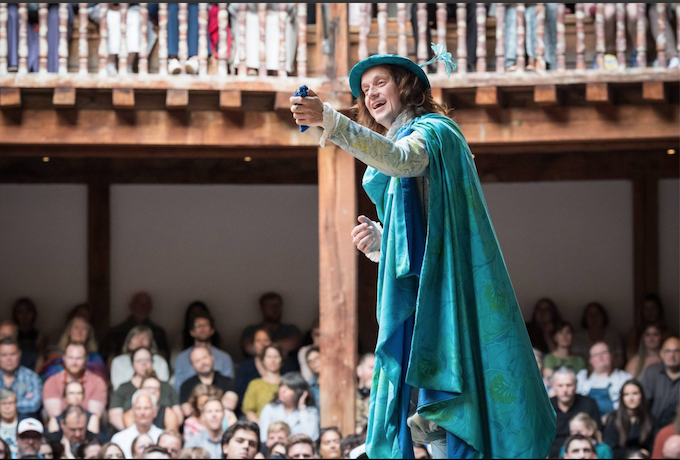
Jolyn Coy had the part considered the co-male lead in that actor managers tended to choose Master Ford / disguised as Brooks over Falstaff. Again, very good. Marvellous wig moment too.
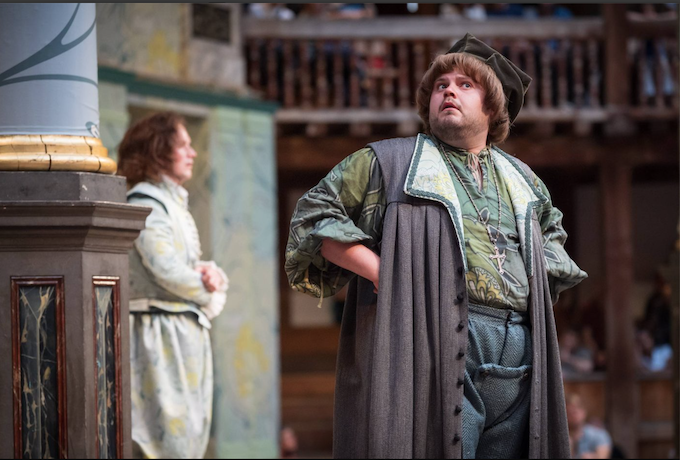
Some reviews selected Samuel Creasey as the Welsh Parson as ‘man of the match.’ Not for me, sadly. I didn’t like his shrill shouting nor did I think he had clarity, though he won the audience over and got spontaneous with a very fine operatic song. He looked good. Also the shouting worked extremely well in the schoolboy encounter where it was funny.
Dr Caius was played by Adam Wadsworth. One review praised him saying ‘turd’ for ‘third.’ It’s in the text.
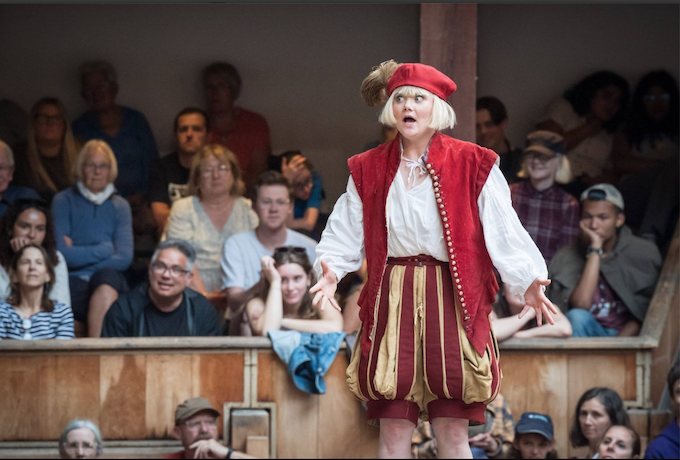
I thought Danielle Phillips as Anne Page stole the show as a very funny, very minor part as the page boy. She excelled. The bit where Mistress Page cuddled her to her breast had the audiences roaring with laughter.
Having seen the 80 minute Shakespeare at the RSC just days before, I was thinking how the RSC could cut this play. The Germans can go right away. Nothing to do with it, probably added for a particular court appearance at Windsor itself. So can the scene where the Welsh Parson tests William Page on Latin. Both did it very well, but juveniles require extra work backstage, and you need two. I suspect it was there to cover costume changes. Losing ten minutes would improve the production, though it was pacy.
I may be wrong but I believe they shifted the last line. The point is Ford was pretending to be Brooks, who wanted to ‘lie with Mistress Ford.’ Falstaff had promised that this would happen.
The Quarto has ‘Brooks’ but the First Folio shifts the name to ‘Broom’. It is thought that Brooks is right because both Ford and Brook are associated with streams. The Macmillan RSC edition explains this and suggests that Shakespeare had to change the name. In Henry IV the Cobham family had objected to the original name, Sir John Oldcastle, so Shakespeare changed it to Sir John Falstaff. The Cobham’s family name was Brooks, so the guess is that between the 1602 Quarto text and the Folio text of 1623 the name was changed from Brooks to Broom. The RSC Macmillan uses the Folio text, but suggests that in production Brooks is a better choice.
At the end, the Pages invite everyone in to celebrate including Sir John Falstaff. Last line (Folio Society edition):
FORD: And Sir John Falstaff, now shall you keep your word
For Brook this night shall lie with Mistress Ford.
Then RSC / Macmillan edition last line (from Folio):
FORD: To Master Broom you yet shall hold your word
For he tonight shall lie with Mistress Ford.
I reckon they changed it to :
For you tonight shall lie with Mistress Ford.
This seems uncommonly “swinging” for the jealous Ford!
OVERALL: The leads did very well. It certainly was fun. It’s certainly NOT a bad play, and I’d happily watch this production again. But there were enough of the persistent Globe niggles to remove a fourth star for me. On a sunny afternoon with a full house,. it might get it back.
***
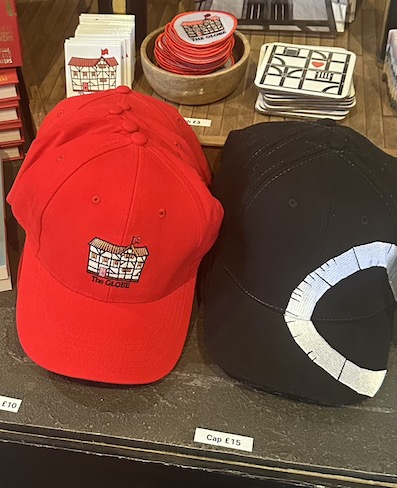
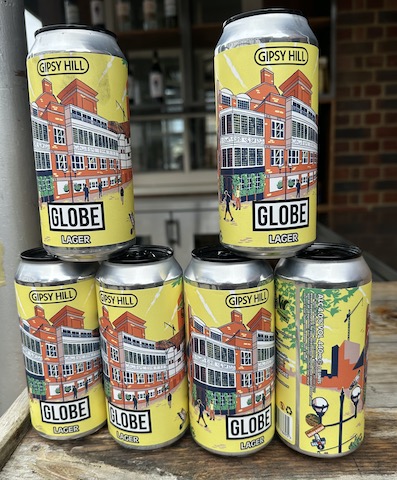
FOOTNOTE: The Globe is always interesting on merchandise, but I think the red cap (Make Theatre Great Again?) is an unfortunate colour choice. I would have bought the lager if it was evening.
WHAT THE CRITICS SAID
four star
Mark Lawson, The Guardian ****
Dominic Cavendish, The Telegraph ****
The Times ****
Nick Curtis, Evening Standard ****
Anne Ryan, London Theatre ****
three stars
Alex Wood, What’s On Stage ***
Holly O’Mahoney The Stage ***
Andrzej Lukowski Time Out ***
Abbie Grundy, Broadway World ***
Patrick Marmion, The Mail ***
Rachel Halliburton, Arts Desk ***
LINKS ON THIS BLOG:
THE MERRY WIVES OF WINDSOR
The Merry Wives of Windsor – RSC 2012
The Merry Wives, Northern Broadsides 2016
The Merry Wives of Windsor – RSC 2018
The Merry Wives of Windsor, Globe 2019
The Merry Wives of Windsor – RSC 2024
The Merry Wives of Windsor, Globe 2025
SEAN HOLMES
Romeo & Juliet, Globe 2025
Much Ado About Nothing, Globe 2024
The Comedy of Errors, Globe 2023
The Winter’s Tale – Wanamaker & Globe 2023
Twelfth Night, Globe 2021 & broadcast
A Midsummer Night’s Dream, Globe 2019
A Midsummer Night’s Dream – Filter 2011
CHRISTOPHER LOGAN
The Rivals, Watermill 2018
A Midsummer Night’s Dream, Headlong (Bottom, Pyramus)
A Midsummer Night’s Dream, Globe (Thisbe)
The Merchant of Venice, Globe, 2015 (Prince of Aragon)
Julius Caesar, The Globe 2014 (Casca)
The Way of The World, Chichester 2012
The Tempest, Wanamaker Playhouse, 2016
Cymbeline, Wanamaker Playhouse
GEORGE FOURACRES
The Comedy of Errors, Globe 2023
Twelfth Night, Globe 2021
EMMA PALLENT
Much Ado About Nothing, Globe 2014 (Beatrice)
DANIELLE PHILLIPS
The Upstart Crow, Gielgud Theatre, 2020
SAMUEL CREASEY
The Winter’s Tale, Wanamaker & Globe 2023
 Peter Viney's Blog
Leave a comment