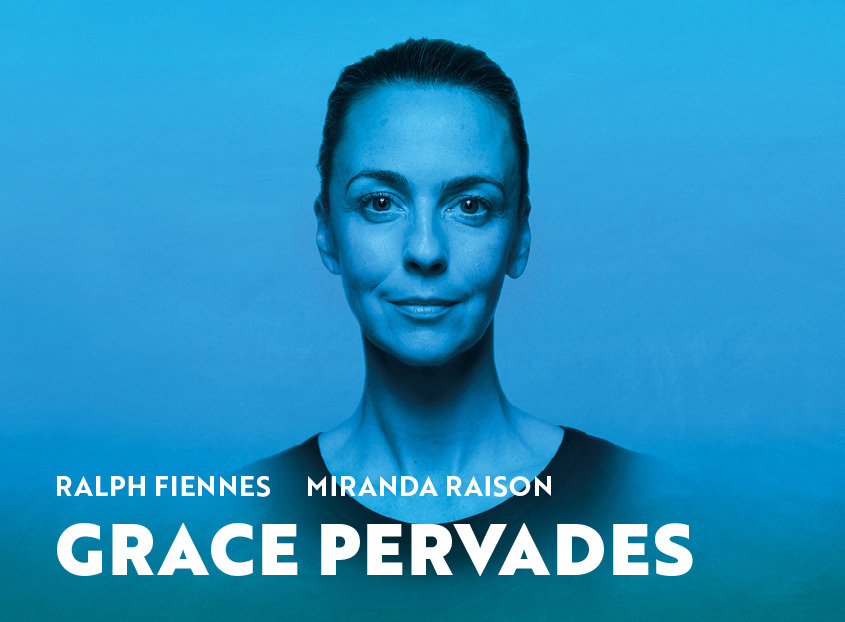
By David Hare
Directed by Jeremy Herrin
Set Design – Bob Crowley
Composer – Paul Englishby
Ralph Fiennes Season
Bath Theatre Royal
Saturday 12th July 2025 14.30
CAST
Ralph Fiennes – Henry Irving
Miranda Raison – Ellen Terry
Ruby Ashbourne Serkis – Edith Craig
Jordan Metcalfe – Edward Gordon Craig
Helena Lymbrey – Christabel aka Christopher St John
Kathryn Wilder – Kate Terry, Tony Atwood
Saskia Strallen – Isadora Duncan, Ensemble
Sharif Afifi – Leopold ‘Suler’ Sulerzhinsky, Ensemble
Tom Kanki – Loveday, Hamlet, Waiter, Ensemble
Harriet Leitch – Maid, Moscow Stage Manager, Ensemble
Jo Mousley – Gertrude, Ensemble
Damian Myerscough – Claudius (Moscow), Ensemble
Guy Paul – Claudius (Lyceum), Stanislavski, Dr Mason, Ensemble
David Hare’s latest play is a homage to theatre and a discussion on theatre. It’s the story of Henry Irving and Ellen Terry, the two greatest actors of their day, and Ellen’s two children, born out of wedlock, Edward Gordon Craig and Edith Craig and covers the period from 1878, when Irving invited Terry to join his Lyceum company, and 1966 when Edward Gordon Craig died, taking in Irving’s death in 1905. It’s not chronological but switches between 1878 to 1905 and aspects of Edward Gordon and Edith’s careers later. The enigmatic title comes from a contemporary review of Ellen Terry:
Whether in movement or in repose,
Grace pervades the hussy
Charles Reade
The “hussy” was Ellen Terry, who managed in late Victorian prim society to have two illegitimate children from a much older artist partner, yet became the most popular (and best paid) actress of her day. Incidentally throughout the play the word ‘actor’ is used for her more than ‘actress.’ Sorry, between 1978 and 1905 she would have certainly been an ‘actress.’ The word is not used in modern theatre, and I’ve avoided it on video filming sets myself since 1985, though as Stephen Fry pointed out, the word ‘actress’ never stopped anyone from stepping up to receive the Academy Award for ‘Best Actress.’
(Sir) Henry Irving and I have shared history. In a gap year I worked at the Russell Cotes Art Galley & Museum in Bournemouth. Irving was a close friend and frequent house guest of Sir Merton & Lady Russell-Cotes and on the corner of the first floor was the Sir Henry Irving Room. Irving was the archetype of the actor-manager, playing the lead in the major Shakespearean plays. The man who put the ‘thesp’ into thespian. He brought Helen Terry into the company to play opposite him. He was a friend of Bram “Dracula” Stoker, and a rival of George Bernard Shaw. Irving didn’t do modern plays. He was the first actor to be knighted and sought for theatre and drama to be respected as art forms. The room dedicated to his memory was quiet and cool (and frankly not of general interest), and on hot summer days when we had very few visitors, I would sit in a chair there. I read every playbill on the wall too.
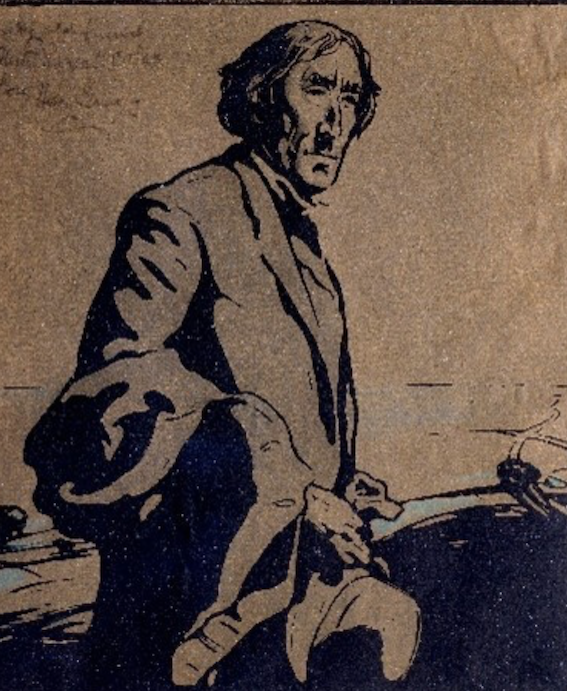

Henry Irving, Helen Terry from the Russell-Cotes Art Gallery & Museum
Helen Terry was in there. Edward Gordon Craig, her son, was in there. The Roman skull Irving used for Hamlet was there, along with Irving’s cufflinks, a lock of his hair, his makeup box, swords, scabbards, pipes, costumes. A year later, in Drama classes, I astonished tutors with my arcane knowledge of them.
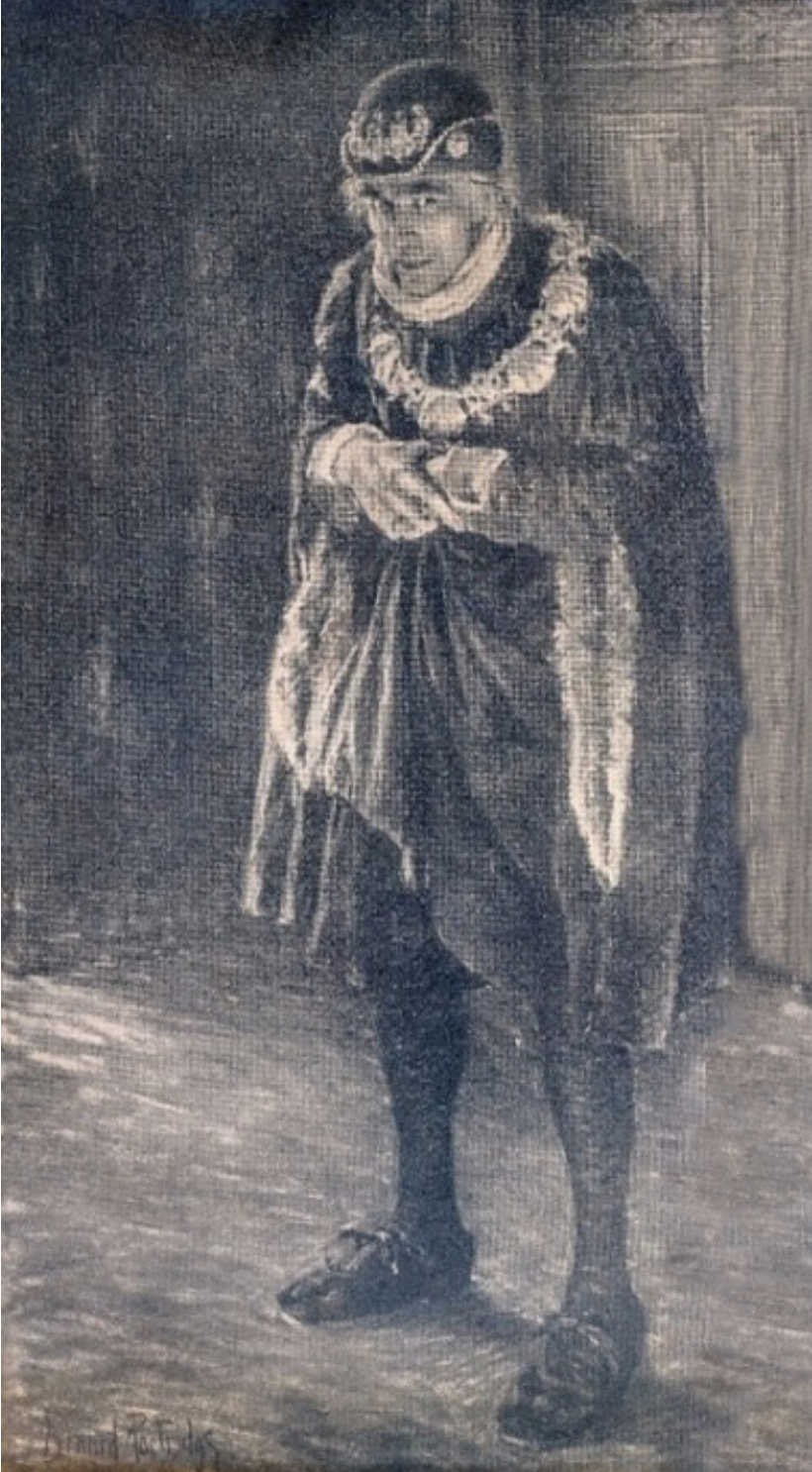
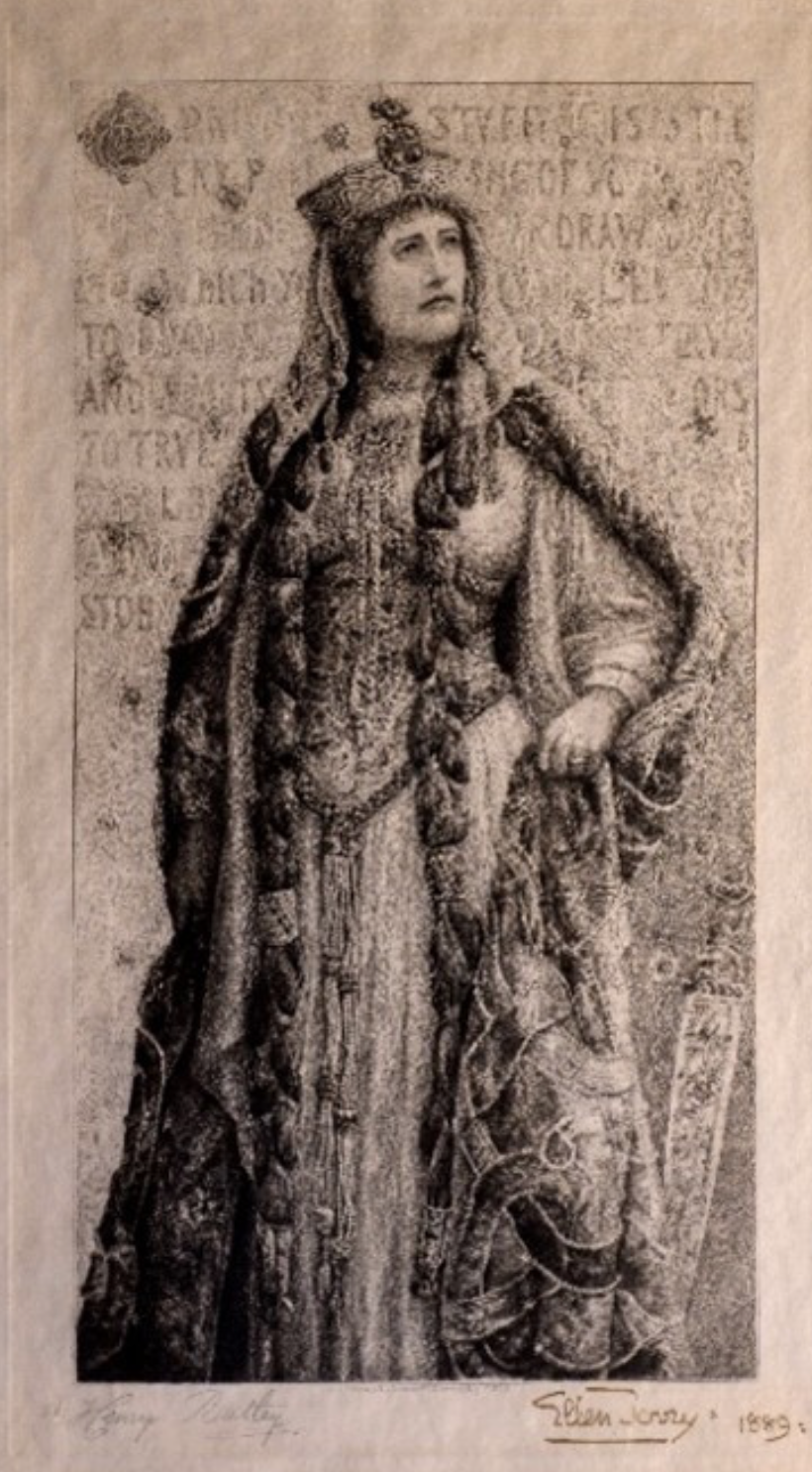
Irving as Richard III, Helen Terry as Lady Macbeth. The costume is reproduced in Grace Pervades.
Edward Gordon Craig featured in the production course at university, though Irving and Terry didn’t appear at all. Craig was innovative on stage lighting (from above rather than footlights), moveable flats, non-realistic sets, costume, dance and movement. I’ll add that the stage lighting here in Bath was exemplary, as were the projected digital backgrounds. Edward Gordon Craig is a figure of fun in the play, stressing the aspect that he preferred designing and conceiving a play to actually doing one. I empathize. I much prefer writing books to promoting them. I went to the shelves to see what I had on Craig. The first book I picked up was Eric Bentley’s The Theory of The Modern Stage. One page was turned over. It was an extract from Craig:
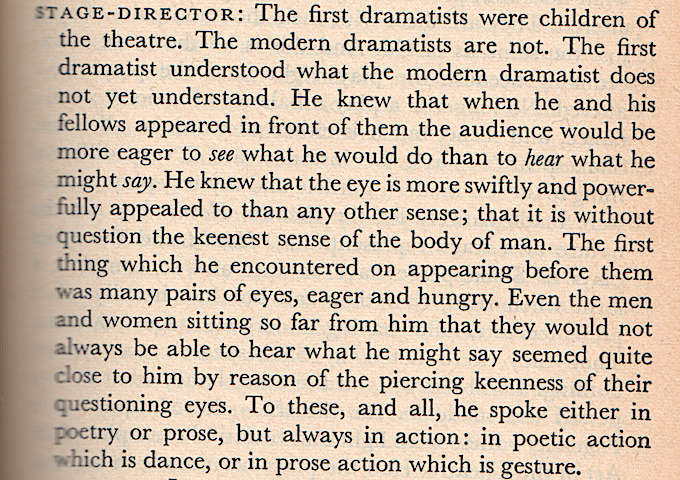
David Hare has read that section and indeed repeats the sense of it through Craig. When I look at other reviews, I note how much I focus on visuals and movement and lighting rather than text. And I’d turned that page over many decades ago.

I wonder how collaborative the writing of the play was. i.e. Was it designed for Ralph Fiennes? It opens the ‘Ralph Fiennes Season’ at Bath. There are two references to Ellen Terry’s desire to play Rosalind in As You like It, a desire Irving avoided for twenty-five years. Yet the second play in the season will be As You Like It, directed by Ralph Fiennes. Then we end seeing Fiennes in red Cardinal’s robes as Cardinal Wolseley, surely a nod to his recent Oscar-nominated starring role in the film Conclave. He received the Critics Choice Award for best actor. If you are writing a play about Henry Irving, an actor with similar stage presence is essential. Given that age excludes Ian McKellen, the obvious choices would be Ralph Fiennes, Mark Gattis or Kenneth Branagh, and Branagh’s already channelled Olivier twice and Gattis has done Geilgud.
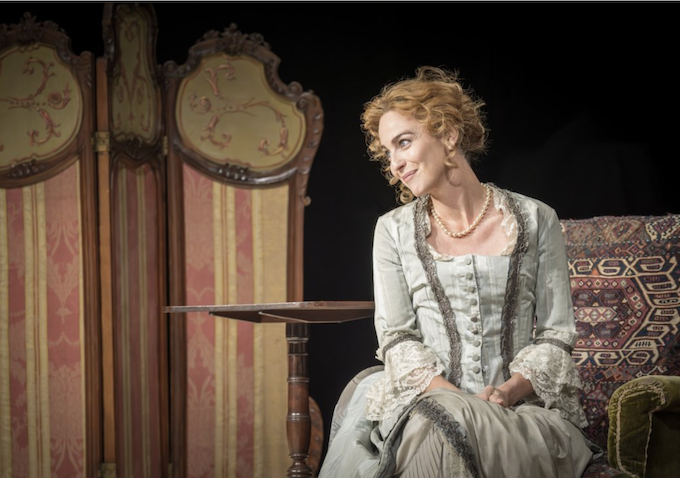
Miranda Raison is ideal casting for Ellen Terry, naturalistic on stage compared to Irving’s portentous declaiming. We see her essaying Portia, Lady Macbeth, Olivia with speeches. Actually, I think both Raison and Fiennes toned down the declaiming aspect. At full 1880s strength it would be funny. They’re not going for that. There are many memorable lines from Hare, and I enjoyed the scene where they discuss Hamlet.
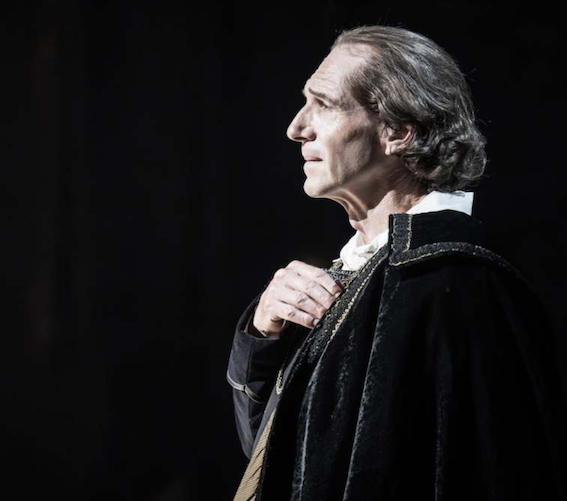
Irving insists only Hamlet wears black, while Terry wants her Ophelia to be in black. They get down to talking about each other’s acting:
ELLEN: I have a feeling that your acting could be improved if from time to time you directed your gaze at the other actor.
After a few lines:
HENRY: Look at the other actors, you say?
ELLEN: (shrugs) It’s always worked for me.
That scene is enhanced by having Claudius and Gertrude and others on stage, then being sent off for oysters and champagne while Irving and Terry discuss the roles.
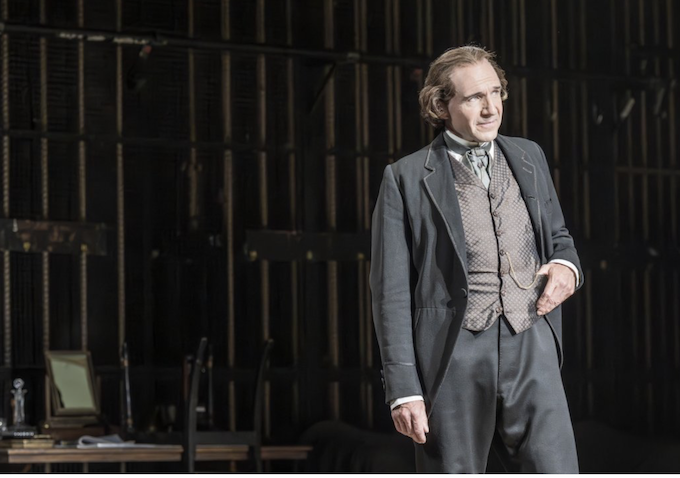
The ongoing story of their quarter of a century collaboration remains enigmatic. When Irving turned up at her sister’s house in 1878, Ellen thought he wanted to employ her famous actress sister, Kate. He wanted to employ Ellen. Did Irving and Terry have an affair? Probably in this version, though fairly short-lived. They start off looking forward to an hour together talking after a production, then years go by without them doing that anymore.
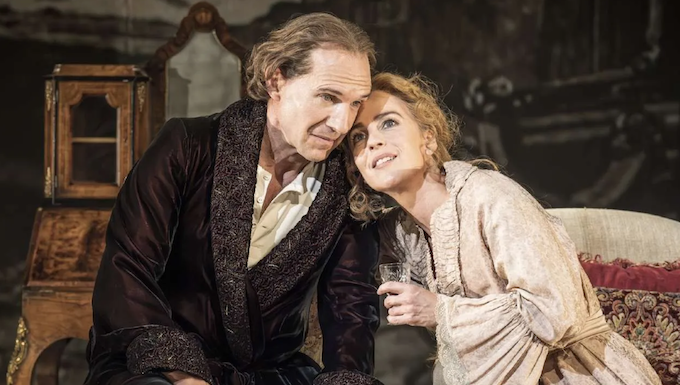
Usefully, a placard tells us the year and scene: 1878, 1883, 1904 Hamburg, 1912 Moscow, 1905 Cafe Royale, 1966 Provence. The Edith sub-plot flashes forwards to the 1920s at Small Hythe where she had an all-female artistic community (though two dress as men) and a small theatre.
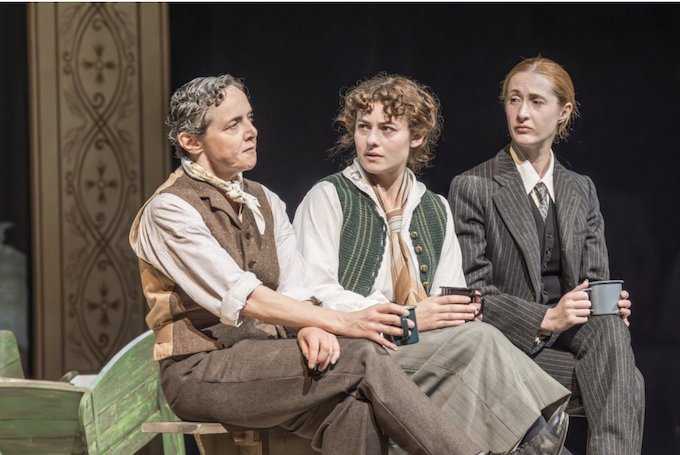
The best Smallhythe scene is when Chris is distraught after a one night stand with Vita Sackville-West. Edith remains the voice of reason throughout as narrator.
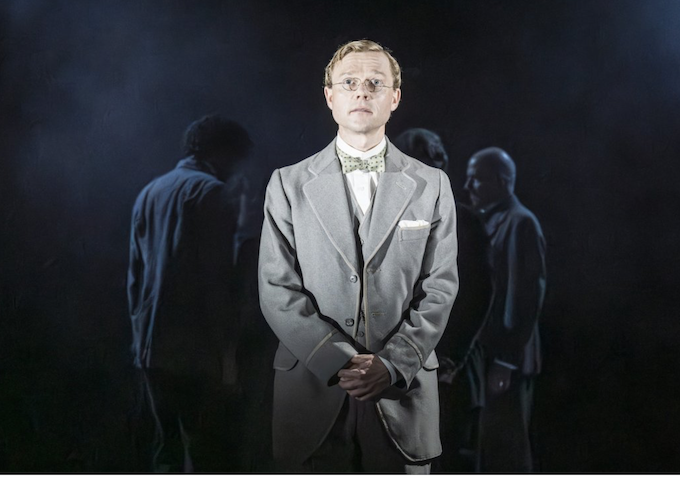
We see Edward Gordon Craig on tour in Europe, with the dancer, Isadora Duncan (she was the mother of one of his thirteen children). This is 1904.

Then a scene from his Hamlet with Stanislavski at the Moscow Art Theatre in 1912, with Craig’s set. This Claudius and Gertrude speak in Russian with projected translation.

References abound … Henry James, Vita Sackville-West, George Bernard Shaw, Peter Brooks in the 1966 scene. Ellen criticizes Irving’s mannered pronunciation, (Tak this rup frum mey neck in The Bells). He tells her in return that the reviews said her Portia shouldn’t flirt.
HENRY: They say it’s not an erotic part.
ELLEN: It is when I play it.
Then there’s Henry James. He wrote an over-long and pompous piece on London Theatre in 1877, the year before Irving employed Ellen Terry and takes swipes at both. First he attacks Ellen Terry’s co-star, a Mr Hare. Was he an ancestor of our writer here, David Hare? Ellen Terry has all the theatrical connections, John Gielgud was her great-nephew.
Mr. Hare’s companion is Miss Ellen Terry, who is usually spoken of by the “refined” portion of the public as the most interesting actress in London. Miss Terry is picturesque; she looks like a pre-Raphaelitish drawing in a magazine—the portrait of the crop-haired heroine in the illustration to the serial novel. She is intelligent and vivacious, and she is indeed, in a certain measure, interesting. With great frankness and spontaneity, she is at the same time singularly delicate and lady-like, and it seems almost impertinent to criticise her harshly. But the favor which Miss Terry enjoys strikes me, like that under which Mr. Henry Irving has expanded, as a sort of measure of the English critical sense in things theatrical. Miss Terry has all the pleasing qualities I have enumerated, but she has, with them, the defect that she is simply not an actress. One sees it sufficiently in her face—the face of a clever young Englishwoman, with a hundred merits, but not of a dramatic artist. These things are indefinable; I can only give my impression.
Galaxy magazine, May 1877Henry James had also submitted a play to Ellen Terry … which she had rejected. Revenge is sweet:
HENRY … Remember Henry James?
ELLEN: He hates the theatre. Too much hugging and kissing he says.
HENRY: “Ellen Terry is too sexual to be a great actress.”
ELLEN: For Henry, a handshake is too sexual. A shared pot of tea is dangerously licentious.
When I was doing postgrad(Hollywood & The Novel) most of the other postgrads were doing aspects of Henry James. I grew to loathe HenryJames. Well, I loved those lines.
I thought it a very good play indeed. I thought there were too many scenes with just two on stage and dialogue and it leapt a little when we had more on stage. I feared that perhaps the asides and references were a little too “Theatre Studies” for a general audience. Indeed the most experienced theatre critics (who know this stuff), Mark Lawson and Domenic Cavendish, both gave it four stars. So shall I.
****
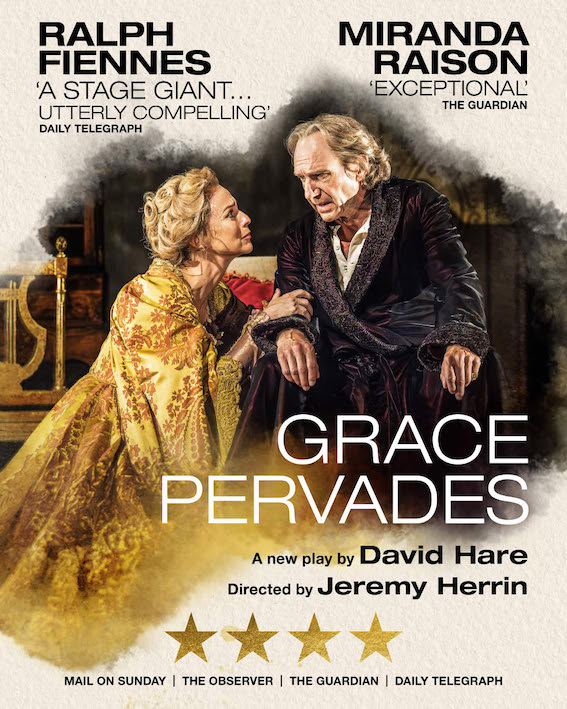
As expected, it goes onto to London’s West End with a much better poster:
PROGRAMME
One of the very best. Excellent essays on the characters which enriched the story.

Unusually for Bath, the play text was on sale. Well, it is David Hare and his 32nd play. I was in a short line and the third in the line to buy a copy.
WHAT THE CRITICS SAID
****
Mark Lawson, Guardian ****
Domenic Cavendish, The Telegraph ****
Cheryl Markovsky, Broadway World ****
Mike Whitton, Stage Talk ****
3 star
Sarah Hemming, Financial Times ***
Bryony, Theatre & Tonic ***
2 star
Dave Fargnoli, The Stage **
LINKS ON THIS BLOG
DAVID HARE
Uncle Vanya, Bath, 2019
Racing Demon, Bath 2017
Skylight West End
Plenty, Chichester 2019
Peter Gynt, National Theatre, 2019
Platonov Chichester 2015
Ivanov Chichester 2015
The Seagull Chichester 2015
RALPH FIENNES
Small Hotel, Bath 2025
As You Like It, Bath 2025 (DIRECTOR)
Grace Pervades, Bath 2025 (Henry Irving)
Conclave (film)
Richard III, Almedia 2016 (Richard III)
Man & Superman, National Theatre
The Grand Budapest Hotel (film)
Cemetery Junction (film)
Hail Caesar! (film)
The King’s Man (film)
The Dig (film)
JEREMY HERRIN
The Man In The Hat (film, actor, the priest)
Wolf Hall, RSC (director)
Bring Up The Bodies, RSC (director)
MIRANDA RAISON
The Winter’s Tale , Branagh Season, 2015 (Hermione)
Harlequinade, by Rattigan, Branagh Season (Leading Lady)
JORDAN METCALFE
Love’s Labour’s Lost, RSC, 2024 (Boyet)
Comedy of Errors, Shakespeare’s Globe 2023 (Dromio of Syracuse)
Jack Absolute Flies again, National Theatre 2022
Eyam – Globe 2018
The Winter’s Tale, Globe 2018
The Hypocrite, RSC 2017
POSH, Salisbury Playhouse, 2015
KATHRYN WILDER
Romeo & Juliet, Branagh Season, 2016
Harlequinade, by Rattigan, Branagh Season 2016
 Peter Viney's Blog
Leave a comment