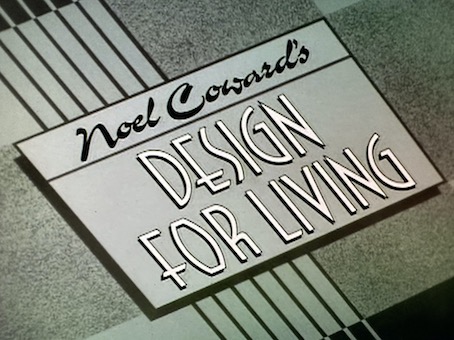
Design for Living
By Noël Coward
Directed by Philip Savile
Produced by Louis Marks
BBC Play Of The Month, broadcast 6th May 1979
CAST
Rula Lenska – Gilda
Clive Arrindell – Otto
John Steiner- Leo
John Blunthal – Ernest Friedman
Dandy Nicholls – Miss Hodge
Helen Horton – Grace Torrence
Vincent Marzello – Henry Carver
Martha Nairn – Helen Carver
Britt Walker- Matthew
From the BBC Noël Coward Collection box set.
A bit of trivia. Apparently the original 1932 production, which also starred Noël Coward, was without the irritating umlaut (ë) over the ‘e’. Was he then ‘Nole’ rather than ‘No-well’? To type you have to hold down e, and wait till an accent menu appears and type 4. If you’re too fast you get Noe4l not Noël. I speak from bitter experience.
The original production was considered too risqué for the London stage and opened on Broadway instead, with a film following in 1933. Coward wrote it with the married couple Alfred Lunt and Lynn Fontanne in mind, and the three of them starred in the first production. He’s promised he’d write a play for the three of them eleven years earlier, and the production was based on their availability. Coward played Leo, the successful playwright. The play didn’t get to London until 1939.

Noël Coward: Alfred had suggested a few stage directions which if followed faithfully, would undoubtedly have landed all three of us in gaol (introduction to play text).
As usual, the BBC went for someone who’d starred on TV … Rula Lenska was in Rock Follies in 1976, then Rock Follies ’77 the next year. Rula Lenska gets the”Starring …” tag line on the opening credits. Dandy Nicholls was Else Garnett from Till Death Do Us Part and was in In Sickness and Health at the time of filming. This was the second BBC version.
It’s a set designer’s dream, especially as the central character Gilda is an interior designer, and there are different locations for each act. The filming is elaborate and not confined to one room – we go into bathrooms, showers, bedrooms, balconies and hallways off the main set. The BBC usually kept to a couple of rooms. The camera work is also elaborate. There’s an obsession with mirror shots (this was a hallmark of the series, so probably the same camera operator) and they use high overhead shots too. It’s further from a stage play than most of these BBC productions.
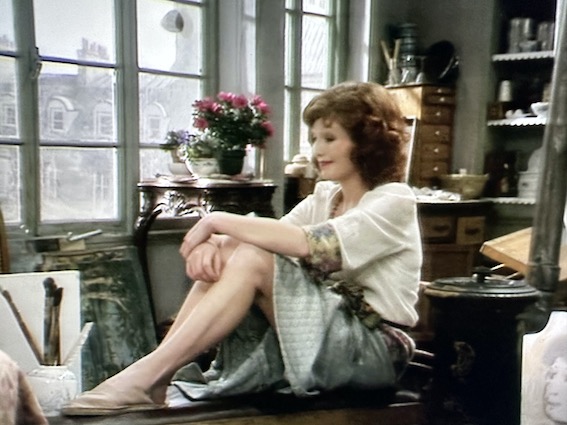
Hence the peasant blouse and skirt.
The BBC version uses headlines … 1933, 1935, 1937 to mark the acts. I doubt Coward did that in 1933, but maybe he did in the 1939 production.
Act One is Paris, and is Otto’s artist studio which he shares with Gilda. The art dealer Ernest Friedman (John Blunthal) arrives with a freshly purchased Matisse (£800). He is going to wait a little and re-sell.
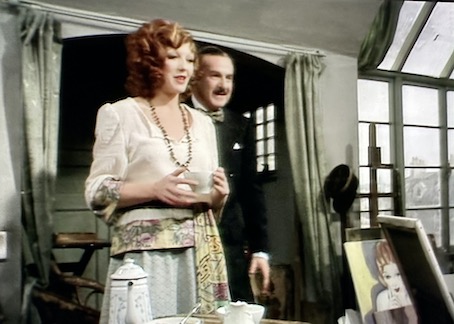
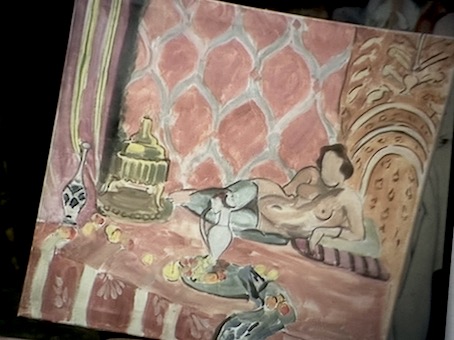
Ernest describes himself as ‘a bitter old family friend.’ Gilda says Otto is indisposed with neuralgia. She finds the flat ‘squalid.’ He asks her if she knows that Leo is back and successful. Gilda feigns surprise. The decades since we last saw it coupled with poor memory helped us here. We assumed the man the camera kept cutting to in the bedroom was Otto with a migraine, as Ernest did.
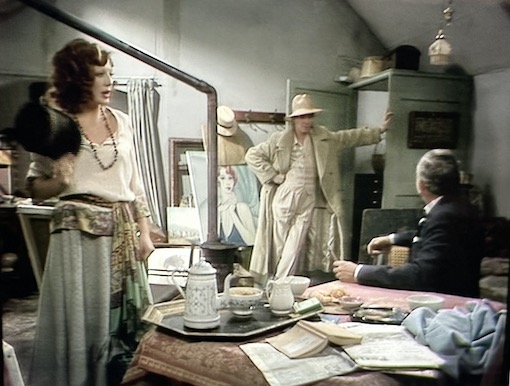
Then Otto turns up from Bordeaux. She informs Otto that Leo who has just returned as a rich and famous playwright. He’s just sold the movie rights and is staying at the Georges V in Paris. Otto is delighted at the news at first. Gilda tells him to go and meet Leo with Ernest.
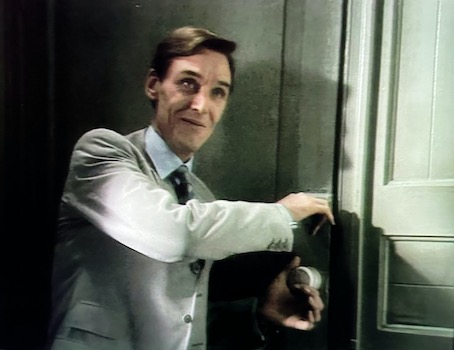
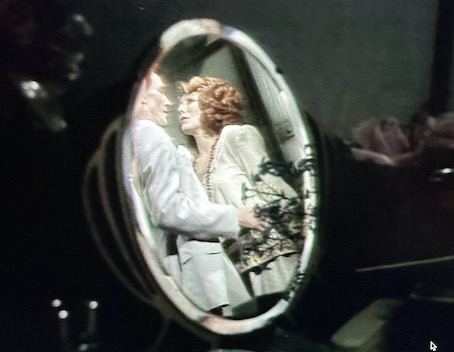
The camera operator is inordinately proud of his many mirror shots.
Gilda goes into the bedroom to speak to Leo (John Steiner) who has been listening through the door. This is Noël Coward, so Leo’s first line has to be ‘Are there any cigarettes?’
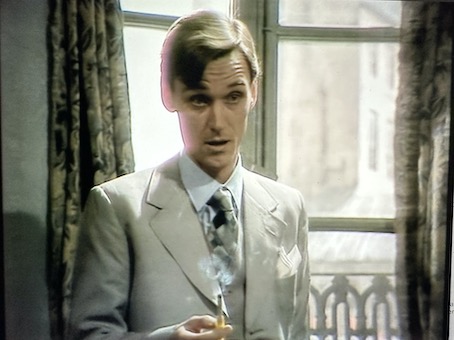
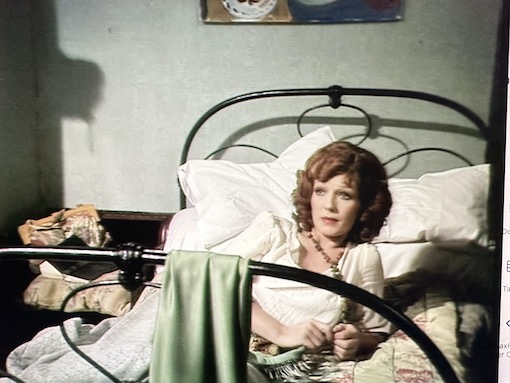
Gilda: Whom do you love best? Otto or me?
Leo: Silly question … it doesn’t matter who loves who the most. You can’t line up things like that mathematically …
Gilda: But what’s the truth? The deep down truth?
Leo: It should be easy. The actual facts are so simple. I love you. You love me. You love Otto. I love Otto. Otto loves you. Otto loves me. Now, start to unravel from there.
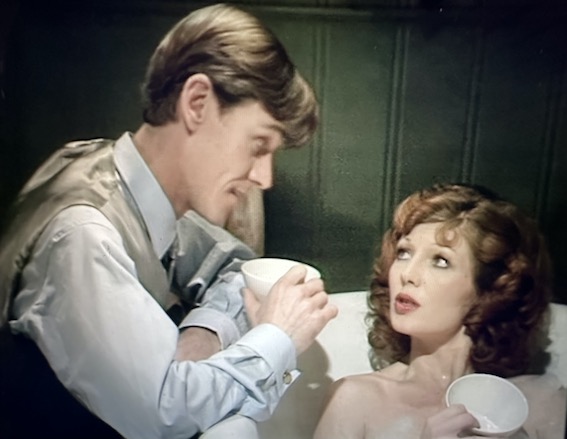
Otto pours champagne in the kitchen and takes it in to dink with Gilda who is in the bath. We assume this was not in any stage version! Nor was Gilda putting her stockings on. They are laughing at a tale of Leo pushing Otto into a narrow bath where he got wedged. Backstory? Anyway while they’re both laughing, Otto comes back. They stop. Gilda is adjusting her clothing. Leo is lounging on the bed.
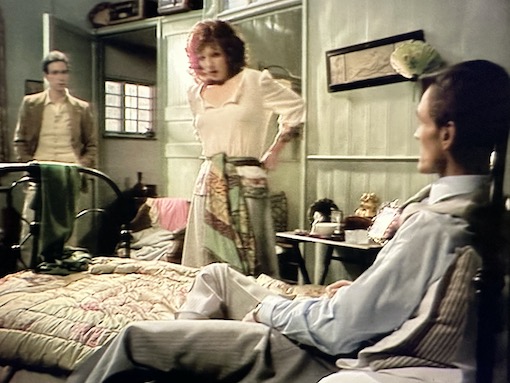
Otto is bright enough to suspect goings-on. He discovers Leo has spent the night with Gilda. Otto leaves in fury.
Leo: Deathless drama!
Otto: Wrong! Lifeless comedy.
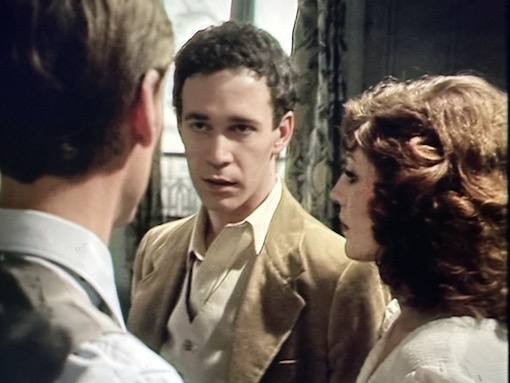
An irritating peculiarity in Act One is continual sounds of a baby crying in a neighbouring apartment and street noise outside. It’s distracting and pointless.
Act two is London.
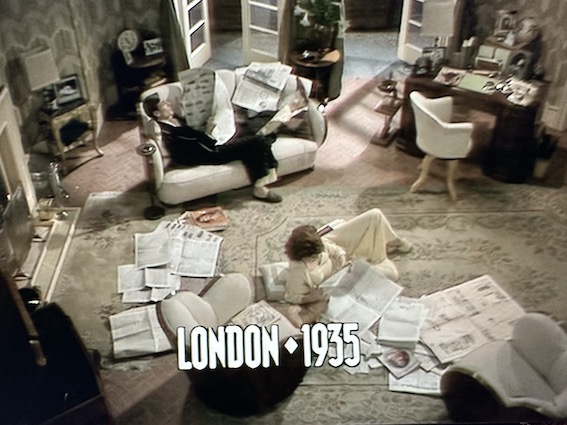
Oddly after the intro music, there is what sounds like audience applause. There’s no way this is live. Leo now has a fabulous apartment and is successful in London theatre with a new play. Gilda is living with him. Coward has some funny self-deprecating lines here as they read his opening night reviews.
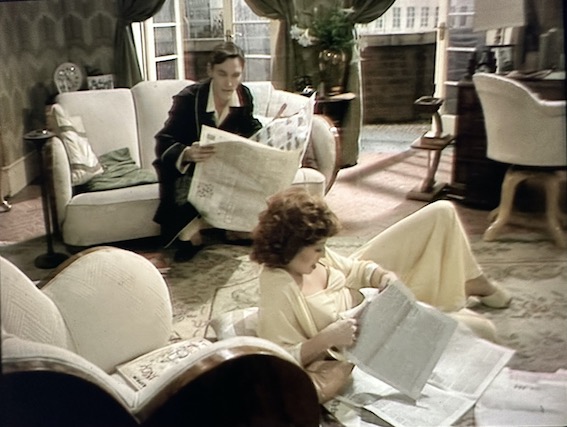
Leo: (reads) The play on the whole is decidedly thin …
Gilda: My God, they’ve noticed it.
Leo: Thin? … Would you call it thin?
Gilda: Emaciated.
Leo: I shall write fat plays from now onwards. Fat plays full of funny fat people.
Gilda: Anyway you can’t expect a paper like The Times to be interested in your petty little excursions into the theatre. After all, it is the organ of the nation.
Leo: That sounds vaguely pornographic to me.
It is said it was those last two lines got the play into trouble with the Lord Chamberlain in England in 1933. The office may not have understood the rest. The scene is enhanced by casting such an extremely thin actor as Leo. It’s full of Coward talking about Coward, the playwright.
Gilda: Success is far more perilous than failure, isn’t it?
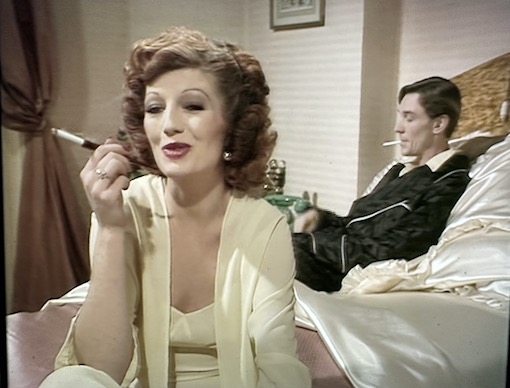
A Do you smoke in bed? B: I don’t know I’ve never looked.
The desperate search through empty cigarette boxes is pure Coward. You couldn’t do him without smoking.
They row. They are invited to a house party. Leo wants to go. Gilda doesn’t.
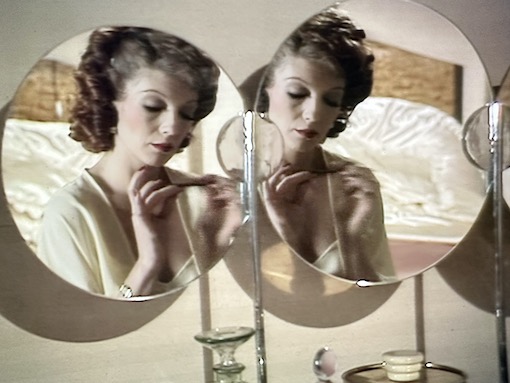
Act II, Scene 2: We switch scenes to a few days later. Leo is away. Gilda asks their housekeeper, Mrs Hodge (Dandy Nicholls) if she and Leo should get married.This comes as a shock to Mrs Hodges who thought they were.
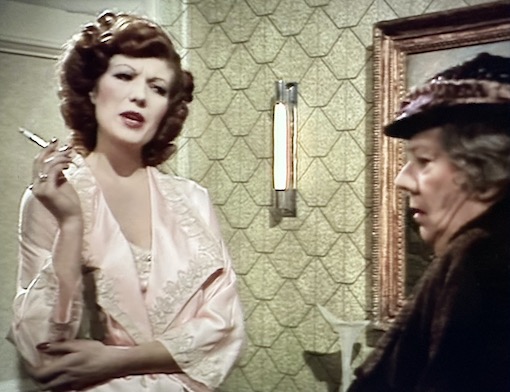
As often with Coward, working class dialogue is creaky (I thought you was married). I liked her response to the questions about her two husbands. ‘One’s dead. The other’s in Newcastle.’
Hodges opens the front door to leave, Otto is there, kisses Hodges hand and slides into the room quietly (Gilda sees him for the first time in a mirror, obviously). They have dinner (we see the scene initially in a mirror).
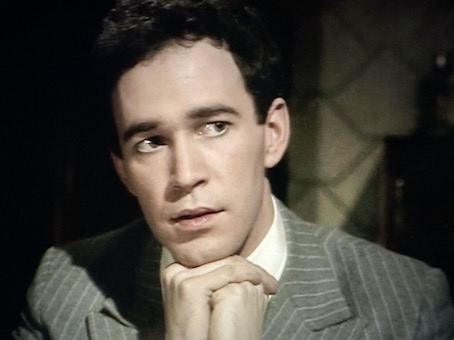
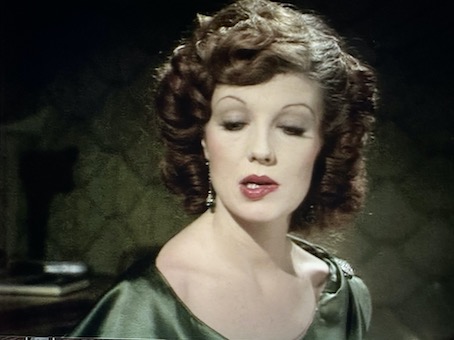
Otto: I know what you are my sweet. You’re just the concentrated essay of love among the artists.
Gilda: I think that was unkind.
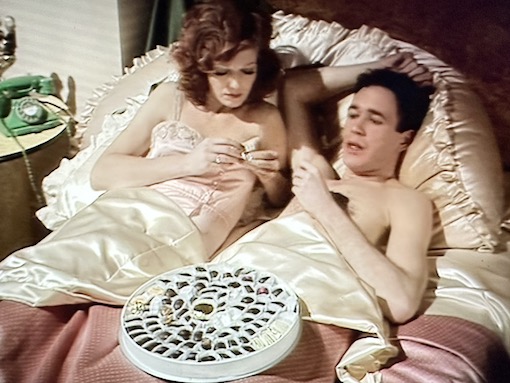
They dance. Inevitably they go to bed together. Unusually instead of a cigarette afterwards, they go for a box of chocolates. Perhaps cigarette ash doesn’t go with silk sheets. It will not have been this explicit on stage.
Otto: We are different. Our lives are diametrically opposed to ordinary social conventions.
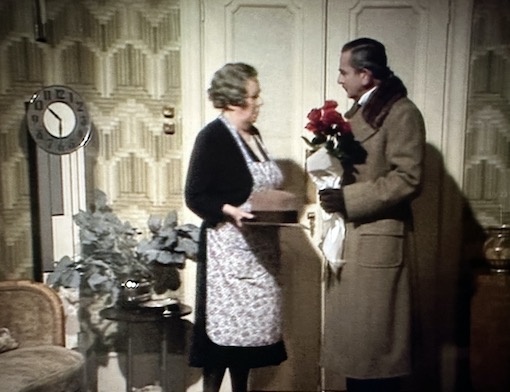
A third scene switches to the next day. Ernest Friedman turns up. Mrs Hodges repeats her ‘Madam / Miss’ confusion. Gilda comes out to greet him. He describes selling a Holbein with some difficulties as to provenance (earlier he had said the Matisse was not the usual style, which may suggest Ernest is dodgy.) Dandy Nicholls disapproves for England.
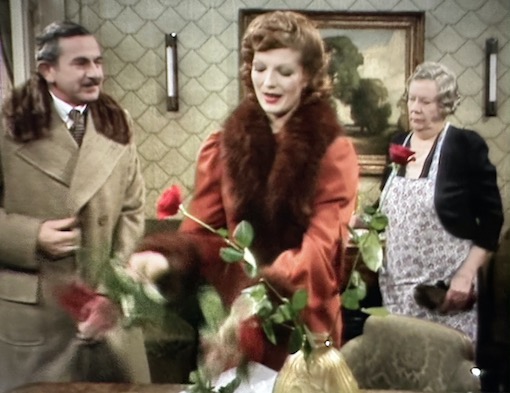
Otto is in bed. Gilda does the previous ‘Leo is indisposed’ line, and leaves quietly with Ernest. Otto calls for Gilda and is discovered by Mrs Hodges.
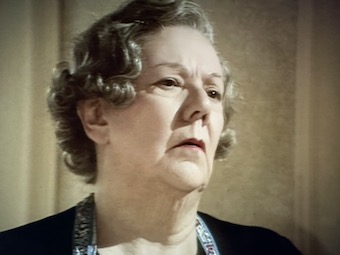
Mrs Hodges: A pretty thing! Nice goings on! I’m a respectable woman!
Otto: Never mind.
Mrs Hodges: I don’t mind a bit of fun from time to time among friends. But I do draw the line at looseness.
Otto finishes:
Otto: Please go away and mind your own business.
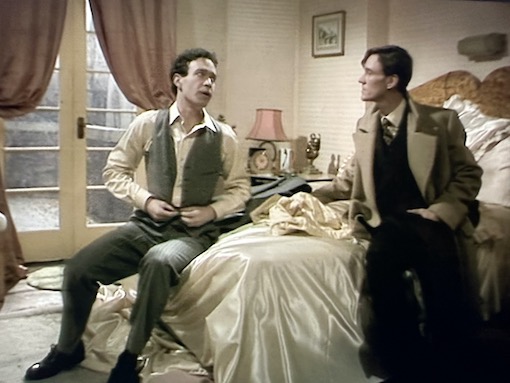
Leo returns while Otto is getting dressed and discovers that they’ve slept together. Otto and Leo stay in the apartment and wake up to find identical goodbye letters from Gilda, They get paralytically drunk and embrace at the end. That’s the text. They go rather further here.
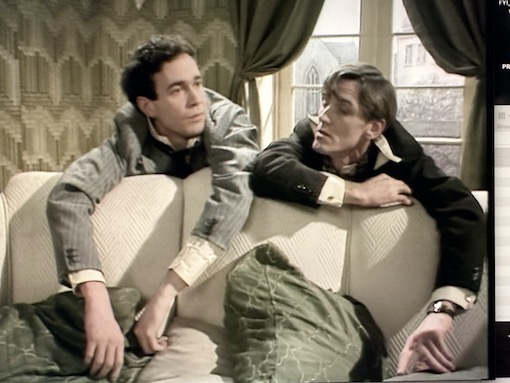
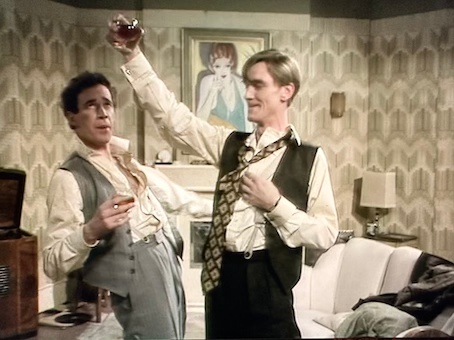
They run out of brandy and switch to sherry – the director uses an out of focus shaking shot to show Otto’s point of viewing. The Coward Estate were traditionally wary of over-explanation of subtext in his plays. They let this one through.
Act three is New York, and Gilda has married Ernest. As the accommodation gets better with every switch, you might conclude Gilda has an eye for the money.
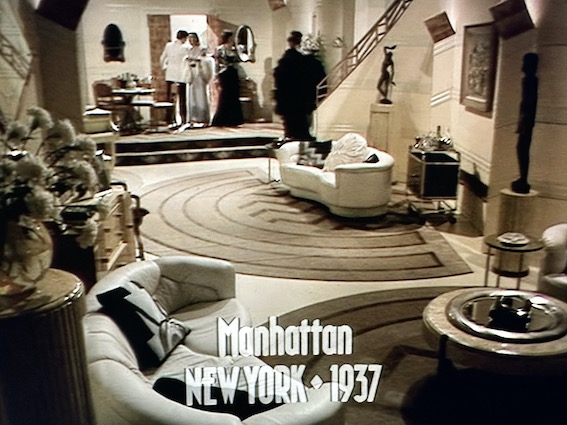
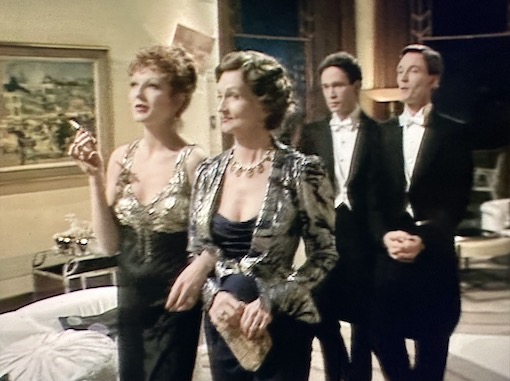
They have an even more fabulous 30th floor apartment. Gilda is a successful interior designer (a second meaning of Design for Living?) and is entertaining a potential customer, Grace Torrence and two of Ernest’s customers, Henry and Helen Carver. Gilda is now much more urbane. The apartment is her ‘shop’ for interior design and Ernest’s for paintings.
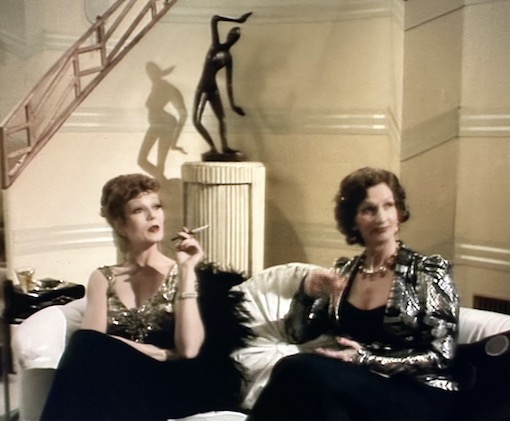
Henry is a philistine on art. He calls her ‘Jilda.’ Face it, he is a ‘comedy American.’ Coward had spent enough time in America to have felt confident about lampooning Henry. Henry’s dad paid $11,000 for that Matisse from Act One. Obviously, as in Act One and Act Two, Ernest is away.
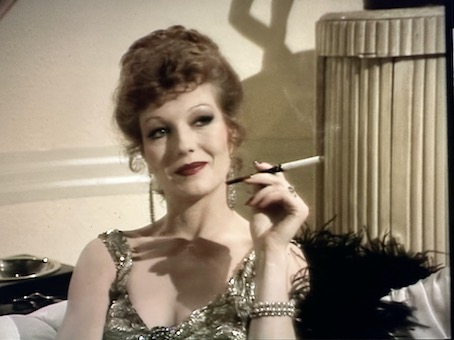
Gilda shows Grace around the apartment, upstairs then in the fire escape hallway. This is a lot of set for short time use.
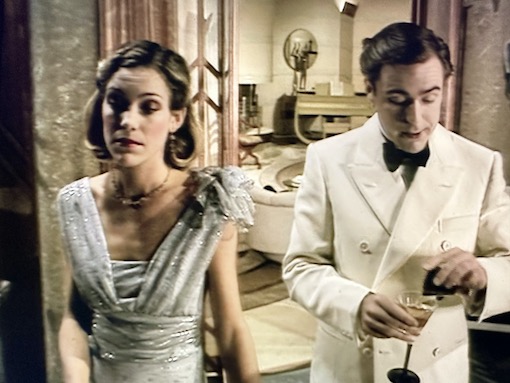
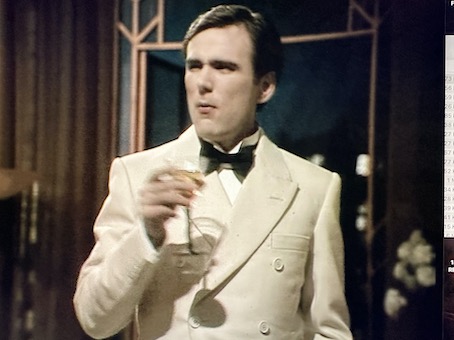
Otto and Leo arrive in identical evening dress to be greeted by the hapless Henry. The contrast is their British evening wear to Henry’s cream tuxedo. Leo and Otto have spent two years travelling together.
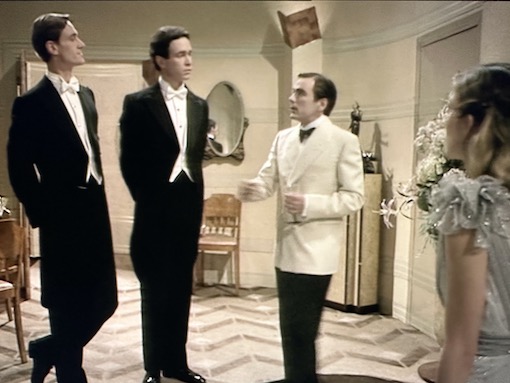
Helen: Are you old friends of Mrs Friedman’s?
Otto: Yes, we’ve lived with her for years.
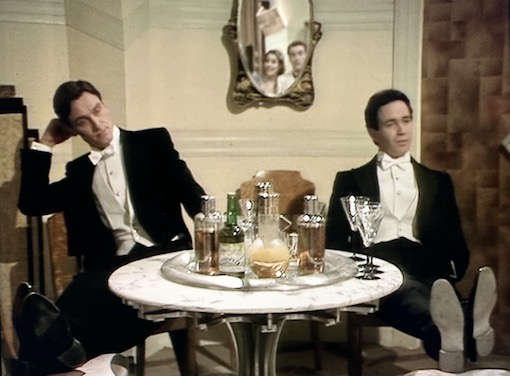
Gilda descends with Grace to find them.
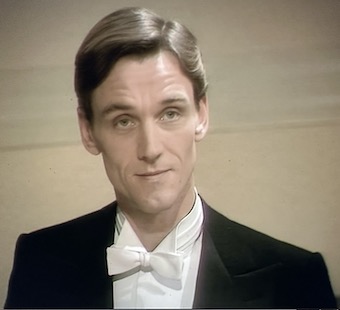
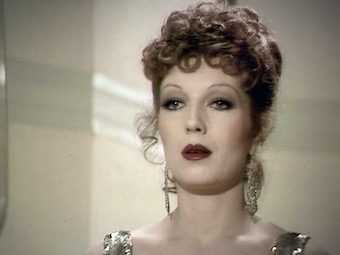
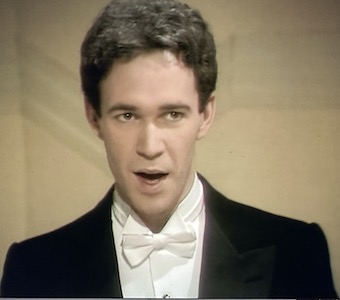
Their overbearing and arrogant behaviour sees off the three guests. They also play up the effete tales of their travels. Gilda persuades them to leave with the guests but gives them a key saying they can return in ten minutes.
Act III, Scene 2.
The next morning Ernest arrives from Chicago. He has a couple of old (or modern) masters in sackcloth under his arm. He’s in a bad mood.
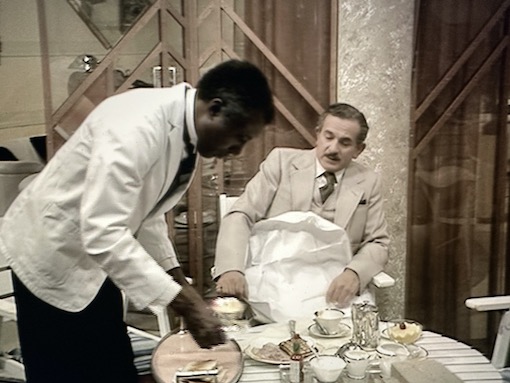
Matthew: Did you have a good trip, sir?
Ernest: No, I did not.
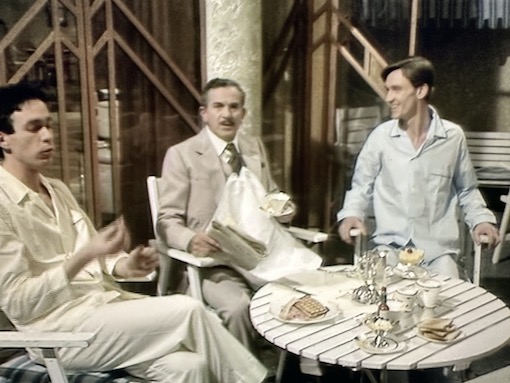
Otto and Leo emerge in his silk pyjamas, creep downstairs and both kiss Ernest on the forehead and sit down at his breakfast table. They announce they’ve come to see Gilda.
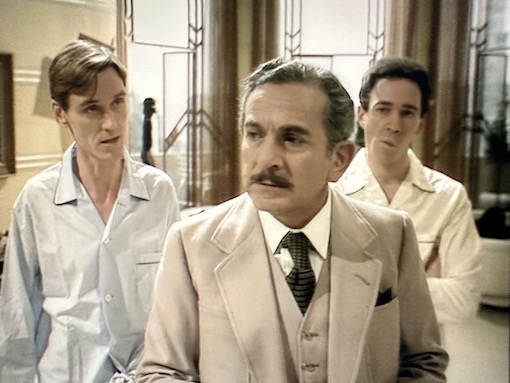
Gilda had left before they returned and spent the night in a hotel. She returns wearing a borrowed hat and coat over her evening frock.
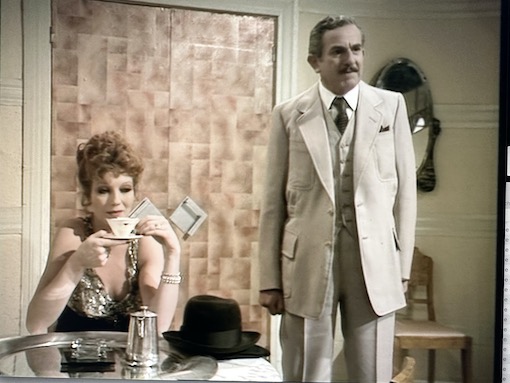
She wants to be with Leo and Otto, not Ernest. Ernest leaves, saying their ‘disgusting three-sided erotic hotch-potch’ appalls him.
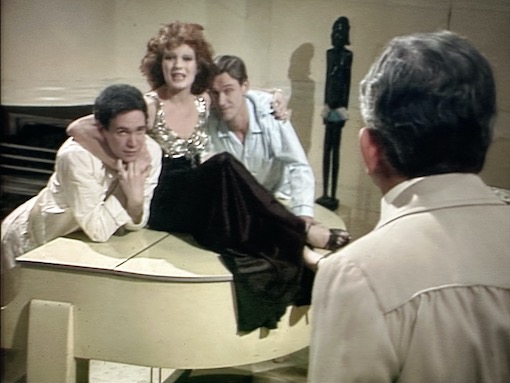
Leo: We have our own sense of decency. We have our own ethics. Our lives are a different shape from yours, Ernest. Wave us goodbye! We are together again.
(Well done to John Steiner as Leo- it would be impossible for most actors to say those excruciatingly pompous lines convincingly!)
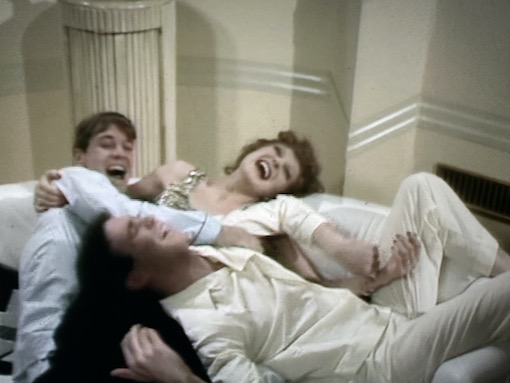
The three collapse laughing in a heap on the sofa.
Cue in my mind (but not on screen) David Crosby’s song Triad as performed by Grace Slick with Jefferson Airplane: Why can’t we go on as three? They will go on as three.
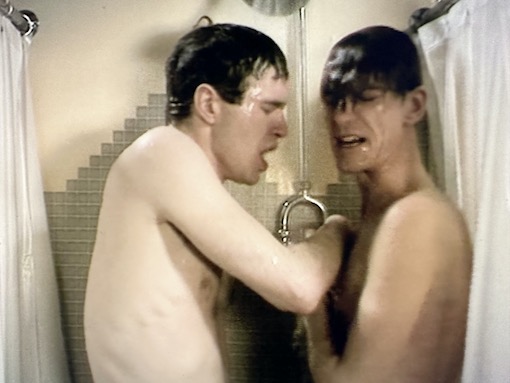
Coward had to be careful about the triangle of sexual relationships. One of the three sides, Leo and Otto, was still illegal and left implied, though you’d have to be very sheltered not to assume it. According to Wiki, it was 1994 before a production at the Donmar Warehouse with Rachel Weisz made the homosexual side of the triangle absolutely explicit on stage. However this BBC production was fifteen years earlier. They go for it. Not only do we see Gilda naked in a bath with soap bubbles failing to conceal a nipple, there are two combinations in bed, and then there’s the ending of Act 2 where the drunken Leo and Otto are naked (we only see waist up) tightly close together in the shower. As the scene fades they go into a passionate embrace. You couldn’t get more explicit.
It’s an odd play. After doing the drunken scene so well in Act 2, Otto and Leo are actively annoying as a double act in Act 3. Neither funny nor credible. Doing a mirrored duo is very hard and takes more practice than a one-off TV play allows. Rula Lenska deservedly gets that ‘starring …’ tag at the start.
Noël Coward summed it up:
These glib, over-articulate and amoral creatures force their lives into fantastic shapes and problems because they cannot help themselves. Impelled chiefly by the impact of their personalities each upon the other, they are like moths in a pool of light, unable to tolerate the lonely outer darkness but equally unable to share the light without colliding constantly and bruising each other’s wings…. The ending of the play is equivocal. The three of them… are left together as the curtain falls, laughing…. Some saw it as the lascivious anticipation of a sort of a carnal frolic. Others with less ribald imaginations regarded it as a meaningless and slightly inept excuse to bring the curtain down. I as author, however, prefer to think that Gilda and Otto and Leo were laughing at themselves.
OK, I think it’s the prelude to a carnal frolic. I think the laughter is self-congratulation at their own sophistication and sense of superiority (David Bowie’s ‘homo superior’ from Oh, You Pretty Things?). That’s emphasised by making Ernest shorter, older, with a funny moustache, an indefinable accent and quivering with moral outrage (looking vaguely like Captain Mainwairing) which allows them to think it’s a generational difference and they’re the “enlightened.” It’s a touch smug (Gilda has described them as smug).
The end credits are to 20th Century Blues from Cavalcade.
LINKS ON THIS BLOG
NOËL COWARD
- PLAYS BY NÖEL COWARD
- Blithe Spirit by Noël Coward, Bath Theatre Royal 2010 (Alison Steadman)
- Blithe Spirit, by Noël Coward, Bath Theatre Royal 2019 (Jennifer Saunders)
- Blithe Spirit by Noël Coward, Salisbury Playhouse 2025 (Susan Wooldridge)
- Blithe Spirit FILM 2021 (Judi Dench)
- Noël Coward’s Brief Encounter, by Emma Rice, Salisbury Playhouse, 2023
- Design for Living, by Noël Coward, BBC Play Of The Month, 1979
- Fallen Angels, by Noël Coward, Salisbury Playhouse
- Hay Fever by Noël Coward, Bath Theatre Royal 2016
Hay Fever, by Noël Coward, BBC TV Play 1984 - Present Laughter, by Noël Coward, Bath Theatre Royal, 2003 Rik Mayall (retrospective)
- Present Laughter by Noël Coward, Bath Theatre Royal 2106, Samuel West
- Present Laughter by Noël Coward, Chichester 2018, Rufus Hound
- Present Laughter by Noël Coward, Old Vic 2019, Andrew Scott
- Private Lives by Noël Coward, BBC TV 1976
- Private Lives by Noël Coward, Nigel Havers Theatre Company, 2021, Chichester
- Private Lives, by Noël Coward, Donmar Warehouse, London 2023
Relative Values by Noël Coward, Bath Theatre Royal
This Happy Breed by Noël Coward, Bath Theatre Royal - The Vortex, by Noël Coward, Chichester Festival Theatre 2023
 Peter Viney's Blog
Leave a comment