
By William Shakespeare
Directed by Ralph Fiennes
Set design by Bob Crowley
Costume by Fotini Dimou
Composer Ilan Eshkeri
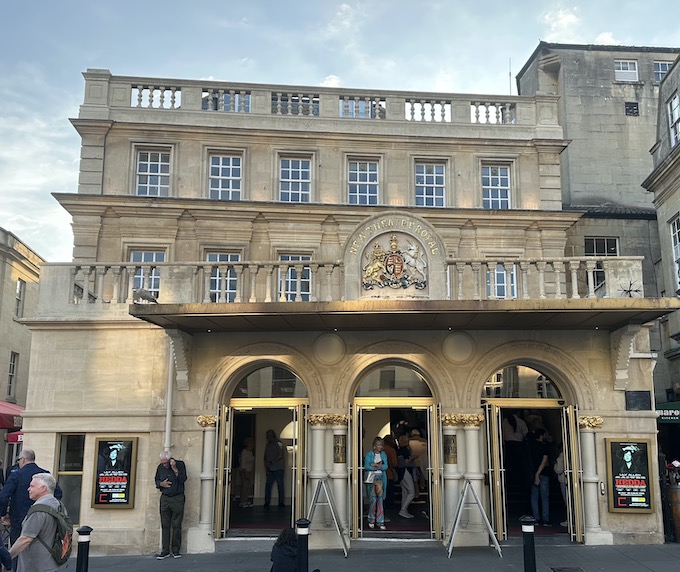
Part of the Ralph Fiennes Season
Bath Theatre Royal
Wednesday 20th August 2025, 19.30
CAST
Gloria Obianyo – Rosalind, daughter of Duke Senior
Harriet Walter – Jaques, a lord exiled with Duke Senior
Charlie Rowe – Orlando, son of Sir Rowland de Boys
Amber James – Celia, daughter of Duke Frederick
Dylan Moran – Touchstone, a fool at Duke Frederick’s court
Patrick Robinson – Duke Senior, Duke Frederick
Sam Alexander – Le Beau, First Lord
Hannah Azuonye – Lady in waiting / Lord in Arden
Matt Ray Brown – Dennis / Lord in Arden
Michael Brophy – Corin, a shepherd
Imogen Elliot – Phebe, a shepherdess
Matt Gavan – Sir Oliver Martext, a priest
Amber Grappy – Audrey, a goat herd
Emilio Iannucci – Jacques de Boys, the other brother
Paul Jesson – Adam, old retainer of Sir Rowland de Boys
Nitai Levi – Amiens, and solo singer / guitarist
Jake Neads – Oliver, older son of Sir Rowland de Boys
Richard Pryal – Charles the wrestler, William, Lord in Arden
Ethan Thomas – Silvius, a shepherd
They should credit which one is playing guitar and singing in the programme. It is Nitai Levi.
As You Like It is more difficult to produce successfully than other major Shakespeare comedies. I find that Midsummer Night’s Dream, Much Ado and Twelfth Night almost always work. Not so As You Like it. The presence of both Jaques and Touchstone is a weight, one of them would be enough, and the plot is convoluted. I have seen sublime versions, notably the Pippa Nixon / Alex Waldmann RSC one in 2013, and then the 80 minute RSC Garden Theatre version in 2024, which benefitted by focussing on the central plot and cutting side plots.
It is surprising how odd it seems seeing Shakespeare on a proscenium stage. They use the front of stage steps for several entrances but clambering up steps is not like the smooth walkways in the RSC’s thrust stages. Is this why it felt too static from the very first scene? People reacting were too often fixed rigid, and longer speeches tended to be straight out front to the audience, a style lampooned by Ellen Terry in Grace Pervades where Ralph Fiennes played Sir Henry Irving right before directing this. I never felt the sense of electricity of the production, nor that it gelled in spite of having such extremely good actors. It was as if background actors had been told not to impinge on the speaker.
The set was long semi-transparent panels hanging down, suspended, gradually receding to a central entrance. There was no furniture at all. For Oliver and Orlando’s house it projected a beige wall, then for the court it projected white, with lines like cages or windows, then trees for the forest, I think there were two kinds of trees projection too. Bare, minimalist and It did nothing for me. Not only that the front on projection meant lighting had to cast long shadows of the type I was taught to avoid. Karen has a problem with lighting casting shadows as it gives her mild double vision. It has happened before. So she hated the lighting. I simply thought it dull.
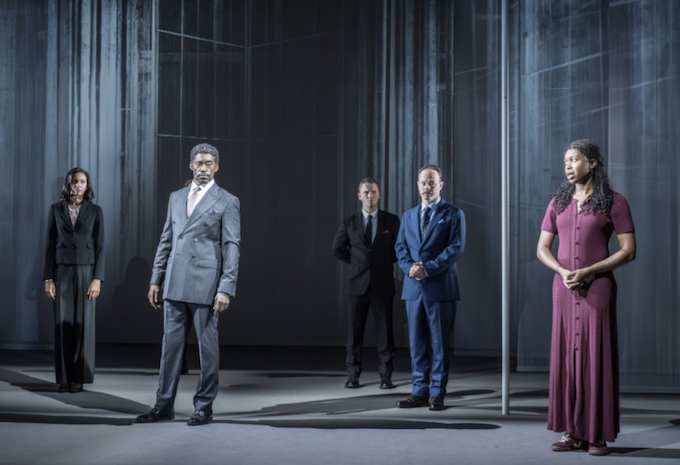
Duke Frederick, Le Beau and Rosalind
This is what I mean about costumes
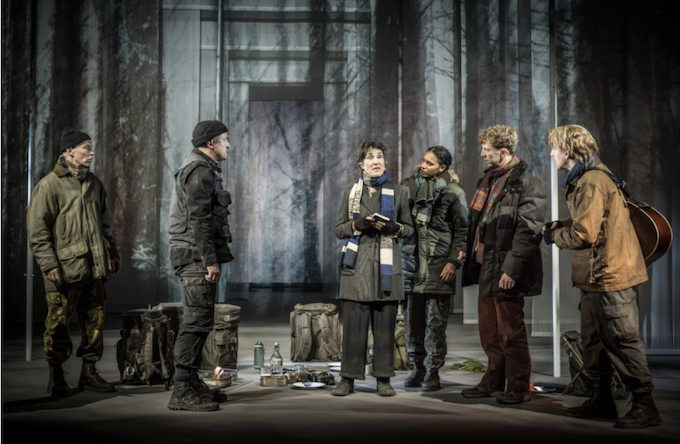
None of it was a visual treat except the closing song. It looks way better in the production photos than it did in real life! Costumes were modern and largely boring – suits in court or those yawn awful Army Surplus camouflage jackets in the forest. The lords in the forest were burdened with giant rucksacks which were used as seats later (having no furniture).
Ralph Fiennes: The exiled duke- who in this production is conceived more as an exiled CEO, an enlightened plutocrat, ousted from a corporation by his vindictive ‘Trumpian’ younger brother – has taken his core team of execs into the forest.
Really? In that case wouldn’t they be in designer glamping gear?
The best costumes were Celia, both in court and Forest, and Phebe, with a good costume for Audrey. They were also the three funniest actors. I would point out that this is supposed to be a comedy. Phoebe’s costume shouted young, modern. I though Rosalind’s male costume, first with a smart waistcoat, then denim jeans and jacket worked, but it didn’t knock me out.
All the other costumes were dismal. Let me give a first principle. When Ganymede comes on for the wedding at the end, so transforms back to Rosalind, she has to have changed to a frock or skirt. White trousers, as here, however gleaming don’t do it. Orlando and the Duke need a screaming visual girlie cue. Do not over-estimate their intelligence. They have failed to spot her gender (Orlando) or relationship (Duke Senior) even in close embraces so far. Really bad choice. A skirt is the international sign on toilet doors FFS. Orlando and the Duke need that obvious symbol to go ‘Ah! It’s Rosalind!’
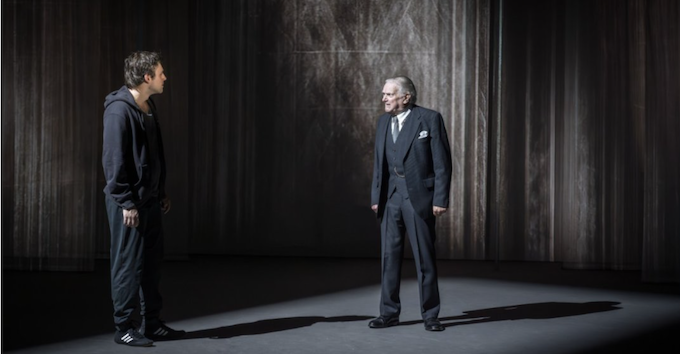
I was less than five minutes in and I thought this is ‘two star’ unless you manage to persuade me otherwise. Bare stage. Orlando and brother. Black dull costumes. Then Orlando and Adam. Bare stage. Black dull costumes. There were bits where I would drop to one. Though the ensemble singing ending was a good four plus. An example, the very good guitarist and singer -see later- did a version of Lover and His Lass / Hey Nonny Nonny. The first time, Audrey (Amber Grappy)did a wonderful stomping dance. At the RSC or Globe, her performance would have rightly drawn spontaneous applause, and I was moving my hands, but here, silence. There was very, very little laughter throughout from the audience and it was isolated in patches never full on.
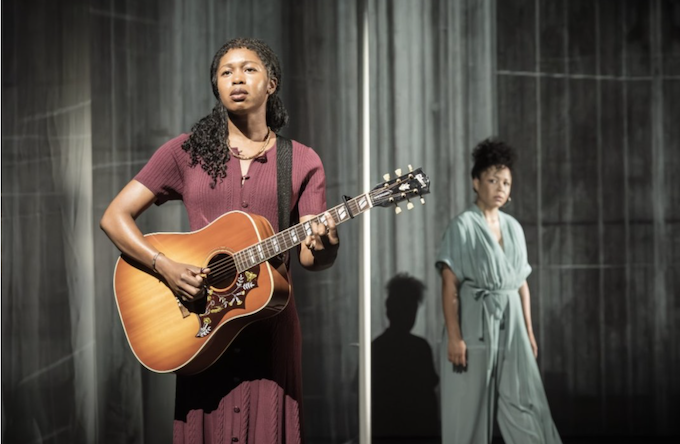
The principles. Rosalind starts and ends playing guitar and singing, and she has the voice for it. I thought Orlando was hampered by dull costume. Her early one wasn’t great.
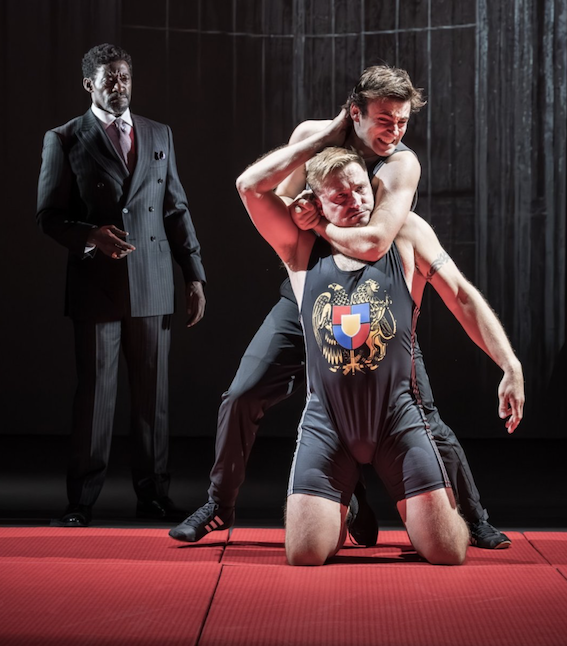
The wrestling scene was acrobatic, but muted. I prefer my wrestlers savage rather than apologetic (and cuts often point this way). Shakespeare’s audiences loved sword fights and wrestling, and it’s one to go to town on. We thought Orlando was a tad vicious too. He should be nearly beaten at least twice before succeeding.
Then there wasn’t the necessary sense of sudden initial passionate attraction from either Rosalind or Orlando. Stiff blocking around them didn’t help. The relationship took a while to take off, but I think it needs to be love at first sight.
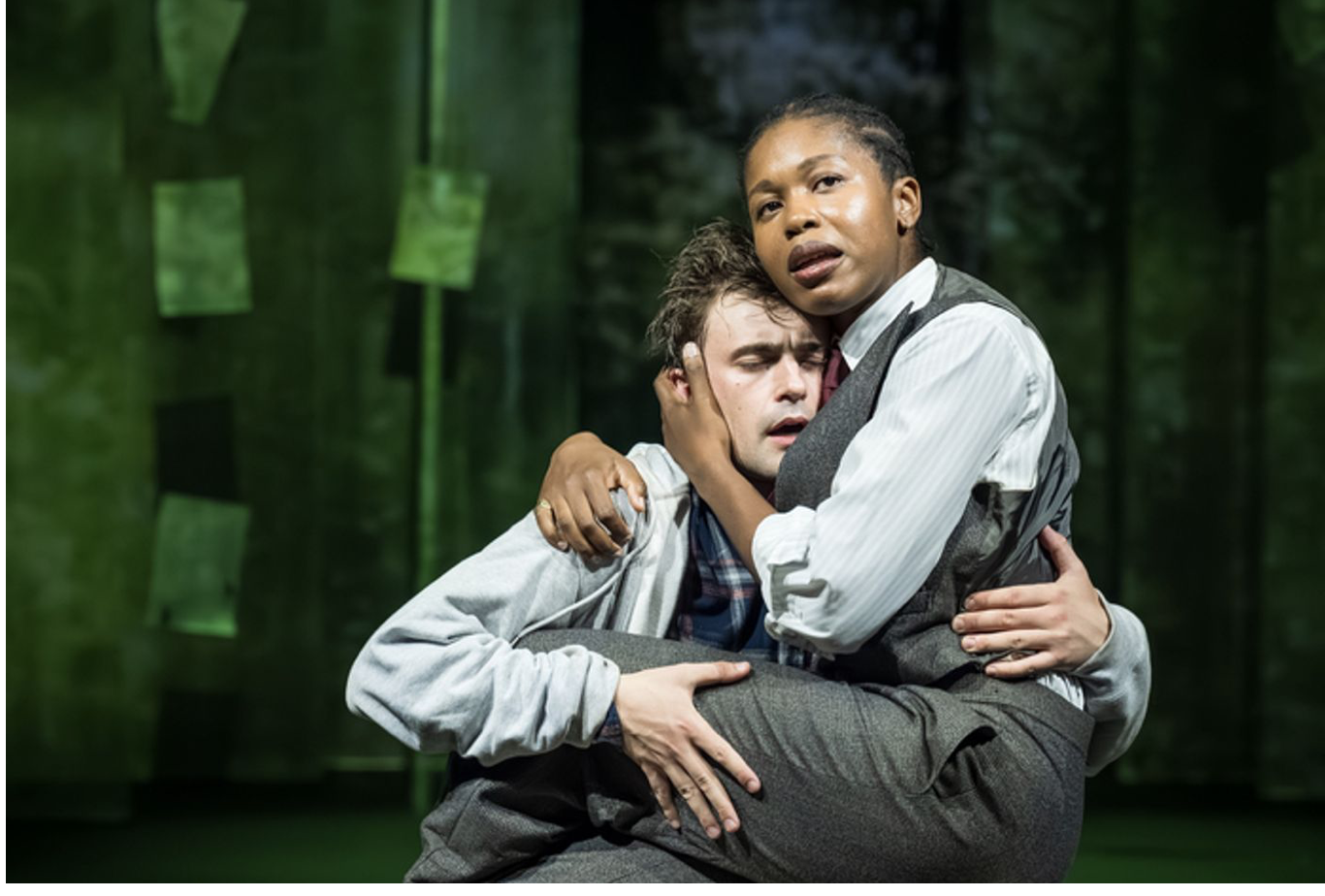
Gloria Obianyo as Rosalind and Charlie Rowe as Orlando redeemed themselves in the Ganymede scene in the forest where Rosalind, posing as the boy Ganymede, tries to teach Orlando wooing. Gloria Abianyo did this exceptionally well, drawing the best of the admittedly sparse laughter.
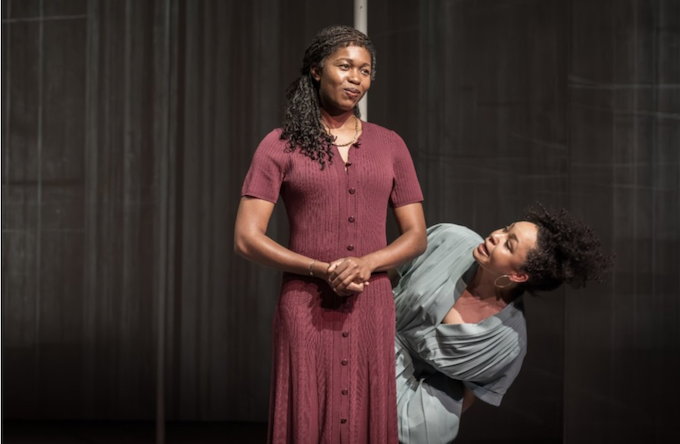

Amber James was Celia, Rosalind’s cousin, my favourite role in the play and she was as expected when I saw her name in the cast list; very good, funny, lovely reactive acting. She always seemed switched on and lively in the background while others just stood there. Celia is a part where the reactions are the key, and she got them perfectly. Celia and Rosalind worked seamlessly as a double act too, and I was pleased every time they reappeared together. An excellent team.
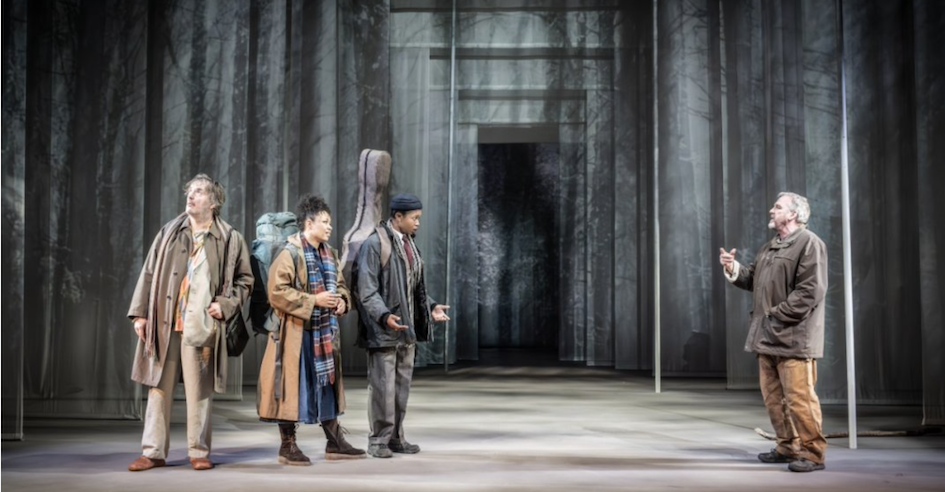
Patrick Robinson played the bad Duke Frederick, and his good deposed brother, Duke Senior. He had some very rapid changes and I marvelled how he got from short hair and dark beard to bald and grey beard and back again so fast. He was fierce and furious as Duke Frederick, kind and thoughtful as Duke Senior.
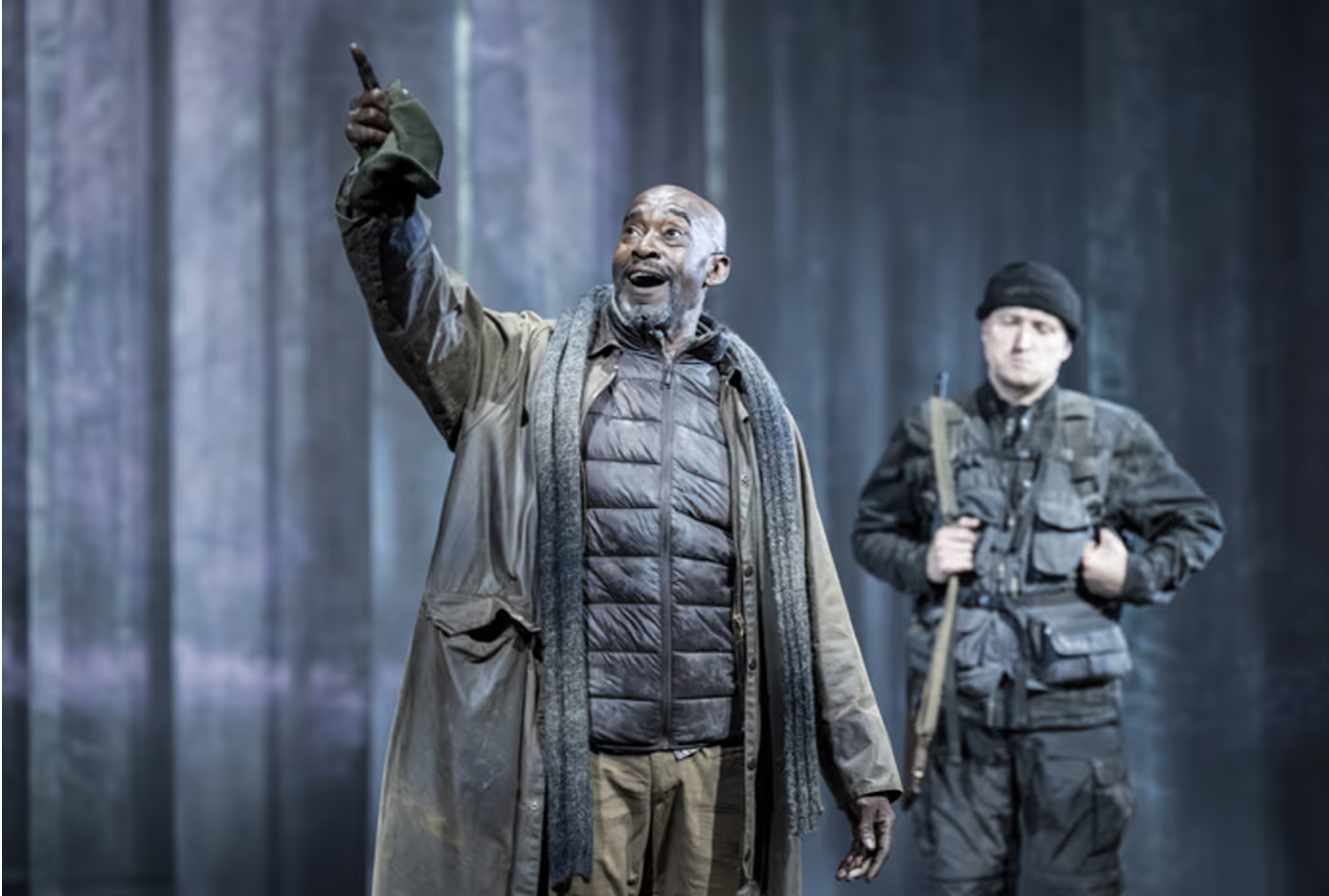
I have long suspected that As You Like It inspired Kurt Vonnegut’s Cat’s Cradle with the evil dictator in the castle and the holy philosopher (Bokonon) in the forest … they turn out to be two sides of a coin. It is a good idea to cast one actor as both, and you note that Shakespeare never has them in the same space, so like Theseus and Oberon, I think it was always intended to be one part.
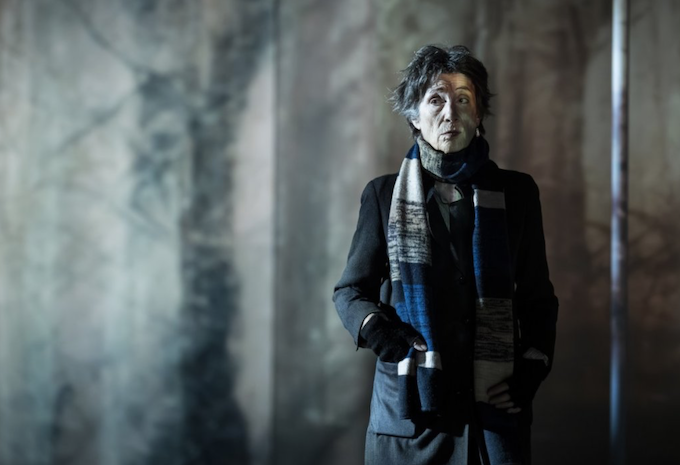
Harriet Walter as Jaques, gets star billing. The tragic clown invariably dates badly, and I was annoyed at the Jake-wees pronunciation of the names. Sources say there are two possible pronunciation of ‘Jaques.’ I’d say three, because I have heard it done as ‘Jacques / Jacks’ as In French. However, the point is they are deliberately mispronouncing French, and he is also called ‘Monsieur Jaques,’ often said as ‘Mon-sewer.’ Orlando and Oliver’s surname is ‘de Boys’ as in the village of Blackboys and Chesham Bois (which is pronounced ‘boys.’) It’s from ‘bois’ the French for ‘wood’ so again Anglicized pronunciation. The seated part of the Globe audience would have known ‘bois’ v ‘boys.’ So we have a man named ‘of the wood’ going into a forest. Making jokes about (the) French was a winner. Pronunciation was on Shakespeare’s mind. Orlando’s poems start rhyming Rosalind with ‘Ind’ and ‘wind’ then switch to rhyme with ‘mind.’
Jakes was the Shakespearean word for toilet, so was a deliberate pun. David and Ben Crystal point out that Jake-wees is a 19th century affectation designed to eliminate Shakespeare’s pun, because jakes = bog was still in use. It still is regionally. Shakespeare said ‘jakes.’ Jake-wees persisted into the mid 20th century, but I see no reason, nor excuse for using it now, even if a generation did it that way at school. You might as well have “Let us now speak of rural matters” in Hamlet. Jake-wees jarred every time for me. I don’t like tragic clowns mooning around looking gloomy, and I didn’t even like her laboured Seven Ages of Man speech, which I have seen in the past getting spontaneous applause. Great actor, but she didn’t work for either of us here. We are in the minority, as when reviews later emerged, they loved her.
The country wenches, Audrey and Phebe, are great comic parts and were here. Part two opened with Audrey and Touchstone having it off under a blanket, giving Touchstone a chance to do a double take on ‘maiden’ later.
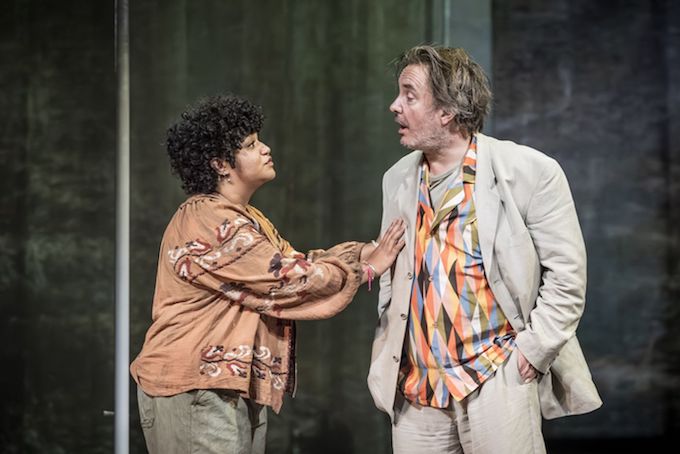
Phebe is a shepherdess, and Audrey is a goat herd, so behaves ‘goatishly’ here.
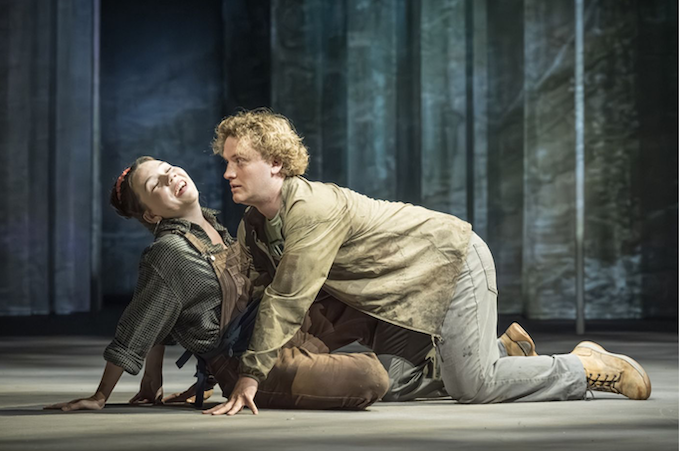
Phebe is delightfully chav and can play poor Silvius along, while mooning over Ganymede. Ethan Thomas convinced as a Silvius, humbly waiting her potential approval. Phebe is a key to the play, with her rejection of her boyfriend, Silvius and her pursuit of the unobtainable in Ganymede. This was an especially well done version of that part of the story.
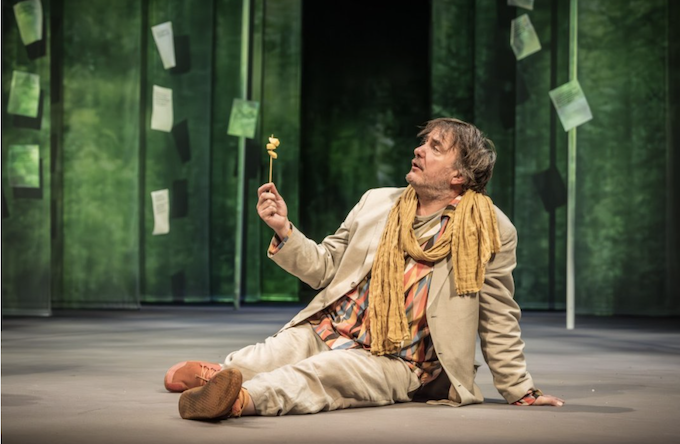
Dylan Moran’s Touchstone was given less rope to improvise than is currently popular, but nevertheless managed NOT to be annoying, and get laughs, which is hard in these clown roles undiluted.
The music is very good. The programme suggests that As You Like It was getting close to being the first ‘musical.’ In 2013, the RSC had Laura Marling writing the music for the songs, and I downloaded them from iTunes and her Under The Greenwood Tree remains a favourite play. The songs by Ilan Eshkeri and Tim Wheeler are almost in her class. The programme credits are not great here. The singer in the wood is Nitai Levi, or Amiens. It’s not listed, but Ralph Fiennes mentions Amiens as the singer in the programme interview:
Ralph Fiennes: I’ve leaned towards something inspired by contemporary folk music. I feel Shakespeare considers quite precisely where he wants music. Most of the songs are sung by Amiens in the forest of Arden. It feels that the songs are unifiers or mood enhancers, Certainly they seem to underpin the spirits of the lords in Arden …… In essence the songs feel connected to ritual and celebration. They are, I feel, less about the expression of the individual which is usually a core stanchion of the modern musical.
Nitai Levi’s programme credits read Royal Academy of Music and that he performs solo. In the final song, the ensemble reprise of A Lover and His Lass, Gloria Obianyo adds a second guitar as well as strong vocal, and Sam Alexander drums on a board, and there’s a tambourine. As music is so important, I thought they under did it.
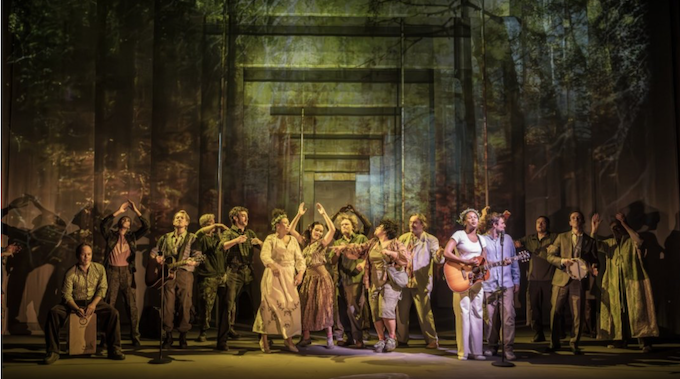
Gloria Obianyo on solo guitar for her first song was fine, but for the rousing stuff in the forest, they could and should have added more instruments. Most actors can play something, fiddles, more guitars, recorders, or just percussion.
Curtain call. Embarrassing, Harriet Walter took centre stage. Ok, she did the big newspaper interviews with Ralph Fiennes, she has seniority but she did what Jonathan Slinger did at least twice at the RSC, forget who are the stars of the STORY. As in panto, the two young leads, the love interest, always take centre position, and also here, deservedly so. The dame, however famous, never stands stage centre instead of or between Cinderella and Prince Charming. It’s not who is the biggest star in real life, it’s who are the main two characters in the story. It can only be Rosalind and Orlando.
Gloria Abiayando did Rosalind’s epilogue and that’s a rarity. The play ends best with the communal song and knees-up. It’s normal, to do Puck’s epilogue in A Midsummer Night’s Dream, but mostly Rosalind’s downbeat epilogue is cut. She played it beautifully, and Fiennes explains he wanted her to end the play, but I would still have cut on the communal song.
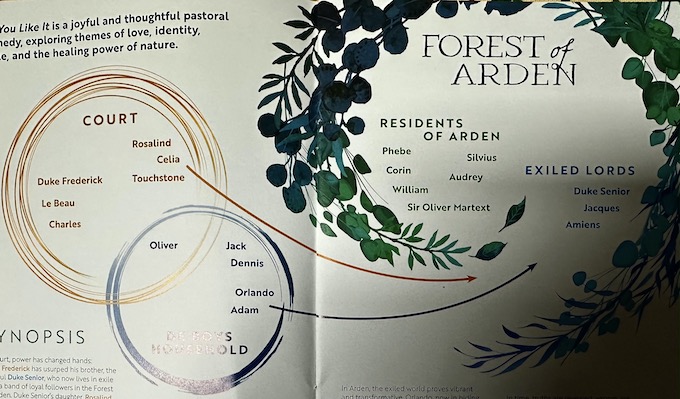
Mainly a good programme with details of the characters, a clear synopsis including three very useful circles showing the three groups. I thought that superb.
Rightly they interview Ralph Fiennes and that’s insightful. However the page from Octavio Paz is dreadful writing. I read it several times and finally thought I’d worked out his point but few would bother. Having said that I showed it to my philosophy fascinated grandson (20) who explained what I had failed to grasp.
We both thought the normal cuts could have shaved 15 dull minutes, and that as it was presented, we found it academic and dry. There were some excellent performances in there … Rosalind, Celia, Phebe, Audrey stand out. However, the versions that work best are those which go straight for comedy. Are great actors necessarily going to be great directors? All great directors HAVE acted, but then they see directing as their main path. Branagh is the best example of being able to do both. Mark Rylance, to me the finest actor of his generation, fell flat on his face directing Much Ado About Nothing. Sadly, I think this As You Like It displays the hallmark of actor as director: full attention on lines and delivery. Not so good on the overall picture, nor interaction, nor on visuals. We actively disliked set, lighting and most costume. Back to his Grace Pervades, perhaps Ralph Fiennes should note the character of Edward Gordon Craig stressing visuals and movement over text. It was visually unappealing. Too much attention to lines? A comedy should be funnier.
In the Telegraph review Dominic Cavendish said:
Harriet Walter is splendid in Ralph Fiennes As You Like It. The production itself is neither as fleet or mesmerising as you’d like it.
We agree. The acting was (mostly) so good I can’t give it two star, though I was sorely tempted.
***
WHAT THE CRITICS SAID
No reviews were in at the point we saw it. Nearly all of this was written before reviews came in, then I added a few lines. I was against the current on stars except for Domenic Cavendish.
5 stars
Cheryl Markosky, Broadway World *****
4 stars
Arifa Akbar, The Guardian ****
Holly O’Mahoney, The Stage ****
Marc Brenner, West End Best Friend, ****
3 star
Domenic Cavendish, Telegraph ***
LINKS ON THIS BLOG
AS YOU LIKE IT
As You Like It RSC 2013
As You Like It, Globe 2015
As You Like It, National Theatre, 2015
As You Like It, Globe 2018
As You Like It, RSC 2019
As You Like It, RSC 2023
As You Like It, Globe 2023
As You Like It, RSC 2024
As You Like It, Ralph Fiennes Season, Bath 2025
RALPH FIENNES
Small Hotel, Bath 2025
As You Like It, Bath 2025 (DIRECTOR)
Grace Pervades, Bath 2025 (Henry Irving)
Conclave (film)
Richard III, Almedia 2016 (Richard III)
Man & Superman, National Theatre
The Grand Budapest Hotel (film)
Cemetery Junction (film)
Hail Caesar! (film)
The King’s Man (film)
The Dig (film)
GLORIA OBIANYO
The Resistible Rise of Arturo Ui, Donmar 2017
HARRIET WALTER
Death of A Salesman, by Arthur Miller, RSC 2015 (Linda)
AMBER JAMES
Cymbeline, RSC 2023 (Imogen)
Troilus & Cressida, RSC 2018 (Cressida)
Dido, Queen of Carthage, RSC 2017 (Anna)
Antony & Cleopatra, RSC 2017 (Charmiane)
Titus Andronicus, RSC 2017 (goth, midwife)
Two Gentlemen of Verona, Globe tour, 2016
PATRICK ROBINSON
Murder On The Orient Express, Chichester 2022
King Lear, Chichester 2017 (Cornwall)
The Rover by Aphra Benn, RSC 2016
SAM ALEXANDER
One Last Push by Chris Chibnall, Salisbury, 2024
How The Other Half Loves, Alan Ayckbourn, Salisbury 2023
The Watsons, by Laura Wade, Chichester 2018
Racing Demon, by David Hare, Bath 2017
Love’s Labour’s Won (Much Ado About Nothing), RSC 2014, Stratford (Don John)
Much Ado About Nothing (Love’s Labour’s Won), RSC at Chichester, 2016 (Don John)
Love’s Labour’s Lost, RSC 2014 (King of Navarre)
Love’s Labour’s Lost, RSC at Chichester 2016 (King of Navarre)
PAUL JESSON
Copenhagen by Michael Frayn, Chichester 2018
Coriolanus, RSC 2017
Wolf Hall, RSC
Mr Turner (FILM
JAKE NEADS
Leopoldstat by Tom Stoppard, West End, 2020
 Peter Viney's Blog
Leave a comment