
Before I could drive
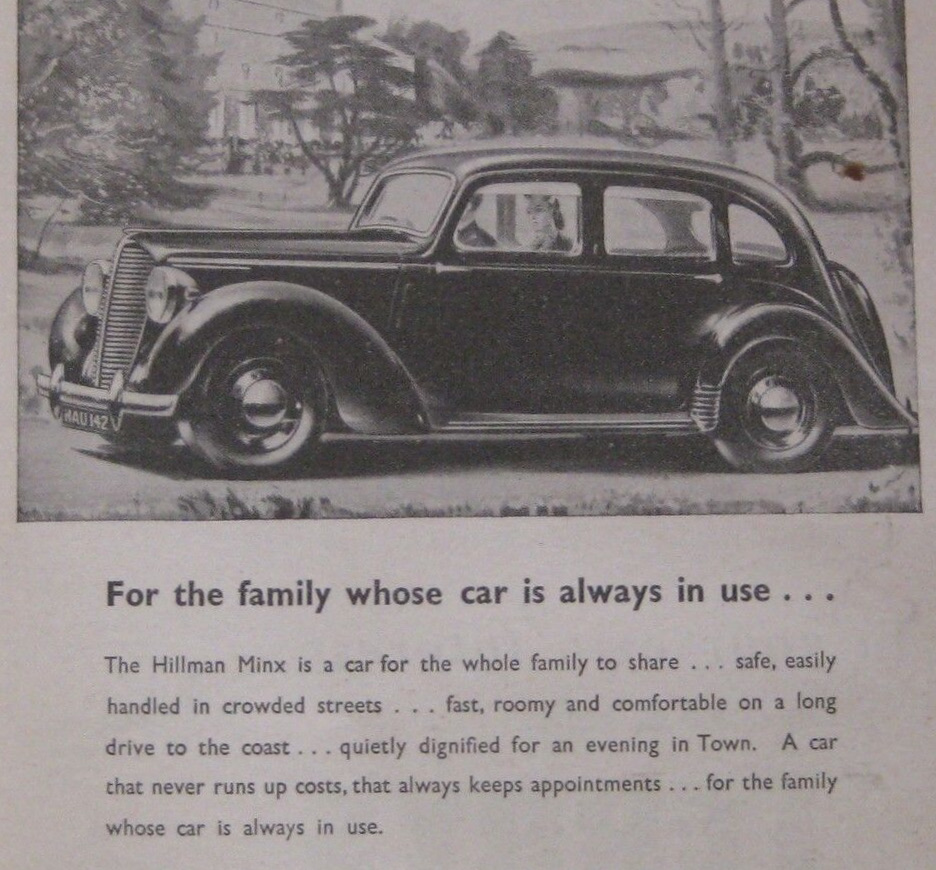
We always had a car. My dad was a sales representative for a motor factor, Marshalls, so it was a company car, never his. When the war ended, he was given the boss’s old and very large luxury Austin straight six, then a secondhand Hillman Minx. Cars were in extremely short supply.
This was the model.
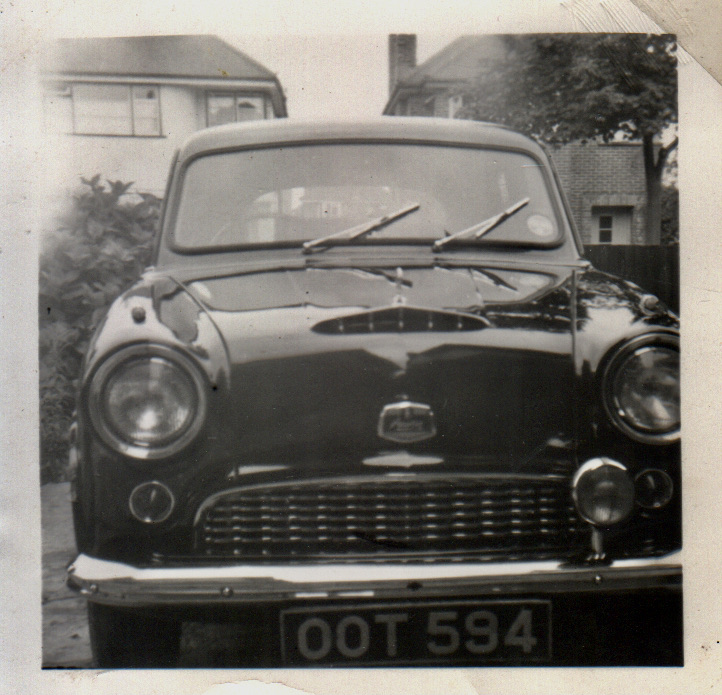
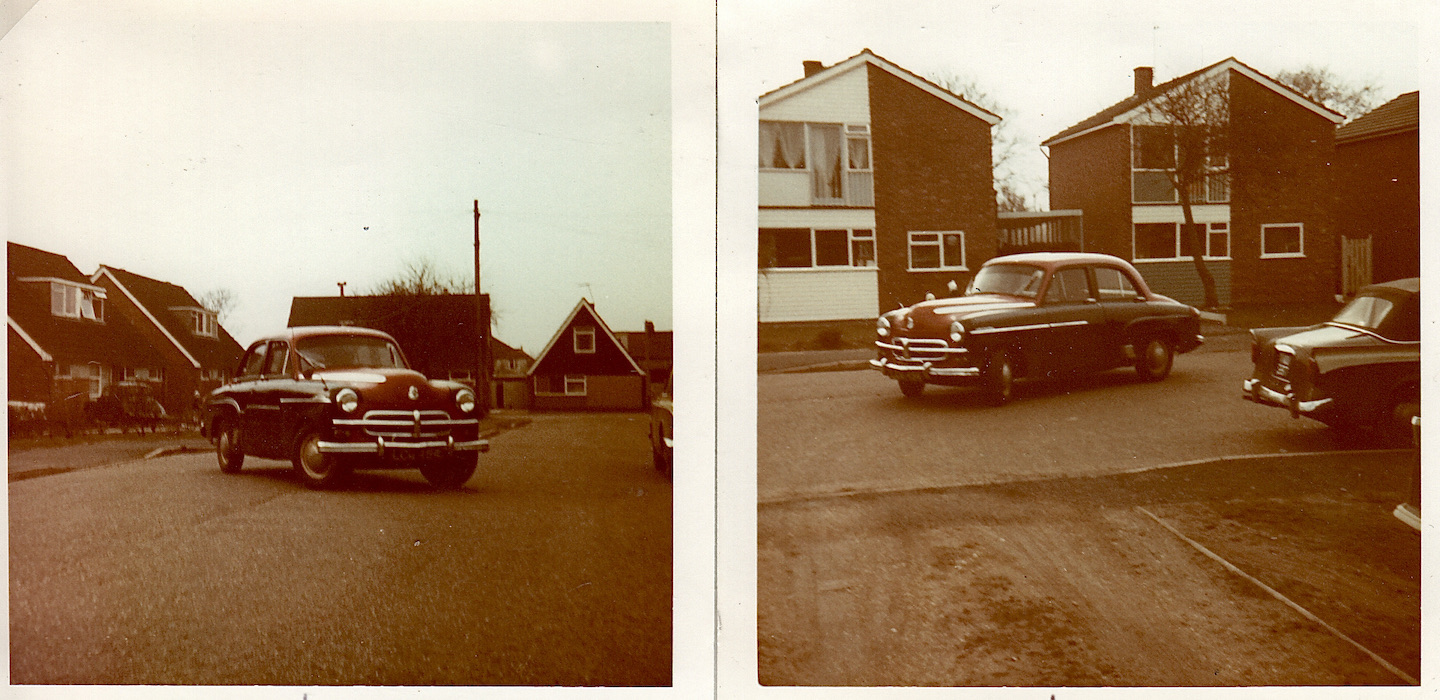
He went to work for John Bull Rubber Company around 1952. They sold tyres. That meant a brand new company car, an Austin A40 Somerset. 1200 cc, built 1952-54. The 0-60 mph time was … wait for it, the passengers had to … 28.8 seconds.


On the pictures you can just see the yellowing plastic fly deflector, a gadget that never caught on. we took it to visit my Welsh grandparents in Tredegar. They thought it very posh, being new. Kids in the street threw stones at it.
Three seats in the front, column change. In England, on weekend trips, I used to sit in the middle in front with my English grandad and dad. My mum, grandma and sister sat in the back. That was how it was. My grandad had to sit in the front. As the smallest, I perched in the middle. My grandad smoked a pipe constantly and declared that an open window, even half an inch, would cause a draught and give him influenza and lumbago and rheumatics and arthritis, which in combination would be fatal.
This is one I saw driving along in Bournemouth in 2024:

In 1956, that was replaced, with another Austin A40, this time an A40 Cambridge.

Then Dunlop bought John Bull. The areas remained the same, but they suggested my dad might like an estate car. He was appalled. Estate cars meant carrying stock around, and he was a sales rep not a bloody van driver. One of his jobs was balancing customers, all car dealers, when purchasing cars. The Austin dealership was run by two brothers who were close friends of his, which is why he’d had two Austins. However, the Rootes Group dealer in the town centre, Hartwells, was his biggest customer. We had a test drive in the new look Cambridge Estate. He hated the rattle of an estate. If Hillman made an estate, it was impossible to get one.
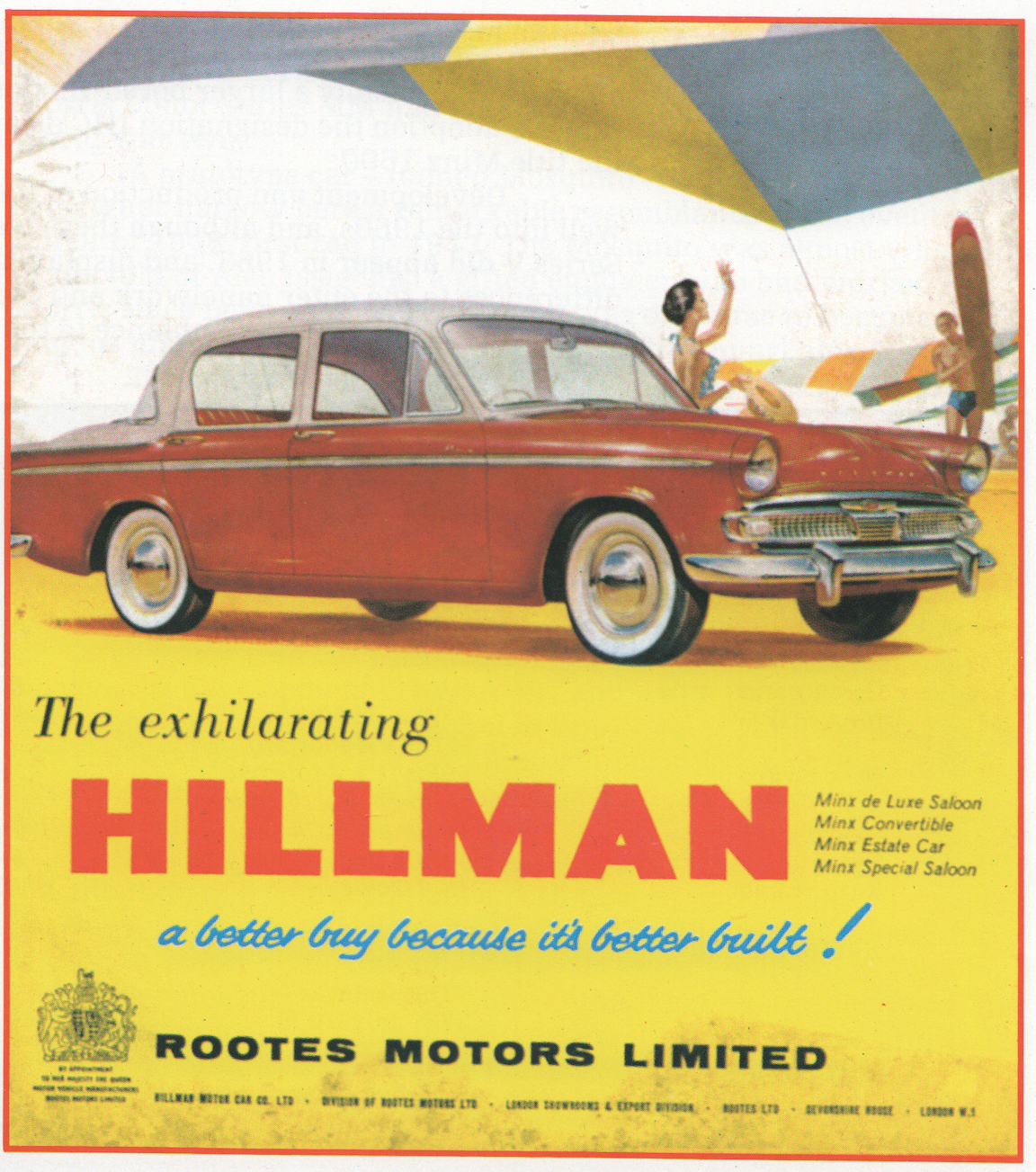
So he opted for a Hillman Minx, with the two-tone paint that Dunlop wanted to offset whitewall tyres, then in vogue. He always had new whitewalls in the summer, and new winter tyres in the autumn.
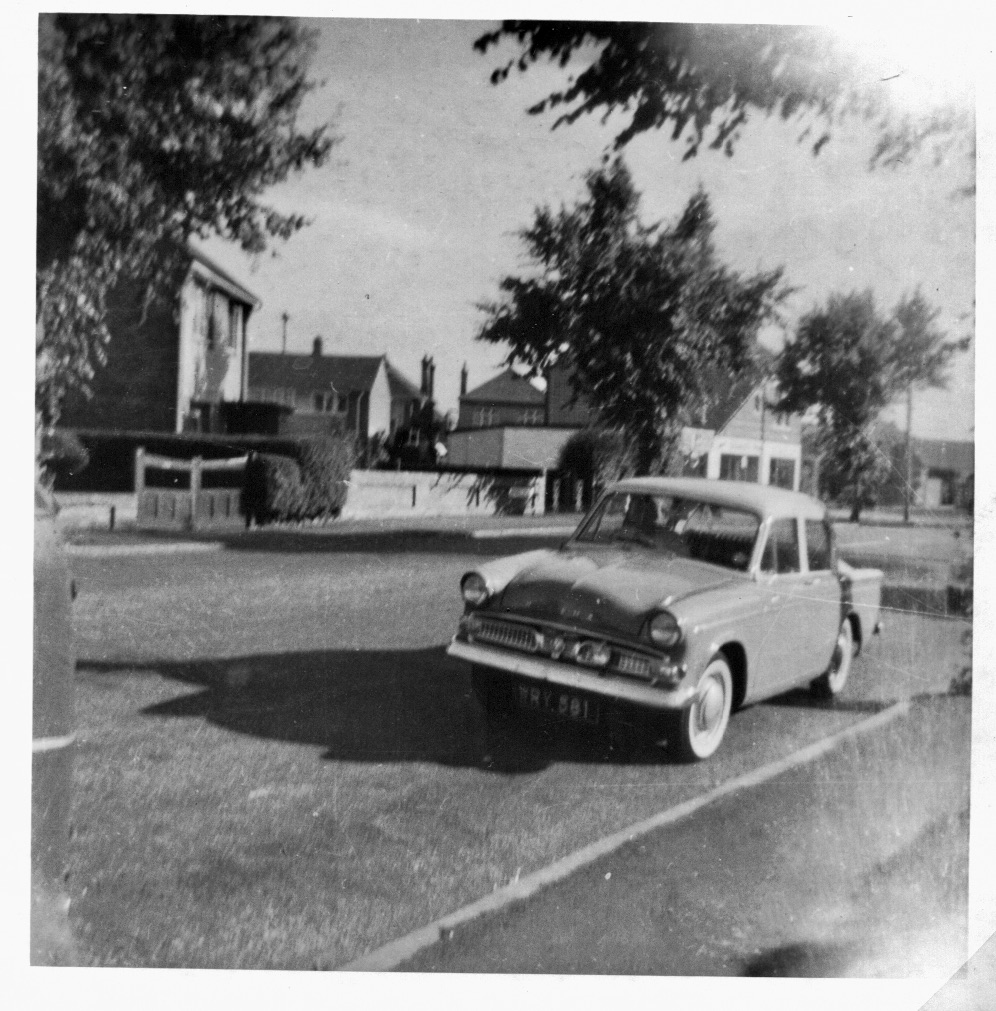
This is from the 1960 Hillman Minx brochure. See above about where the genders sat in the 50s. No seat belts of course. There was nowhere near that much legroom.

He did 78,000 miles in that car. Then he went back to work for his old wholesalers, the one he’d started work with at age 14 as sales manager, and he had a new Hillman Super Minx, a larger car.
At that point he was promoting the first seat belts and the newer ranges of transistorised car radios, as well as demonstrating the first Crypton engine analyzers. So the super Minx had rare seat belts.
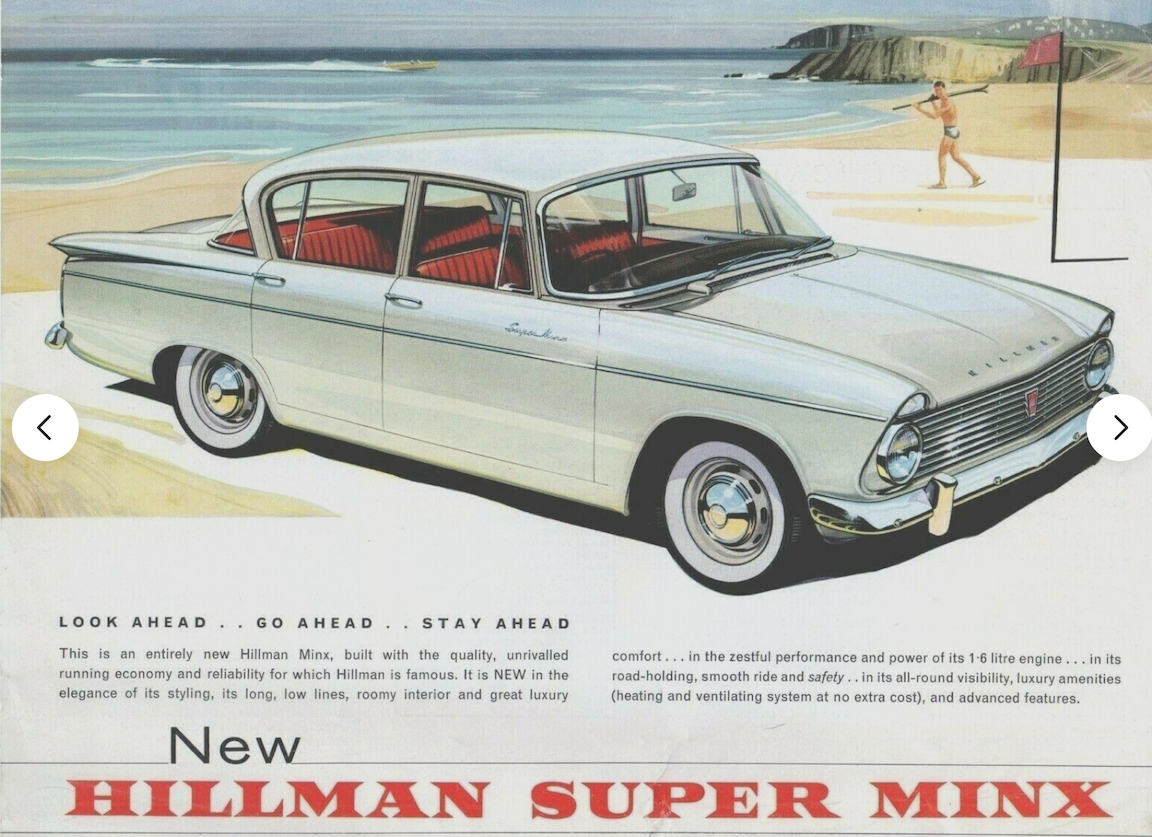
Advert seems stretched and lowered. A lot.
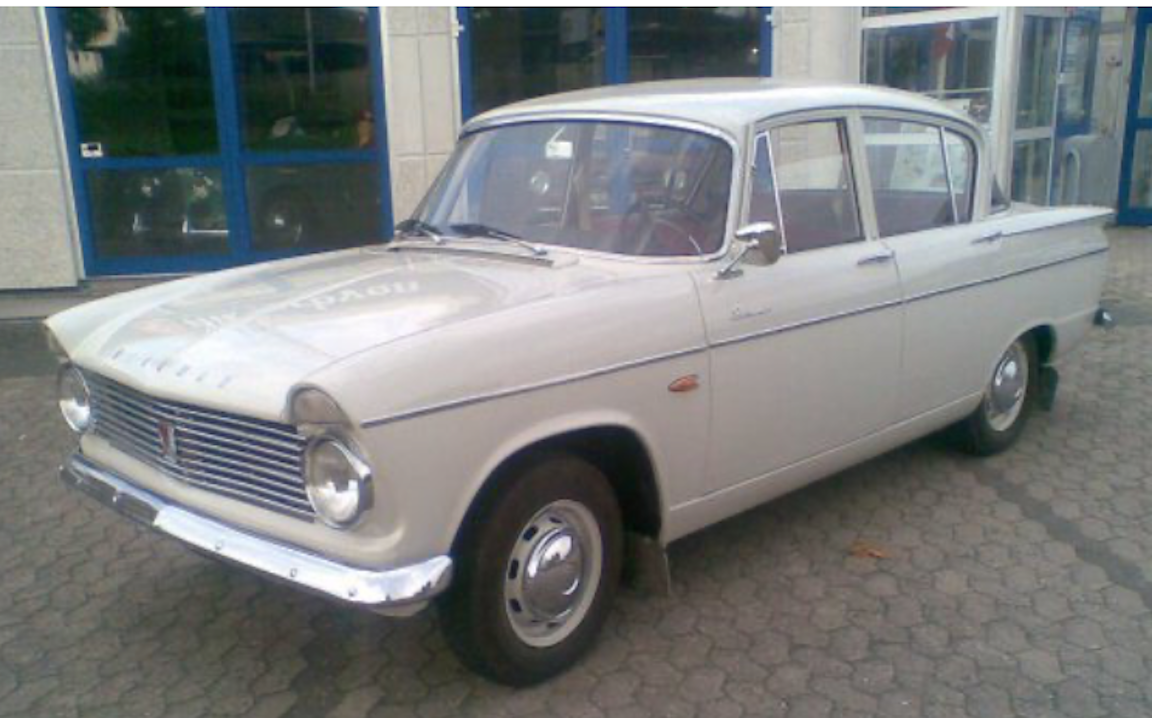
Mod
I have no photos of my Vespa 125. My dad taught motor vehicle maintenance in the army, and gave occasional talks at the college. When he took his cars to be serviced, he stood and watched the mechanics. ‘I’ve taught the buggers,’ he would say, ‘I don’t trust them.’ My dad made me take that Vespa completely apart and put it back together from scratch. He indicated my oily bleeding hands and said, ‘The lesson is earn enough to pay someone to do that for you.’ In those sexist days, my sister was never made to take her new and much better Vespa 150 apart. They look much the same. This is me on her Vespa in 1966.

Vauxhall Wyvern
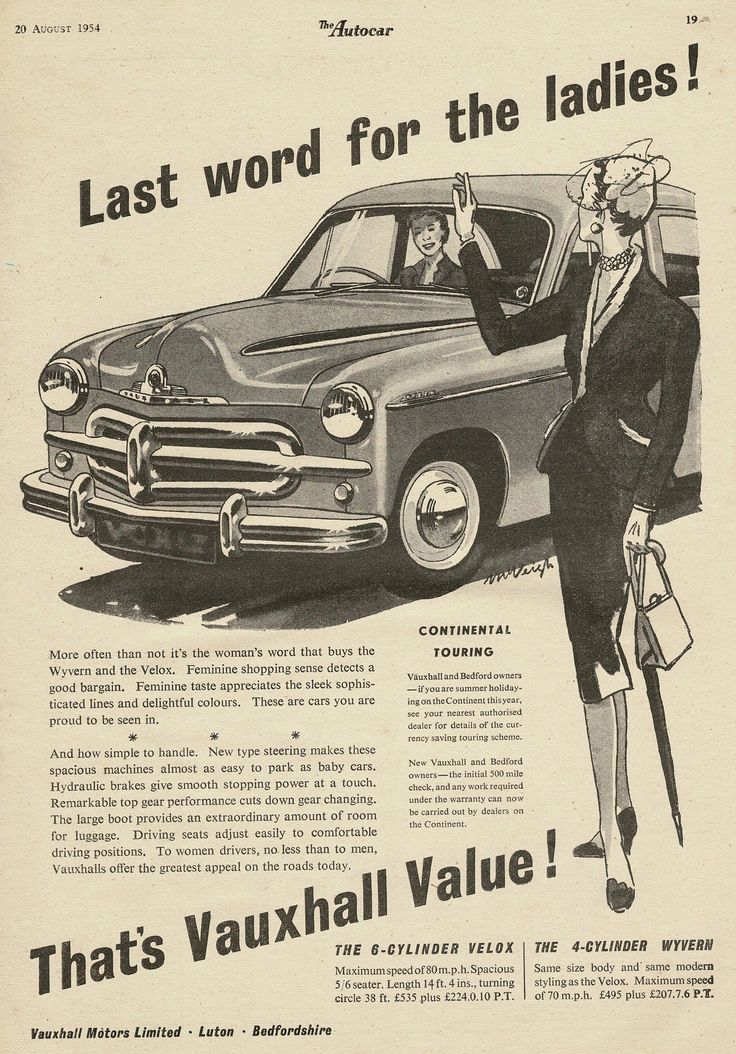
1953 model. 4 cylinder 1508 cc. It was from my mum’s neighbour in August 1969. £25. The seller worked as a mechanic at a Jaguar dealer. He pointed out that it had a Jaguar interior mirror which he had put on after the old one broke off. I was impressed thinking being Jaguar it might make it go faster. He had hand sprayed the fetching two tone black and red. I loved its American General Motors look, most especially the front radiator grill.
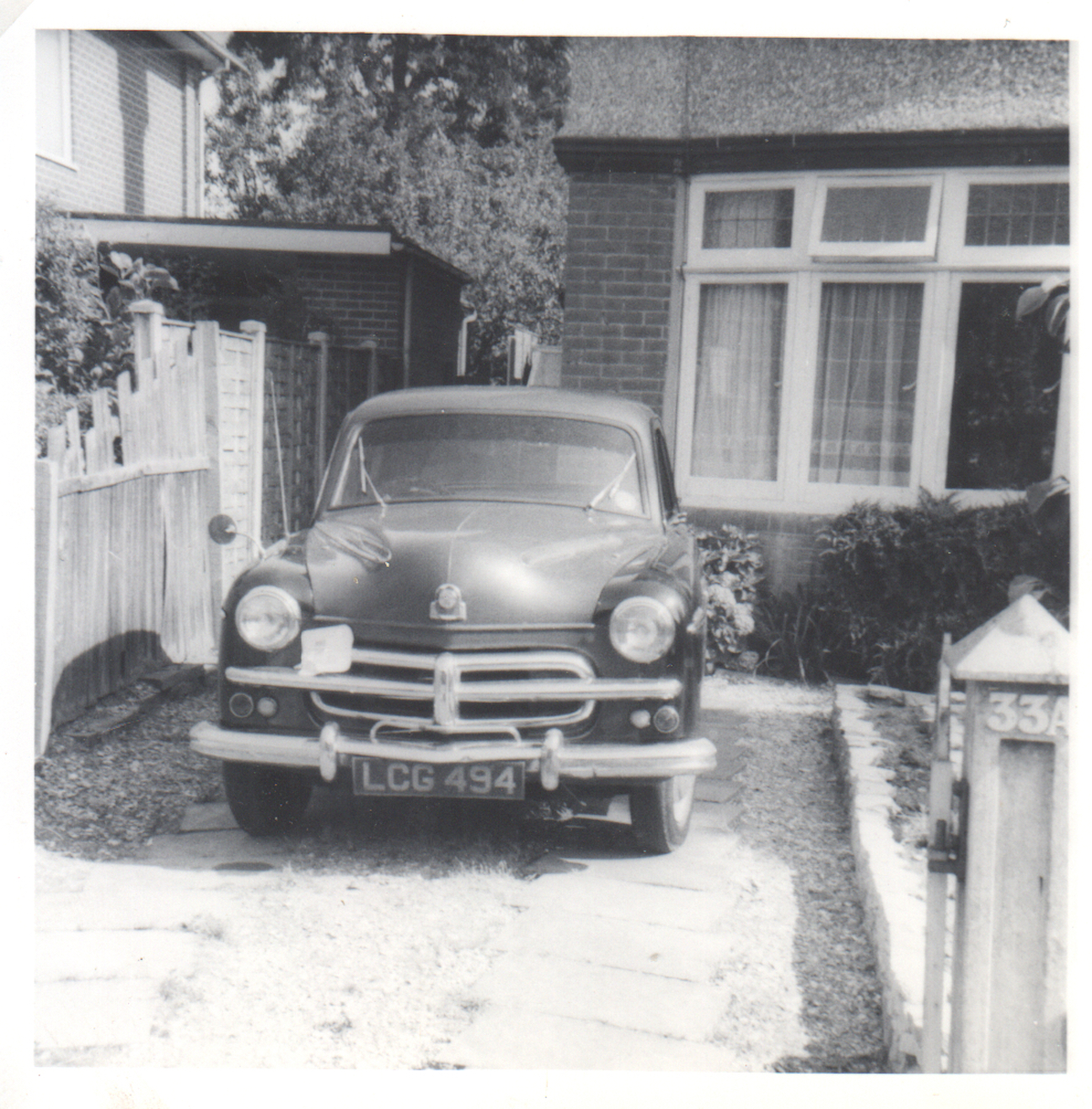
My friend Hutch gave me driving lessons in it. He came with me to pick it up. I assured him I was a competent driver having had several lessons in a Ford Cortina some three years earlier. The journey home terrified him, though I only swerved and touched the kerb two or three times. I will add that when others have criticized my driving in later years, Hutch has defended me on the grounds that I was his pupil.
We did many miles in that car with L-plates. All over Dorset. On holiday to Cornwall. I failed my first test when the door handle came off in the examiner’s hand. Undaunted, Hutch accompanied me to Norwich (via central London) so I could get the car there. In my second test I was out an hour. I realised they wanted to fail me. Ancient car. Long hair. Eventually I was told to go up an alley between shops. Failed on touching the kerb at the end. Third test. Same examiner. He took me round the corner. Asked me the Highway Code questions, said, ‘Sorry about last time. You seemed too confident. You’ve passed.’ Ten minutes. I was confident. I’d driven around 3000 miles including London.
The car was 3 speed column change and slow. Top speed was claimed to be 72 mph, but that would be down a steep hill with a tail wind. In heavy rain you had to drive faster to get the wipers moving fast enough to clear the screen. One night in torrential rain, I missed the notorious 90 degree dog leg on the way to Norwich, sailed straight through a hedge into a field, circled in the mud, drove back onto the road and got to Norwich. It was somewhat scratched and very muddy.
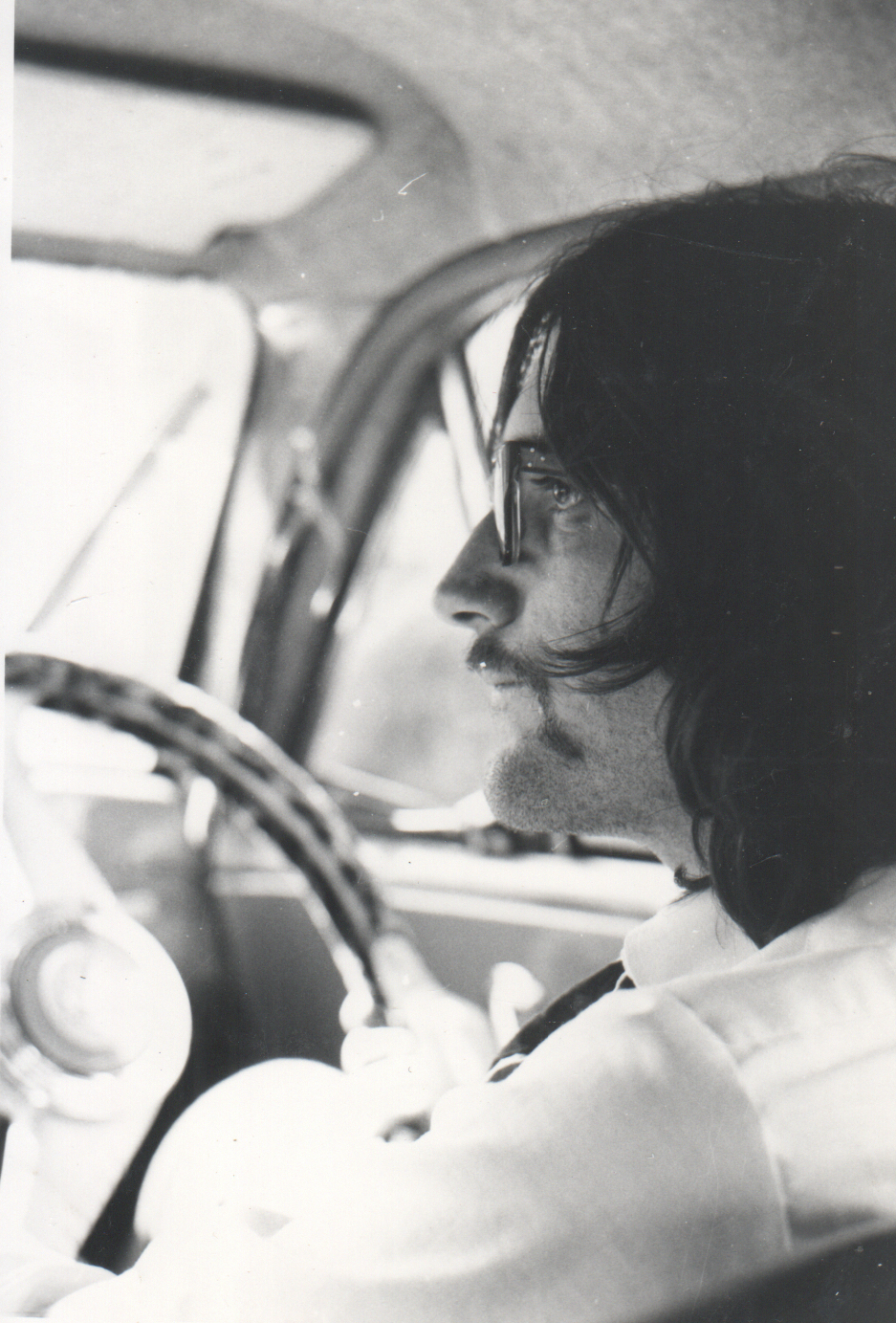
I had forgotten my luxury extra. A leopard print steering wheel cover.
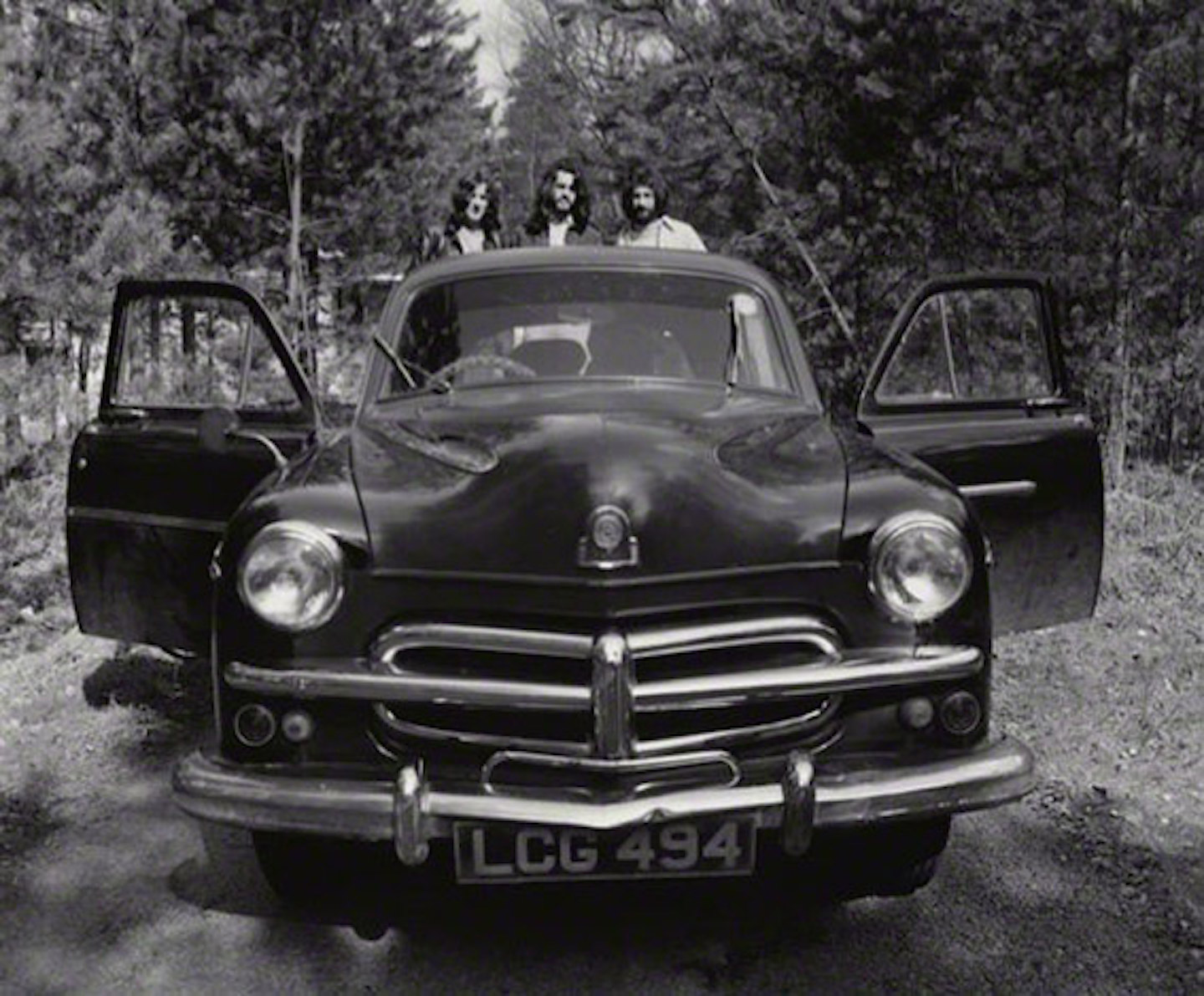
It nearly made rock history, being photographed for the potential rear cover of the first Supertramp LP. However, while it had the three originals / composers, drummer Bob Millar was not present.
At one point the water pump failed. Vauxhall only supplied complete ones. Hutch found it was just a split metal washer. He took the old one to a metalwork shop, and we had a new one made for a pack of ten cigarettes. Everything on it was big and heavy. I took it for its MOT. They put it on a ramp, hit the underside with a hammer and the leg of the passenger seat fell through in a cloud of rust. ‘Is that a fail?’ I enquired. Scrap. That was the trouble with old Vauxhalls. Solid heavy engines and mechanics. Paper thin bodywork.
Ford Transit LWB
Long Wheel Base, so stretched with four wheels at the back to take the weight. I really learned to drive properly on this. Not mine. I was working for the first incarnation of Supertramp. The first day, Andy (John Andrews), who ran the tours said he’d drive it out of London, hand me the keys at the first motorway services, then I would be used to the van by the time we arrived. That arrival was in Stirling, Scotland. I was used to. I really liked that van. it was better than any car I’d driven. It was pointed out to me that it had a Ford Corsair engine and dashboard, so better than a Ford Cortina. I drove it from Doncaster to Frankfurt without sleep too.
You can see better in a van, over the tops of cars. You’re upright so you don’t get back-ache. It’s why SUV’s are popular. Obviously it broke down. All vehicles did in those days. Two bad ones. I also got to drive a huge rented BMC van after the Transit engine seized at Leicester. I also had various drives in the alternative car the band travelled in, mainly an Austin Westminster.
It’s surprisingly hard to find photos. Surviving ones have window conversions or are bright colours. This was midnight blue. When you stopped at the motorway services at 3 a.m. there’d be five or six identical ones. All dark blue. All bands. No back windows. No side doors. Solid partition between the cab and rear to prevent theft. We had three key holes by the door. You had to open them in sequence to stop the alarm going off. None of the photos I can find are dark blue. As that was the preferred group van colour, I expect they were all driven into the ground.
Rented
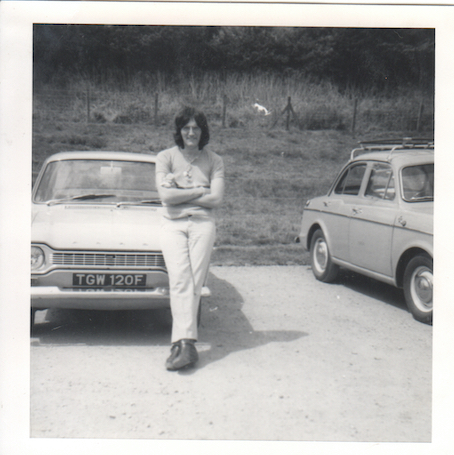
We took this rented Ford Escort on our first holiday in July 1971. We drove to Swanage, Bath, North Devon, Cambridge, Norwich and London in it. It was OK, except the first day the gear stick came off in my hand as I tried to shift from first to second, and we had to drive back to Bournemouth in first gear and wait for a repair. I
Humber Super Snipe Mk IV
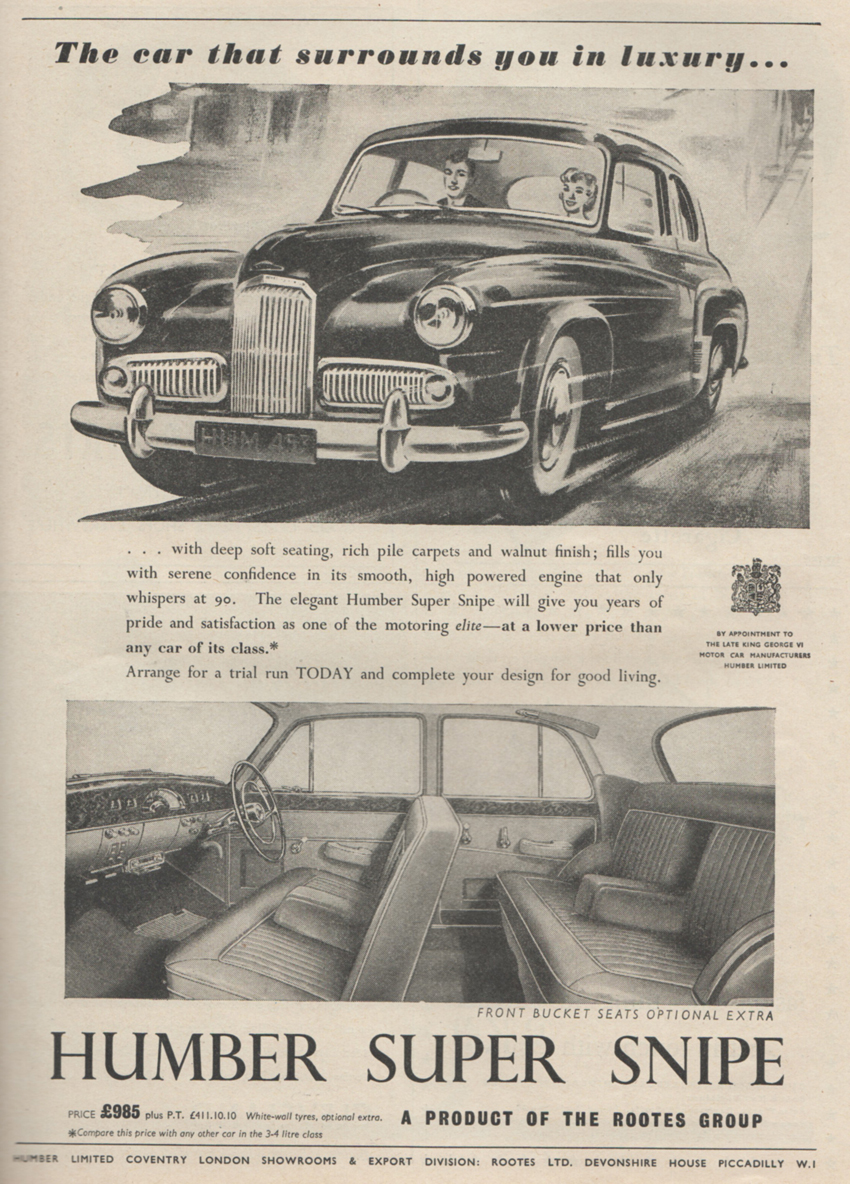
My favourite car ever was a 1953 Humber Super Snipe. It had been laid up for ten years in a garage in Corfe Castle, Dorset, when we bought it in April 1972, with 40,000 miles on the clock. A friend had paid £40 for it, and sold it on to us for £60. It was our first major joint purchase.
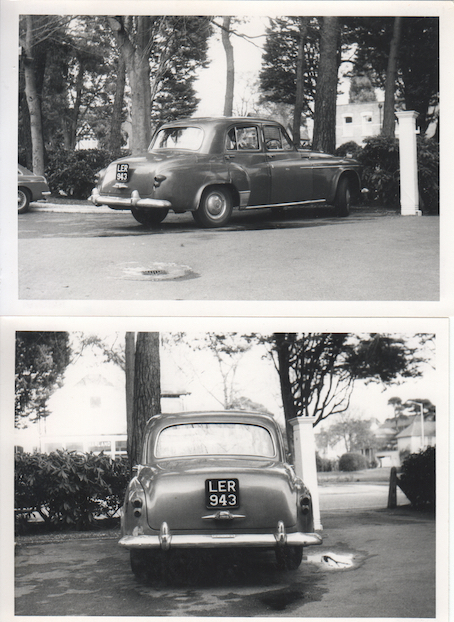
It had a 4.138 litre engine, so was barely run in. You didn’t really need gears as it would go anywhere in 4th. It would go anywhere in 1st too, usefully as the column change was not positive.
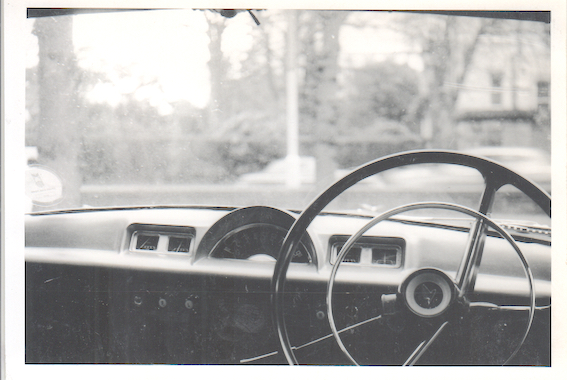
The engine had been designed for a Commer truck, and was presumably based on the modified Chrysler engine used in the wartime Mk 1 and Mk II.
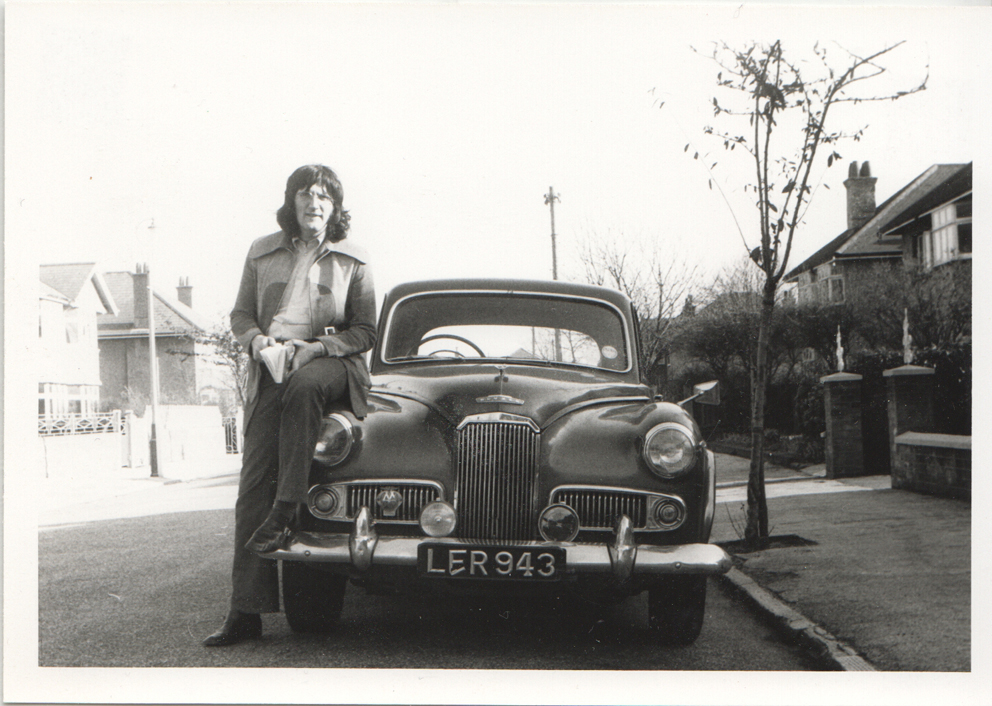

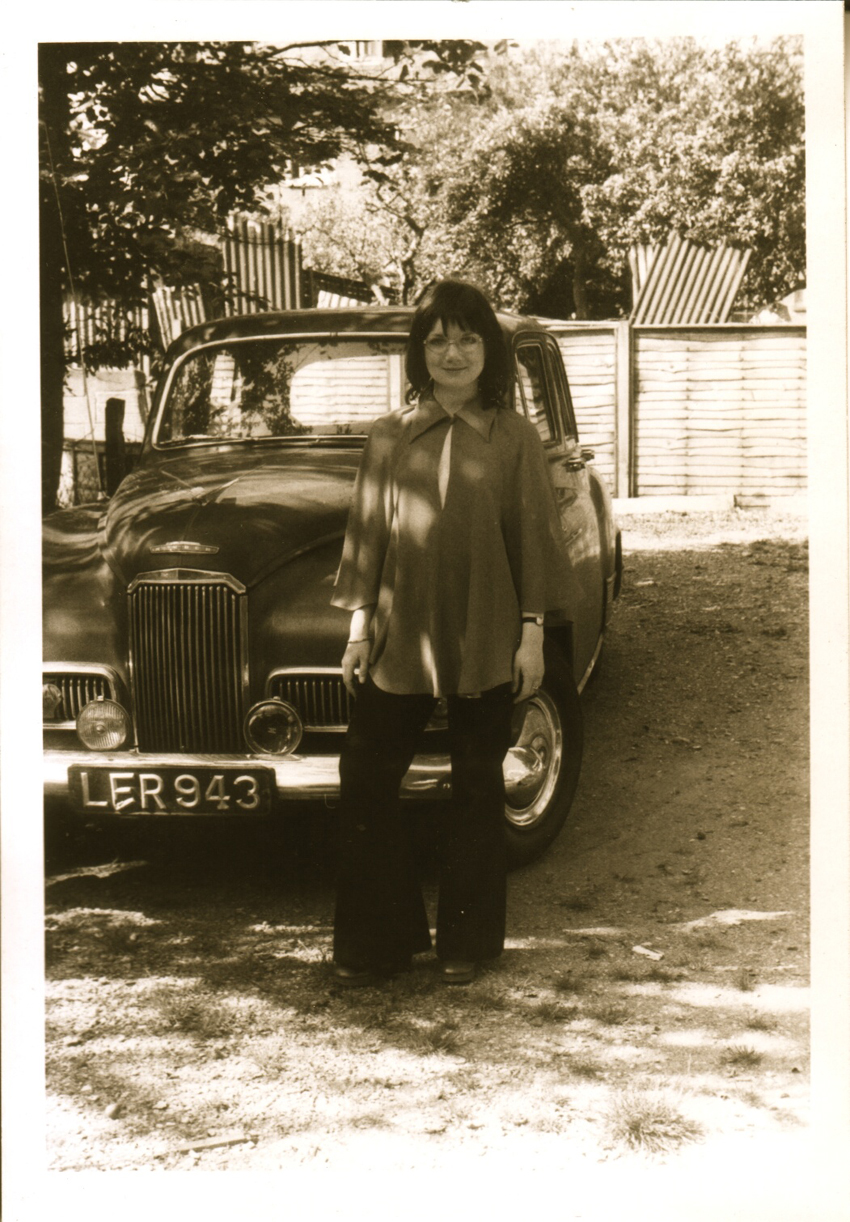
Sadly, the 1973 petrol crisis was the end of it. The exhaust fell off in December 1972, but I managed to get a Jaguar Mk X box welded in to replace it. Then petrol prices started rocketing. The exhaust change had seen its petrol consumption drop from 15 mpg to 11 mpg around town. Petrol ration coupons were issued (though never used). It was time for it to go. I sold it for £60, a rare car I didn’t lose money on, to a neighbour who intended to restore it to pristine condition for a concours d’elegance. We moved. Four years later we passed the block of flats again, and there it was, wheels off, engine out, a hulk, rusting quietly in the garden.
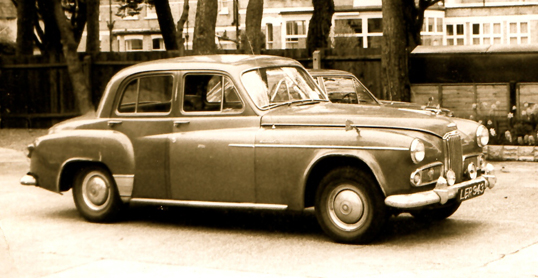
OK, on some of the photos the driver’s door looks different. A respray? A trick of the light? I don’t know – it was nowhere near as noticeable in real life. I doubt the story that it was by the opening in the barn it was stored in and afflicted by pigeon shit.
Humber Sceptre
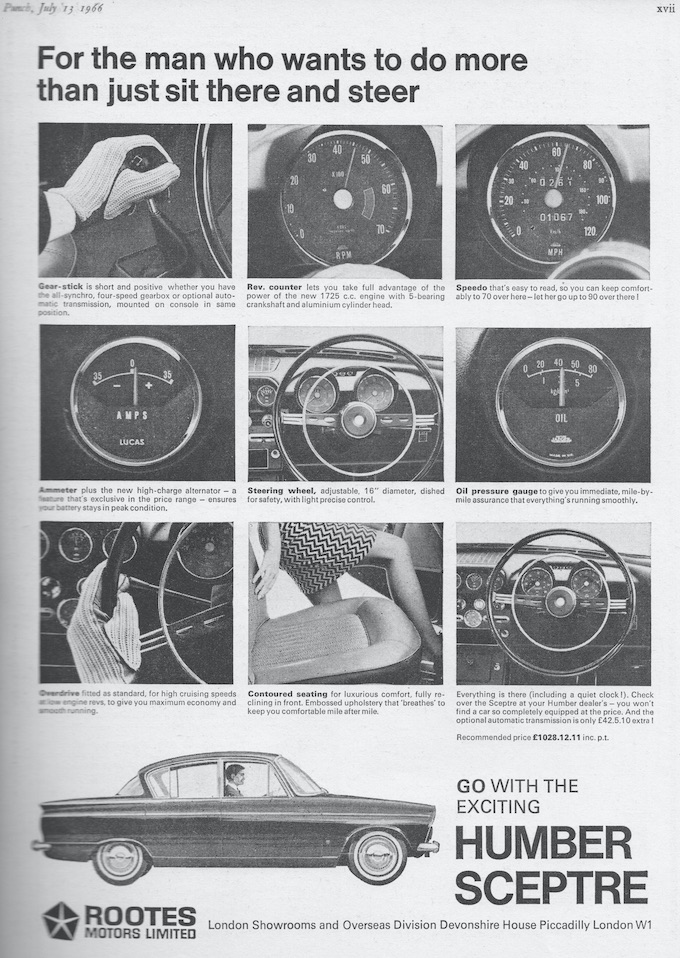
This is all my friend Hutch’s fault. He had a Humber Sceptre Mk 1. It was glorious, comfortable and had rows of instruments on the dashboard. My dad had had a Hillman Super Minx, basically the same car with a 1600 cc engine rather than 1725 cc and fewer toys.
Rootes Group had a scale which ran Commer > Hillman > Singer > Sunbeam > Humber. I knew from working in a motor wholesaler that they all had the same (e.g.) Ferodo fan belt, but they were priced according to the brand. I knew you always bought the Commer one as the cheapest and they came in the same Ferodo packet. You put a sticker on for the brand.
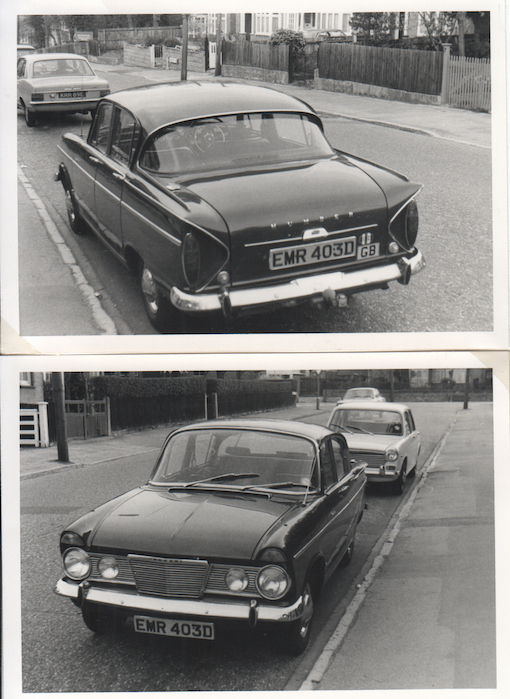
So when the Super Snipe went, I had deep brand loyalty. I wanted a Humber Sceptre. His was a Mk 1, but by now Mk IIs were available. I found a dark metallic green one in the paper and bought it, ignoring the motor trade old advice ‘Never buy a green car. They’re unlucky.’ And so it proved to be. £350. I only had it for a few miserable months of breakdowns. When we started polishing it and examining the metal closely, I began to suspect it was a crash repair too.

The single window behind was our flat. It had been carved out of a corridor between two larger rooms. It was very long and very narrow. Eating area, kitchen, bathroom, bedroom.
That car had serious dashboard appeal. I note that it had done 54,000 plus miles. Quite a lot then, though it was already six years plus old. Look at all those dials! That was the sign of a luxury car. Not that you looked at them. Now it would just be a piece of text inside the speedometer.

Triumph Spitfire Mk IV

The Sceptre was playing up. Karen’s old drama teacher, Elsie, sympathised. She had another pupil, a woman in her 50s. She had bought a yellow 1972 Triumph Spitfire ten months earlier. It had cost her £1650 new, and had a top quality radio, an expensive extra. She had injured her back and couldn’t get into the car. In retrospect, I sympathise. I wouldn’t be able to nowadays, or if I did,I couldn’t get out. She had been trying to sell it for £1250 for months, then the petrol crisis had meant no demand for sports cars (though in fact the Spitfire was extremely economical being small and light). She dropped to £1000. No offers. Elsie advised she would take £950 from someone she knew who wasn’t a trader. I had never hankered after a sports car, I like big and luxury, but it was too good a bargain to miss. Not even a year old. We took out a bank loan and bought it. I got £300 for the Sceptre, not a great loss.

Yes, you might well say how does a bloke your size in this picture get in a Spitfire? The long bonnet was the secret. Your legs were nearly straight out. In contrast two friends had MG Midgets and while I sat in agony in the passenger seat, I could never have driven them. The Spitfire was way better-looking too.
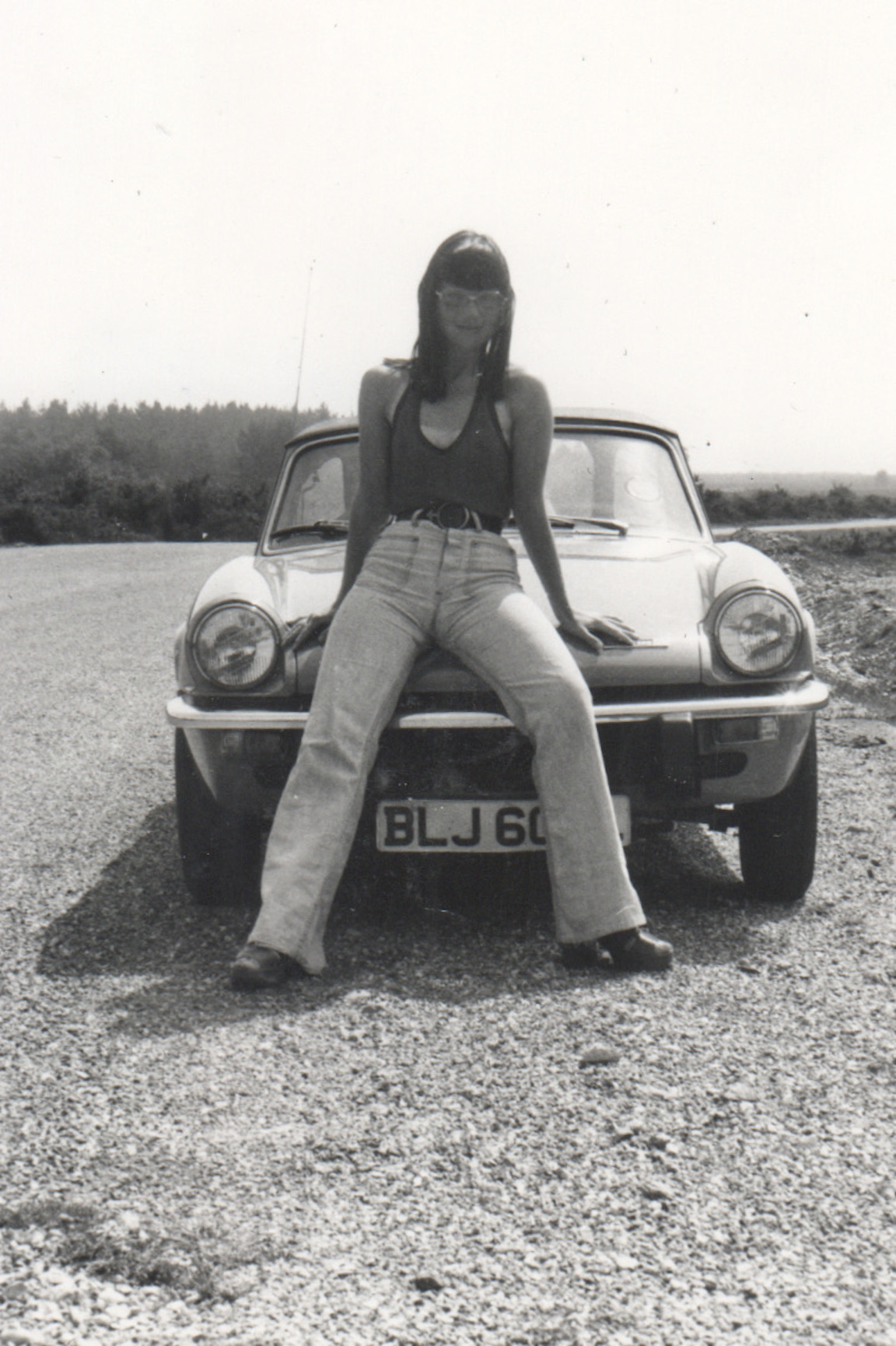
It was more suited to Karen’s size.
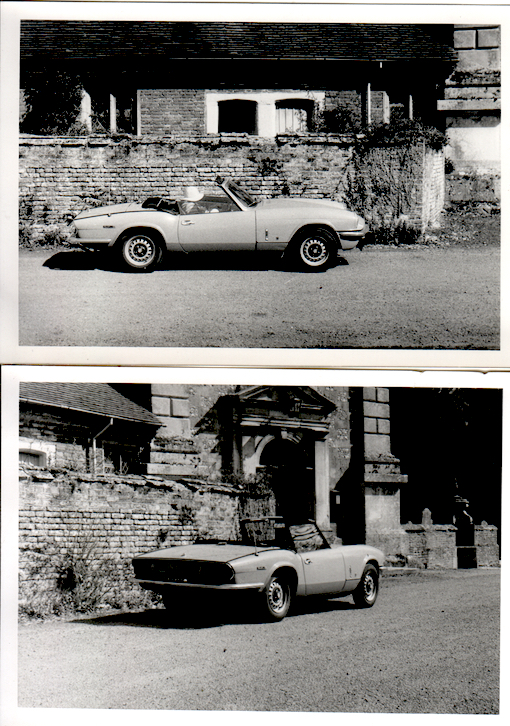

This is outside our flat (2nd floor) in Penn Hill Avenue over a shop. it’s a ten minute walk from our current house.
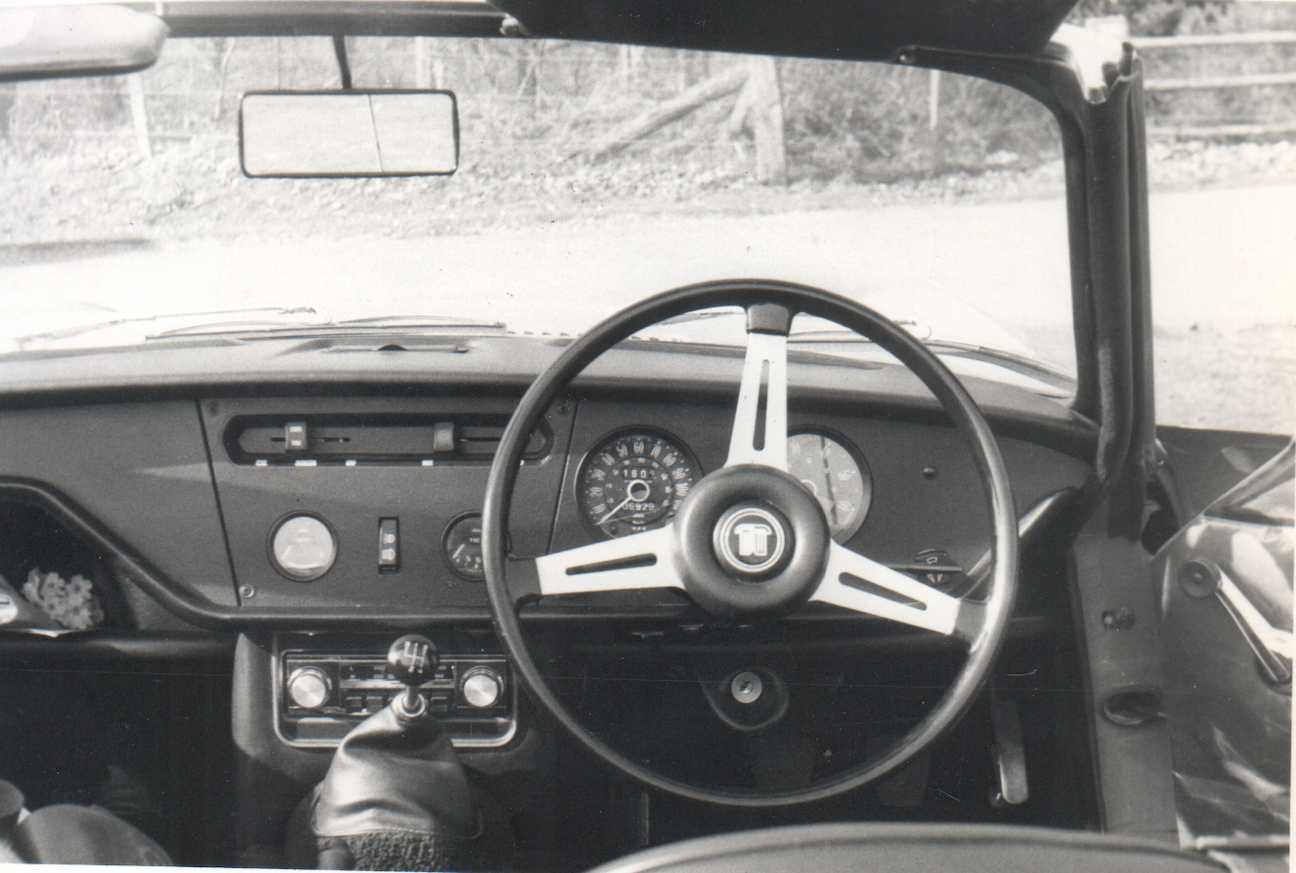
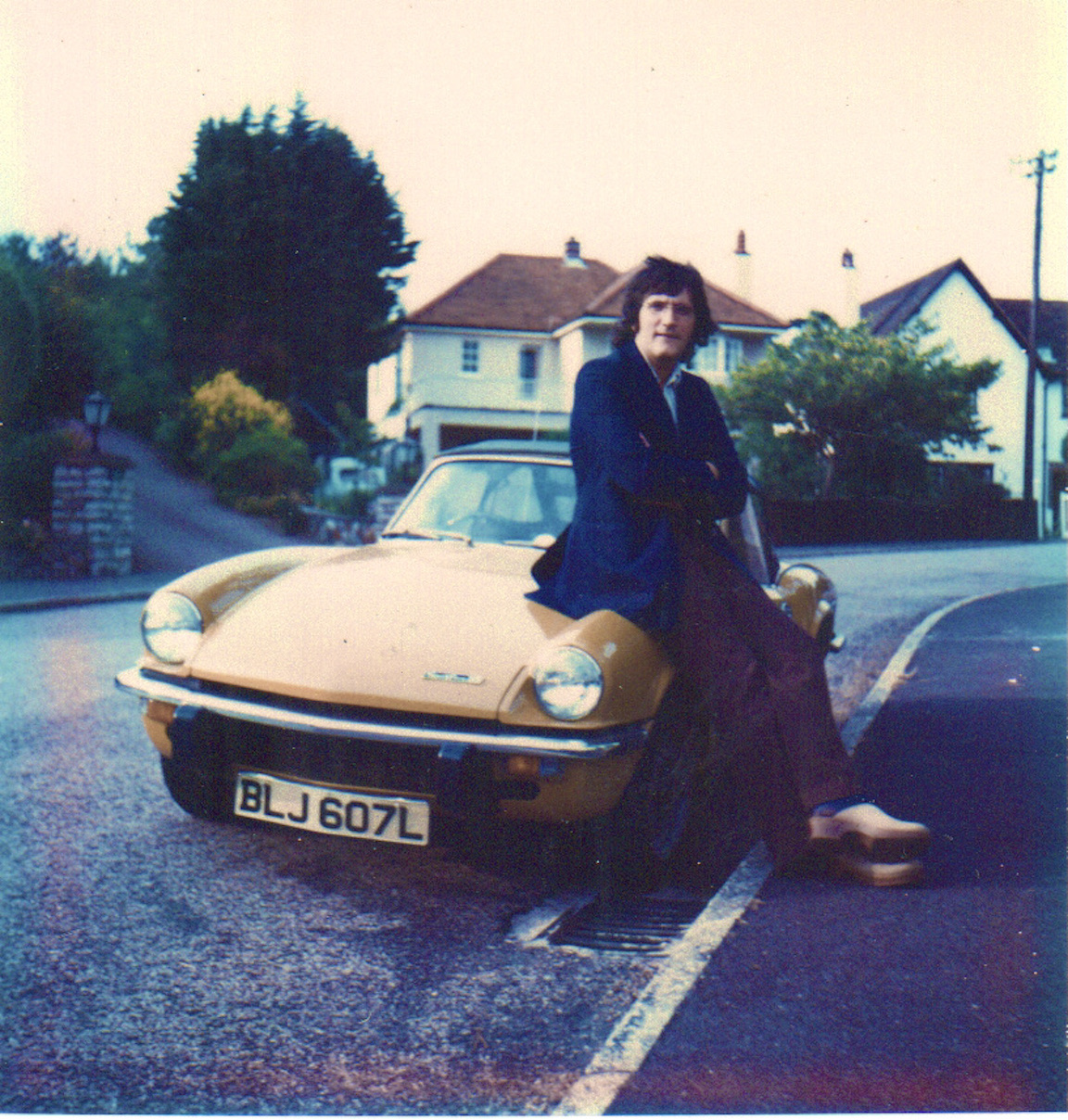
We had a Spitfire story. We were going to a conference on teaching with drama at IH London. I had the car serviced the day before. The bill said they’d replaced the fan belt. Just outside Basingstoke the fan belt broke. I called the AA. Was it over-tightened? The AA guy showed me. No, it was worn out and in shreds. But it was replaced yesterday? No, it wasn’t. This was the car’s original fan belt.
The AA guy told me to send the fan belt with the bill to Triumph. They refunded the entire cost of the service. They also phoned and said this was a repeat event for the dealership. They lost their franchise a few months later.
However, while the Spitfire was fun to drive on winding country roads, it was irritating on the motorway as streams of bog standard small saloons sailed past faster than it would go, and you couldn’t have a conversation over the engine noise. It just felt very fast being so low and so bumpy.
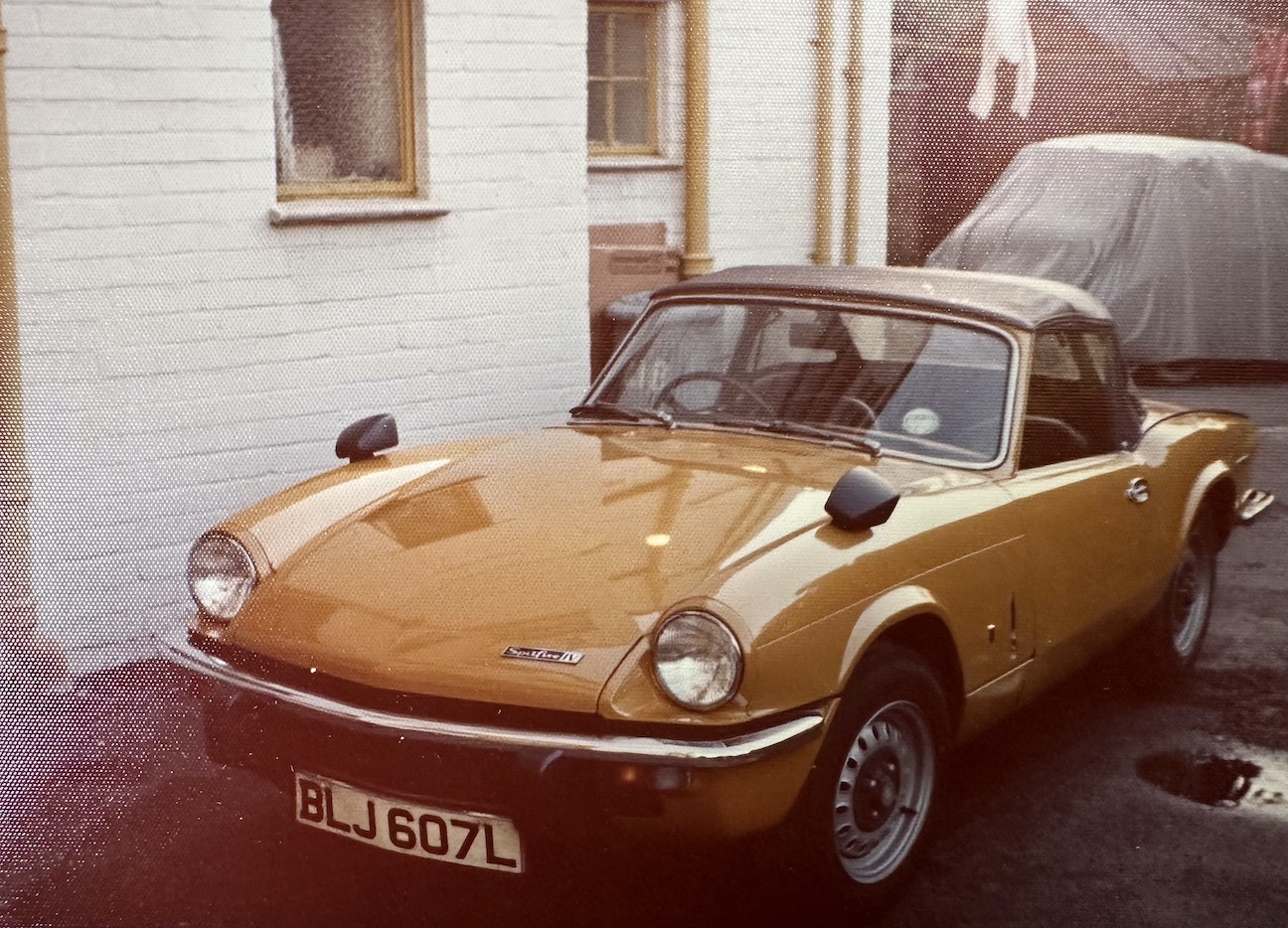
They go for £7000 to £28000 now depending on condition. Still, where would I have stored it for fifty years? Plus I couldn’t get out of one now.
Fiat 128 Rally
It was a Friday evening in August 1975. A friend of a friend arrived and asked if I wanted to sell the Spitfire. He’d been looking for one for weeks. Ours was valued at around £1250 to £1350. Would we take £1350? A profit! On a car! Yes! It’s never happened since. He wanted it there and then and gave me cash.
So Saturday morning, no car. We determined to buy new this time and we had enough money burning a hole in my hand. We’d paid off the loan on the Spitfire. Leo Jones kindly offered to take us car hunting. I wanted a Ford Escort in a particularly horrible vibrant blue they had just introduced. We went to English, the main Ford dealer in Poole (now our local Tesco).
– Could I have a test drive?
– No.
– Could I sit in one?
– No.
– I have cash.
– Yeah, right. Excuse me, sonny …
As a rock musician I knew said, that happens with Fords and Vauxhalls. The Aston Martin dealer is used to people with scruffy hair in faded jeans.
So to Renault. Renault 5. Short test drive? No problem. Didn’t like it.
Fiat? They had the 128 Rally with big spotlights in red. £1535.
Test drive?
Of course, sir. Have a coffee while I get the keys.
It handles superbly. I love it.
We’ll throw in road tax and a full tank of petrol.
Done.


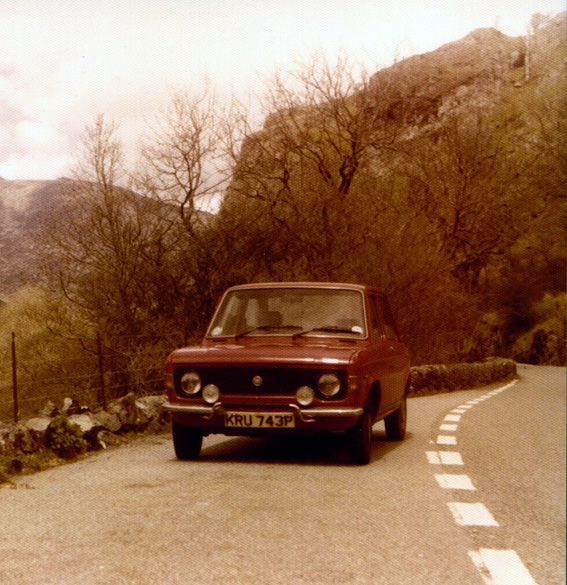
This wouldn’t be interesting if you couldn’t laugh at our dress sense. I assume we were on the way to work, and it was an intake Monday, the only time I wore a suit as it gave confidence to new arrivals as Head of Department.
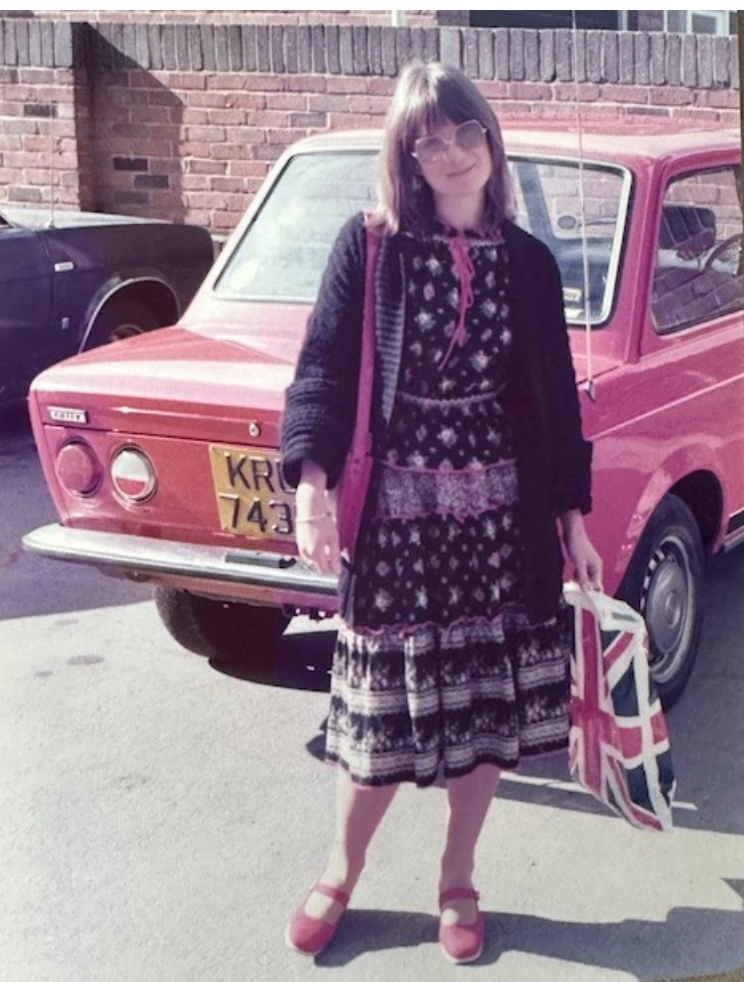

The little known fact about the 128 Rally is the round rear lights. Fiat and Ferrari were part of the same company and a designer saw the 128 rear lights and decided to stick them on the Ferrari. I bet Ferrari ones cost more than 128 ones.
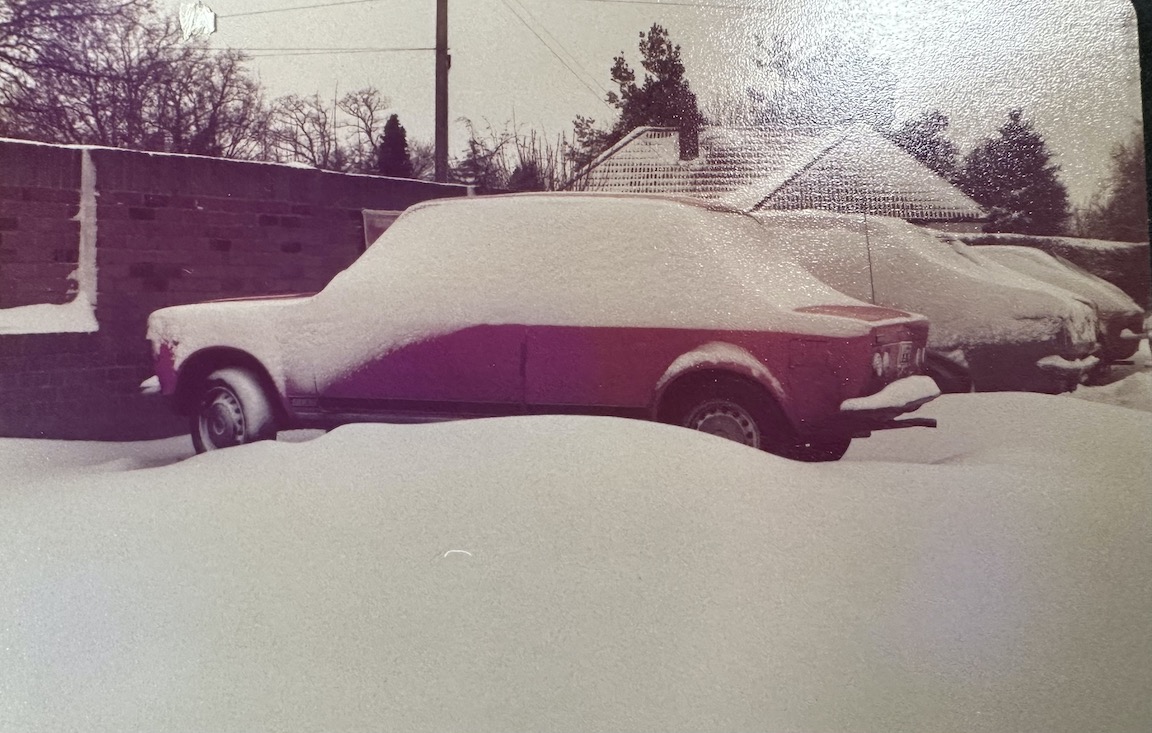
Years after we sold the Fiat 128, I saw it outside the station. The red paint had totally bloomed out to matt (as red paint will) and the sides were riddled with rust. Not a keeper then, but perhaps January 1978 did it no good.
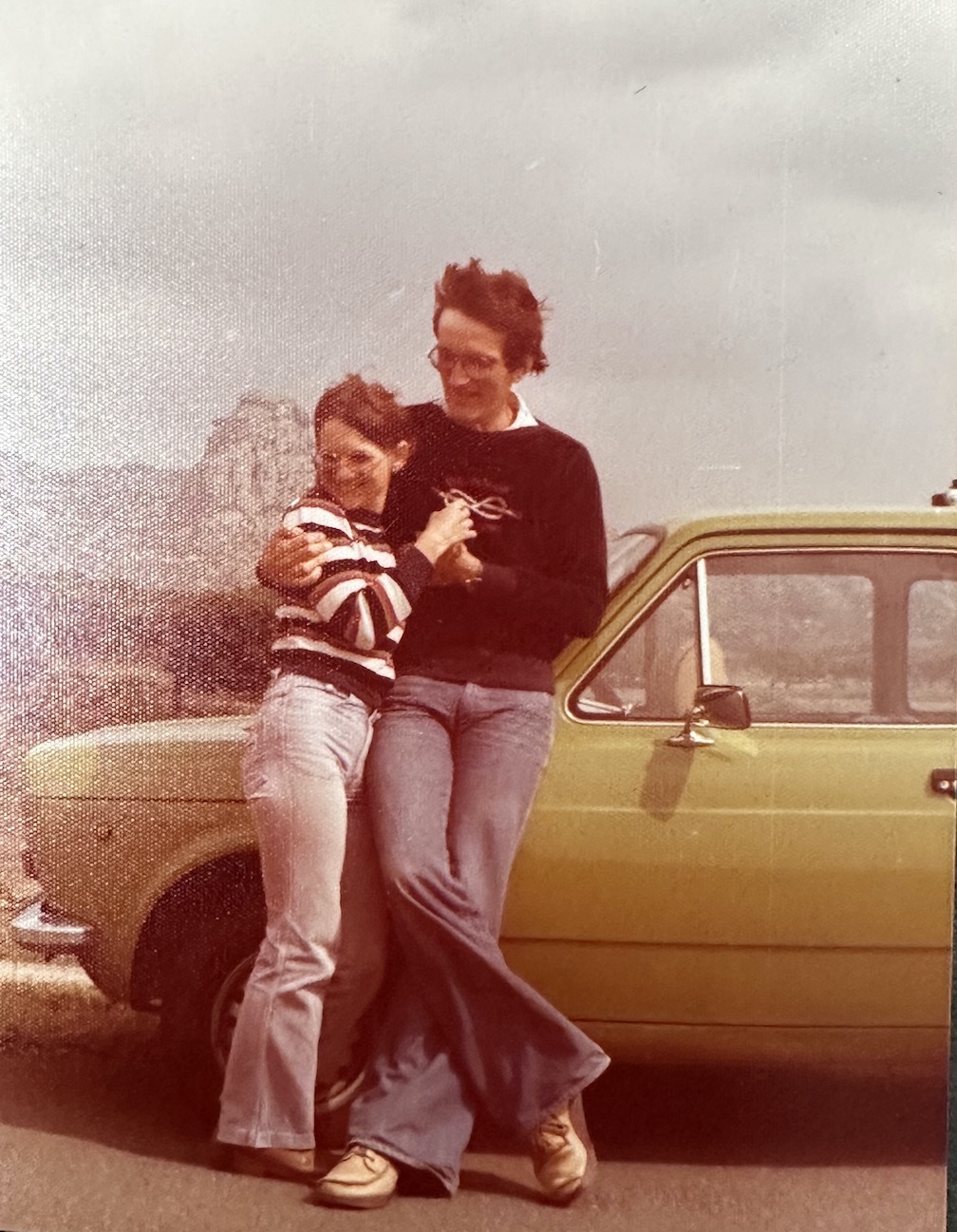
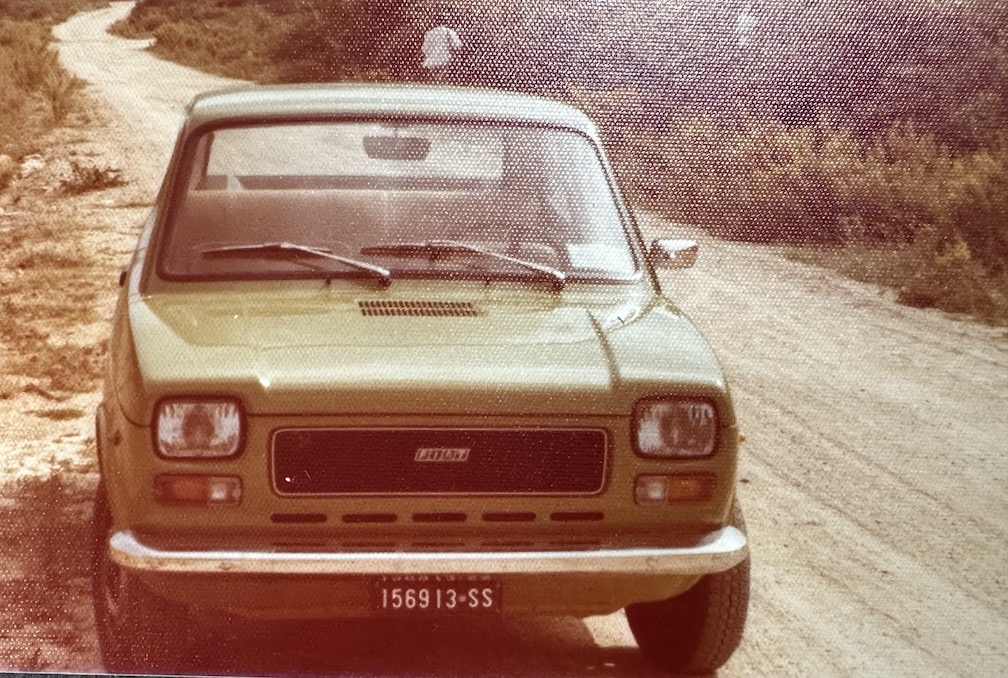
I liked Fiats. We had a Fiat 127 in Sardinia for two weeks in 1977. We went around with another couple who had a Fiat 500. We took it in turns to use the cars. We survived Sassari in the rush hour and driving could be hairy in Alghero or Sassari, and I took the brunt as the 127 was marginally less uncomfortable. When we used to rent cars in the early 80s (me and Bernie to go on promotions) we usually rented a Fiat 132 from that same garage that my 128 came from. They were lovely when we virtually wrote off a hired Fiat 132 (50 miles on the clock) when a truck rear-ended us when we stopped to let a pram across a zebra crossing half a mile after we picked it up. They just gave us another one. Even so, I would never say Fiat were reliable. Later we had a Fiat Uno. Never again.
The two car family
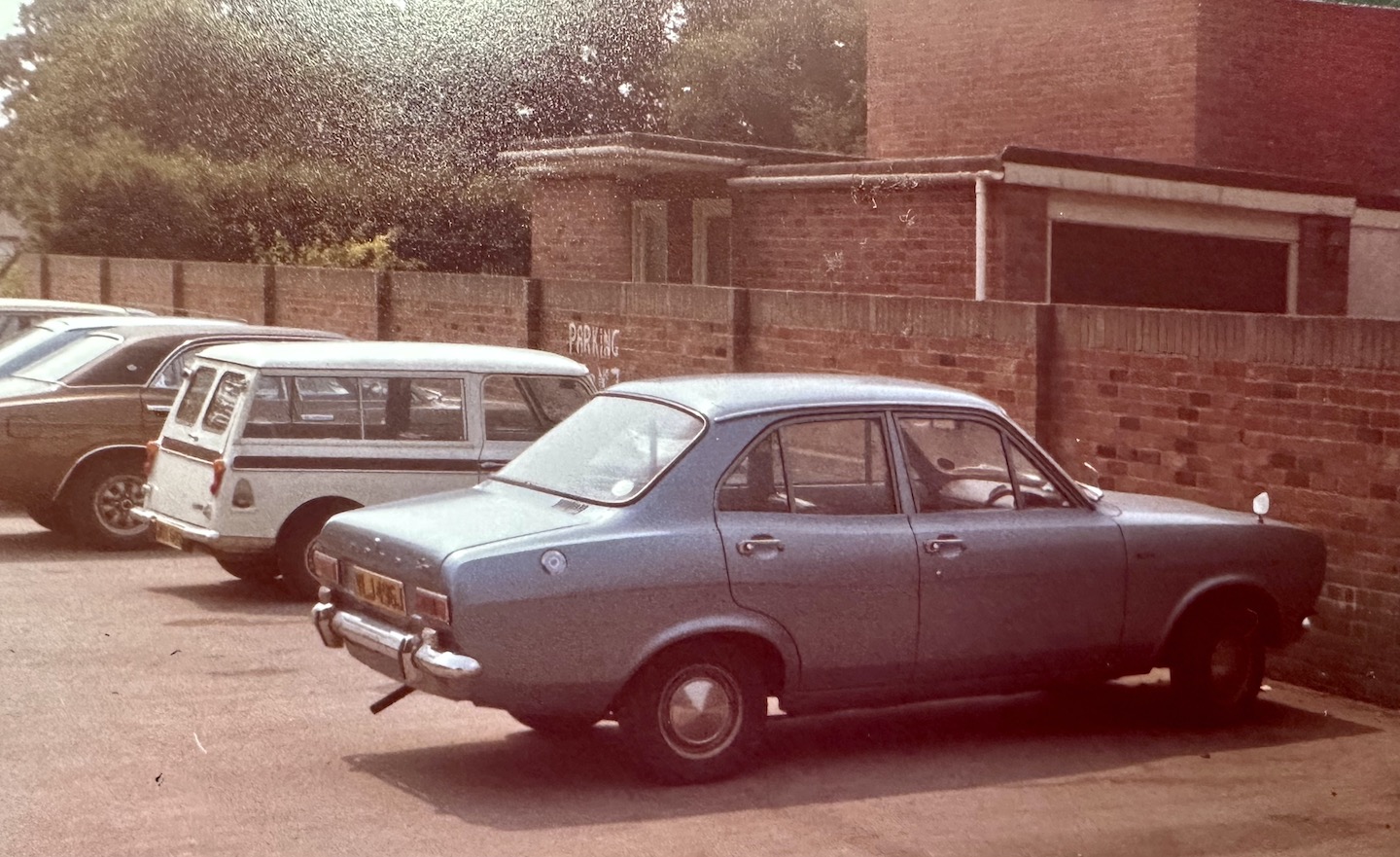
It was time to embrace the two car family. We lived at West Moors, a 30 minute drive in to work in Bournemouth. Karen was pregnant, and when she stopped work it was obvious that we needed two cars. A colleague, Alan, wanted our Fiat 128 Rally. He traded in his 1970 Ford Escort with us, not that old, but with 106,000 miles on the clock plus cash for it. The Escort had had an engine rebore at 90,000 miles, but everything else was knackered. Seats, floppy window winders, controls, wobbly gear stick. The cash balance allowed us to buy a secondhand 1972 Mini Clubman at Dear Bros, the car dealer in West Moors, a branch of the Austin dealership my dad had favoured in the 1950s. They knew my name. I got a good deal. I used the Escort. Karen used the Mini.
Ford Escort 1100L
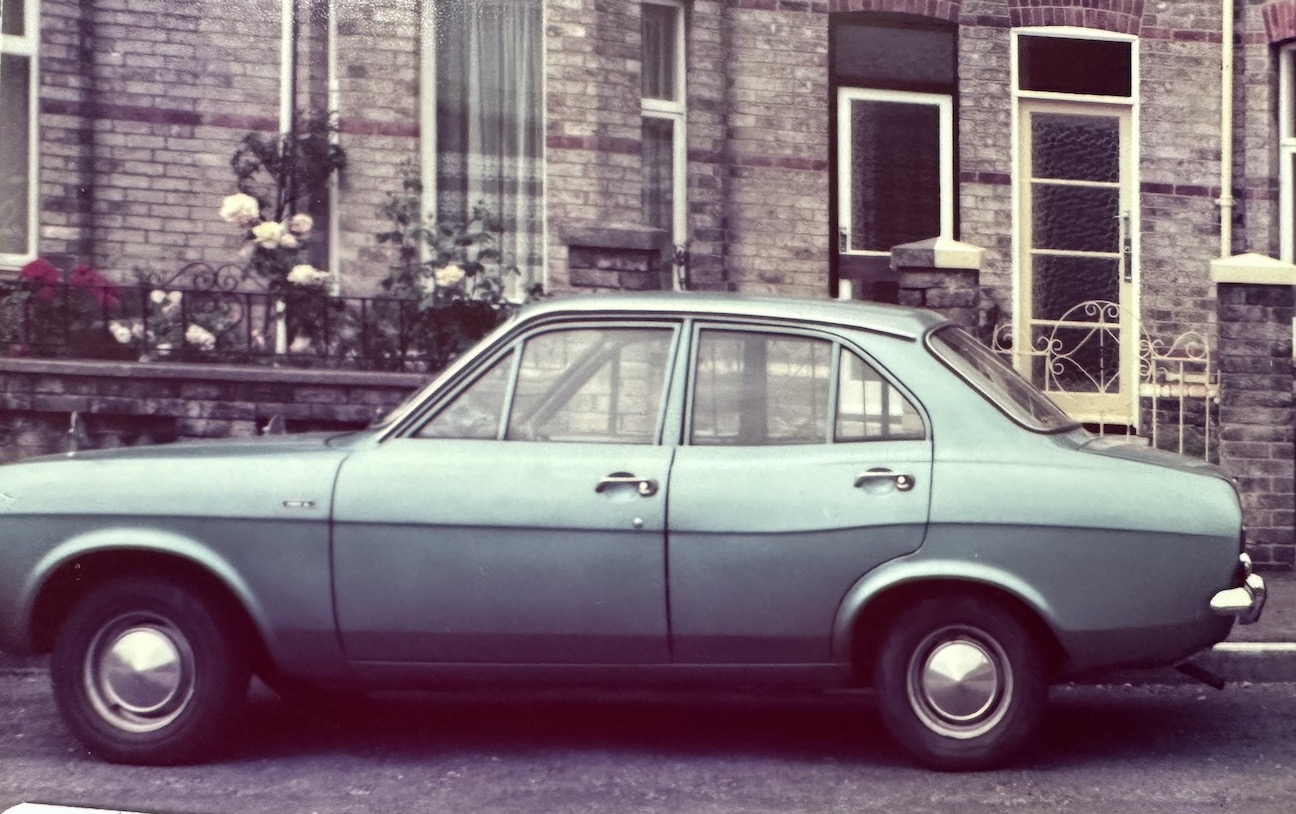
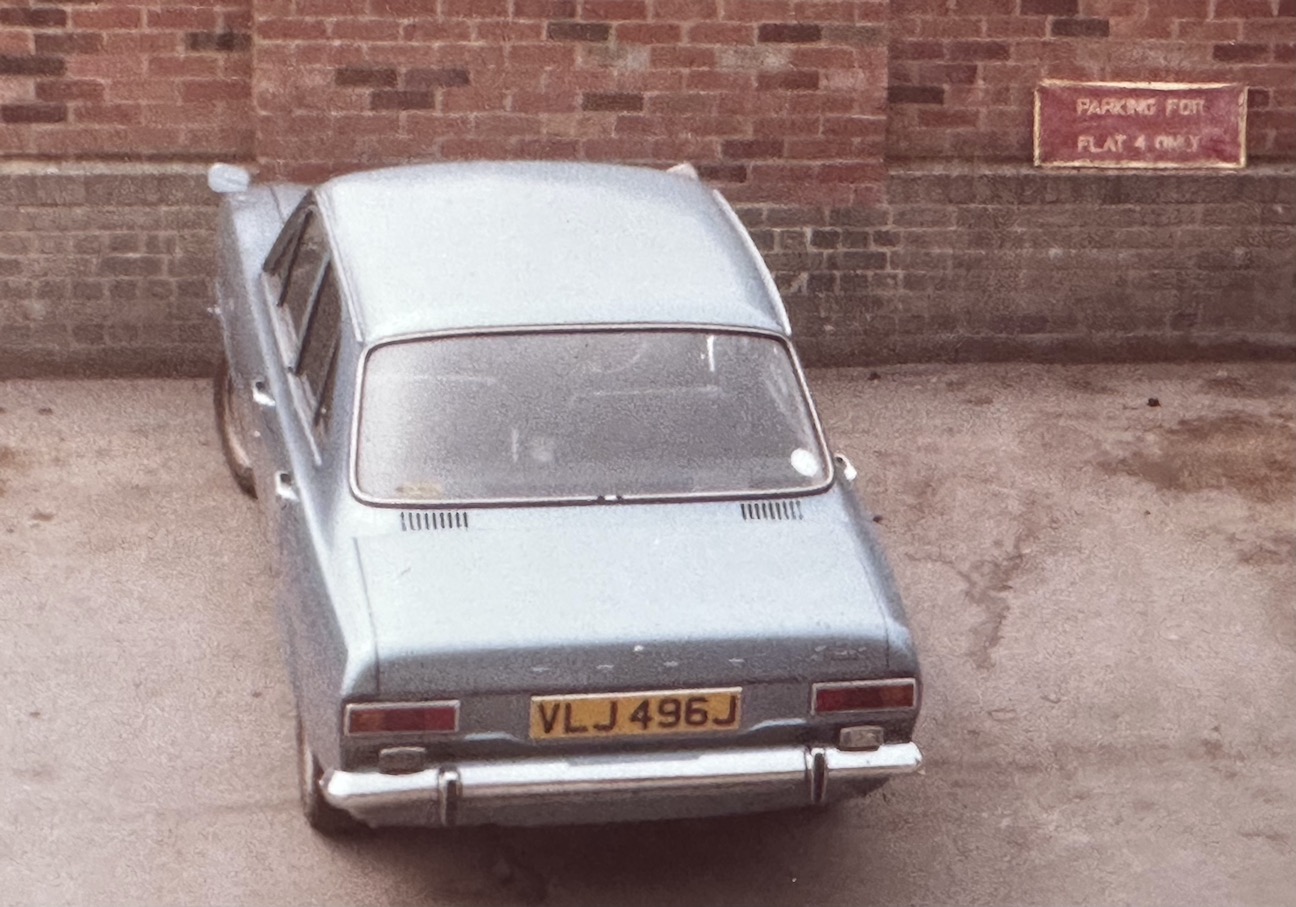
Our only epic journey in the creaking Ford Escort was to Cambridge. Streamline had just been published. Bernie Hartley and I had done promotions together in Bournemouth, Brighton, London, but I spoke in Cambridge on my own, my first solo one. Being around eight months pregnant, Karen came with me. Oxford University Press booked us into the University Arms Hotel, far better than our normal choice of accommodation. Things stick. The oak panelled dining room. Kippers for breakfast (they’re still repeating forty-six years later). Then check in. I said it was a booking by Oxford University Press. The reception clerk looked at his book.
‘University Press? I can’t find anything booked by CUP.’
‘Not CUP. OUP. Oxford University Press.’
‘Oh? Have they got one too?’
‘A press?’
‘A university.’
He was joking.
One thing about Fords. Just before we sold the Fiat 128, the dashboard light bulb died. It was two hours labour to replace it because it meant taking out the entire dashboard. We bought the Ford, and within a week the dashboard light died. I was driving home often at night. I went to the dealer and asked about booking in a fitting. The man said, ‘you just do it yourself.’ I said ‘What about removing the dashboard.’ He came out to the car reached under he dash and pulled a wire down. There was a holder. He put the bulb in and pushed it back up. No charge, just the price of the bulb. Easy maintenance is part of Ford’s success.
The main memory of that car was 6 a.m. 9 July 1978. Our son Daniel had been born in Poole Hospital after a 22 hour labour. I drove to my sister’s to tell her, along the cliff top road, window open, a cassette of Bob Dylan’s Street Legal playing. Total exhilaration. I woke her up. We had breakfast.
We moved back into Bournemouth in December 1978. We were now just a ten or fifteen minute walk from Anglo-Continental. It was a cold winter. It was instantly apparent that the night storage central heating was useless in the house. The Ford Escort had to go to help pay for a new one. We no longer needed two cars.
That cold winter of January 1979 brings up another memory. There was snow, heavy for Bournemouth but only two or three inches. I walked in. The phone rang. One of our teachers to say he couldn’t get in because of the snow. He lived under a mile away. I had walked past his house to get there. Leo was in, who lived a few doors away from him. Bob had driven nearly twenty miles in. All the students had walked in. I think he resented my suggestion that he could be at work in 15 minutes, or we could count it as a day’s holiday.
The Mini Clubman
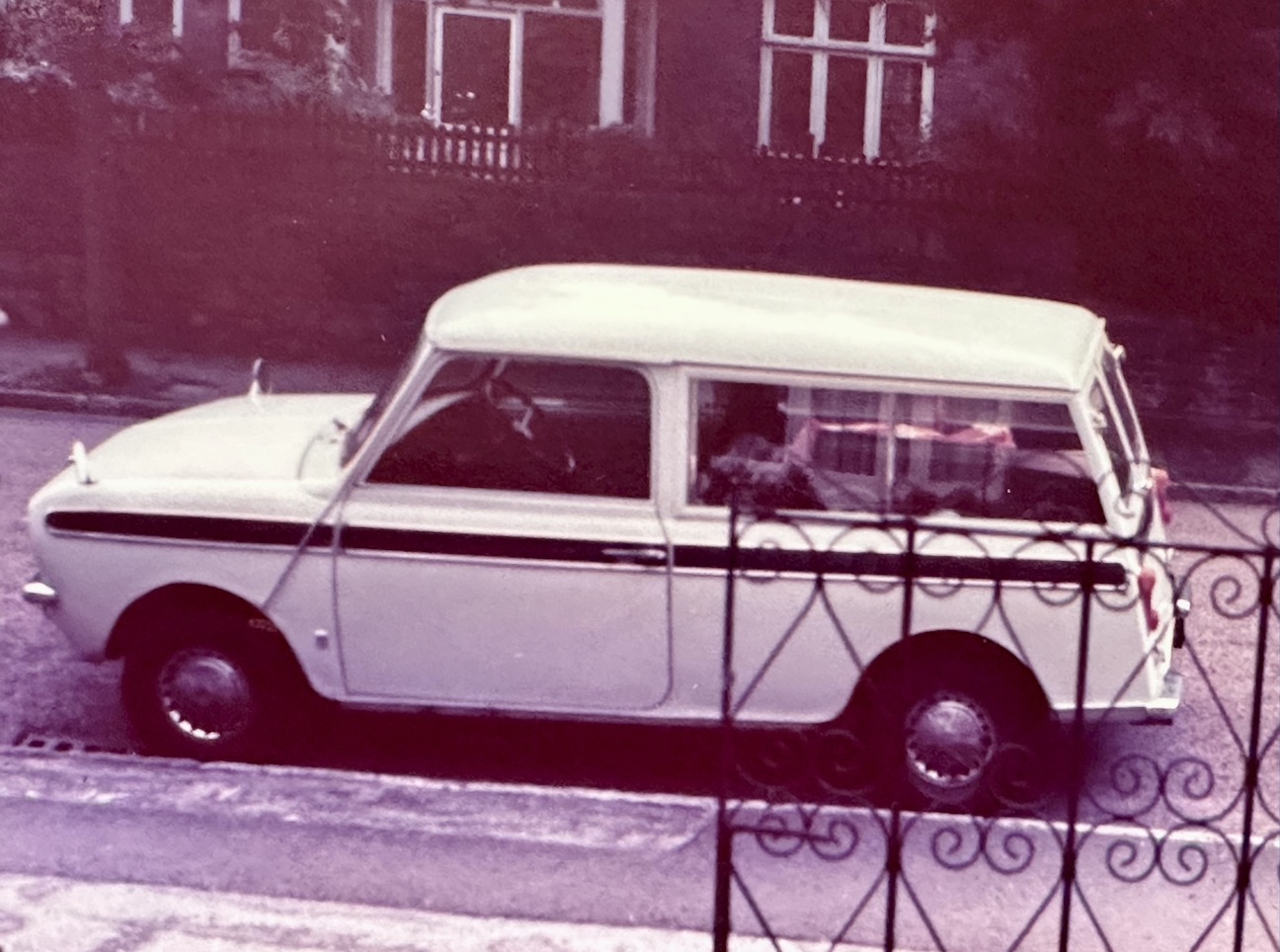
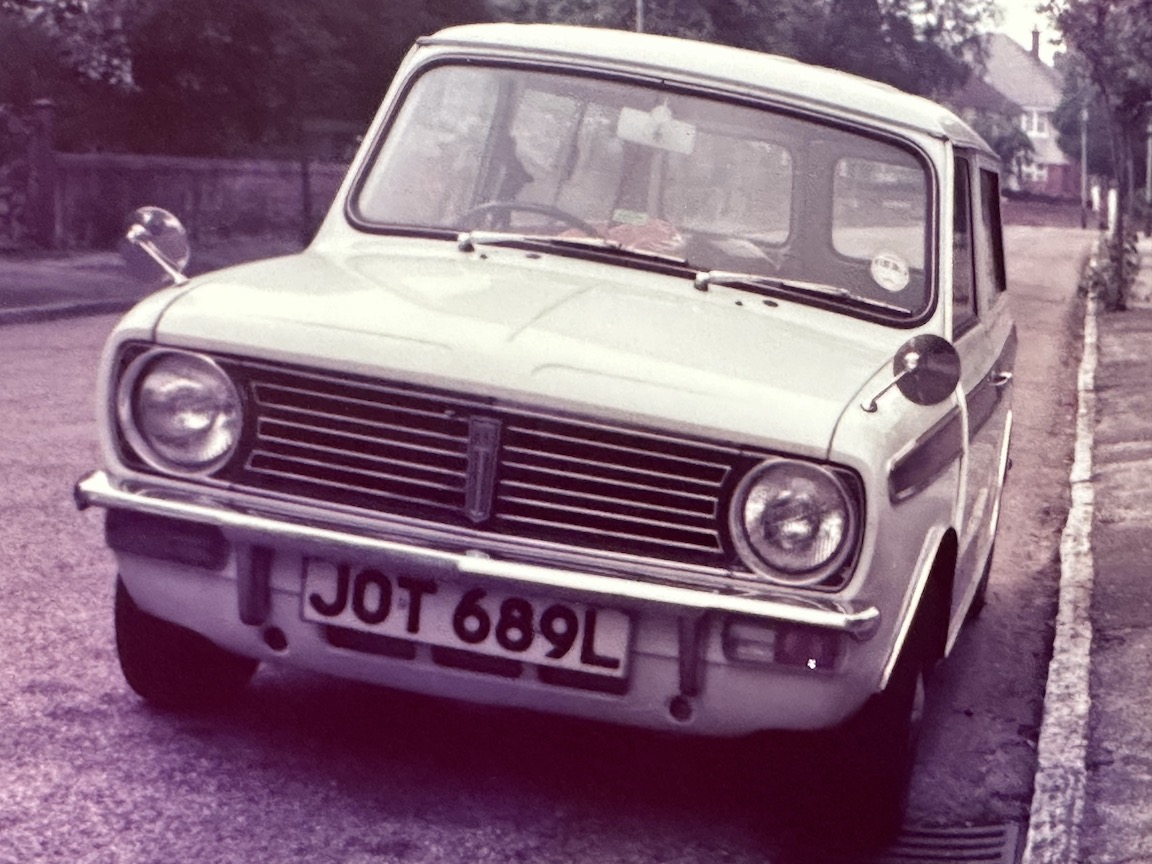

So then I walked to work, Karen had the Clubman. The original Mini Clubman had wood panel strips on the side, which was the 1940s and 1950s indicator of an estate car. It came in two versions which were identical except for the badges: Morris Traveller / Austin Clubman. The Traveller was abandoned for one name, but stayed on the Morris Minor Traveller.
By 1972, BMC had switched to brown metal strips instead of wood, or even fake wood, bolted on to provide even more rust points. It is astonishing to see an old BMC Clubman next to a current BMW Mini Clubman. The old one is really tiny in comparison.

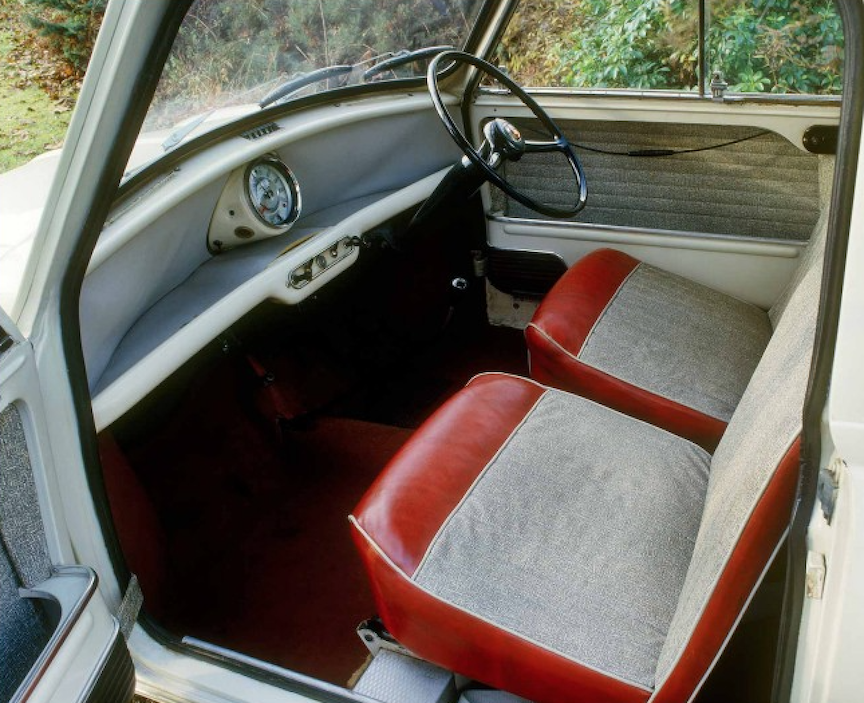
I can only describe the interior as basic, though ours was newer than this and had a door handle, not a bit of wire.
The two back doors made it ideal for a carry cot.

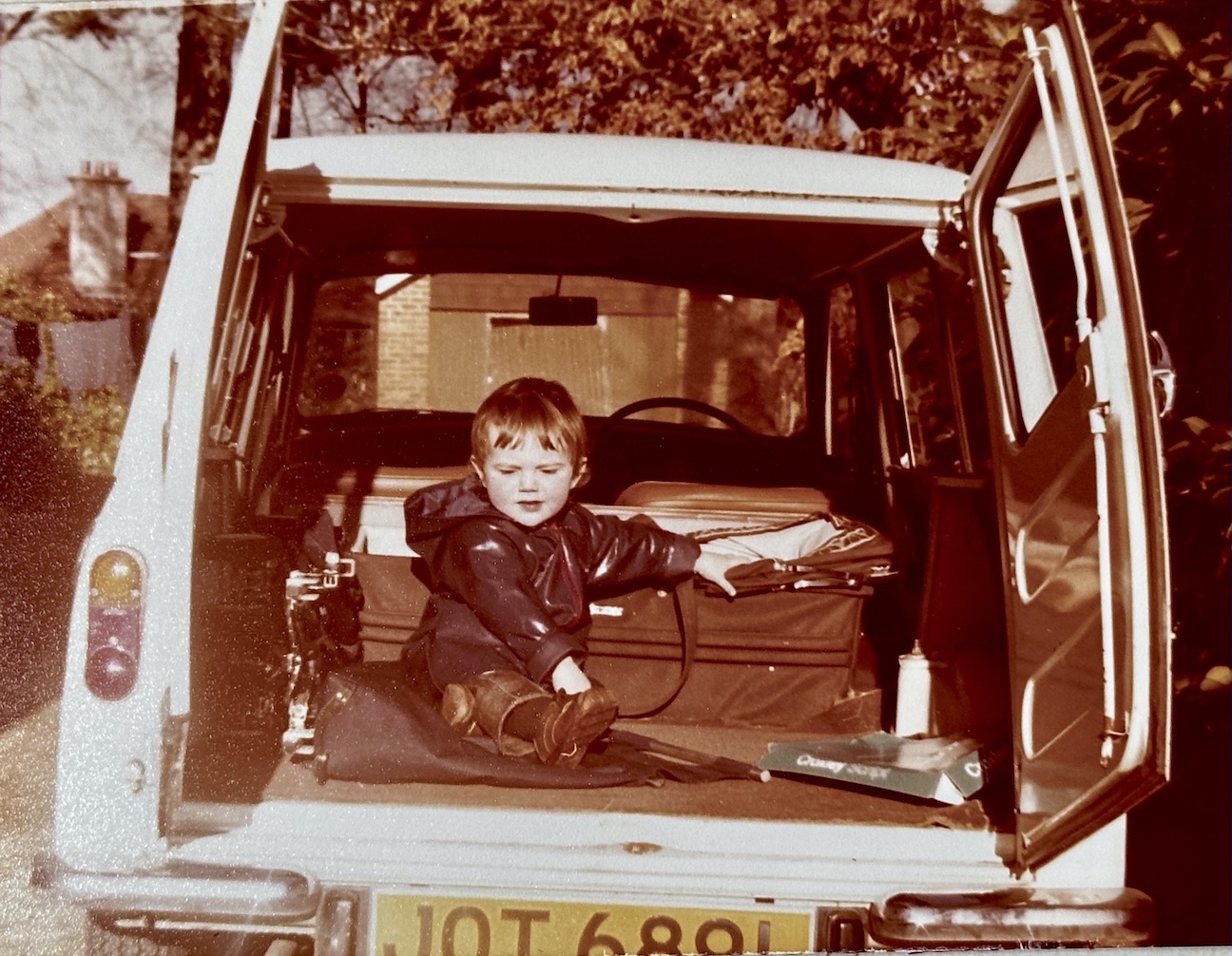
Yes, this is how kids used to travel in cars, though we did shut the doors obviously.
A tip. When we fitted the first baby seat in that car we went to our local little garage. It took him nearly three hours. He’d never done one in a Mini before. When we needed to fit a second, I took it to the British Leyland main dealer. Twenty minutes.
A third child. The Mini would no longer suffice. I was doing more trips to Oxford and back. We used to go in Bernie Hartley’s yellow left hand drive Mini which was left behind by his Swiss girlfriend and had a Swiss registration plate. As it had been in the UK a couple of years it must have been illegal. Sitting in the passenger seat of a LHD Mini on fast roads is terrifying at the best of times, but then Bernie could chain smoke a pack of twenty between Bournemouth and Oxford (Going through Newbury could take an hour what with traffic and Greenham Common protestors). The windows had a dark yellow film. The only upside was it had an 8 track player and he only had Rubber Soul. The crunch came when he recounted how he’d worn glasses till he was twelve, then had an operation. The surgeon had said he’d never need them again. As he drove with his eyes scrunched up, I asked him to read the number plate of the car he was tailgating. ‘No one can read that,’ he said. Ouch. At least he took my advice and had an eye test and got glasses.
I needed a new car, and with a third baby imminent, I wanted a big one.
Audi 100 5S
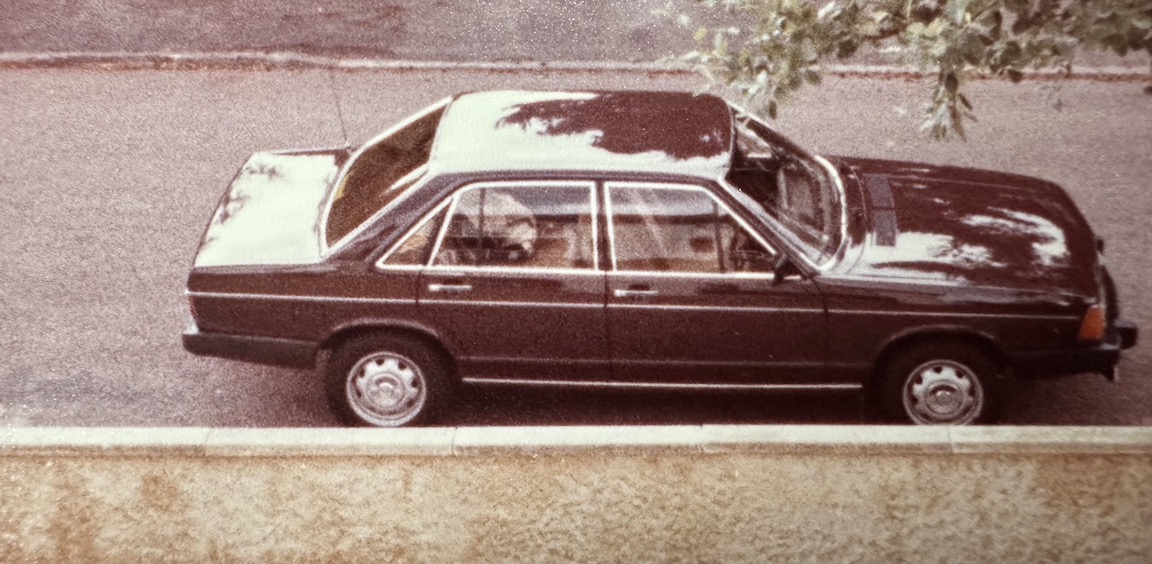
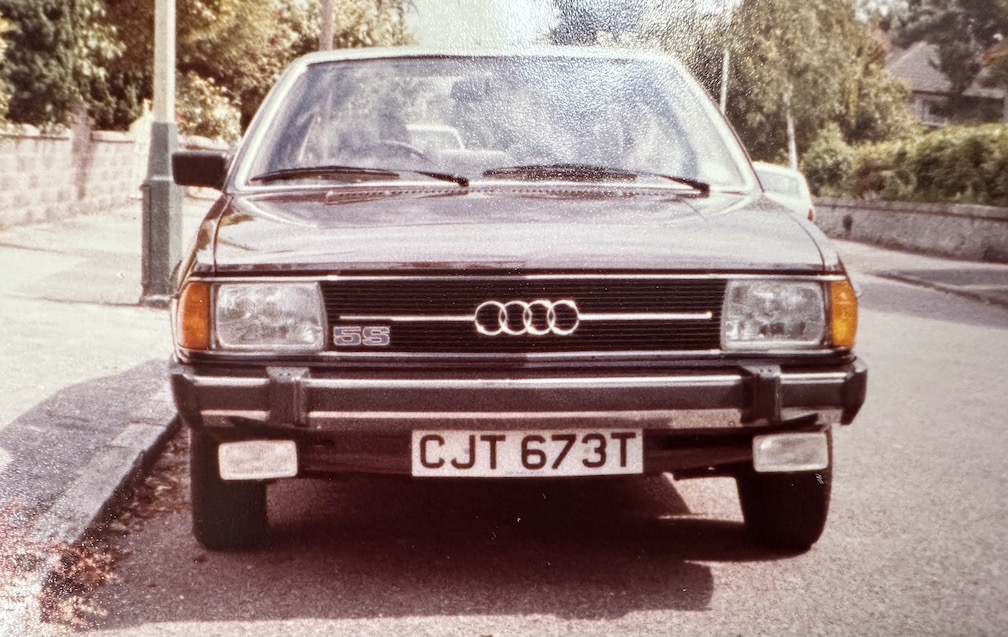

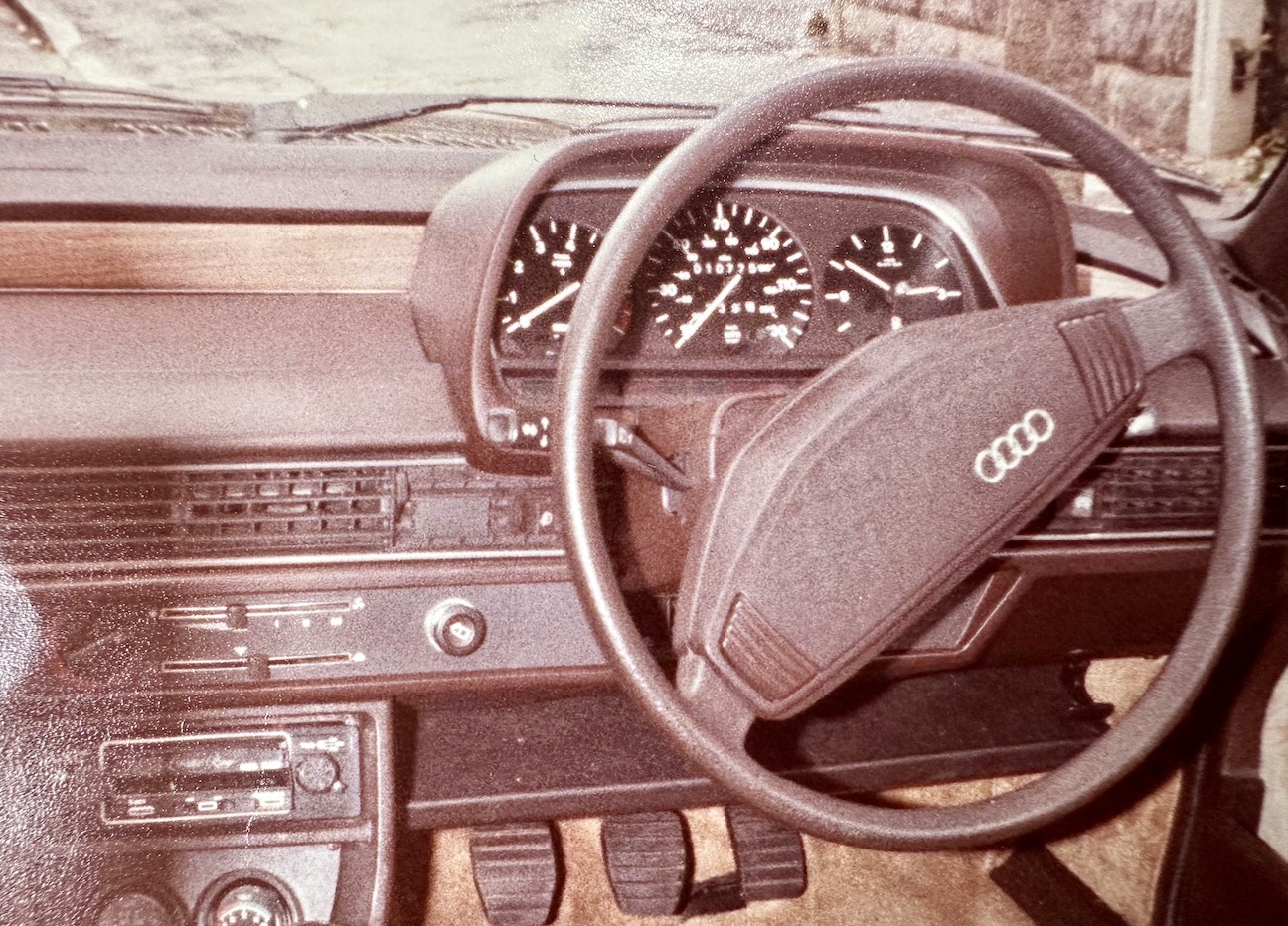
It was a 1979 model from an Audi dealer, so dropped at three years old, as companies were wont to do with company cars. It was brown. Very brown indeed. Not a colour that’s stayed popular.
I felt guilty buying a German car. My dad, who drove the BBC radio convoy into Belsen, would not allow a relative’s Volkswagen Beetle to be parked in his drive. He pointed out that VW (so Porsche & Audi), BMW and Mercedes were all implicated in concentration camp labour and equipment. This is why Americans called Jaguars ‘the Jewish Mercedes.’ In that era, many Jewish-Americans declined to buy German cars, but wanted European. Where do you stop? Henry Ford was a Fascist sympathizer. At that point, you had to admit that German cars were just better than British, French or Italian ones. At that point, better than Japanese ones too.
The only British car I might have considered was a Jaguar, but I couldn’t. My uncle had been killed driving a Jaguar which veered off Black Rock in the Brecon Beacons. I was made to promise my mother I would never drive one. I toyed with the idea that a Daimler, Jaguar’s more comfort-oriented brand (i.e. more walnut on the dashboard and a wooden top on the gear stick) might get past the ban, but dismissed it.
Nowadays, when you see someone weaving in and out on the motorway dangerously at speed or tailgating the chances are high that it will be an Audi. They are now the car of choice for regional sales reps who benefit from going at high speed. Those Audi ring symbols are an aggression marker. An article a few years ago pointed out that Audi successfully targeted an age group by providing A8 limos at celebrity events. A new generation wants a new luxury car. BMW was moving older (it had had the aggressive reputation ten or more years earlier). Mercedes older again. Basically whatever the car of choice for the successful early forty somethings will soon get a reputation for aggressive driving. It’s Audi.
That wasn’t so in 1982, and the 5 cylinder engine was claimed to have the economy of four and the power of six. Funny that it never caught on then. Audi dropped it quickly. When I sold it, I was offered so little for it that I offered it to my sister for the trade in price.
It was fast and comfortable and very stable at speed. We had to drive home from Westgate-On-Sea, leaving at 3 a.m. Our youngest was running a very high temperature, and that is the fastest I have driven any car. It could sustain it. I’ll avoid incriminating myself with numbers. He ended up in hospital for several weeks with septicemia.
Datsun Cherry Estate
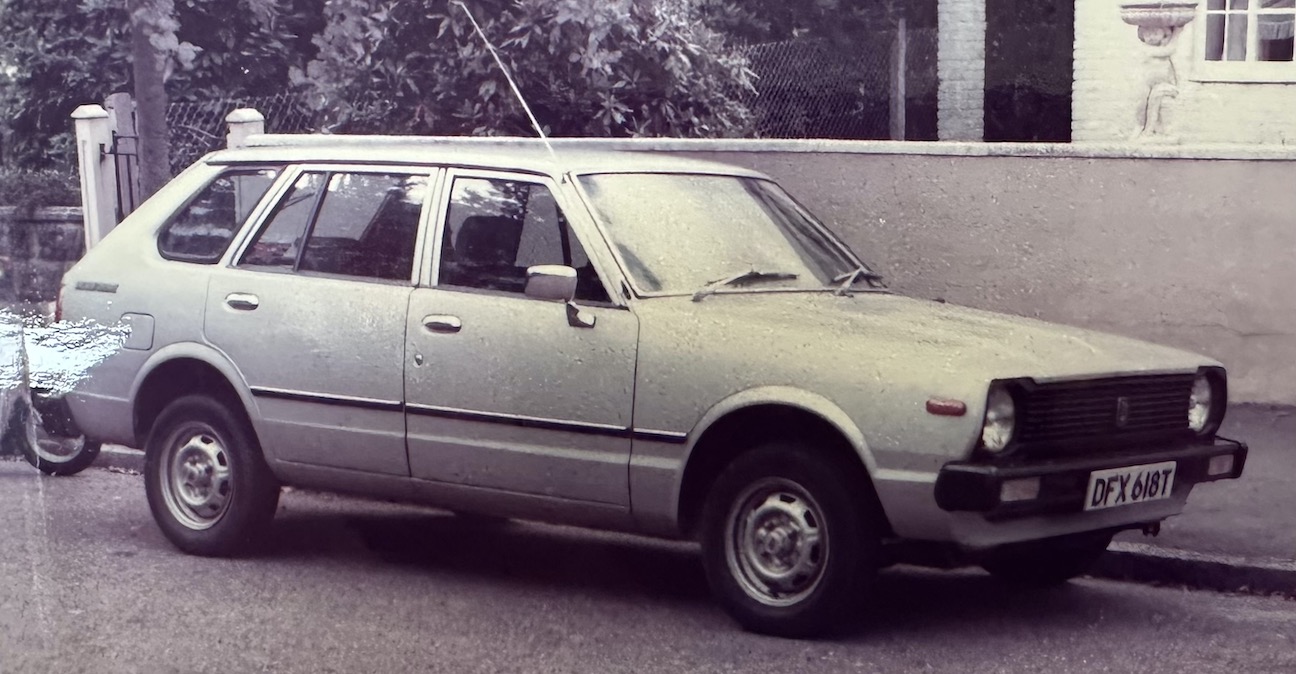
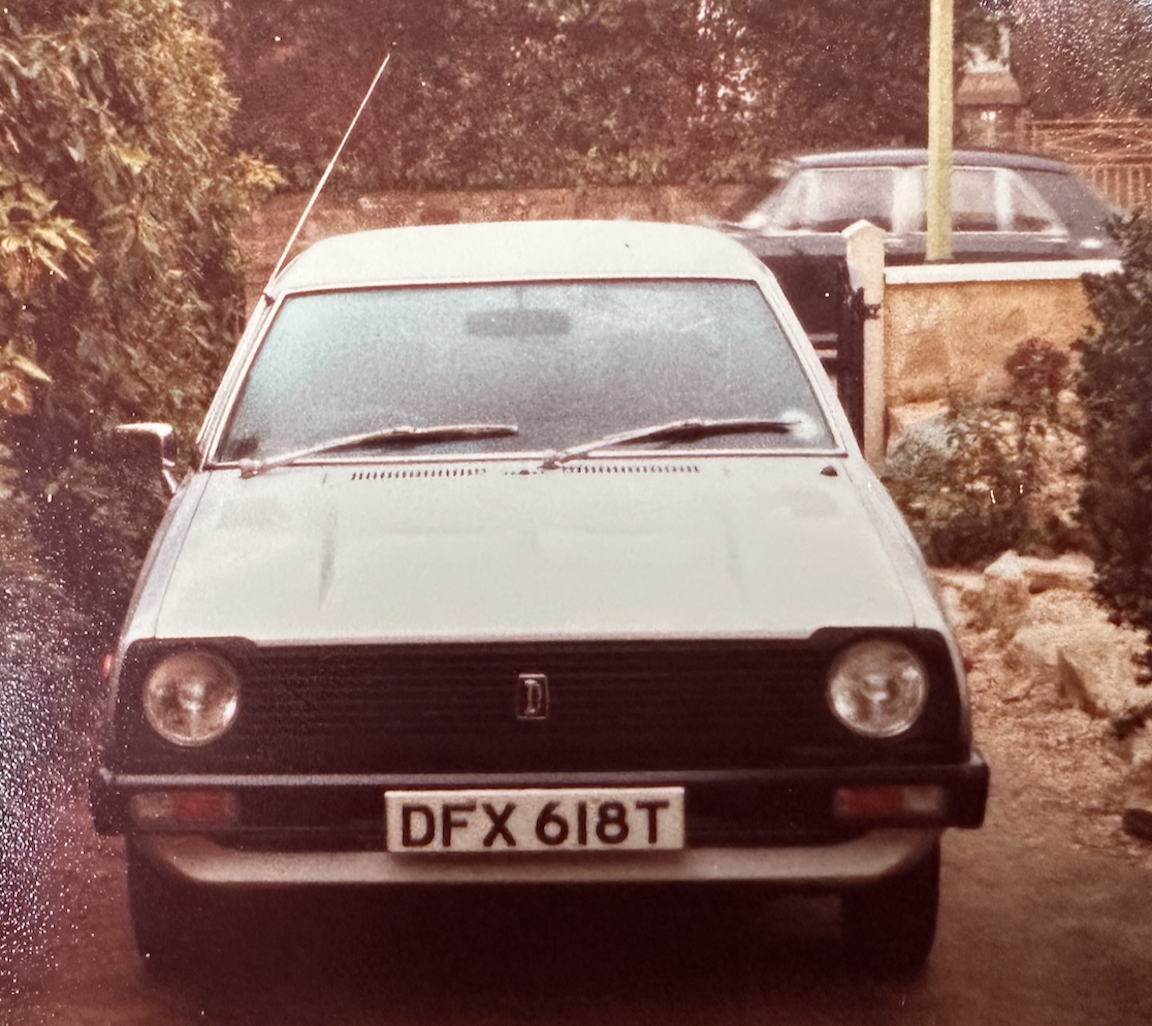
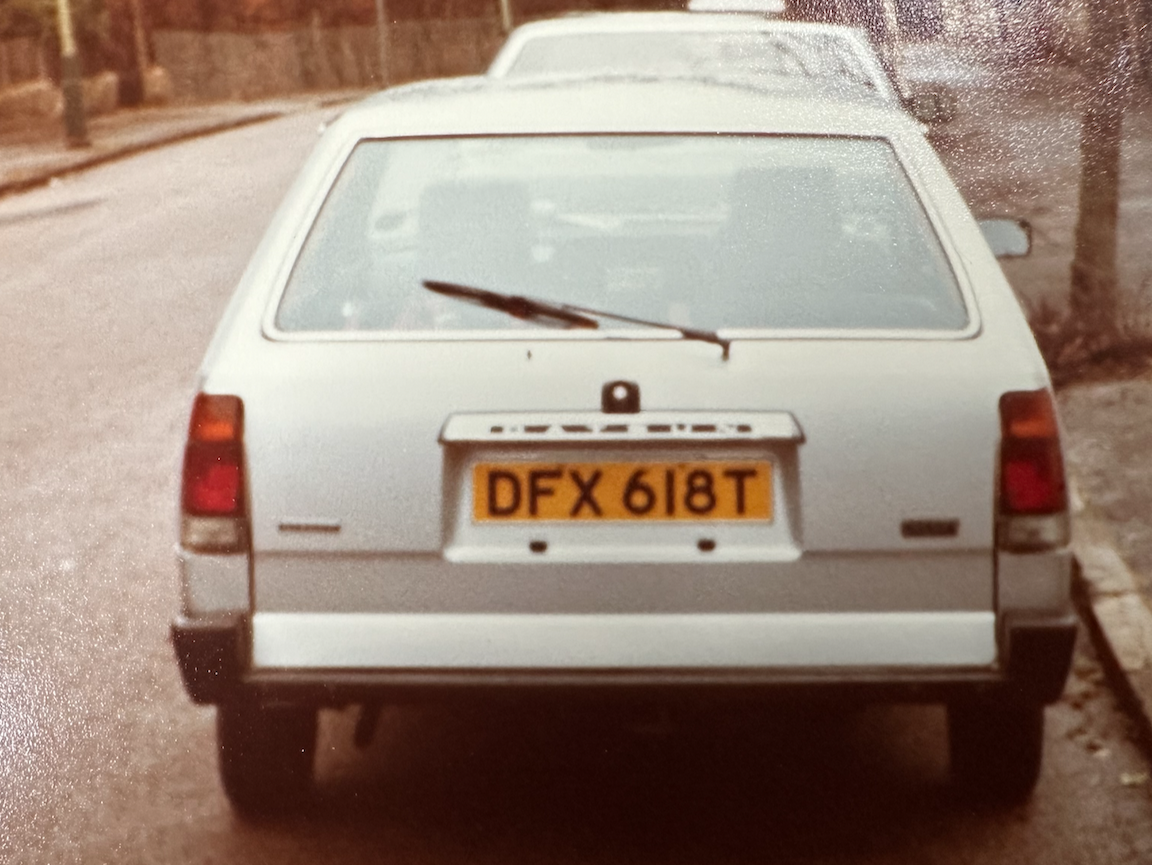
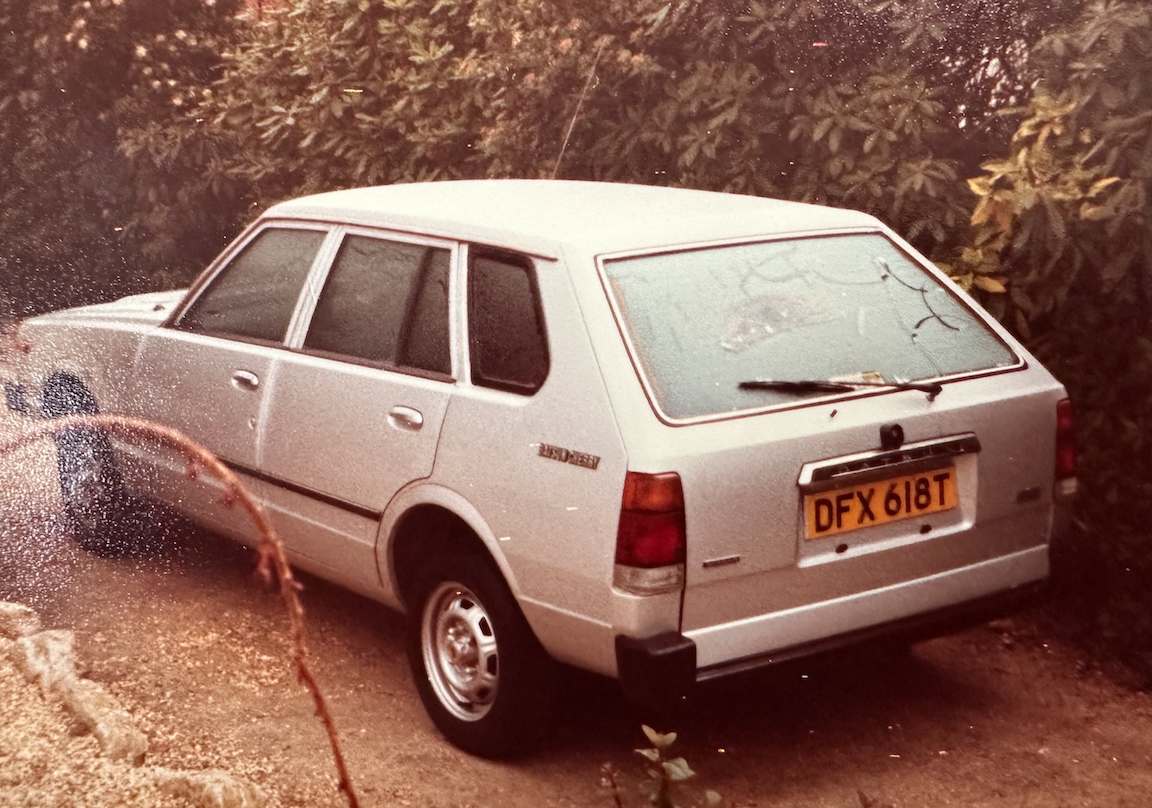
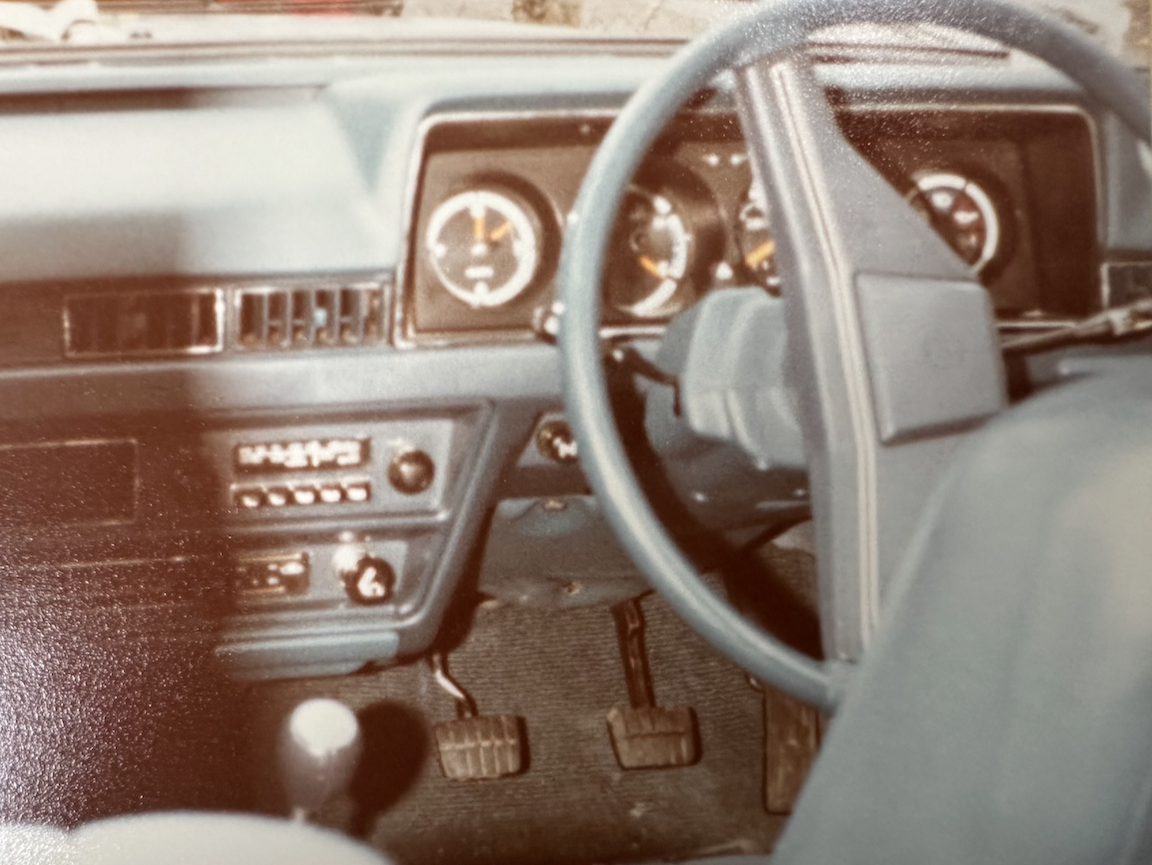
With three children, the Mini wasn’t large enough for Karen (and the Audi was too large tp park easily outside schools). The Mini went and the 1979 Datsun Cherry arrived in August 1982. Cherry. Sunny. Bluebird. Daft names. I loathed that car. It may have suffered because we always used the Audi for longer journeys. It had constant battery and alternator problems. It never drove well. Everything about it was imprecise and floppy. Spongy gas pedal. spongy brakes. Body roll on cornering at over 10 mph. Squeaked. Horrible cassette radio. Datsun had set out to achieve mediocrity and failed to even make it that far. I got fed up of trekking round to the local garage to collect the Cherry after another repair. My dislike extended so far that I wouldn’t even consider driving any Nissan, and forty years have passed. In Belfast car rental were were offered a Nissan Qashgai. I opted to wait half an hour until a Kia Sportage was ready.
Toyota Space Cruiser
The reflections on the photos are an effect of stippled old photo paper and taking photos of an album not scanning.
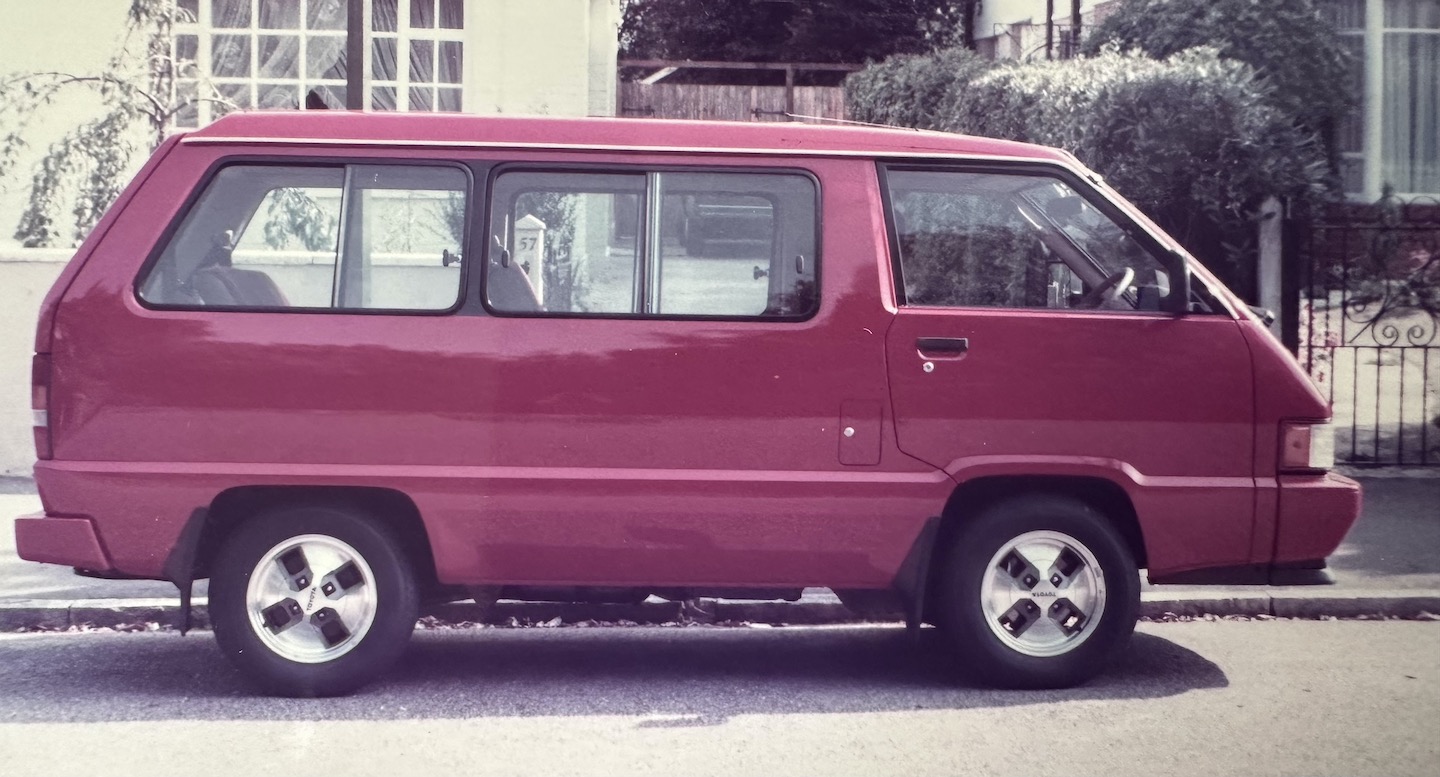
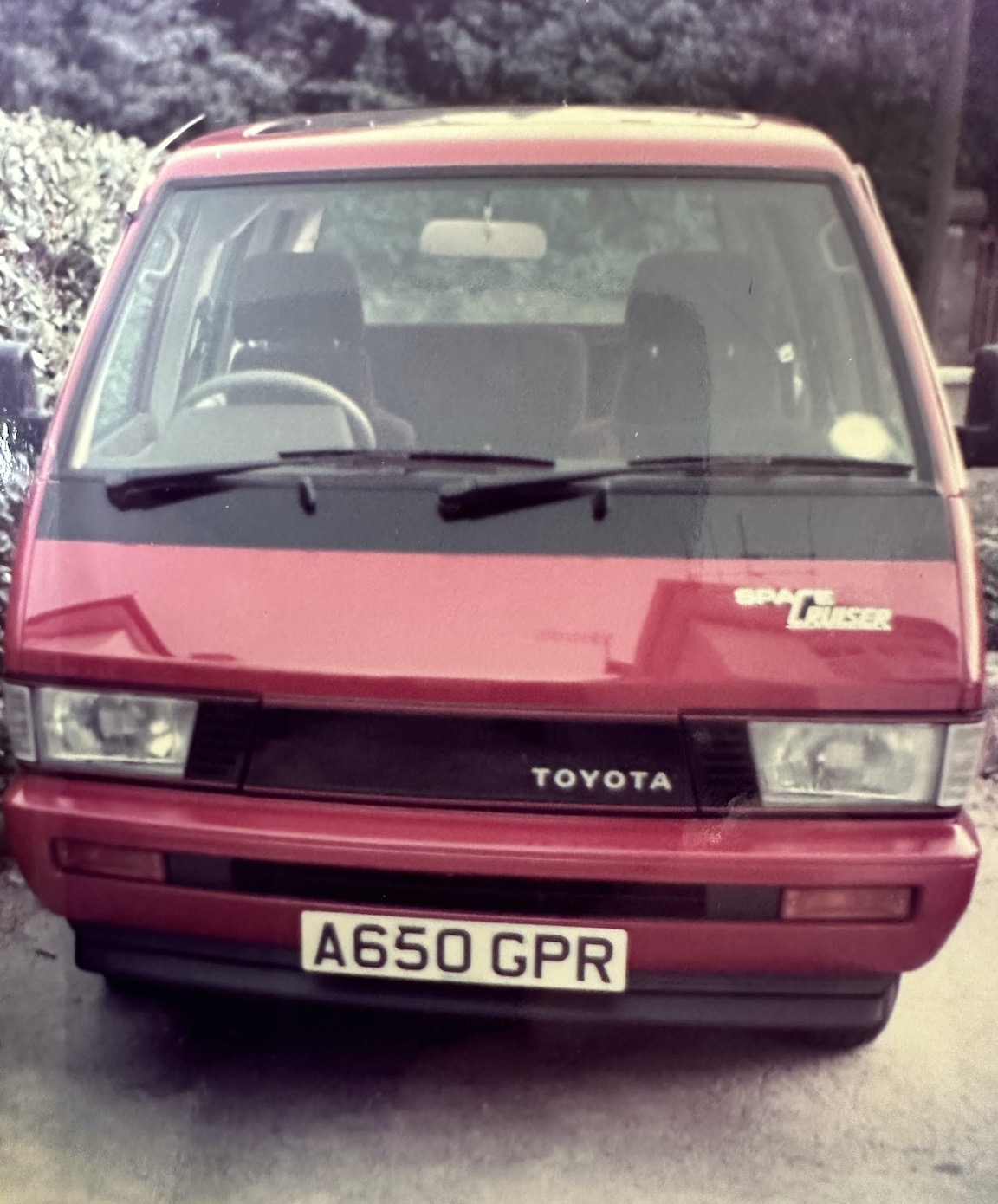
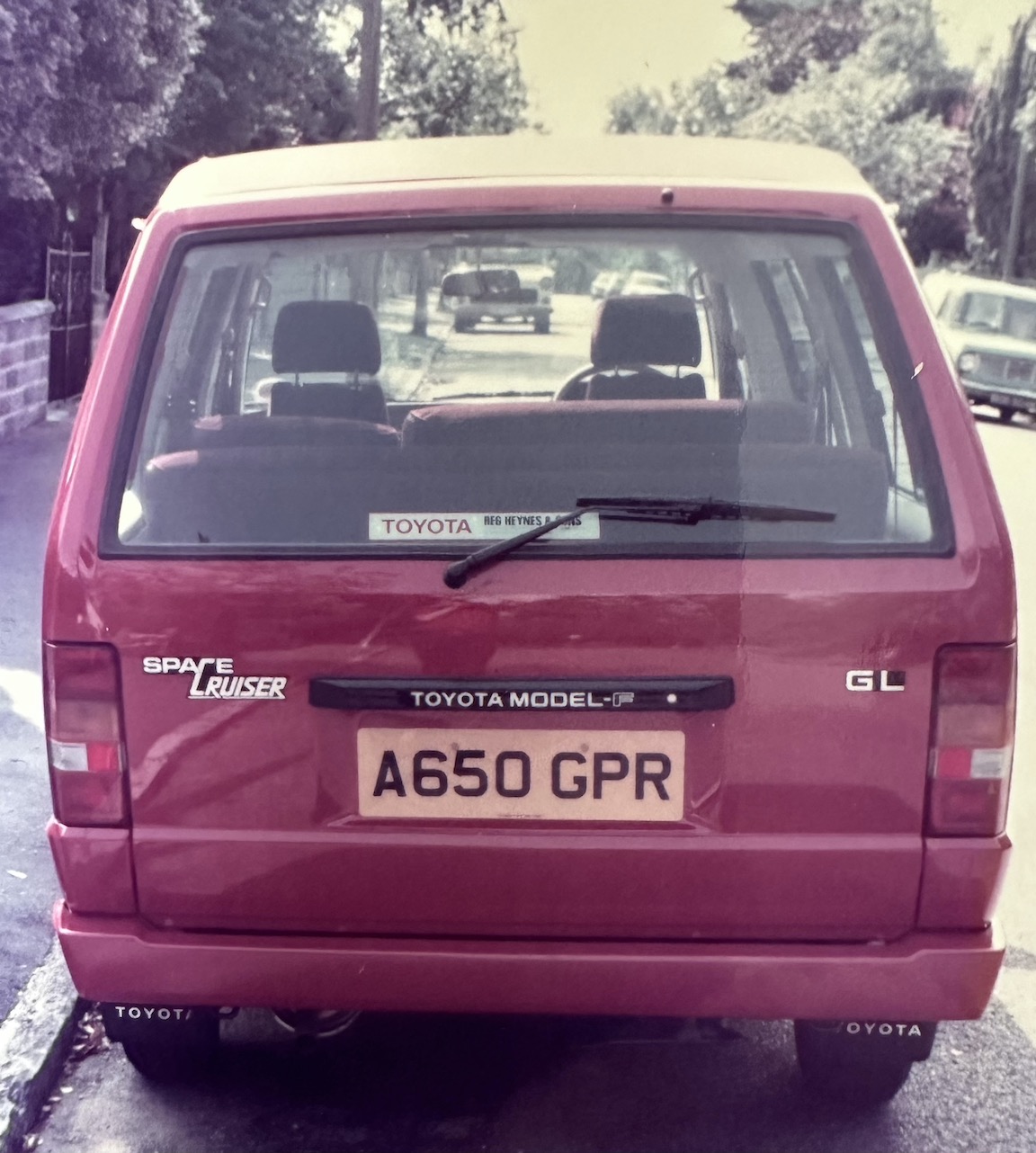

For the first time ever, Karen fell in love with a car. She came back from Sainsburys and urged me to come back with her to see it in the car park before someone moved it. It was German registered. A Toyota Space Cruiser. A very early people carrier. Three rows of seats. Two sun roofs. It meant we could go places and the kids could take their friends. We went to the Toyota dealer. Newly arrived in the UK. We sat in. We drove round the block. We had to buy a new one.
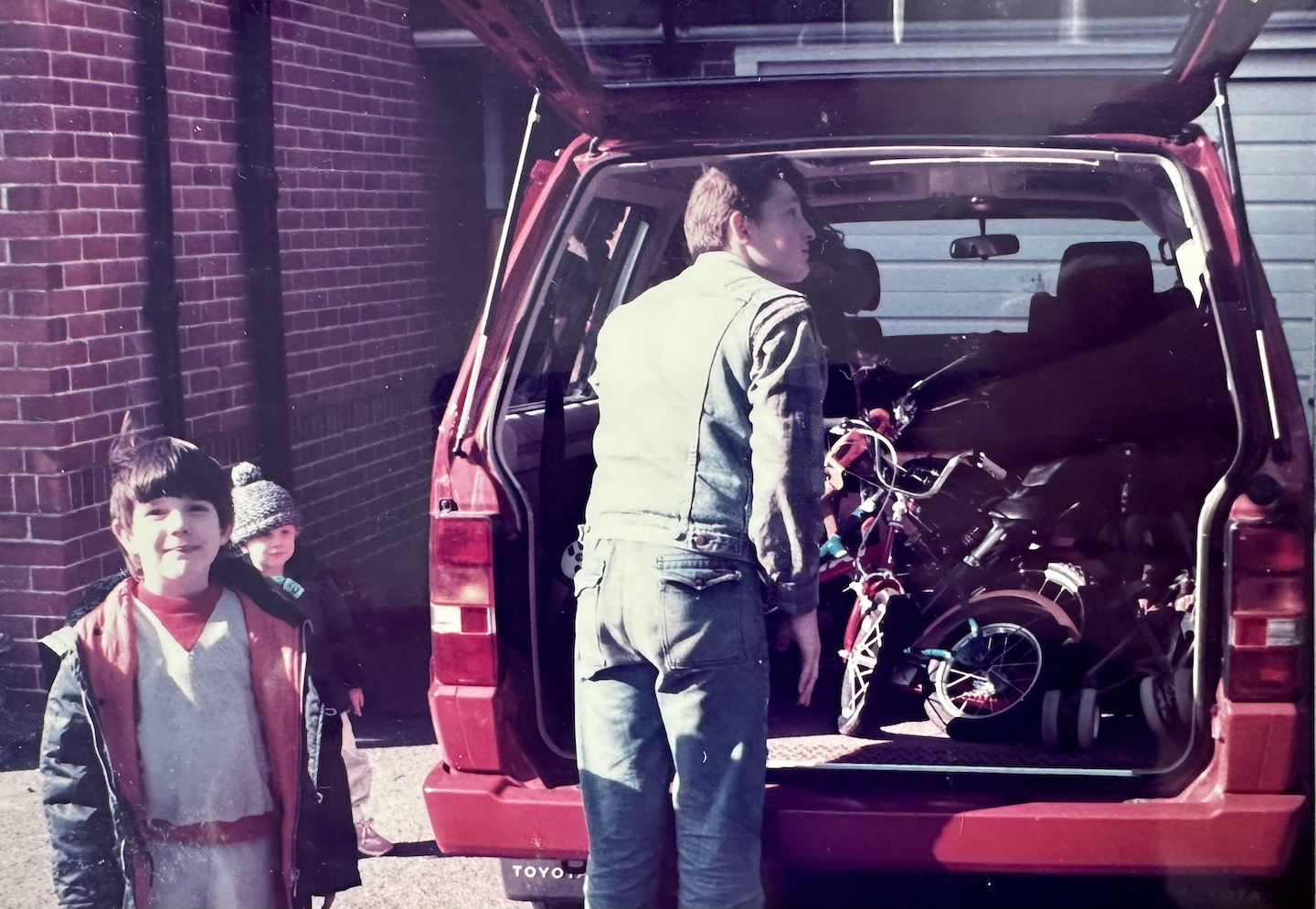
This was what the car was about. Kids and bikes and luggage and excursions. Our very first journey was to Bourton-On-The-Water with two of the kids’ friends. The mum omitted to tell us that one child suffered from terrible and instant car sickness. The red velour upholstery was christened on its first outing.
It drove like a van, but not as well as a Ford Transit. It was more susceptible to sidewinds than any other vehicle I’ve driven. It was slow, but when you want a car to transport up to six children, speed is not a requirement. It was light and airy. I dread to think what its collision protection was in front. It also introduced us to Japanese reliability (which the Datsun certainly hadn’t had). It only went wrong once. We returned from three weeks in the USA in early January. It wouldn’t start. The AA man went to start it but put the terminals on wrong and blew the electrics. Insurance claim for us from the AA for virtually new wiring.
We also needed a new sliding door when an enthusiastic child decided to open the sliding door as Karen was turning into the driveway. It hit the gatepost.
On reliability, I had worked with the Toyota salesman at the Bournemouth Winter Gardens in 1967. A few years later they dropped their Toyota franchise. He told me that a large proportion of a dealership income was warranty repairs. They had Volkswagen and Volvo franchises which generated a great deal of money in warranty repairs. Toyota generated almost nothing.
SAAB 900 Turbo 5 dr
August 1984. There was a cartoon book I wish I’d bought which matched cars to drivers. A SAAB it said, was driven by architects, doctors, academics and authors. Our doctor had one. The head of R&D at ACSE had one. I felt I fitted the profile. This is one of the favourites of all the cars I’ve had. It was two years old when I bought it. It was smaller than the Audi, but so well designed that it felt better. I loved the ignition key which locked the gear box in reverse, which meant they were almost impossible to steal. The controls were perfectly placed. SAAB stressed this is because they also made jet fighter planes and carried over their knowledge of control placing. The roadholding was outstanding. It was Swedish, as safe as a Volvo, without looking like a threatening tank to other road users. A solid bar ran through the doors (as on all cars forty years later). Our dealer had a picture of one an oak tree had fallen on. The wheels were splayed out at 90 degrees to the body under the weight. The roof held. All four occupants escaped unscathed.
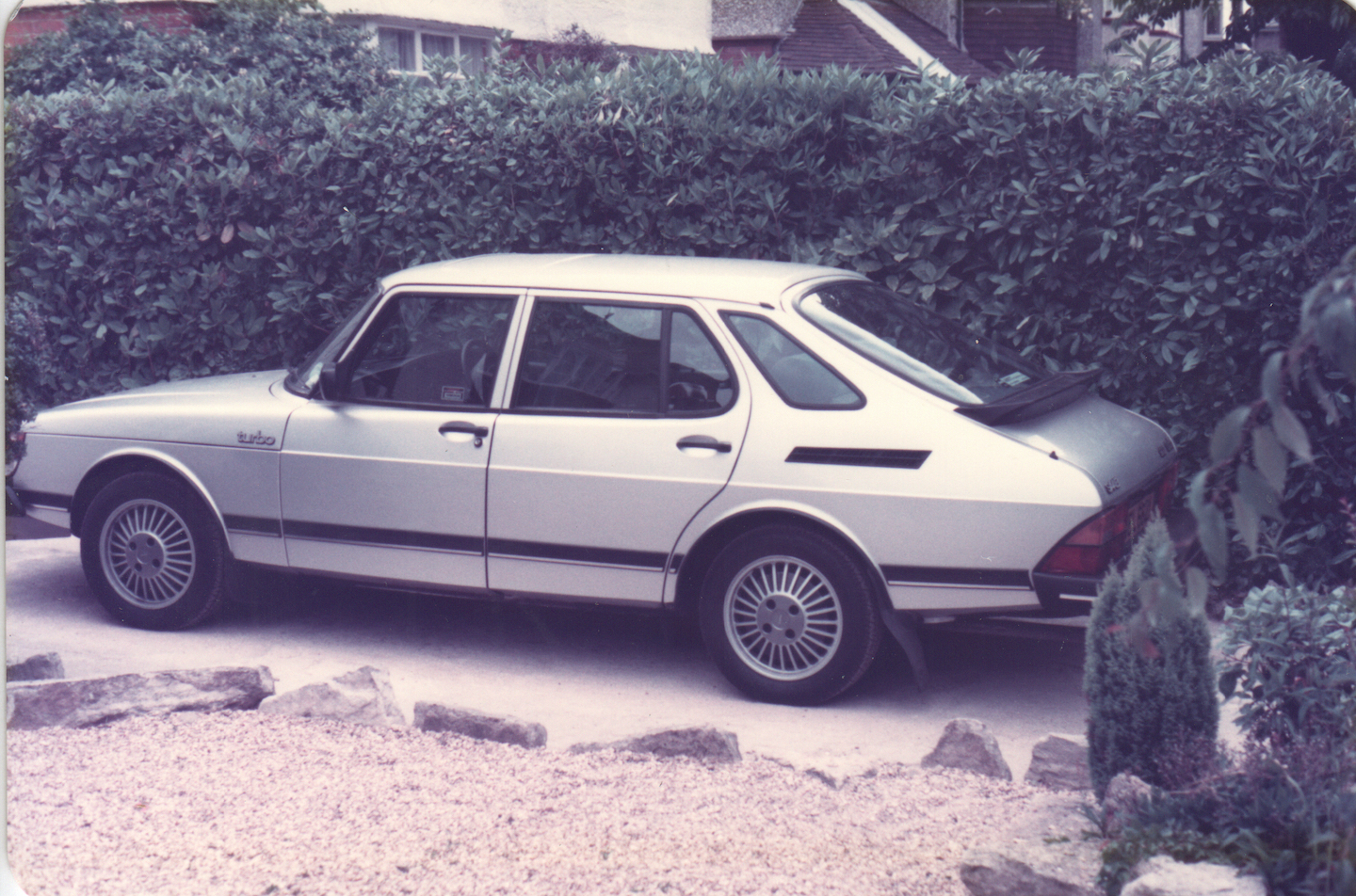
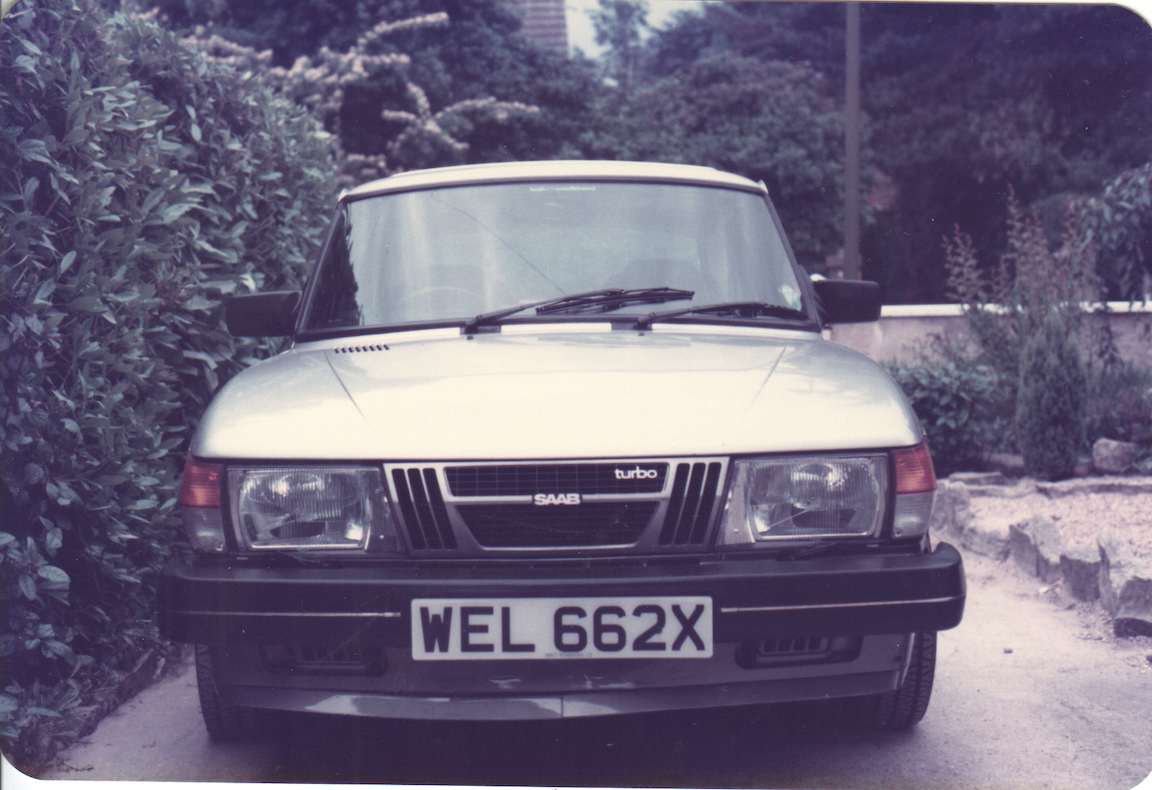
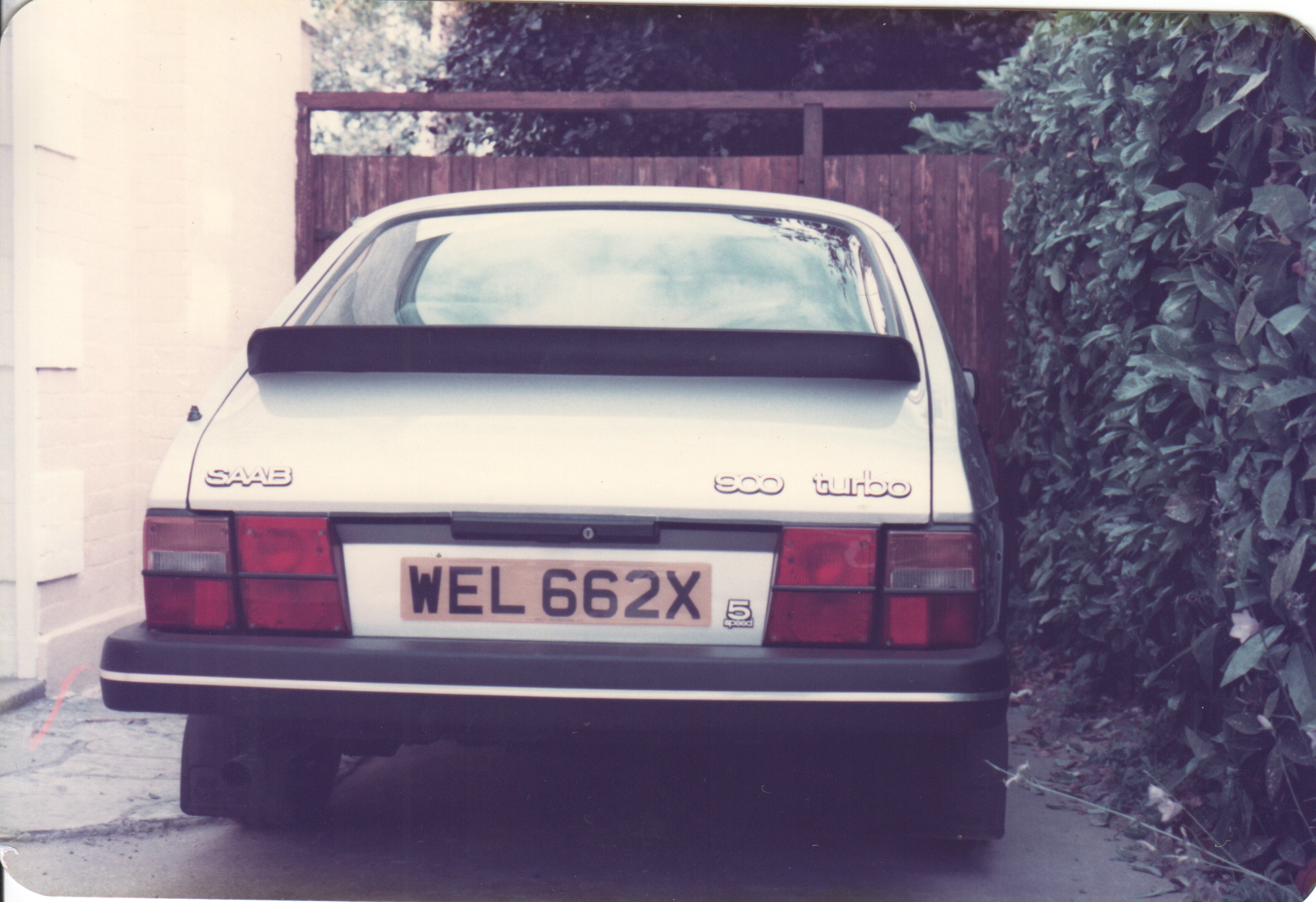
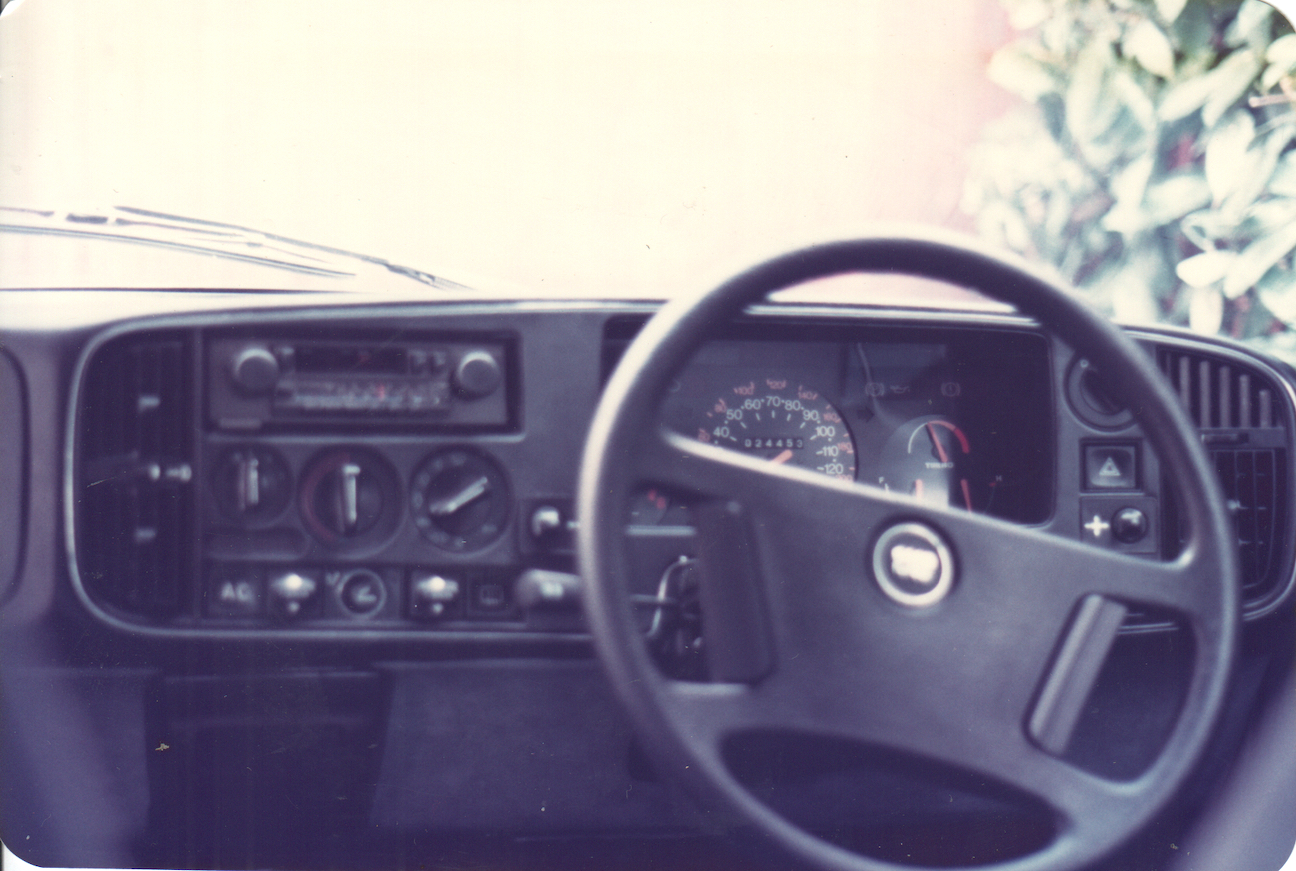
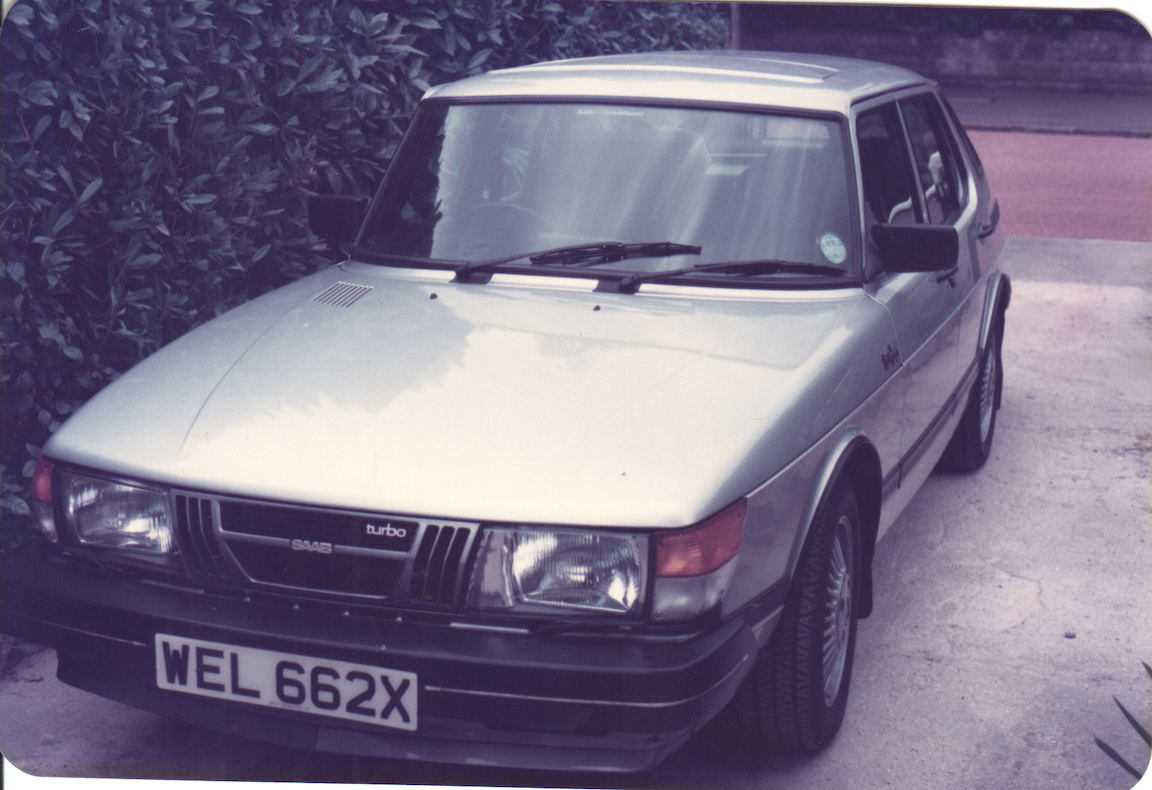
We drove this one through Holland in snow on the motorway to Center Parc north of Amsterdam. The snow was belting down. I was doing 70 mph plus and trucks were tailgating us and flashing their lights to hurry us up. This may be why the Dutch police needed Porsche sports cars. Left to my own devices I would have been doing a cautious forty to fifty.
We drove it back via central Amsterdam and The Hague where we saw The Star Wars Emperor’s shuttle in a toy shop, a huge and rare toy which was not sold in the UK. We drove back with the kids taking it in turns to be obscured by the box in the back seat.
Wen we filmed our first video, A Weekend Away, in December 1985, I had this one, and Simon, our producer and editor, had a three door model. Both silver. His appears in the film on a snow covered road. The three door version looks even better than the 5 door and is much easier to board.
I can testify to its safety. I had a tyre blow out on the A34 dual carriageway going to Oxford once. I was doing 70 mph (honestly, your honour) in the fast lane and hit a metal object which fell from a lorry. I had another lorry on the inside. The car went dead straight without deviating till I managed to pull over. The AA put on the space saver wheel and I drove slowly to Oxford. Simon called the local Oxford SAAB dealer to pick it up. It needed a new wheel. It would take days, but they could take one off a model with the same wheels they had for sale. They did. I could drive home. They didn’t take credit cards (due to the percentage) and I had no cheque book. ‘You’re a colleague of Simon’s. There’s no problem. Just post us a cheque when you get home.’ There was a fraternity of SAAB owners.
I spent five minutes admiring one of the same vintage in a car park recently. Very few have survived. If I saw a perfectly-restored one, I’d be tempted. Sadly SAAB were bought by General Motors and became re-skinned Vauxhalls. Then they disappeared altogether. Great cars. I was to have two more.
That’ll do for now. There’s forty years to go, but they’re less interesting. I will return to it eventually.
 Peter Viney's Blog
Leave a comment