Bournemouth Symphony Orchestra
Conductor: Enyi Okpara
Piano: Thomas Luke
The Lighthouse, Poole
Saturday 14th February 2026
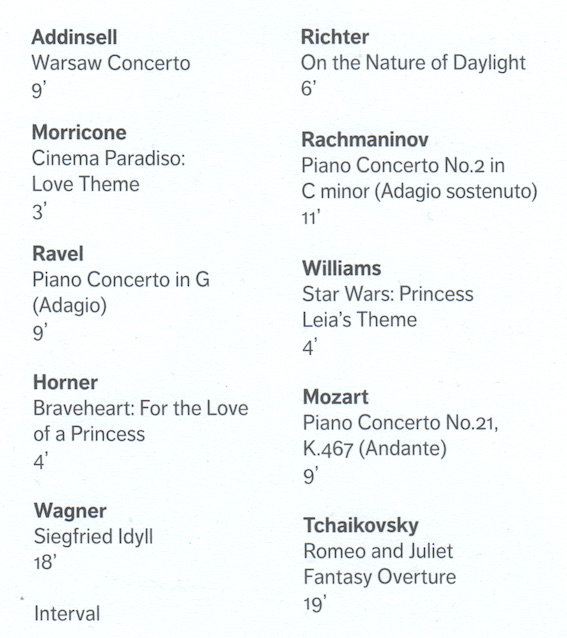
PROGRAMME:
From the BSO website:
Celebrate Valentine’s Day with an evening of luscious symphonic classics offering some of the most romantic melodies ever written. The concert features the sensuous slow movements from three of the finest concertos for piano and Richard Addinsall’s Warsaw Concerto, as well as love themes from silver screen masterpieces by Ennio Morricone, James Horner and John Williams Also included is Wagner’s musical love letter and Tchaikovsky’s passionate overture to Shakespeare’s star-crossed lovers, Romeo and Juliet. Make sure you make a date and treat a loved one!
We had to see this. It includes two of my favourite pieces, the Adagio from Ravel’s Piano Concerto in G and Max Richter’s On The Nature of Daylight. As readers of my music reviews will know, when I say I know little or nothing about classical music, I am telling the truth. I don’t review every BSO concert, but I do select ones which are of more general interest. These were popular selections, and to suit the occasion the men in the orchestra wore white tuxedos, and the women gowns in a colour of their choice.
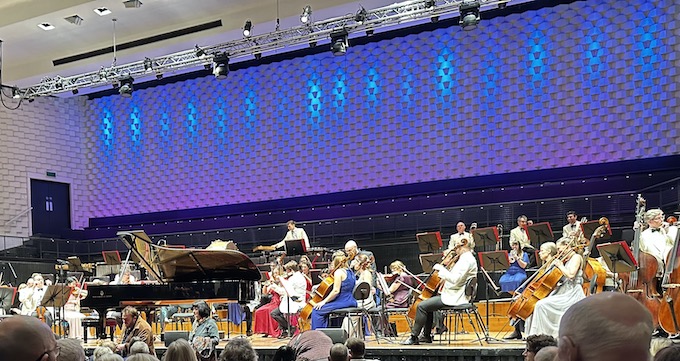
The programme here was well thought-out. It would make a fine double album with wide popular appeal. I looked up to see if microphones were suspended over the stage which they used to be just post Covid when they were still streaming. Not a mic in sight. In fact, this was just as well. it looked full and it was a noisy audience. The worst of all was next to us. She coughed but worse did long sequences of grunting, and this necessitated opening water bottles and unwrapping cough sweets noisily. We both said it severely impacted on our enjoyment of sublime and quiet pieces of music. Then there’s the question, was she infectious? Has she bequeathed a cold on us? Why wasn’t she wearing a mask? Why had she decided she was fit to inflict herself on others? Yes, seat H18. The other serial cougher was fortunately at the diagonal opposite end of the hall, but must have spoiled it for a few metres around himself.
Warsaw Concerto – Richard Addinsell
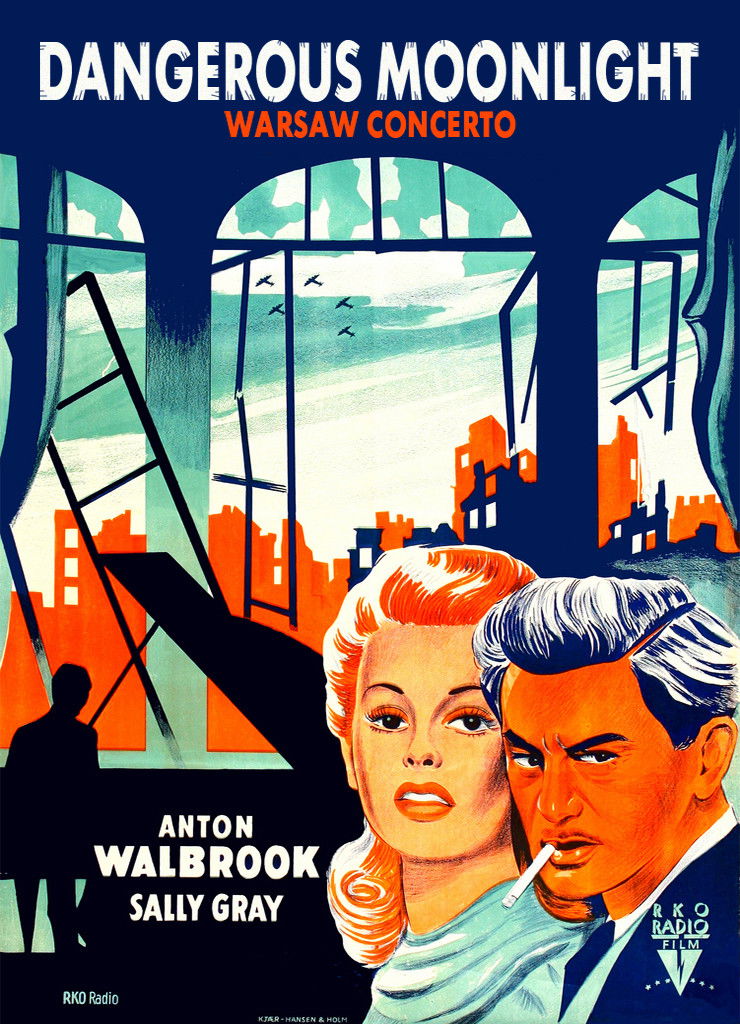
Warsaw Concerto and Piano Concerto No 2 by Rachmaninov is a cunning combination. Addinsell wrote it for the 1941 film Dangerous Moonlight. The director had chosen the Rachmaninov piece, but either it was too expensive, or permission was refused, versions differ. Addinsell was tasked with writing a piece in the style of Rachmaninov. It appeared in bits in the film, but when the record was released, it was a major popular success. The piano was played by Louis Kentner, who wished to remain anonymous as he was an esteemed concert pianist. He changed his mind when the record became so popular.
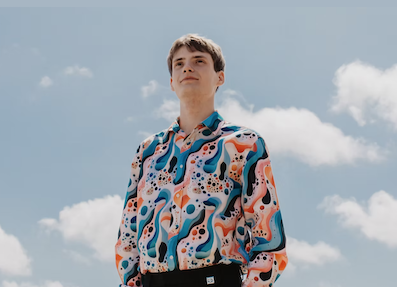
This is where we met the soloist Thomas Luke. During one of his introductions, Enyi Okpara, who is the BSO Calleva Assistant Conductor praised the genius of the composers and described himself as in his ‘mid-twenties.’ According to the web, Thomas Luke is twenty-two, and an acclaimed prodigy. Yes, he wore the shirt in the photo for the second half. He is astonishing. You can tell he is not reading, because he looks up, closes his eyes, is lost in the music. What hit me is we have two young musicians on stage, conductor and pianist, who appear to be both born in the 21st century. (Okpara might be just before).
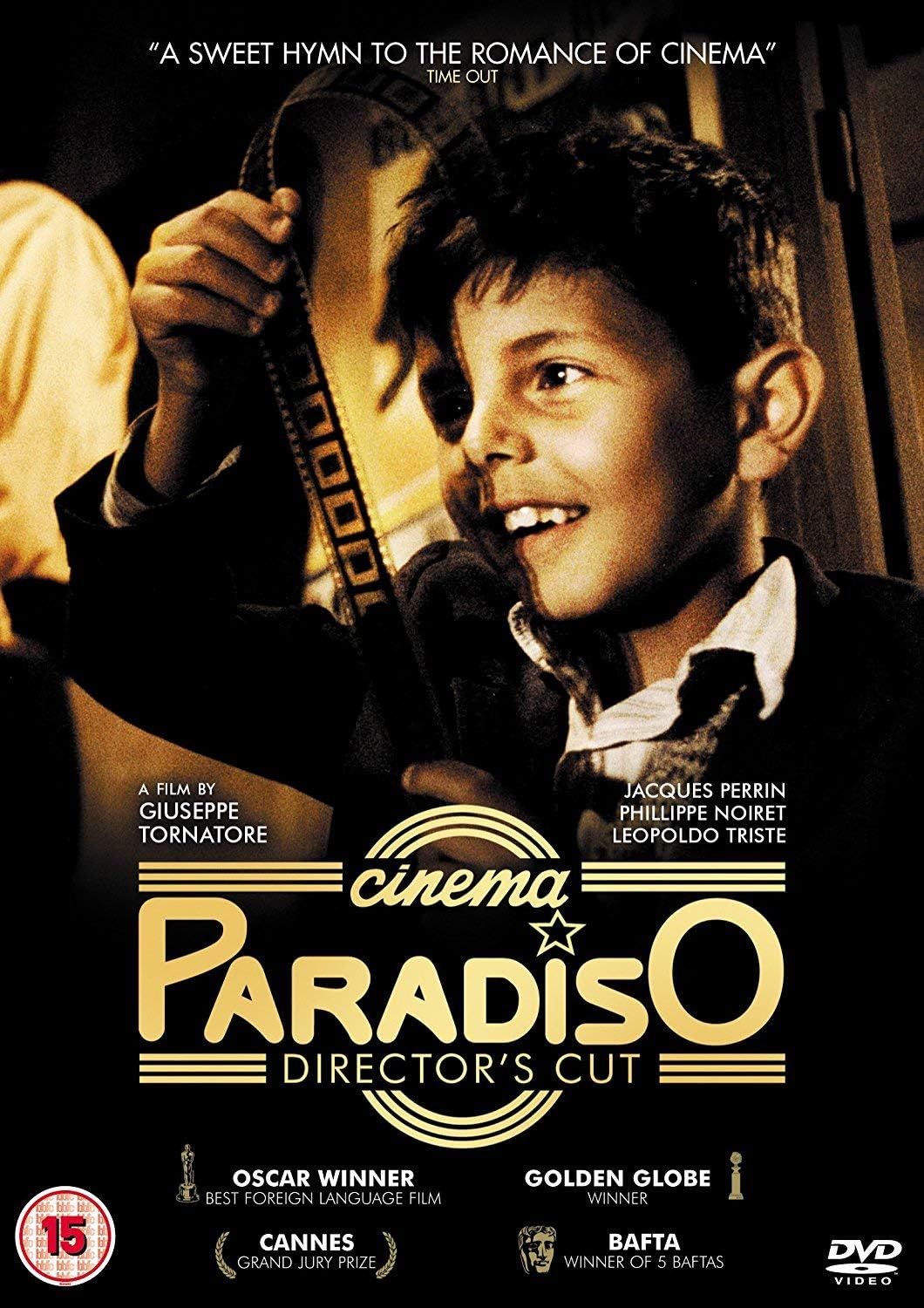
Love Theme from Cinema Paradiso- Ennio Morricone
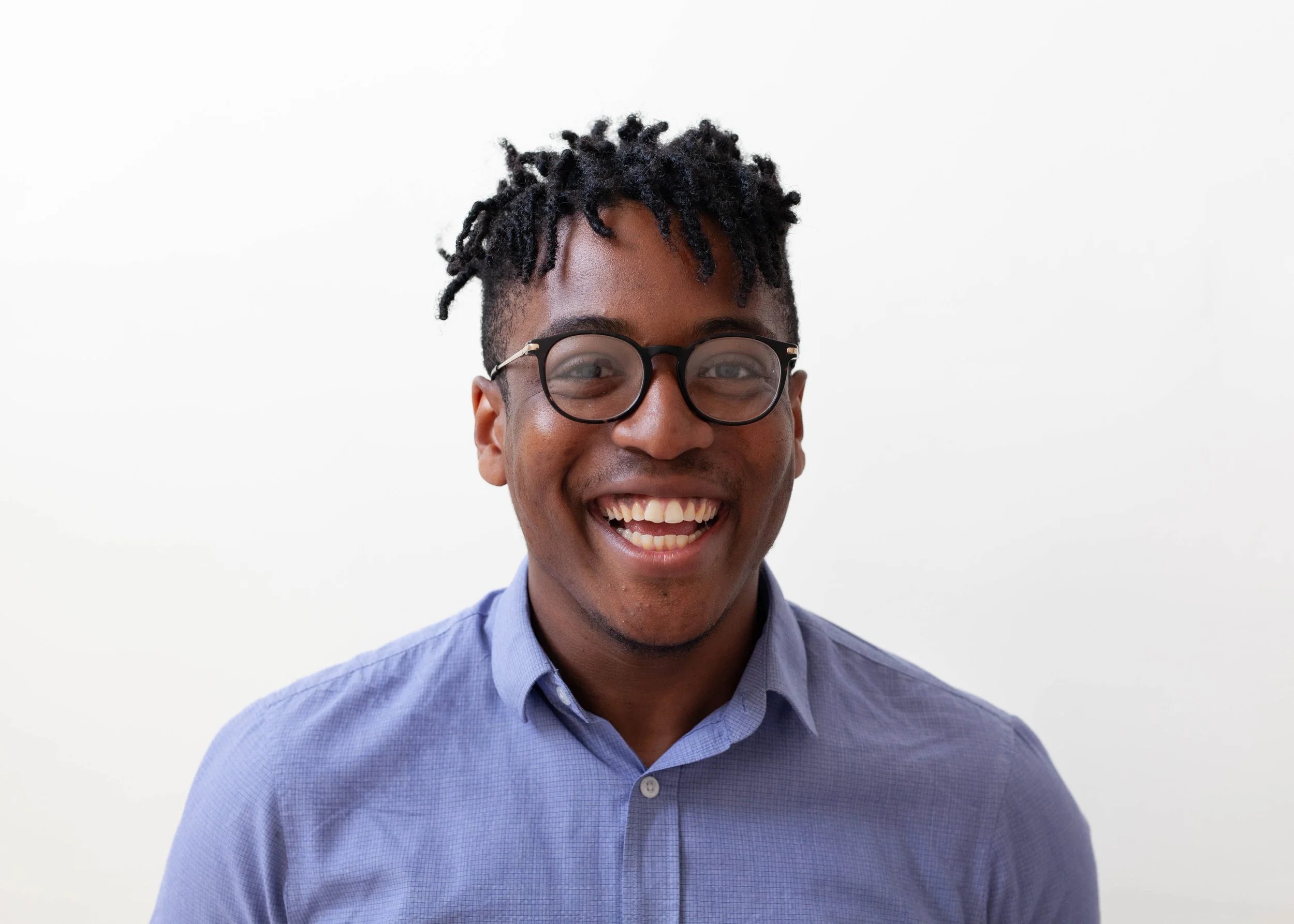
Enyi Okpara gave enthusiastic introductions to each piece. Conductors are at extremes, some never say a word, but for this kind of mixed programme you need introductions. Off went Luke Thomas. On came the assistant to close the grand piano lid.
A great favourite film, and my son is an avoid Ennio Morricone collector. The violin is central, and played sublimely by Amyn Merchant, the leader of the orchestra. I’ve seen him seated behind some stunning guest solo violinists, and it was good to see him taking the role. It’s a very short piece. Too short.
Adagio from Piano Concerto in G- Ravel
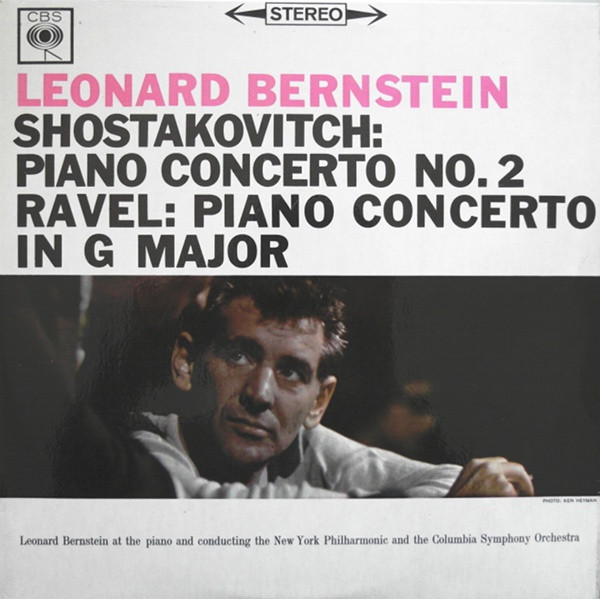
I used the Ravel for the ten minutes before I gave lectures for twenty odd years, always the Leonard Bernstein recording, 1960 with the New York Philharmonic. I just put it on and said nothing and it relaxed the audience. Introductory music also makes a waiting audience feel less exposed, and freer to chat to their neighbours which is why I always used it. The late Robert O’Neill said to me after one talk, ‘So glad you chose the Bernstein. It’s obviously the best.’ This is Bernstein at his West Side Story peak, playing and conducting from the piano. For us, it’s a good Valentine’s Day selection. I’d never heard it until Karen played it to me soon after we met: that, Ravi Shankar, and The Spencer Davis Group. An eclectic choice.
The programme notes it as 9 minutes. I know the Bernstein length, 9 minutes 43 seconds, because I was used to timing myself to it. Some have said he plays more slowly than other versions. I suspect 9 tonight is simply the nearest number below. It didn’t feel any faster in a truly beautiful rendition by Luke Thomas. Not, I think, quite as languid as the Bernstein which is playing as I type this, but still pensive, thoughtful. It was a great moment for me to hear it live with an orchestra in the hall, in spite of the grunting and snuffling a metre away. (By the way, I never understand why it’s described as jazz influenced. It was again tonight).
On The Love of A Princess, from Braveheart – James Horner
Much as I appreciate James “Titanic” Horner, I am unfamiliar with the piece from Braveheart, and for the only time tonight will disagree with the introduction, describing it as a ‘great film.’ It is not, it is one of the worst and most historically inaccurate pieces of crap ever filmed. I guess the claymore swinging is good. We used the fight director for one of our ELT videos.
So it’s so many years since I was exposed to it that I had no memory. It is a Celtic influenced melodic masterpiece. So, great soundtrack piece, shame about the film.
Siegfried Idyll – Wagner
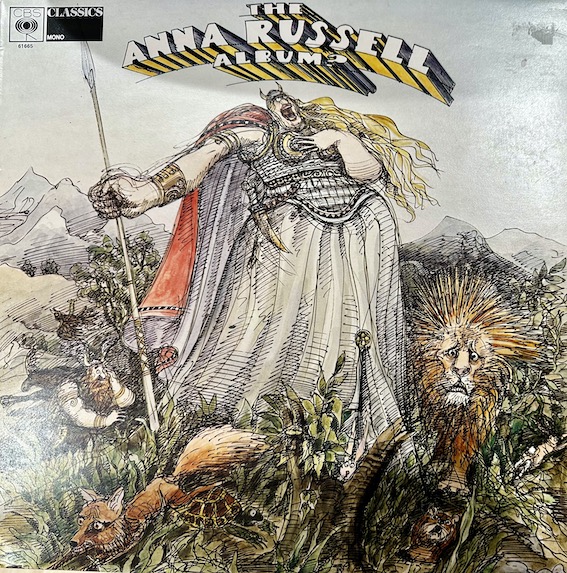
Both halves of the programme ended with the longest piece. My ignorance of classical music will be confirmed when I admit my collocation with Wagner is a burly woman in furs and a horned helmet brandishing a spear and bellowing in German. This was written for Wagner’s wife as a present after the birth of their son, Siegfried, rather than the operatic character he had been named after. It was a reduced orchestra. The brass and percussion left the stage, leaving strings, woodwind and one trumpet. It’s gentle, it’s melodic, the opposite of my preconceptions.
I didn’t know it. I’m going to seek a copy. I hope the BSO have done it, as I can’t imagine it being bettered.
INTERVAL
On The Nature of Daylight- Max Richter
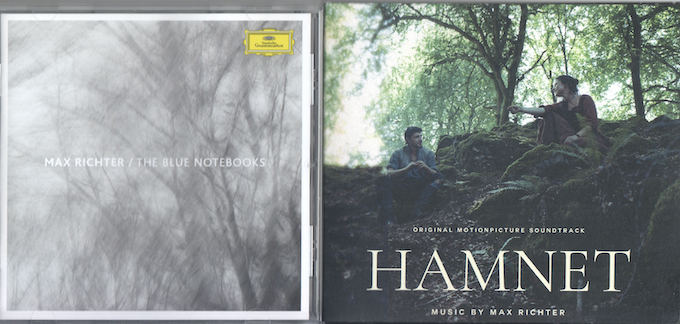
This only requires the string section, giving the rest of the orchestra an extended interval. For the brass section, it was an extended interval both sides. Enyi Okpara described Richter’s The Blue Notebooks as a personal favourite. I guess it was his choice. I liked him even more. He missed a trick in the intro, he mentioned its use in Arrival and Shutter Island, but most recently it is in Hamnet, where he uses On The Nature of Daylight at the end. The film can’t have been out when they planned the concert programme, but they can’t have known it was coming. We haven’t seen it yet, but I already have the CD.
Robbie Robertson did a mash up for the Shutter Island soundtrack, combining On The Nature of Daylight with Dinah Washington singing This Bitter Earth. How he got it to work, I don’t know, but it started me on Max Richter – The Blue Notebooks, Sleep, My Brilliant Friend, gradually becoming quite a collection. Sleep works, but for me, I spent a couple of years where I listened to The Blue Notebooks or My Brilliant Friend on headphones before going to sleep at night. I think I should restart.
Adagio sostenuto From Piano Concerto No 2 in C minor- Rachmaninov
Thomas Luke returns to the stage. Like The Warsaw Concerto indeed, a piano virtuoso show off piece, and one which the composer used to perform himself. There is another film reference, mentioned in the programme, which is David Lean’s Brief Encounter. Lean in 1945 got the permission declined in 1941.Rachmaninov died in 1943 and estates tend to be more accommodating than the original artists. Again, Luke’s playing is impassioned, and he has learned it. He is not reading.
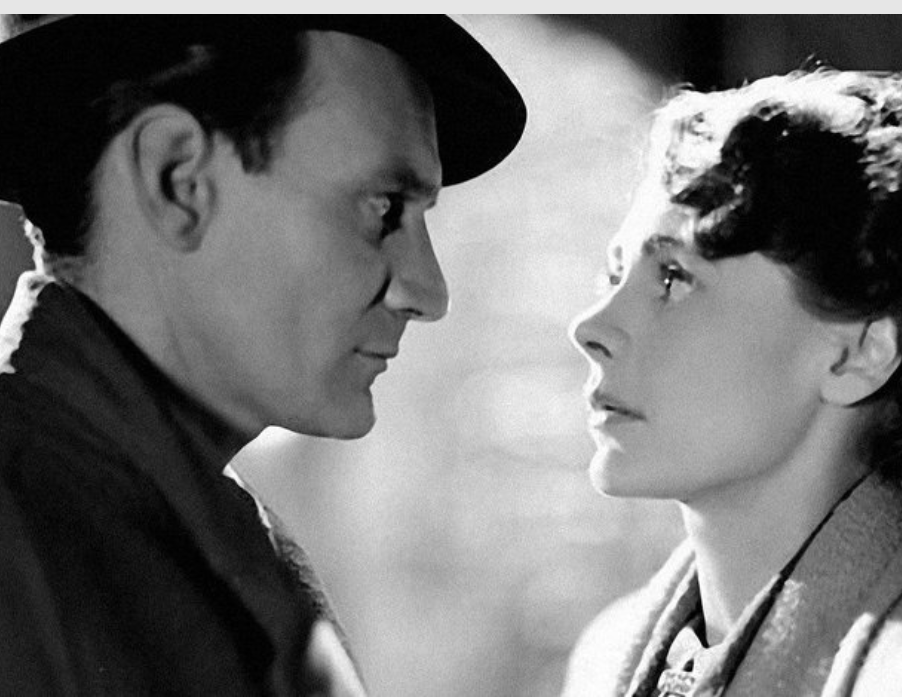
Classic FM did a reader’s poll and this was voted the UK’s favourite classical work.
Princess Leia’s Theme from Star Wars – John Williams
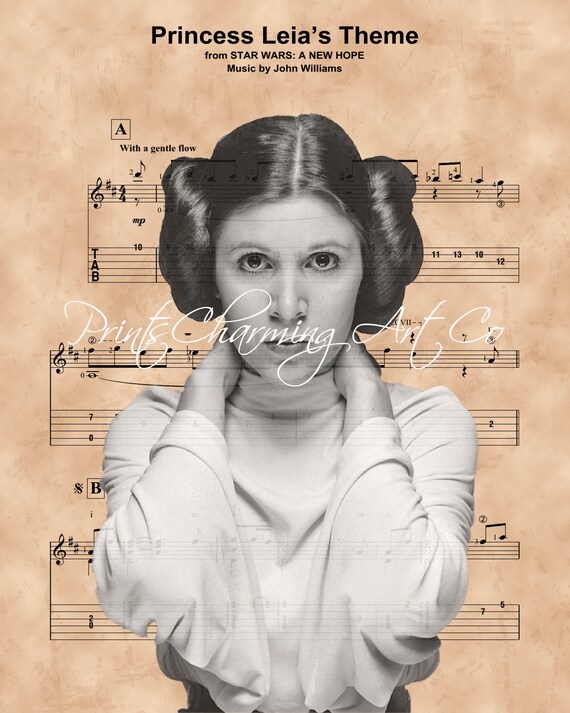
The BSO have done enough Star Wars and John Williams concerts to mean this is a familiar piece. Short, in popular music terms, a single. Again, a marvellous performance.
Andante from Piano Concerto No 21 – Mozart
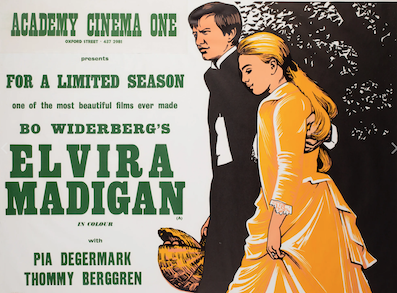
Enyi Okpara did a short interview with Thomas Luke before this piece. Thomas Luke said the Warsaw Concerto, Ravel and Rachmaninov pieces were more difficult to learn and the Mozart was ‘transparent.’ Its popularity continues the film theme, and Andante from Piano Concerto No 21 is the posh title. We lesser mortals call it the theme from Elvira Madigan from the 1967 film.
Romeo & Juliet Fantasy Overture- Tchaikovsky
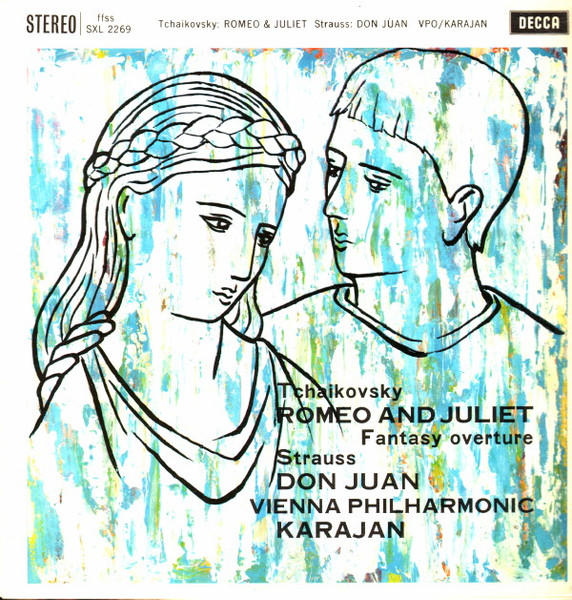
The three parts were explained: Friar Laurence, The Fight, the love theme, their deaths. A symphonic poem then. I didn’t battle to see the plot line though.
No piano, and at last a bit of decent playing time for percussion and brass who must know that an evening of gentle romantic music will not call on their efforts too often. Again, the long piece is to end the half. You can sympathise with percussionists. The cymbal player at last had clashing to do. A friend played in a large Chicago amateur orchestra and graduated to cymbals. He said in one piece he had to strike a triangle just once and it was incredibly stressful waiting and waiting to do a perfect ting. He said cymbals were almost as stressful. Excellent of course.
Encore: Ballad pour Adeline – Richard Clayderman
An encore was well deserved after the standing applause for Thomas Luke. As we went out he was walking across the lobby to sign his CDs and everyone was applauding there too. I thought Enyi Okpara muttered over the words Richard and Clayderman in the context, but it is a perfect short melodic closing piece.
Overall, we saw two musicians, conductor and pianist who will be major figures over the next twenty years. My prediction.
.
 Peter Viney's Blog