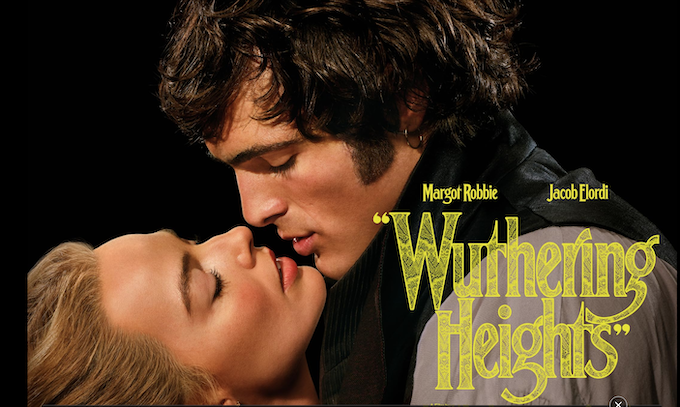
Based on the novel by Emily Brontë
Directed by Emerald Fennell
Screenplay by Emerald Fennell
Music by Anthony Willis
Bournemouth BH2 Odeon, iSense screen
Monday 16th February 2026
CAST:
Margot Robbie- Cathy
Jacob Elordi- Heathcliff
Hong Chau- Nelly
Shazad Latif – Edgar Linton
Alison Oliver- Isabella Linton
Martin Clunes – Mr Earnshaw
Ewan Mitchell – Joseph
Amy Morgan – Zillah
Jessica Knappett- Mrs Burton
Charlotte Mellington – Young Cathy
Owen Cooper- Young Heathcliff
Vy Nguyen- Young Nellie
Millie Kent- Jane
Vicki Pepperdine- Sister Mercy
Paul Rhys – Heathcliff’s father
Cats among pigeons. This film divides the critics if any ever did.
A rule. NEVER go to see a film on an an iSense screen. We wanted to go to the 13.40. It cost £3 more for iSense. The trailers were so deafening that I am going to contact the local council to check decibel levels. They were above painful. Thankfully, Wuthering Heights has no explosions, or car crashes or thumping music except for the opening hanging scene.
CONTAINS PLOT SPOILERS – you may wish to see it and judge for yourself first.
First, the novel. I have adapted English classics for English Language Teaching graded readers, I’ve edited others, I’ve been a judge on awards panel. I’ve adapted Wuthering Heights myself. I’ve edited another version.
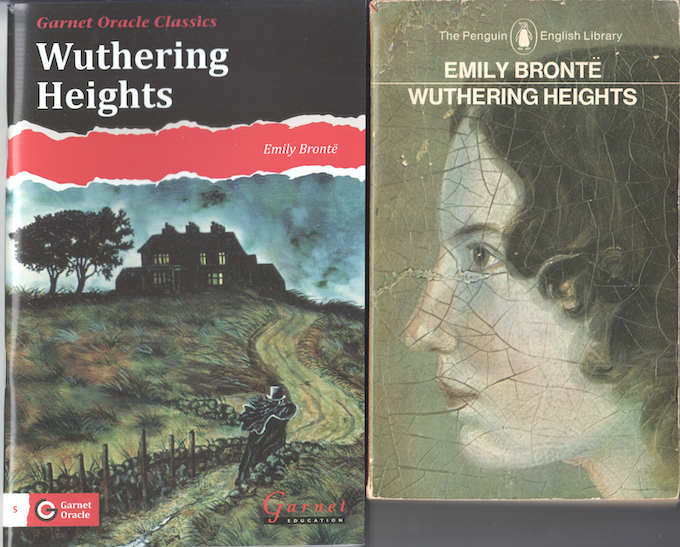
If I had to choose just one 19th Century British novel, it would be Wuthering Heights. Second would be Jane Eyre. When I adapted it, I realised how it was ‘modern’ in its use of dialogue. I also found the sub plots essential. It was really hard work to cut it, and I realised how important the frame story with Mr Lockwood and Nelly as narrator is. I retained that.
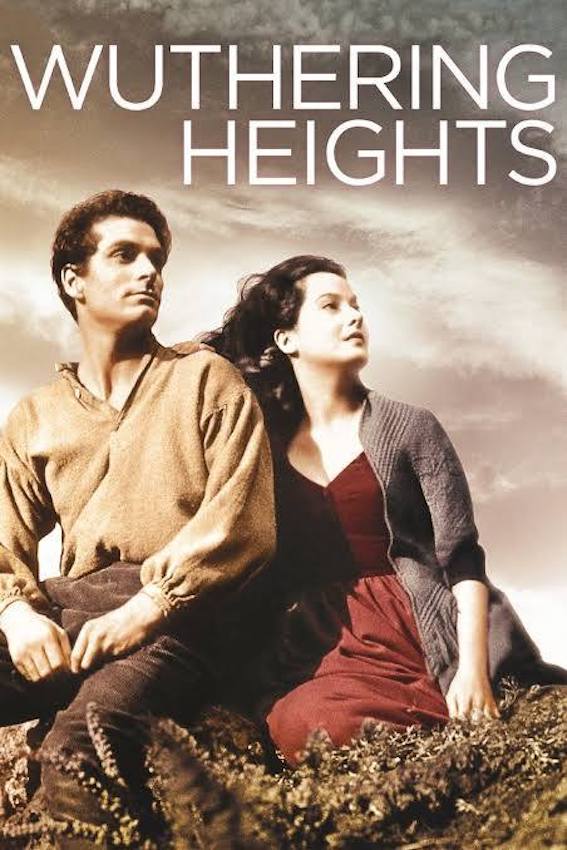
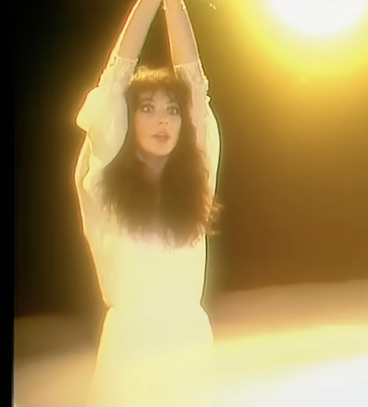
On film? Laurence Olivier’s greatest moment? Probably not, but a fine performance. Come back, Larry, all is forgiven. Apart from Othello. On record? Kate Bush’s 1978 hit isn’t likely to pick up any sales as there’s no ghostly window tapping at all in this.
We are in the perennial book / film debate. People who love a book tend to dislike a film adaptation, because they already have mental pictures of the characters and settings and the adaptation interferes with them. If you see the film first (as many will in 2026) you have less of a problem. I don’t generally have an issue with broad or tangental takes on classics.
Yes, it’s sexed up. Critics like to quote the shock and disgust quotes when it was published in 1847. There’s more now. It’s an event. Can Jacob Elordi do for Emily Brontë what Colin Firth did for Jane Austen? Colin Firth took his shirt off, Jacob Elordi goes for wet and transparent muslin AND shirt off.
Then sales of the original have shot up in advance of release. In January of this year, 10,670 copies were sold, compared with 1,875 in January 2025, in what Penguin has described as an unusually large boost. It’s expected to boost tourism around the Brontë home in Haworth. An aside, Emily, Charlotte and Anne’s dad, Patrick, added the pretentious and silly umlaut to the Brontë name. Annoying, but you press down E then ‘4.’
So is it any good? First naming it “Wuthering Heights” with or without quotation marks, as the director insists, is inaccurate. I wish she would change the title to (say) Cathy & Heathcliff and then I might be able to assess it. She can add “Inspired by characters in Emily Brontë’s Wuthering Heights” but that’s as far as it can go. It is NOT Wuthering Heights.
An alternate title could be Sticky Fingers, if The Rolling Stones don’t object to using their LP title. Tom Shone’s Sunday Times review:
Tom Shone: Cuddle up close for the famous scenes on the Brontë sisters beloved moors – you’ll surely remember- where Cathy masturbates furiously behind a rock only to be discovered by Heathcliff, who sucks her fingers afterwards. Ah, those wild, wuthering moors. Wait … what? You don’t remember the masturbation scene from Emily Brontë’s book? … Characters plunge their fingers suggestively into jelly, dough and egg yolk ……
I’ll add that Cathy and Heathcliff can’t keep their fingers out of each other’s gobs, and Cathy even shoves her finger deep into a wet carp’s mouth on the dining table. Very fishy.
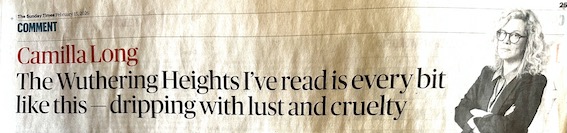
It’s a fantasy world view of the locations. Camilla Long, defending the film in the Sunday Times against the negative critics says,:
To the Brontës, living in mud, imagination was everything …
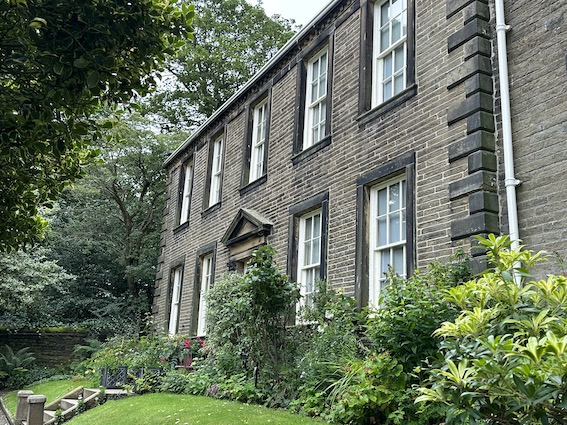
The Brontës didn’t live in anything like Wuthering Heights. Haworth was and is a solid small town, whose cobbles date back that far. They lived in a substantial Georgian parsonage right in the town. They didn’t know that the local water supply ran via the graveyard, which is why they didn’t live long. They were not totally isolated either. They went to stay in Brussels. Their letters describe excursions to stay with wealthy families. The building in Wuthering Heights is held to be inspired by an isolated farmhouse, Withens Farm, NOT by their home.
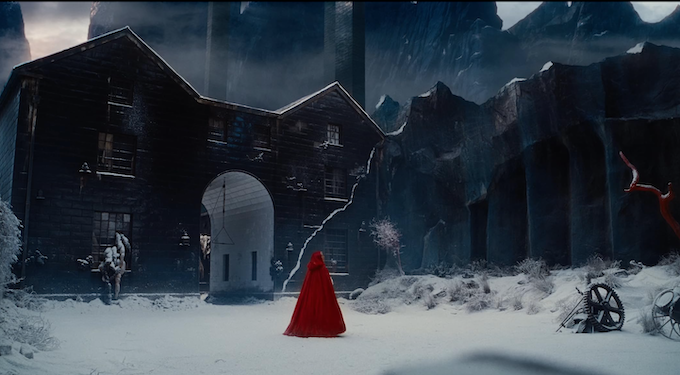
In the film, Wuthering Heights is built into a sheer granite rock face with Alpine granite peaks behind. It reminded me of the sets in Guillermo del Toro’s Frankenstein, in which Jacob Elordi played the creature. The mansion occupied by Edgar and Isabella Linton, the rich man and his ward (no longer his sister), is not a pleasant country house, but a palace to rival those of European kings.
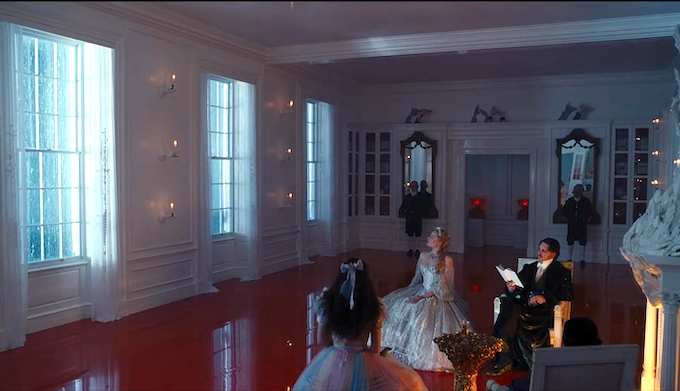
The interiors are never more bizarre than Cathy’s bedroom at the Grange, which Edgar has done in her flesh colour complete with veins, mottling beauty spots or freckles. Though most skin specialists would call them moles. This set was actually done from photographs of Margo Robbie’s skin. This must be to suggest that Edgar is also really weird.
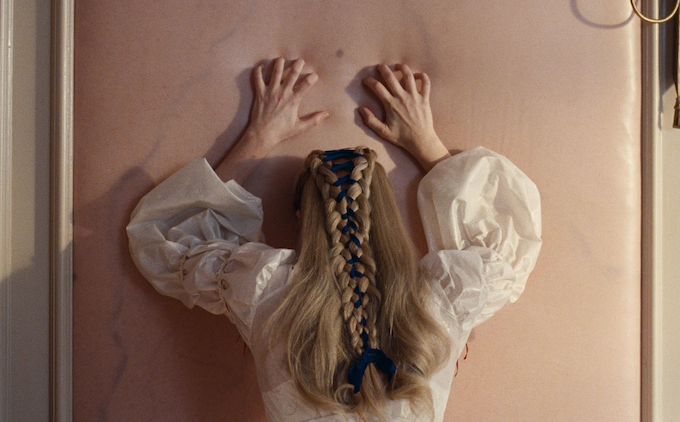
Then there’s a fireplace of grasping intertwined hands. With the amount of bonking in the film, I will note that the full name of the Linton’s house is THRUSHcross Grange. I’m not in the least surprised in the thrush given the intimate hygiene of the era. Later, when Mr Earnshaw dies, the room has mountainous neat pyramids of gin bottles against the walls. Realism is not the aim.
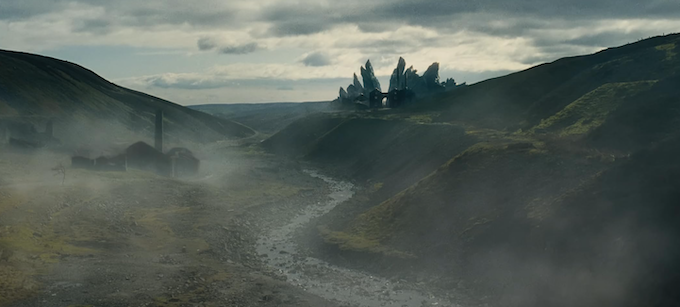
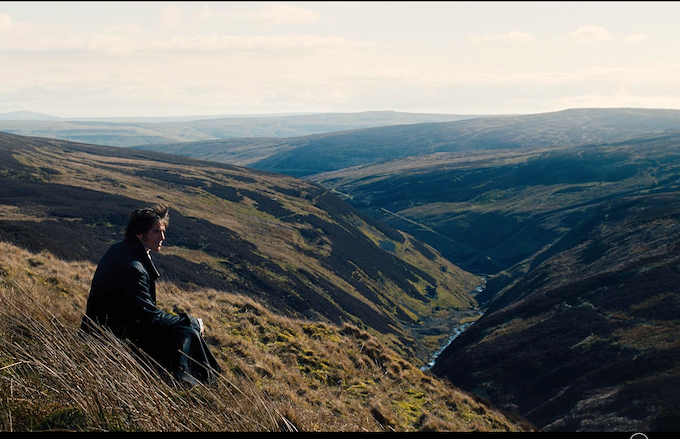
Between these two fairy tale locations, we do get the actual moors, but I would say the ruined factory is as it is now, not how it was when it was thriving in the 1840s.
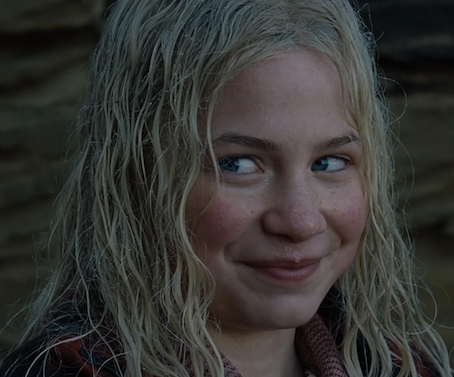
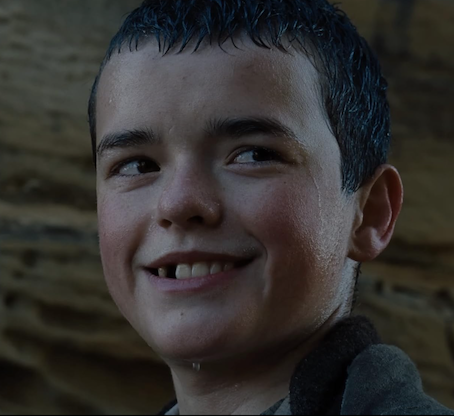
Young Cathy (Charlotte Mellingham) and Young Heathcliff (Owen Cooper)
Who is eliminated from the plot? Hindley, Cathy’s elder brothers for starters, and his family goes with him. That’s a bold cut. You need bold cuts, but it’s not one I’d’ve thought of. Given the removal of the later part of the novel, it works well. Mr Earnshaw, played by Martin Clunes, takes over all Hindley’s bullying and drunkeness. It’s easily the best performance in the film. But it’s not in the novel. Oddly, the online photos have no film shots of Martin Clunes in the role.
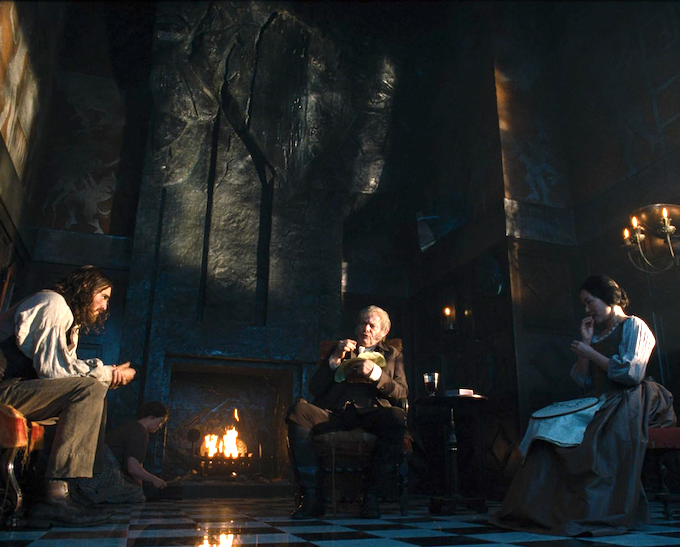
My main issue are the two leads. Margo Robbie as Cathy, Jacob Elordi as Heathcliff. You don’t feel chemistry at all. One review suggests it’s because she’s seven years older than him in real life. No, that doesn’t show so much, but it is true that she never looks nineteen. They just don’t look attractive together which for the stunningly beautiful Margo Robbie is a major shock.
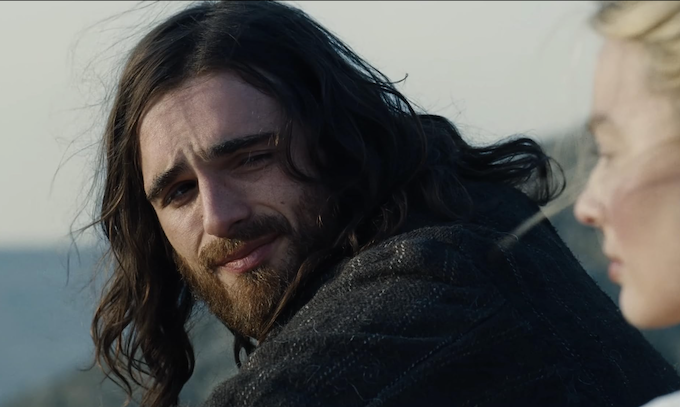
Jacob Elordi is fine when he’s heavily bearded with long hair, but once he shaves, he doesn’t look as attractive, full stop. He has a tiny mouth and it looks odd when he moves his tiny mouth in for lip to lip contact with her fulsome lips and wide mouth. His mouth is highlighted by the gold tooth which is actually a good costume indication of his success and wealth. Nothing wrong with either, but they just don’t look right together. Then we see his protruding tongue. Mottled, dark, thick rather than flat, round like a budgerigar’s. Was that AI? It doesn’t look real. It looks disgusting.
I haven’t started. Then there’s the characters. Cathy is supposed to be a wild child, a child of nature and the moors. in fact, the child versions of Cathy and Heathcliff work much better than the adult ones (and finish the film). This adult Cathy is a spoiled bitch with a nasty streak and her eye firmly on the money. Not a hint of wildness.
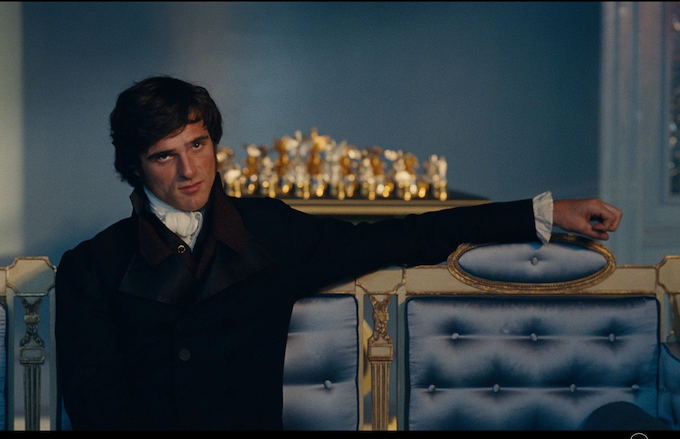
Heathcliff certainly turns out unpleasant in the book and makes it worse in eloping with Isabella and ignoring her. Here he puts Isabella in a dog collar stuffs old bread in her mouth and he’s a sadistic pervert and she’s a masochist. I think the director is confusing it with Marat -Sade. Earlier, Joseph and Zizzi have a barn bonking session while Heathcliff and Cathy watch through gaps in the barn’s floor, and that involves chains and a horse’s bridle too.
Basically, we thought them not miscast so much as mismatched. Elordi is very good indeed as the resentful, brooding Heathcliff, and exudes venom from every pore when he returns wealthy from exile. I think Elordi would be fine with a different Cathy. We say this as great Margo Robbie fans. She is too conventionally good looking for Cathy. We recall she recently played Barbie. Too plastic. Cathy has to be wildly attractive, but that means a flaw somewhere, a tooth gap, a mole, something that makes her look REAL. Also chemistry between actors in not a predictable thing.
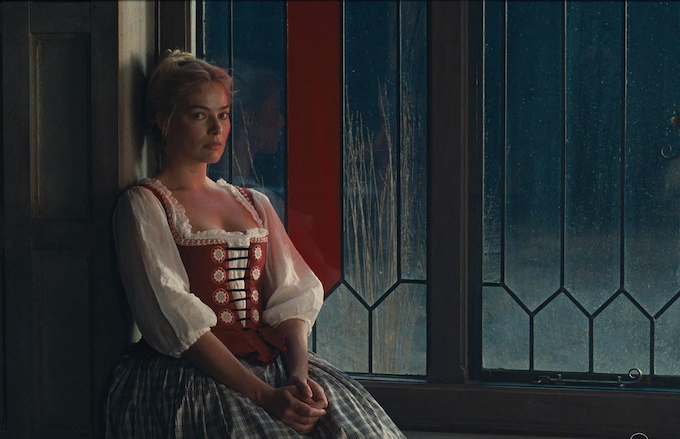
And why on Earth is Cathy dressed up as a Bavarian shepherdess, or an extra from The Sound of Music or a rosy cheeked bucolic milkmaid in earlier scenes? Once she marries Linton her costume budget shoots sky high and she drips with jewels so large that even Elizabeth Taylor might have found them excessively blingy.
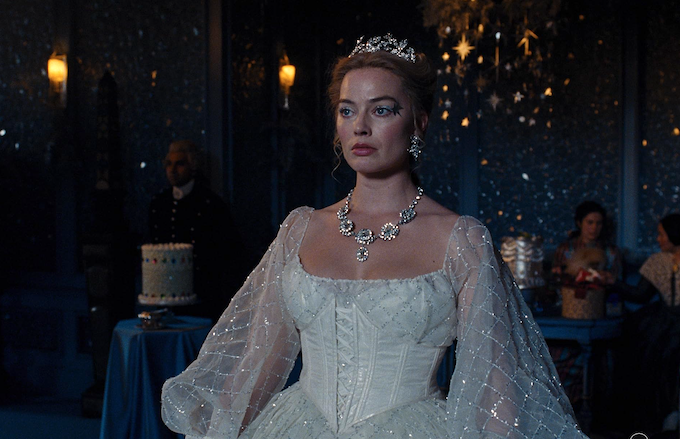
Then the film starts with a hanging and the boy (is it Heathcliff?) in the crowd points out that the dangling corpse has a stiffy, an erection. Later over a meal, Isabella and Cathy discuss a woman who is to be hanged. Isabella, who appears more than slightly simple, wonders if you’ll be able to see up her skirt. Alison Oliver’s portrayal of the clinging, needy, childish Isabella is a highlight of the film. Both Shazad Latif as Edgar and Alison Oliver as Linton are well cast. We liked both. However, in the novel Isabella is Edgar’s sister. Here she’s announced as his ward. Why? I guess a lot of 19th century novels had wards.
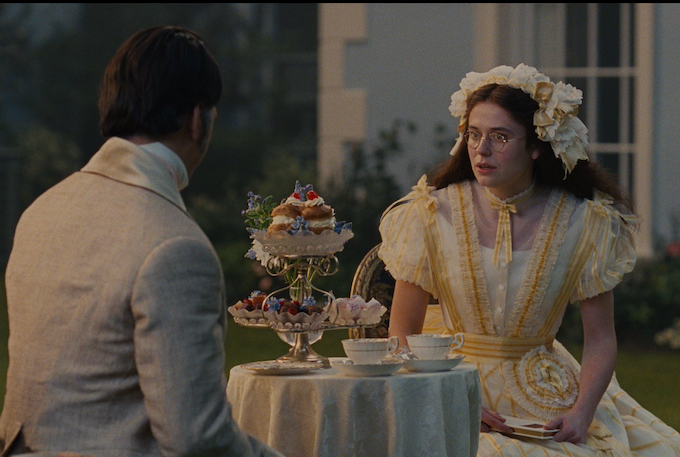
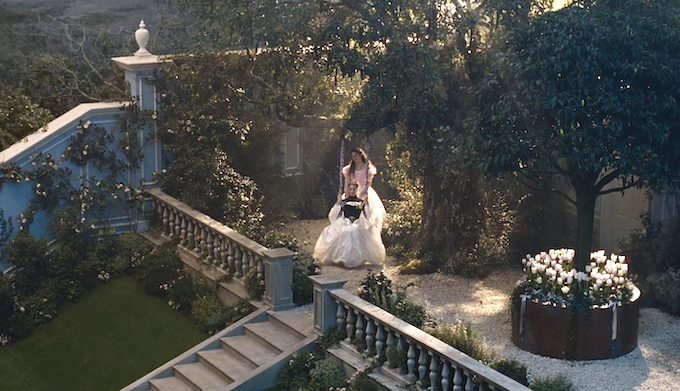
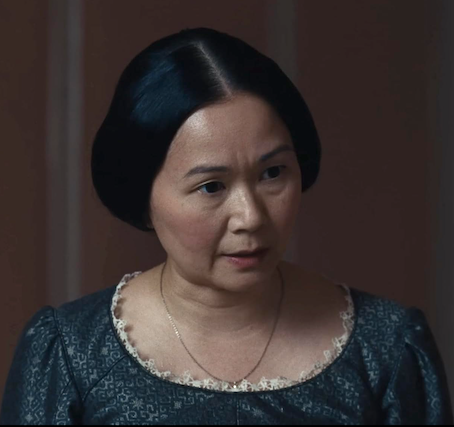
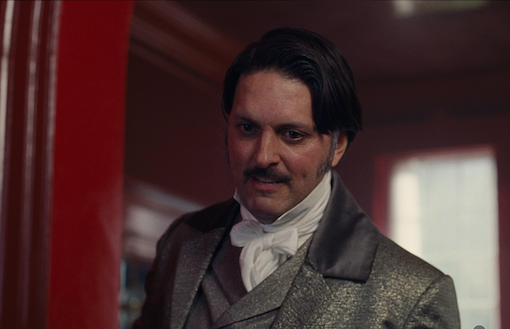
Hong Chau as Nelly, Shazad Latif as Edgar
Nelly’s role has changed. Mr Earnshaw calls her the bastard daughter of a lord. What? Why? In the novel she is the vital link and narrator who saw all, but obviously in a film, you can show it, so you don’t narrate it. Similarly Mr Lockwood’s role can go. But then the whole “twelve years later” sequences at the end of the novel have gone too. Nelly (Hong Chau) loses her narrator role but replaces it with an observer role, and a plot hinge role. Hong Chau does it very well.
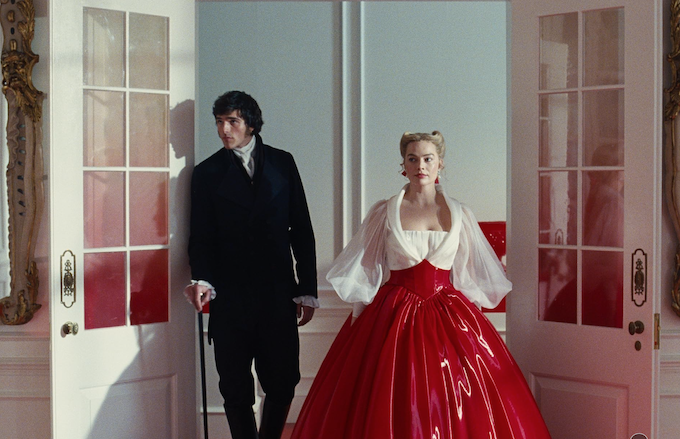
Once they get to it, after Heathcliff’s return as a rich man, there’s a fury of bonking between Cathy and Heathcliff. The triple bonk times three. They do it in three locations (garden, moors, carriage) with quick cutting. Then they repeat the sequence. Then they repeat it again. LESS IS MORE is the film editing rule. I can’t think of a 136 minute film that would not benefit from trimming to 120 minutes or less. Many bits of this one felt overstretched and laboured.
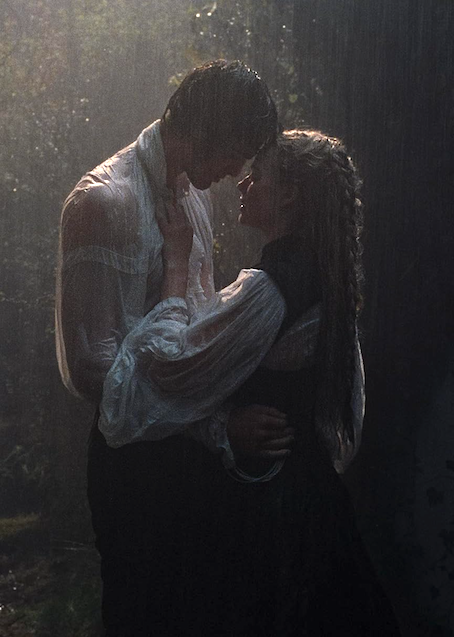
OK, we’ve got the point. Let’s move on. They like a bit of porno, but in fact Margo Robbins never exposes herself. The strange thing is we get lust. We get sex. We never get eroticism.
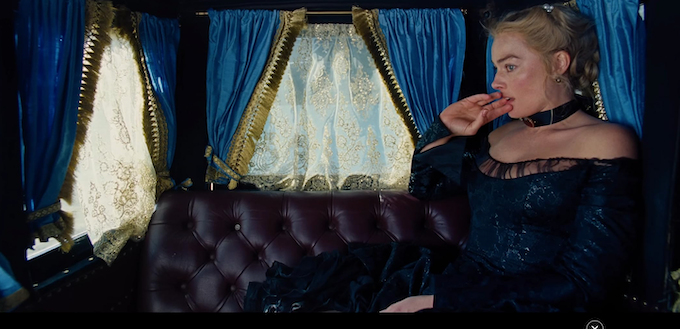
Cathy and Heathcliff finish off the montage bonk sequence with screwing in an ornate carriage on the wild and wuthering moor. OK, so how did it get there? Where are the horses? Where is the driver? How will she get home? Right, it’s another fantasy sequence.
There’s a lot of blood. Cathy has to get her skirt hems soaked in the copious blood of a pig they’re slaughtering as she walks out to spy on the Linton’s. Not attractive, and also a stripped porcine carcass should be well past the bleeding out stage. We won’t go near her deliberately cutting her hand, or her death, which suggests the human body contains five gallons of blood rather than five litres. The death scene is enlivened by covering her with black leeches, with more in a bottle. A nice historical touch.
The whole is lurid apart from the misty moors. Writ too large too often.
Ah, the death. Plot spoiler. It ends with Cathy dying. The baby has died inside her. That cuts out the daughter, as well as Hindley’s son from the “twelve years later” section of the book. On the plus side for Edgar, he gets to survive unlike the novel. We never find out what happens to Heathcliff.
There is some worked up controversy about ethnicity. Two Australians in lead roles. The Guardian seemed to think it should be Yorkshire born actors. Why? It’s called ‘acting.’ Then some reviews get worked up about Heathcliff being described as a dark-skinned gypsy boy in the novel, but Jacob Elordi being white. I went to school with Romany kids, I researched fortune telling with Romanies. Dark hair and dark eyes may be frequent, but ‘dark skinned’ in 1847’s wet and murky moors meant ‘not as deathly pale as the rest of us.’ I’d read dark-skinned as ‘a bit sallow.’
A problem for us was that after six weeks of continual rain in Southern England, it was depressing to watch so much more.
The dialogue? Look at Emily Brontë’s novel. You can lift what she wrote in swathes. They didn’t. They should have done.
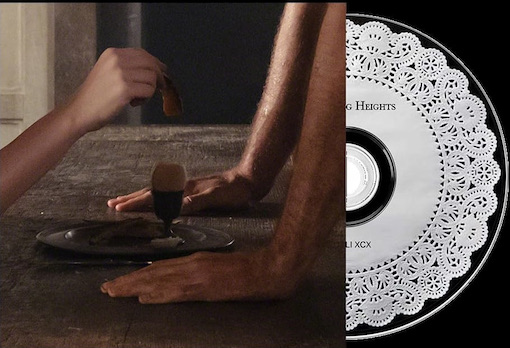
MUSIC: The ‘classic film score;’ semi minimalist music was very good indeed, as were the two folk music sequences.
The obligatory anachronistic modern pop song in the Grange mansion sequence jarred, not because it was anachronistic but because it was not a suitable song that reflected anything to us, and nor was the one over the credits,
Overall: two star, and it wasn’t the playing with the plot so much as miscast lead actors. We didn’t like either performance. Martin Clunes could well get Best Supporting Actor. Cinematography has some memorable shots.
WHAT THE CRITICS GAVE IT
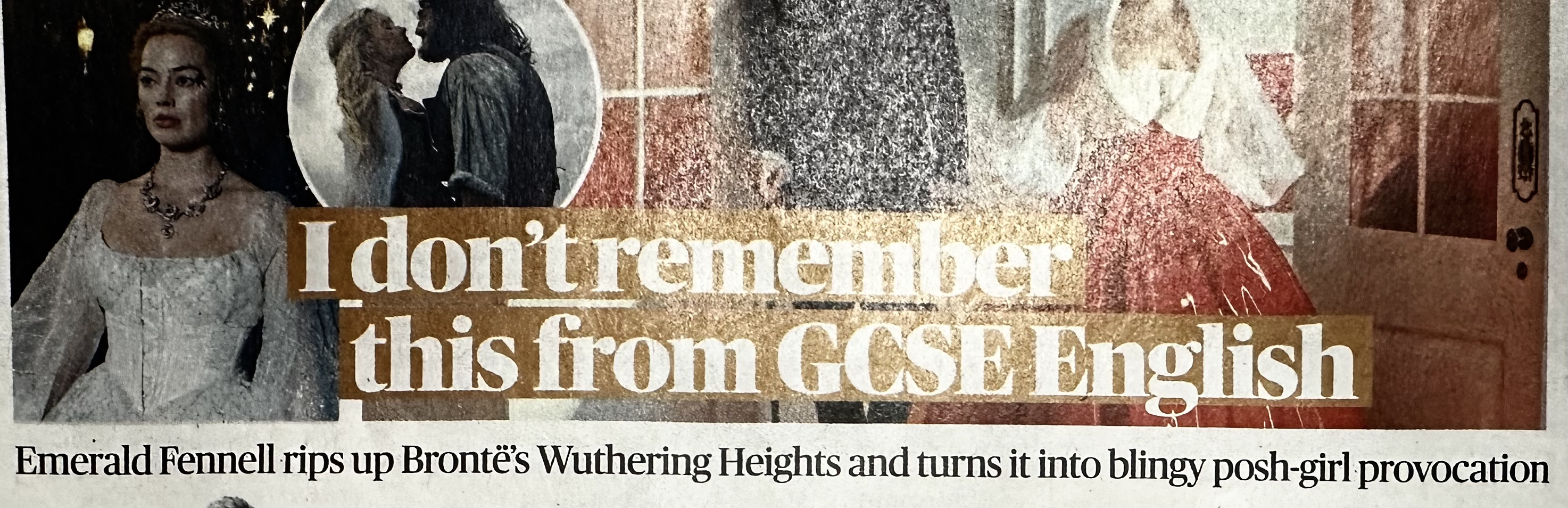
Tom Shone: … it’s a work of posh girl provocation: intent on pushing as many buttons as it can, mistaking Brontë’s effect for her intent. Provocation is just people pleasing upside down. A wind whistles through the film and not the Brontëan kind.
Sunday Times, 15 February 2026
He also notes the quote marks around the title as a distancing effect. Not really. Now I put book and film titles in italic, but the default was quotation marks.
Then in the same paper Camilla Long disagreed.
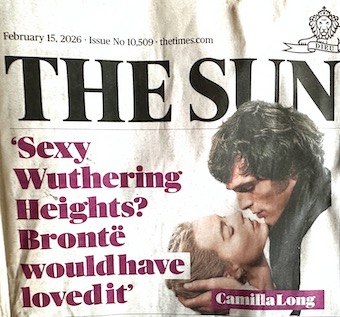
five star
Robbie Collin The Telegraph *****
four stars
Matthew Bond, Daily Mail ****
Tori Brazier, Metro ****
Caryn James, BBC Culture, ****
three star
Ben Webb, Empire ***
two star
Tom Shone, Sunday Times **
Peter Bradshaw, Guardian **
Adrian Horton, Guardian **
one star
Clarisse Loughley, Independent * (a limp Mills & Boone)
LINKS
JACOB ELORDI
Frankenstein (The Creature)
MARGO ROBBIE
Barbie
Babylon
The Wolf of Wall Street
ALISON OLIVER
The Other Place, NT 2024
Dancing at Lughnasa, National Theatre 2023
 Peter Viney's Blog