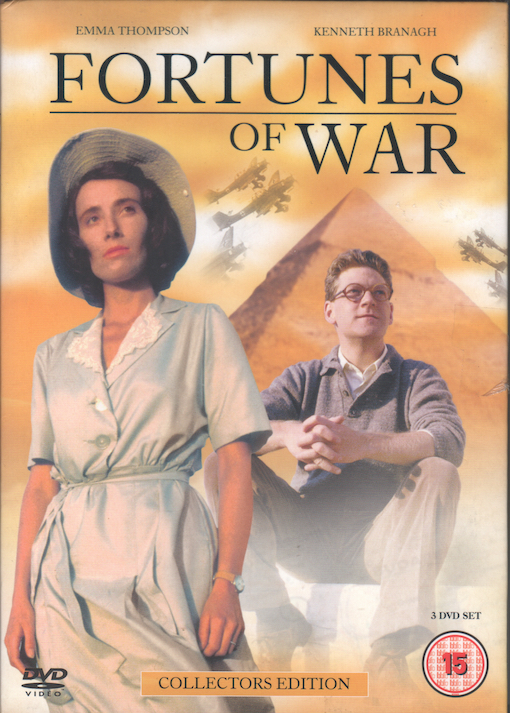
TV series 1987 / DVD Box Set
Based on the novels by Olivia Manning
Screen adaptation by Alan Plater
Directed by James Cellan Jones
Screened October- November 1987

Seven x 60 minute episodes:
MAIN CAST
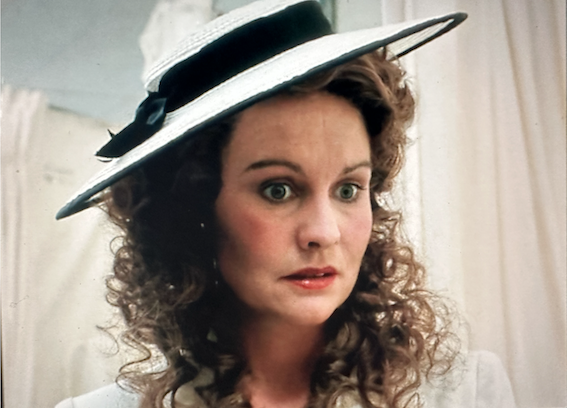
Emma Thompson – Harriet Pringle
Kenneth Branagh- Guy Pringle, British council teacher
Charles Kay – Dobson, diplomat
Ronald Pickup – Prince Yakimov
Alan Bennett – Professor Lord Pinkrose
Harry Burton – Sasha Drucker, Jewish refugee
Rupert Graves – Simon Boulderstone
Robert Stephens- Castlebar, poet
Greg Hicks- Aidan Pratt, famous pre-war actor
Ciaran Madden – Angela Hooper
Diana Castle- Edwina Little
Claire Overman – Mortimer
Esmond Knight-Liversage
Michael Cochrane – Clifford
Richard Clifford- Lawson
Caroline Langrishe- Bella Niculesco
Christopher Strauli – Toby Lush
Desmond McNamara – Galpin
Clifford Rose- Professor Gracey
Jeremy Brudenell- Charles Warden
Jeremy Sinden – Lord Lisdoonvarna (Peter)
Sam Dastor – Dr Shafik
Philip Madoc – Freddi von Flugel
Peter Timbury – Alan Frewen



1 The Balkans September 1939
2 Romania January 1940
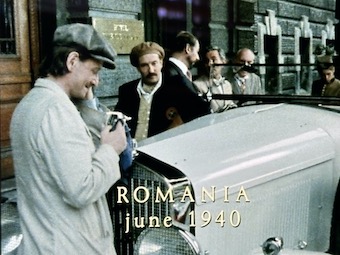
3 Romania June 1940
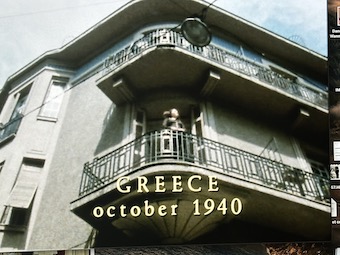
4 Greece October 1940
5 Egypt April 1941
6 Egypt September 1942
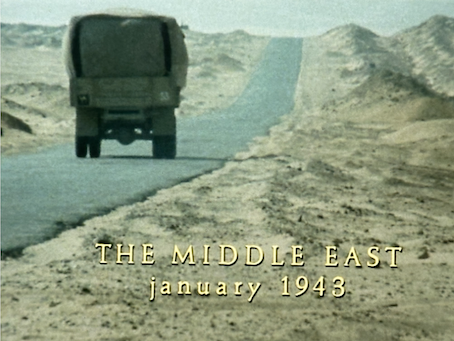
7 The Middle East January 1943
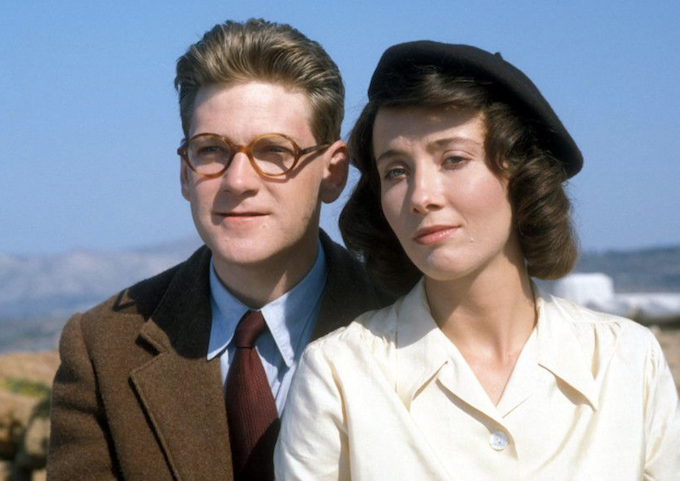
Didn’t they do well? This is the series where Emma Thompson and Kenneth Branagh met, married, and both won awards (Best actress / Best actor) in 1988. The support cast includes Charles Kay, Ronald Pickup, Alan Bennett and Rupert Graves. Christopher Strauli is in it. He is a very familiar face as we used the BBC English Teaching series On We Go heavily in the 1970s. That’s not on his Wikipedia profile but it was broadcast worldwide.

We remembered Fortunes of War fondly from the first broadcast and decided to get the box set and watch again. I’d always been interested in Romania. My father-in-law had visited it in during the 1970s in his work with BAC-111 aircraft, and talked about it. Our modest wedding was celebrated with quantities of Romanian ‘champagne.’ I don’t suppose duty-free limits existed on non-commercial flights … he worked for BAC.
The seven episodes are based on six novels by Olivia Manning, which form The Balkan Trilogy (1960-65) and The Levant Trilogy. They were based closely on her life. She married a British Council lecturer in August 1939, moved to Bucharest in Romania, and moved on to Athens, then Egypt then Palestine.
The finest fictional record of the war produced by a British writer … probably the most important long work of fiction written by a woman since the war … (Guy Pringle) is one of the most fully-created male leads in contemporary fiction … He is a sort of civilisation in himself.
Anthony Burgess: 99 Novels: The Best In English Since 1939. (1984)
The adaptor was Alan Plater. BBC did a Timeshift programme on him which is on the DVD set.
Narrator: Plater stripped back the traditional wordiness of the literary adaption to produce something much sparer, and he caught perfectly the emotional distance separating Olivia Manning’s two main characters.
Alan Plater: I’ve always tried not to clutter up the page with too many words. Actors frequently said to me ‘we love the way you leave space for us’ which is not space to improvise, but space for the characters to breathe and have their being.
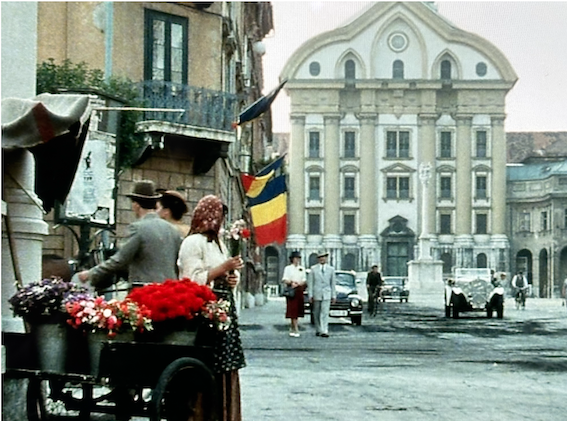
It may be 4:3 screen, but production values were high. In 1987, it became the most expensive British TV series ever made to that point at a cost of £6.5 million. They created two thousand 1940s costumes. The story is that the BBC had taken major criticism after ITV’s success with the lavish Brideshead Revisited and The Jewel In The Crown, and needed to respond in kind. They could afford large numbers of extras, many vintage vehicles, large interior scenes. Surprisingly none of the online photos show how major and highly-populated so many of the scenes are. These are screenshots off a computer. I’d intended a short pithy review, realised there were so few pictures, started again to find them from the DVD and it has grown. Not only that but as I got into it, the later episodes grew more than the earlier ones.
1987 was two years before the fall of Ceausescu, and they didn’t (probably couldn’t) film in Romania. So Serbia, then still Yugoslavia, stands in for Romania. They were filming there for two months. Yugoslavia had been the film friendly location for many ‘behind the Iron Curtain’ films. There are long interior shots of the Hotel Athené and I suspect those, along with the Pringles art decor Cairo mansion are studio set-ups in the UK.
First we both found the Balkans sections (Episodes 1-4) superior to the Levant sections by a considerable margin. Yet most of the publicity materials focus on Egypt. It has been hailed as one of the best literary versions of World War II, but to me the home front longer TV series A Family At War (LINKED) does it better, but then they had 52 episodes rather than a mere seven. Olivia Manning was annoyed to find it was seven rather than six as with her novels, but it needed the time.
This is an effete elite and in the Balkans remote from any British idea of what was going on.

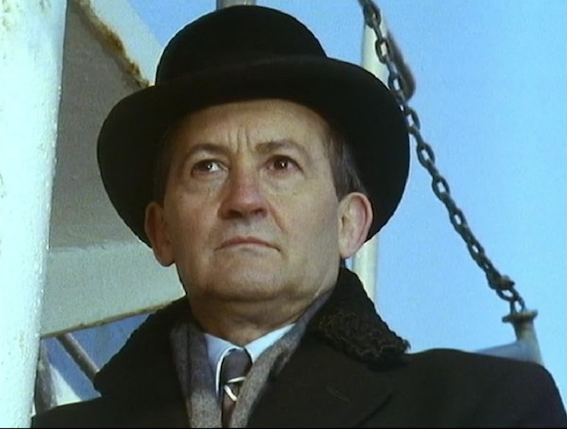
The history of Romania from 1939 to 1941 is convoluted in the extreme, and part of the inspiration for getting the box set was reading Paul Kenyon’s Children of The Night: A History of Modern Romania. The historical events are even more dramatic, with greater atrocities than the fictional version, and an immediate note is that Romania’s Fascist Iron Guard were ‘Green Shirts’ and in the film version, they’re ‘Black shirts.’ The TV version doesn’t explain what’s going on in any comprehensible way. Everybody was after Romanian oil, and Romania was squeezed between Hungary, allied with Germany, and Russia. So what we are seeing is an ex-pat’s partial view of the chaos, even though Dobbie (Dobson) is a career British diplomat (and beautifully played by an ever-calm Charles Kay.) They don’t know either.
Naturally, with the strong autobiographical element, Harriet (Emma Thompson) is our Olivia Manning observer. She’s not quite omnipresent, but in the Balkan section, not far off. It’s an unenviable role in many ways, so an award for subtlety. She spends much of it powerless, watching the goings on with a long face. Kenneth Branagh is her new husband, Guy Pringle. Guy is an ELT type, a cheery British Council type too, even in my experience forty years later. You can sense his enthusiasm. Right, that’s Romanian thoroughly learned. New posting! Great, off we go, start on the Linguaphone Greek. Off to Cairo? Wonderful, now I can learn Arabic. He is also way more interested in teaching literature than language, and by sheer effort will get it across.
Lesser Council teaching types like Toby Lush (Christopher Strauli) are the international drifter mode.
ELT memories flood back. These are 70s Bournemouth: I can remember Michael, off to see what the Beginners thought of the To be or Not To Be speech, or Alan treating them to the Gilbert & Sullivan Patter Song, or Brian reciting The Lion & Albert to Elementary learners. I despaired, though all had charisma enough to get away with it.
Guy loves everybody. He’s a passionate Communist who fondly believes Russia will protect Poland and Romania from the Germans. He blithely disregards his wife. A rehearsal is far more important than visiting her in hospital. We learn in the very first scene that he’s a nice guy as he empties his wallet to help a Jewish refugee who has no papers on their train to Romania .
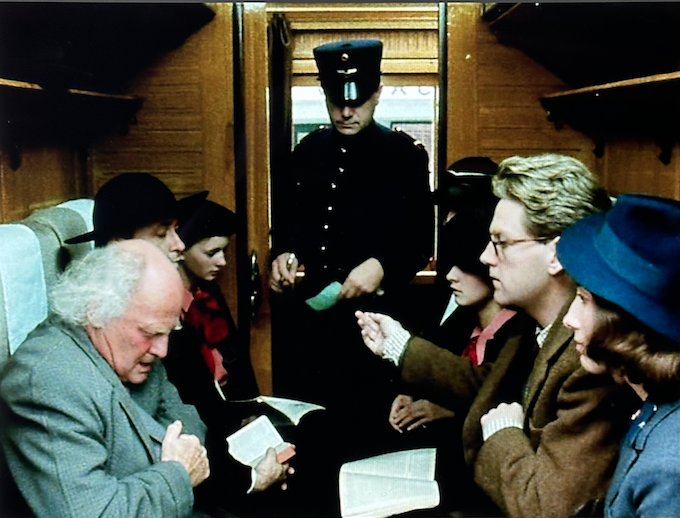
When they arrive they hear King Carol on the radio while terrified Romanians listen, ‘We have learned from Poland’s mistakes. Romania will never suffer defeat.’ Though in fact King Carol left the country pretty fast not much later.
In the Romania episodes, the character of Prince Yakimov (Ronald Pickup) is the third central figure.
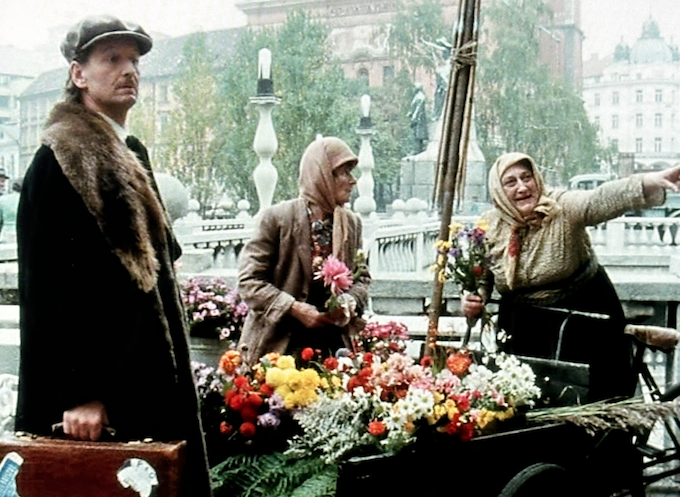
A spirit of dispossession is found in the character of Prince Yakimov, a White Russian aristocrat who haunts the cafes and bars of Bucharest. Yakimov has lost everything but his painful memories, his hunger, and an increasingly tattered fur-collared coat, which he claims, with deadening repetition, was given to his father by the late Tsar of Russia. Yakimov is penniless, homeless, obsessed with memories of his aristocratic past, and always refining his amusing anecdotes or tales of hard luck to extract drink, loans, and shelter from those around him. When not on the scrounge, he spends his time yearning for the rich food—blinis, black caviar, and champagne—of his youth, and for his Hispano Suiza, a fabulous motor-car impounded at the Yugoslav border, which he longs for “like a mother.” Once society’s golden boy he is now crafty, ingratiating, parasitic, and burdensome—a living symbol of war’s humiliations.
Robin Ashenden, June 2022 ‘Has Olivia Manning’s Fortunes of War Finally Found Its Moment? (Quilette)
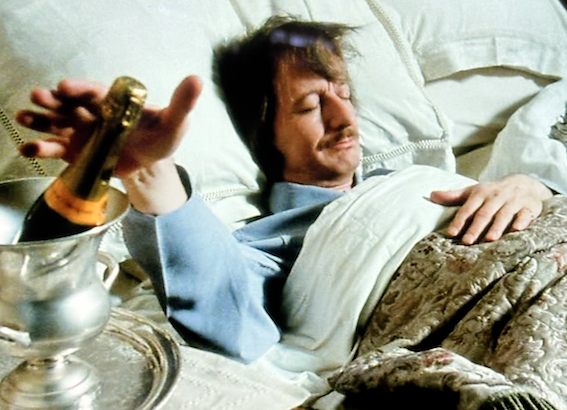
He’s a Russian-Irish alcoholic con-man in a fur coat. ‘It’s said that he has a very peculiar English sense of humour,’ Harriet is told. He has several lengthy sequences where Harriet is not observing him too. Pickup plays him as a larger version of Terry Thomas. He may be intended as comic relief, but it jars sometimes as over the top, though he IS funny and some lines work. He gets led into deputising for an injured reporter and screws everything up by inventing stories. He will end up sponging off the Pringles as a house guest.
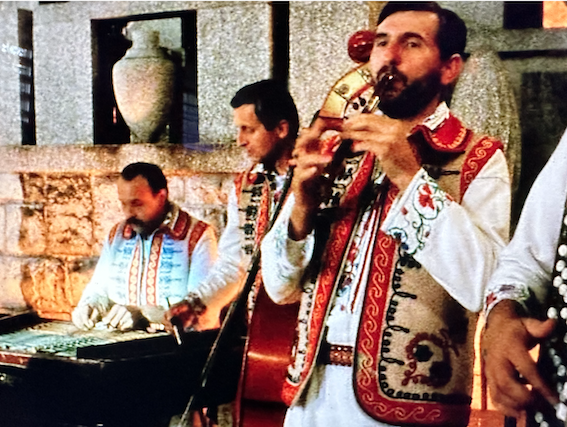
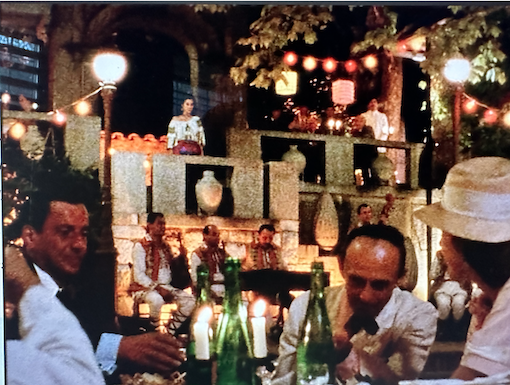
There is a lot of music in Episode One, so much that I wondered about a soundtrack album (There is but only of Richard Holmes soundtrack music. See later). There’s a zither orchestra, an operatic singer (Bella) and a uniformed band on a bandstand. Bella sings to the huge nightclub. She is the mistress of a senior politician who watches with his wife.
Then we move from tranquility to the brutalised bodies of the “students” who assassinated the prime minister, Armand Cãlinescu in September 1939. The corpses were left on display in the market. History indicates they were all too old to be students and that the assassination was carried out by the Iron Guard with German approval and help.
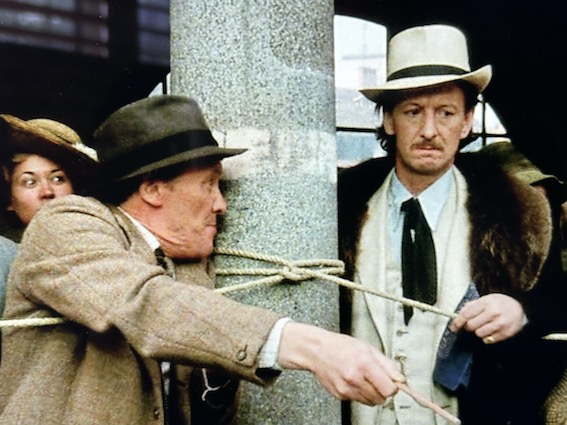
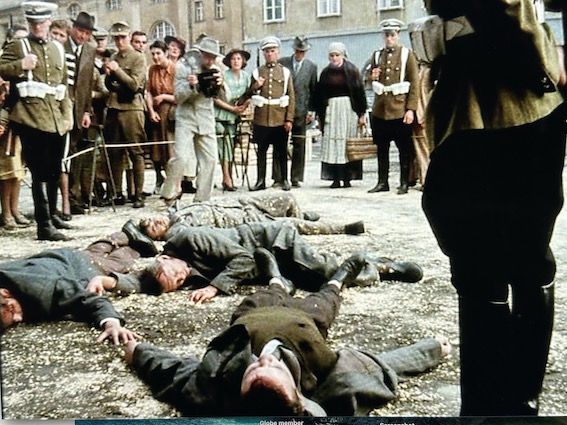
The older journalist points out that one wasn’t dead. He twitched. Yakimov has a wonderful line ‘Can’t blame a chap for twitching’ before leaving the scene to vomit. They function much as ‘The Brokers’ Men.’

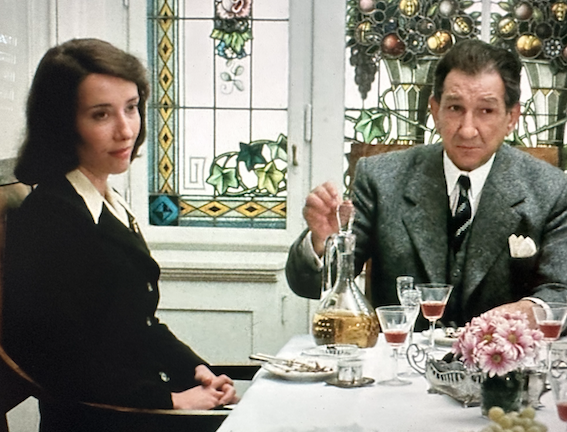
The Pringles have dinner with the Drucker family the parents of Guy’s student, Sasha. They are Jewish, or rather the father is Jewish. His wife says waspishly as they discuss the Nazis, ‘You’re Jewish. I’m not.’ Harriet is shocked to see the devout Marxist Guy dining with the wealthy Druckers with their butler and serving maids. As the many hotel lobbies and posh restaurants show, Guy has no problem with being a champagne socialist. The later story threads are set up beautifully in episode one. Drucker senior is arrested and the Pringles will end up hiding Sasha.
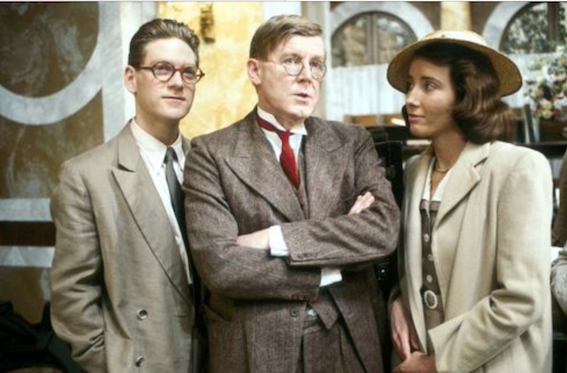
Alan Bennett has another comic relief cameo as Professor Lord Pinkrose, a precious, moaning senior academic intent on giving his lecture on Byron, just the sort of literary thing the British Council would finance and support in the middle of a major war. I spoke at the British Council Greece just a few weeks after my MA tutor, Malcom Bradbury. I wonder what they made of him. Pinkrose fails to give the lecture in Bucharest, fails again in Athens and eventually tries in Cairo. You wonder what these people are doing swanning around foreign capitals while London’s being bombed. Yes, they have worrying moments as the Iron Guard take over Romania, or the Germans approach Athens, but on the whole they lead a very comfortable five star hotel existence. We see a lot of hotel lobbies. Much alcohol is consumed.
They go off for a holiday in the mountains. The script captures perfectly Harriet’s enthusiasm and Guy’s complete distraction:
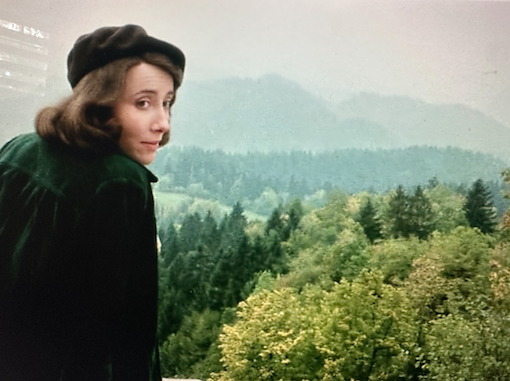

Harriet: (on the view) Isn’t it beautiful.
Episode 2
Guy: (lost in his book) Mmm. It has its moments.
Harriet: I’m talking about the mountains.
Guy: Oh. Mountains.
Harriet: You do agree the mountains have some good moments.
Guy: I haven’t got my distance glasses, darling.
It’s significant that Guy produces Troilus & Cressida in Bucharest, and if I had to decide the least likely Shakespeare play for foreigners, that would be a strong candidate.
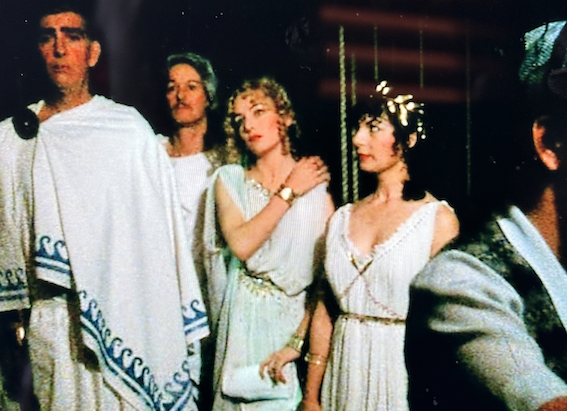
‘There are twenty-eight speaking parts!’ says Harriet. Given his subsequent career, the scenes of Kenneth Branagh directing (as Guy) are memorable. One actress declares she can’t follow the story. ‘If we just feel our way into the characters, we can come back to the story later,’ says Guy. They fill the opera house for the production.
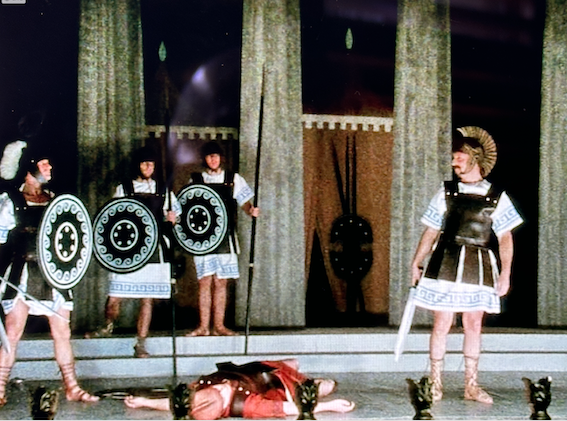
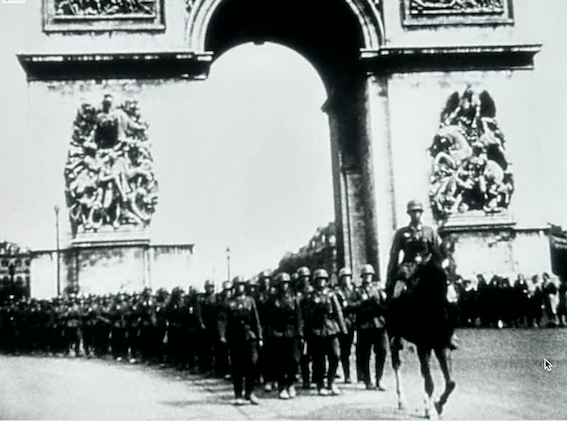
The play scenes of the death of Achilles are intercut with newsreel of German bombing in France then the triumphant march into Paris. Romania was relying on French help. The cast come off stage and hear the news.

In Episode three the black shirts (who should be green shirts) start to appear. Again there’s the juxtaposition of a beautifully dressed Harriet having tea and fancy cakes with a friend in a restaurant as the Iron Guard march by.
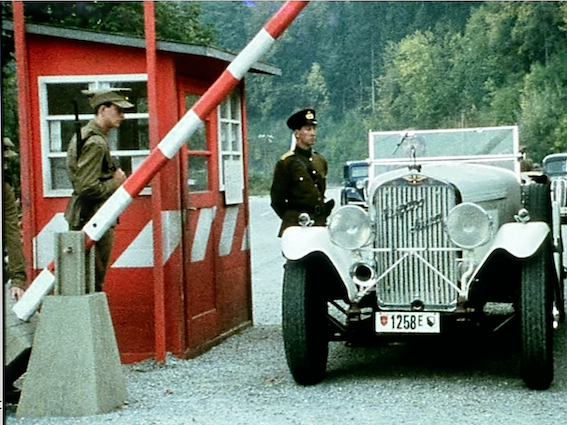
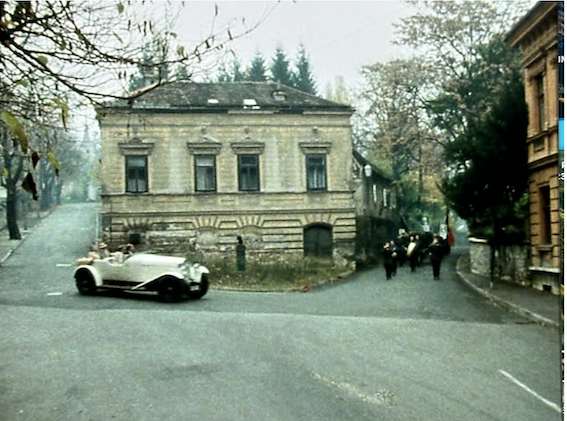
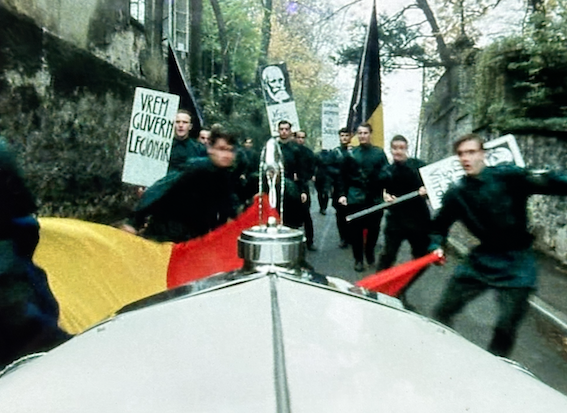
Then Prince Yakimov has recovered his beloved Hispano-Suiza car which was confiscated at the Yugoslav border, goes out for a spin, turns a sharp corner and ends up ploughing through the Iron Guard parade by mistake. The Fascists are starting to take over.
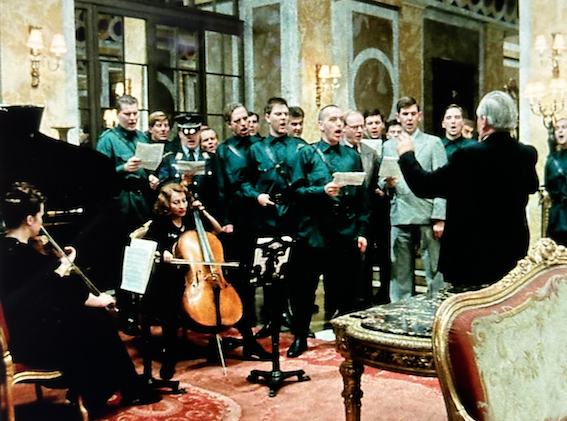
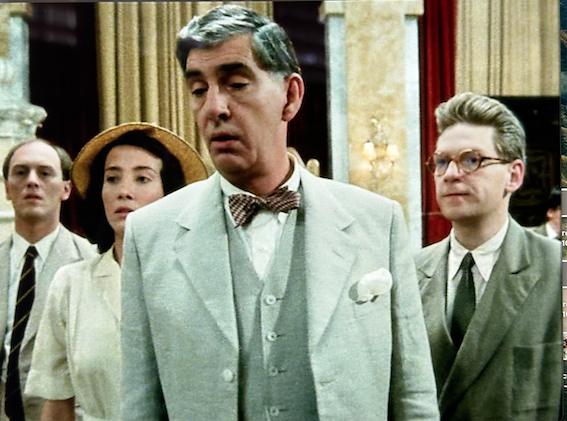
They Fascists are meeting in the hotel. Germans are staying there – in the brightly lit hotel, the shirts could be dark green though they look black in all the outdoor shots. They’re singing Deutschland uber alles while the British, led by Guy’s boss at the university, Professor Inchcape, watch in dismay (Toby Lush departs).
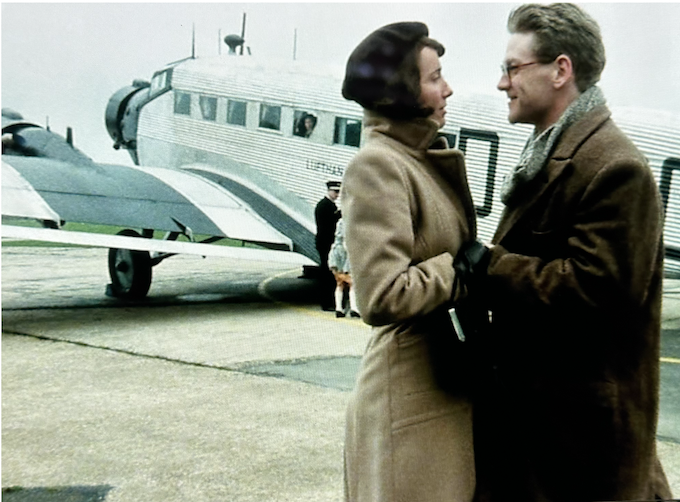
It’s getting too dangerous. Harriet flies to Athens (interestingly on a German Junkers-52 Lufthansa plane).
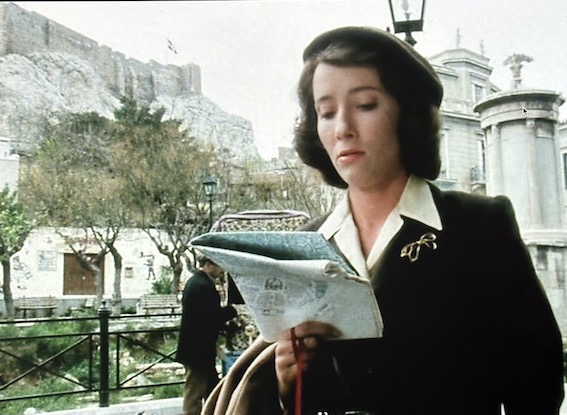
Episode 4 is Athens. We thought it the best of the series, but then we now know the characters, and the scenic opportunities abound. Yakimov is already there, Guy arrives soon after Harriet. Guy’s off to find a job but the useless earlier poorly-qualified (if at all) escapees from Bucharest like Toby Lush are there ahead of them and have the vacancies.

Harriet and Yakimov get a job with the British information office. Guy gets a hard time in his interview with Professor Gracey, head of the English department, who has heard reports that Guy was ‘frivolous’ in Bucharest.
Prof Gracey: Wasn’t it a tiny bit frivolous to mount a production of Troilus & Cressida whilst the Germans were marching on Paris?
Guy: I think the Germans would have marched on Paris whatever I did.
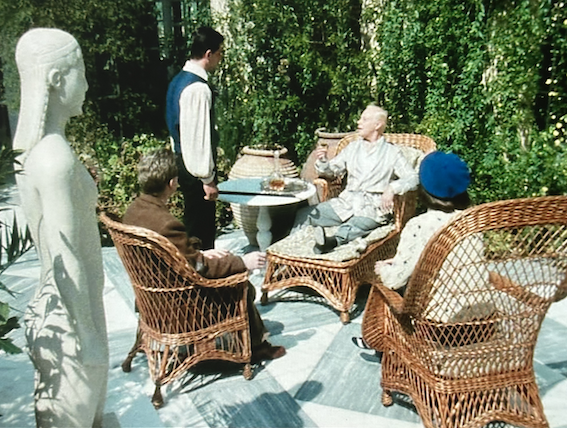
It turns out that Lord Pinkrose is Gracey’s house guest and that Pinkrose had undoubtedly been the source of criticism of Guy. They appear, the suggestion is, to be a pair of ageing gay men.

There’s a sequence of the Greek army marching through the streets of Athens with exultant crowds. Harriet thinks they look like young Greek gods. Guy dismisses them as ‘cannon fodder.’ Guy and Harriet still spend much time eating and drinking in five star hotels.

Pinkrose takes over at the information office and employs two elderly ladies, Gladys and Mabel, and sidelines Harriet and Yakimov. I thought they were played by Hinge and Bracket at first. Over this episode, the information office is the recurring comic relief. Alan Bennett is marvellous in wing-tipped collar. Pinkrose is still working on his Byron lecture.
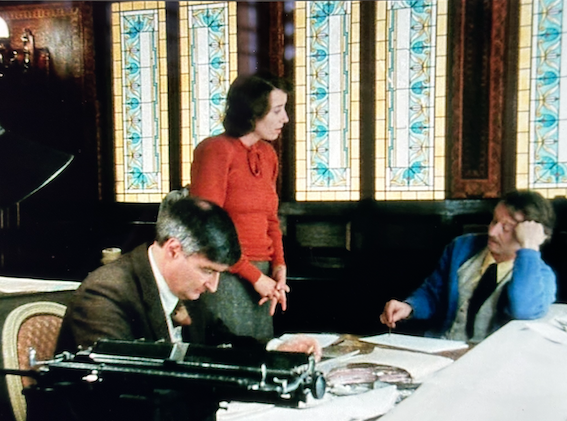
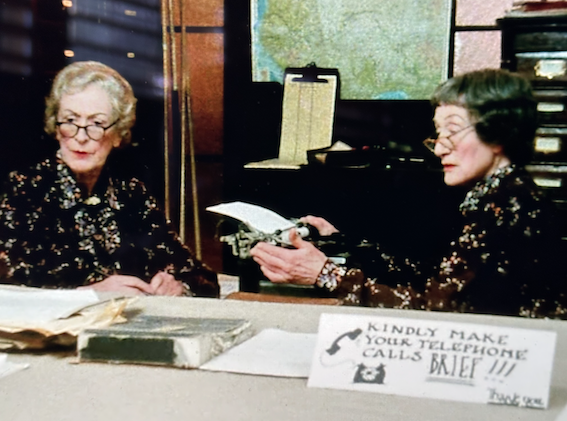
Harriet: He was supposed to be giving that lecture in Bucharest and everybody forgot about it.
Yakimov: My personal view is that the Pinkrose lecture will never be given by popular demand. Self-centered pompous old tit!
Gladys: Professor Pinkrose is a gentleman and a scholar!
Yakimov: He can still be a pompous old tit. It’s practically a qualification, dear girl.
Prince Yakimov has mellowed into almost a different character, lighter, more laconic, gently taking the piss out of Pinkrose and the ladies.
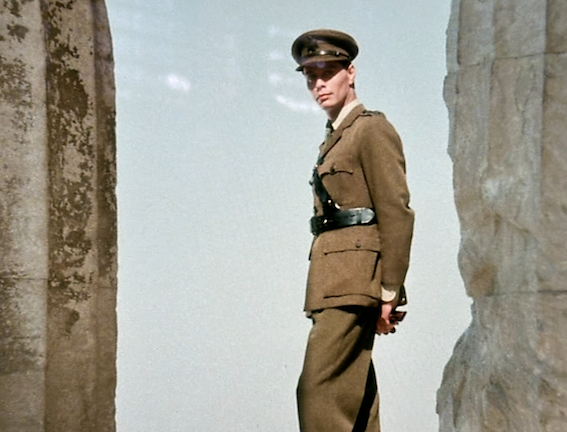

Charles Warden (Jeremy Brudenell) is a young soldier who takes a fancy to Harriet. They have an idyllic stroll on the deserted Parthenon (That must have been very early morning filming in 1987!) He certainly knows how to strike a romantic hero pose, flanked by columns, and Harriet is suitably misty-eyed.


Charles and Harriet watch the injured Greek soldiers returning from the battlefront. ‘I saw them when they first left. They looked like young Greek gods,’ she says. Charles stares at them, no doubt wondering what his chances will be in the war. ‘We all look like gods when we march into battle, and we all look like that when we return,’ he replies. Time is short.

They visit The Temple of Poseidon at Sounion. He fears he is ‘someone to keep you amused while Guy’s busy.’ ‘More than that,’ she replies huskily. She contemplates an affair, but is dissuaded when Sasha turns up at the last moment. Charles is off to war.
It draws closer. Athens is bombed, windows have tape across, there’s a blackout. No plot spoilers.
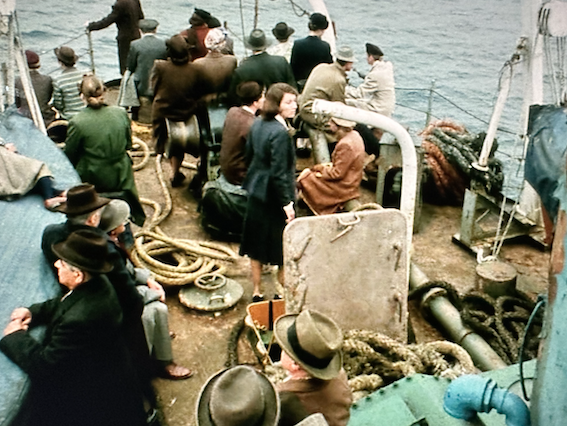
After the Germans advance on Athens they all set off on a tramp steamer for Egypt and we’re into the Levant Trilogy. Incidentally the director ends each episode with a moving vehicle (boat, train, plane, car, truck) usually moving away. They also got a lot of screen time from the carefully filmed steam locomotive wheels in the Balkans.
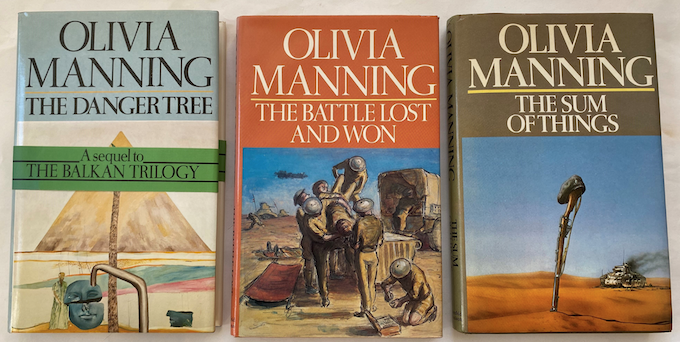
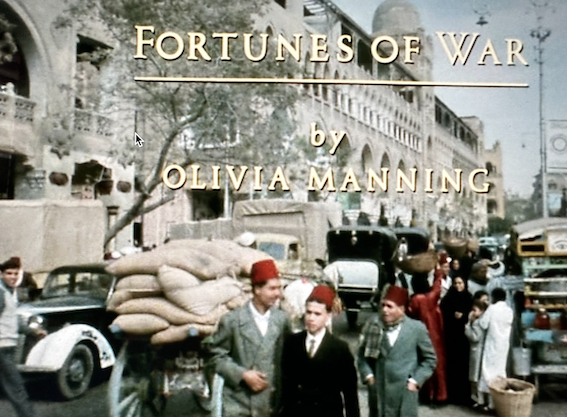
There is a strong stylistic narrative change in the Levant Trilogy, forming the final three episodes. It’s a later batch of novels, and for me not quite as good. Harriet is no longer the constant observer because we switch continually to the Eighth Army in the desert and a young lieutenant, Simon Boulderstone (Rupert Graves) out on the front line. It’s a different and major thread. It was probably done by a completely different film unit too. The film budget runs to battle sequences against the Germans. Wouldn’t it have been the Italians early on? The battle sequences look better than A Family At War’s desert sequences. This is real desert, where A Family At War had to use British sand dunes on the beach with tufts of grass betraying their location.
Also, Guy is much less present, and we miss him. The main themes are Harriet getting involved talking to various young men.
The publicity and DVD designers liked the desert. Ronald Pickup’s Prince Yakimov gets on the DVD Disc 3 label, even though he does not appear at all in the Levant Trilogy so gets nowhere near a pyramid. Guy gets a pyramid setting for disc one, but is only on a pyramid in the last minute of the entire series.

We get minarets, we get camels, we get pyramids. We start with our Athens contingent … Pinkrose, Guy, Harriet, Toby Lush, and Dubanet rattling along together in a truck.
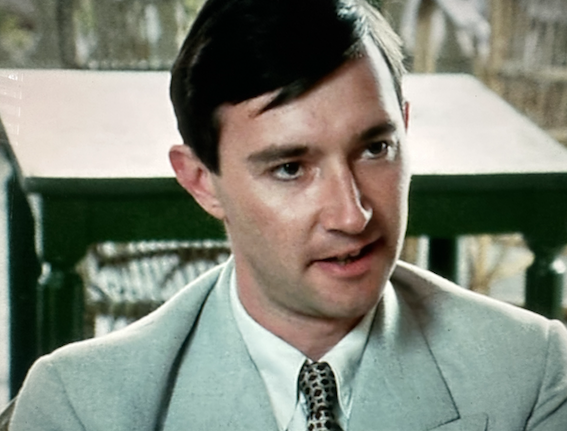
Dobson is already there and introduces them to the poet, William Castlebar. Of course Guy knows his poems.

The Council crew: L to R Dubanet, Gracey, Guy, Toby, Harriet, Pinkrose
Harriet & Guy are not invited to sit. Dubanet is spectacularly nasty.
Professor Gracey from Bucharest has preceded them to Cairo and the British Council, and Lush, Dubanet and Pinkrose are in ahead of Guy and have got the jobs again. Dubanet suggests Guy might ‘Keep your wife quiet’ and go to a business college in Alexandria. He does.
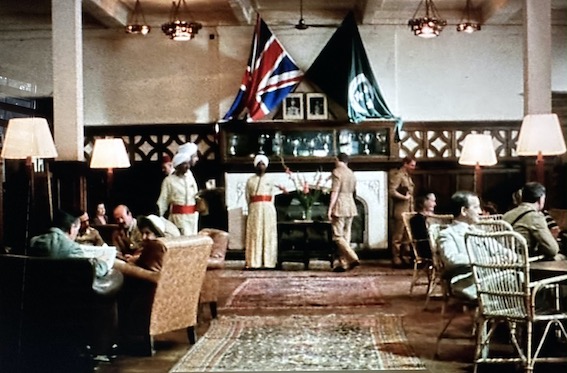
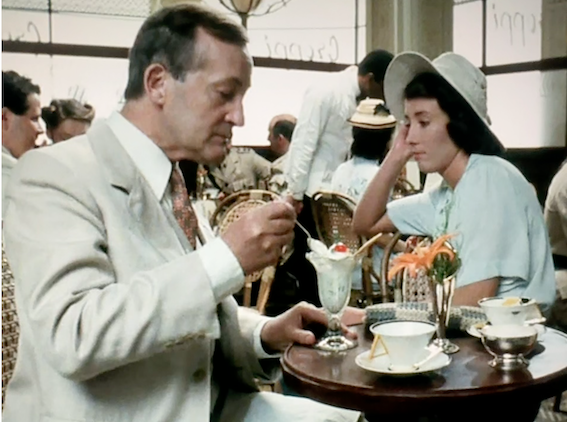
Harriet gets a secretarial job with the intelligence offices, which gives her a chance to discuss British rule with Egyptian colleagues. One points out that while loyal to the British, he’s also learning German just in case. In all the large scenes, turbaned servants hover, standing to attention. The above is an early scene at the Anglo-Egyptian Club. Dobson is seated on the right. Note the servants waiting patiently to be beckoned.
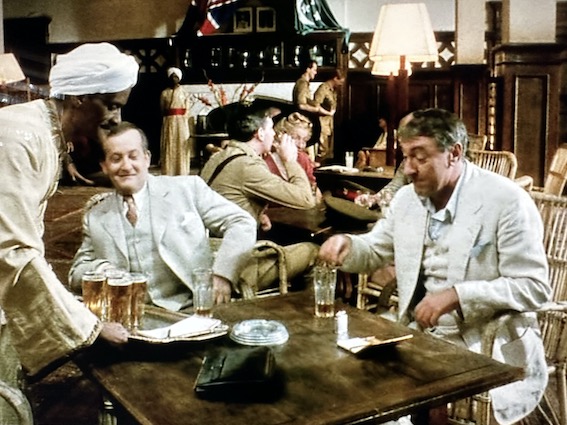
Later, when Guy gives a talk at the university, there’s a servant standing to one side. Another aside. A friend went to teach English at a military base in the Gulf in the 80s. English teachers were given an honorary rank of lieutenant so they could use the officers’ mess. The previous teachers had been Indian and Pakistani, and only given the honorary rank of sergeant. He told me how the Pakistanis became ‘assistant teachers’ standing next to him, and bawling ‘Answer the officer!’ when he asked a question.
Simon Boulderstone (Rupert Graves) arrives looking for Edwina (Diana Castle), a girlfriend of his brother, Hugo. Edwina is flighty and flirty. Simon is an innocent junior officer and is taken off on a sightseeing trip to the pyramids with Harriet. They go with Liversage, an old buffer expat who drags around a stuffed dog on wheels.
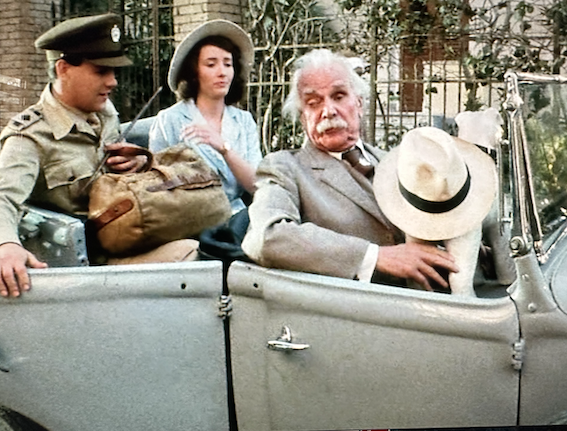
It’s on their return to Cairo that they meet Angela Hooper (Ciaran Madden) for the first time. Her son has severe head injuries after stepping on a mortar shell while she was painting. They have to tell her that he is dead. As we have seen her painting by the pyramids, you have to wonder where a mortar shell came from.
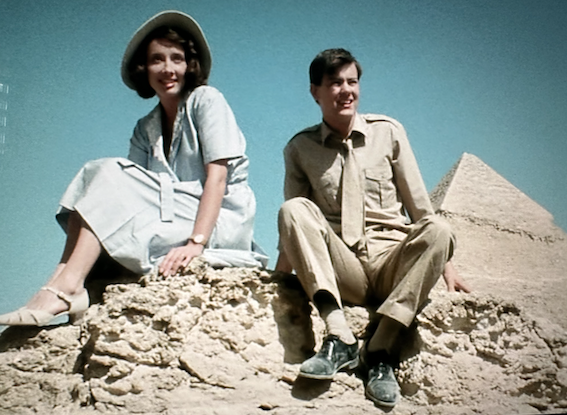
Harriet & Simon Boulderstone (Rupert Graves)
Harriet and Simon go back and climb a pyramid. This will happen again. She tells him that the previous time she climbed it she was in a long evening dress. They have a dance right at the top and sing Run Rabbit Run. Did they use stand-ins for the long shots and create the top elsewhere (with the Great Pyramid in the background)? Possibly. The camera is at their eye line in some shots (though looking up in the one above). It’s a pyramid. It would have to be on a scaffolding platform. What would the insurance be on the star of a £6.5 million film? The long shot is blurry and murky, possibly dawn, and the shot at the top is bright and sharp. It could be studio and green screen, but it would be easy enough to create the top at ground level in the desert with the real view. I would feel extremely sorry for the camera and sound operator who would have had to climb it too, but lugging equipment (if they did). 1987 equipment was much heavier than today.

The poet Bill Castlebar (Robert Stephens) gives Harriet a lift to visit Guy in Alexandria. Olivia Manning (or Alan Plater) knew about dedicated literature teachers. Guy is now teaching Finnegan’s Wake. She wants him to return to Cairo – the Germans are only fifty miles away. At the hotel they meet Captain Aidan Pratt (Greg Hicks), on leave from Damascus.

He was a pre-war actor as Aidan Sheridan. Harriet had seen him in The Seagull. Guy had seen him as Romeo, Oswald and Henry V. Aidan’s next role would have been Hamlet which inspires Guy to try and produce it. During their conversation, they hear the sound of German planes attacking the harbour. Bill, Harriet and Aidan compete to show subtle fear, but Guy hardly notices the explosions and rattles on about Hamlet. (Incidentally, 26 years later, in 2013 Greg Hicks was probably the best Claudius I’ve seen).

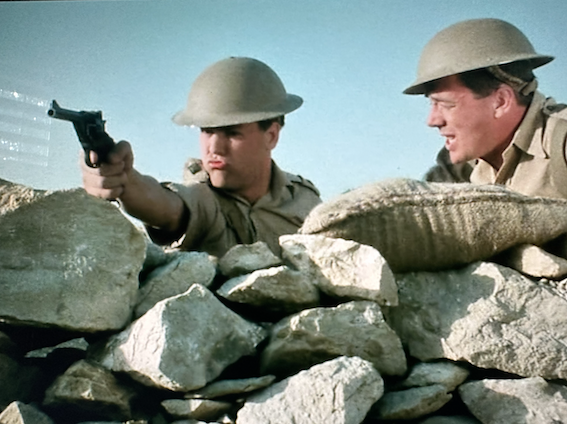
Simon joins up with his platoon. This happens in every World War One and Two film, but he discovers the sergeants know much more than him, and in discussion one turns out to have been at university before the war. The rank of officer was still based on social class rather than ability or intelligence. My aunt used to tell me about this. She joined up in 1940 with a South Wales accent, rapidly became a sergeant and ended the war as a first lieutenant. Her secret was deliberately losing her Welsh valleys accent and learning to speak advanced RP.
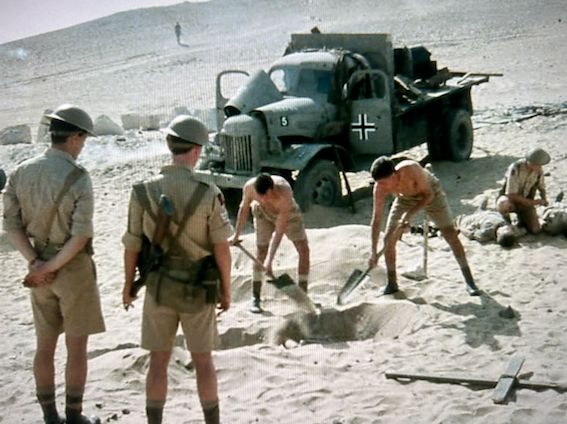
We cut to a battle scene in the desert, Simon’s first taste of action. He makes himself look daft by firing a pistol at a German several hundred yards away. The sergeant explains that to him. Then the German soldier running away is shot by riflemen and then buried in the sand.

Guy is appointed as the new director of the British Council Institute. Gracey et al have been invisible. The Pringles are eventually ensconced in a Cairo mansion with Edwina and Dobson. They arrive and Harriet suggests ‘showing Guy their new room’ after his long absence. ‘Can we leave that till later, darling? I have some people to meet.‘ Off he goes to a lecture hall to meet the new teachers and inform them there will be weekly play readings. I thought they took that pretty well. Being Guy, he forgives Dubanet and Toby’s previous bad behaviour. At home, the only obvious sex scene with Guy and Harriet begins and we see explosions in the sky. It is simply a cut to the desert war thread.
Simon goes off with his driver, Arnold, to find his brother Hugo, only to discover his brother is dead.

Angela Hooper arrives at the house in her posh car to announce she is moving in at Dobson’s invitation. They go to a champagne reception where Angela describes her son’s death again. They’re all there: Guy, Bill Castlebar (who we see knows Angela well), Aidan, Liversage.
The impassioned communist Guy sees no irony in lounging in luxury with Egyptian servants running around after him. Angela and Edwina, the two single women, and their romances with army officers, are now a major part of the story and the household.
Episode 6 begins with Simon arriving to tell Edwina that Hugo is dead. She is upstairs in the arms of another, Peter aka Lord Listoonvarna (Jeremy Sinden). Harriet asks her to come downstairs and see Simon.

Edwina: Don’t ask me to cry.
Harriet: It would ruin your make-up.
Edwina: It wouldn’t help!
Harriet: A good performance, please!
The new boyfriend, Peter Listoonvarna, a Lord and also a senior officer, offers to get Simon an HQ posting. He’s one of the staff officers hypocritically protesting their desire to get in the war while living the high-life in Cairo. Simon says he likes being in the desert. Harriet, Angela and Simon are having drinks and are joined by Castlebar and a woman soldier, Mortimer. It’s clear that Angela and Bill are in a relationship. They all go out to see the seedier night life, including drinks in the Silver Moon Cabaret, a brothel. They listen to an opera record punctuated by groaning above their heads. Simon later complains about how they exploit the Egyptians. Harriet responds ‘Naked Imperialism.‘
We certainly see the seedy side of Cairo. These wealthy ex-pats find it amusing to go for drinks in brothels and laugh at the goings on. The British officers are Staff types expressing their regret that they can’t be in action, but staying well away from it. They turn out to be married, but on the pull. The Egyptians speak of freedom from the British. They have a point.
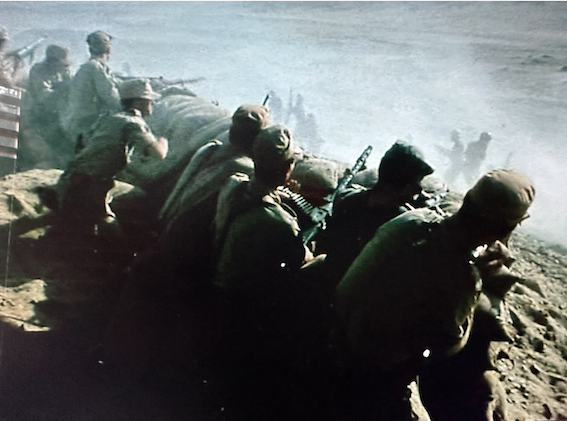
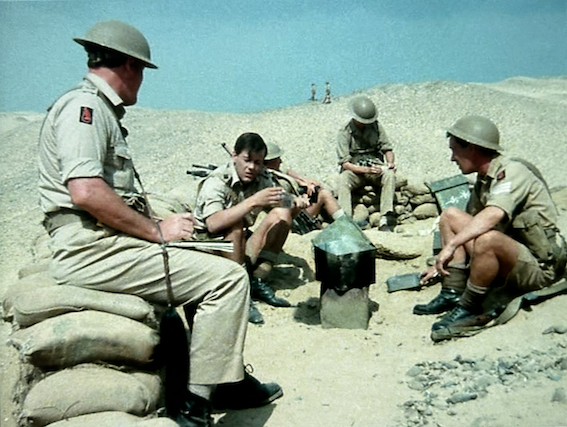
Simon is back in the desert for the biggest battle scene and leads his platoon on an assault on an entrenched German position. Afterwards he’s told, ‘Not bad. Six dead. Four walking wounded. A few CCS.’ CCS is Casualty Clearing stations … hospitals.
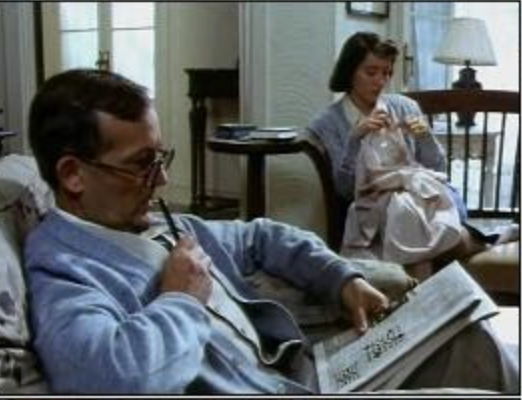
Poor Dobson back at the mansion finds his afternoons with Harriet of reading and darning interrupted by the constantly creaking beds above their heads. Harriet is dispatched to deal with it. Meanwhile Guy has recruited two teachers from Palestine. Angela is shocked when Mona turns up. She is an ENSA entertainer … and Bill Castlebar’s wife. Harriet comforts a tearful Angela, and goes downstairs to find a weeping Edwina. She has discovered that Peter Listoonvarna is married. Yes, they’re all at it. Dobson knew all along. ‘They’re all married … People just get on with it regardless. Usually in the middle of the afternoon,’ he comments.

Angela suggests she and Harriet ‘run away’ on an excursion to Luxor. It’s remarkably quiet and deserted at the hotel. They see a funeral. There’s an epidemic.

Angela says she can’t stay in Luxor. She fears infecting Bill, ‘Europeans who catch things out here … they’re gone in no time.’
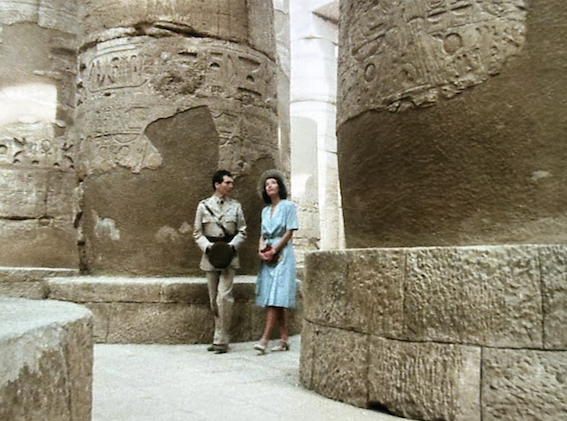
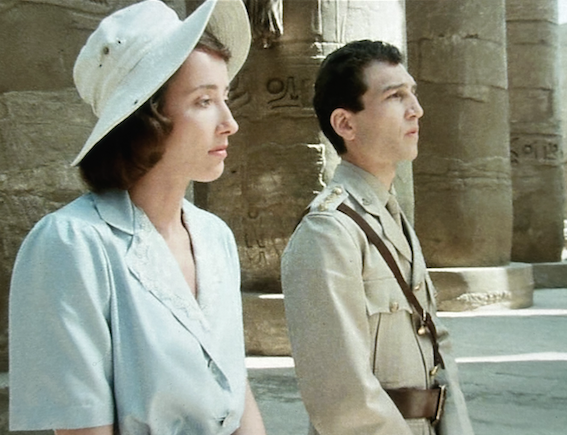
Harriet stays on her own and meets Aidan by chance. This is the third young uniformed man at an archaeological site we’ve seen her with. It’s becoming a habit. They do not look cheerful. He’s visiting from Damascus. These reviews are educational for me. I wondered why he would be in Syria, a French protectorate. I looked it up. Anglo-French Syrian war, June-July 1941. The Vichy French were assisting the Germans to mount an attack British oil supplies in Iraq. There was a proper fighting war, air, sea and land, mainly Australian and Indian troops with some Free French and Free Czech. The Vichy governor called Britain ‘the old enemy.’ British forces occupied Syria and Lebanon.
Aidan describes how he was a conscientious objector in 1939. They made him work as a steward and waiter (not an unusual task for a resting actor) on a ship taking refugee children to Canada. It was torpedoed and he was one of the few survivors.
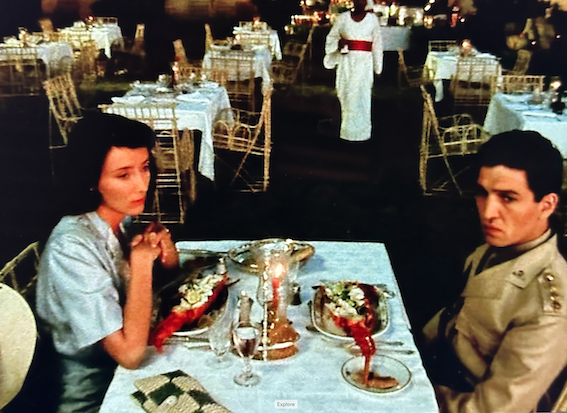
Aidan and Harriet dine in the empty restaurant, you get the strong impression she dislikes him. Harriet picks up amoebic dysentery in Luxor. As soon as they ordered lobster (on the muddy River Nile river so far from the sea) I was well ahead in the story. It brought back a day (probably in Athens) where five or six ELT authors were sharing advice based on their travelling experiences. The two strongest pieces of advice were ‘Never write for the BBC’ (total agreement – I was the only one who hadn’t) and ‘Never do a lecture tour of Egypt.’ They all had and suffered. I never did go to Egypt so avoided the curse of the Pharoahs, though Montezuma had his revenge on me in Mexico.
The desert cut sees Simon’s CO tells him he’s been appointed to a staff job in Cairo. ‘You must have friends in high places … You’re going to be among the nobs.’ Everyone thinks he’s wangled it. They set off for HQ in a Jeep and stop for water. We now know that the repeated shot of a kite in the desert sky is the harbinger of death.
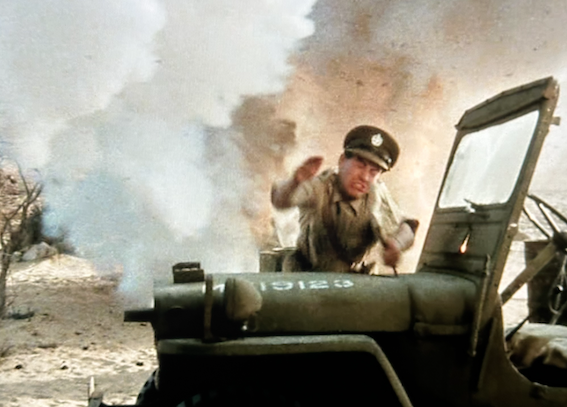
The driver steps on a booby trap, and Simon is injured in the explosion. A medical team who just happen to be passing by stretcher him off.

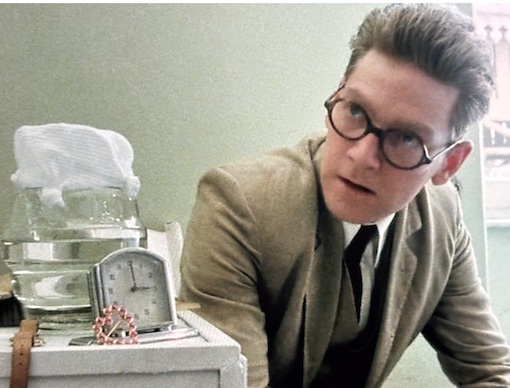
Harriet ends up in hospital tended by a handsome Egyptian doctor, Dr Shafik (Sam Dastor), with her upper eyelids smothered in pink make up. Guy visits but is in a hurry to go. She tells him it’s not malaria, but dysentery. Guy is ‘Oh. 3 o’clock? Is that the time?’

Guy has finally arranged Pinkrose’s Byron lecture. The Egyptian contingent at are all in red fezs. Yes, the comic screen Egyptian wears a red fez. Was it really universal? It was banned in Egypt in 1958, though it was a mark of cultural identity in World War II. My childhood GP (who also delivered me) was Egyptian and of course I never saw him in a fez. He was a lovely and kindly man, who as soon as you reached sixteen, offered you a cigarette during consultations. He was one of the reasons I hated so many of the teachers at my grammar school who used ‘Dirty Arab’ and ‘Street Arab’ as their main term of abuse. They always claimed to have learned their prejudice in wartime Egypt.
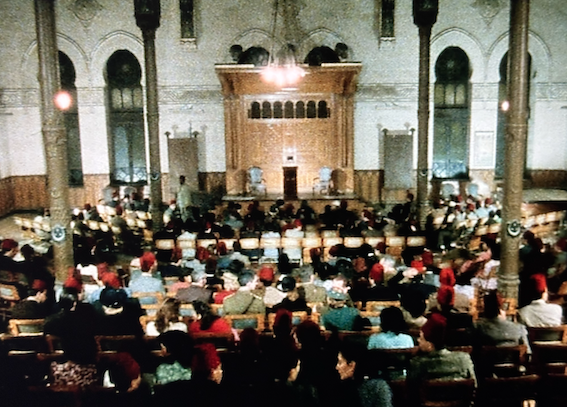
The lecture has a dramatic ending. Harriet decides she should join the boat evacuating women and children from Egypt. She arrives at the docks and meets Mortimer, the female undergraduate turned military truck driver. On the spur of the moment she decides not to board the ship, but to join Mortimer and her co-driver on a jolly trip to Jerusalem. She doesn’t tell anyone.

The episode ends with Guy reading a newspaper report. Edwina is reflected in the mirror behind him. A merest hint?

The final episode opens with the three girls singing.
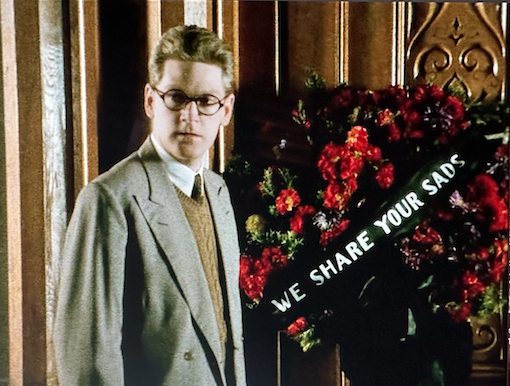

Guy trudges sadly into his lecture hall to find a sympathetic message from his class. Yes, they’re all wearing Fezs. It reminds me of when to correct in an ELT class. My example was a student saying ‘Yesterday my grandma she dies!’ The teacher response can only be ‘I’m sorry.’ NOT ‘No, Yesterday, my grandma DIED.’
The girls are singing away in the truck. Edwina wonders whether going to a dance at the Savoy would cheer Guy up. Simon is in hospital, lying on his front, paralysed, hoping Edwina might visit him Visit him she does and finds it so depressing.

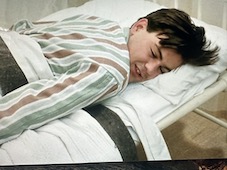
Edwina: Harriet would be the perfect person to visit him … Oh! I’m sorry, Guy. I’m so stupid!
Dobson: Yes.


Back on the beach, Harriet realises that Mortimer and her co-driver are more than just ‘friends.’ Harriet seems envious of them. They’re on the road to Damascus. ‘Watch out for a light from heaven,’ suggests the co-driver.
Guy has to go and visit Simon in Edwina’s place who ‘has a migraine’. He has brought a few books, ‘I’m not much of a reader,’ says Simon. He’s probably seen the titles. Would Guy have brought Finnegan’s Wake? Perhaps he thought a little Proust might be lighter. Simon asks after Harriet and Guy has to say she’s dead. Branagh’s tears probably won him that 1988 acting award on their own. Seriously, beautiful acting from both of them. Then Simon feels sensation again and asks Guy to tickle his feet. He can feel again!
The girls drop Harriet in Damascus. She’s looking for Aidan Pratt but he’s been transferred. She asks the desk sergeant what it’s like in Damascus.
Sergeant: Same as everywhere else, Miss. A lot of bloody foreigners.
Harriet: Is it safe?
Sergeant: Safe as anywhere else, Miss.
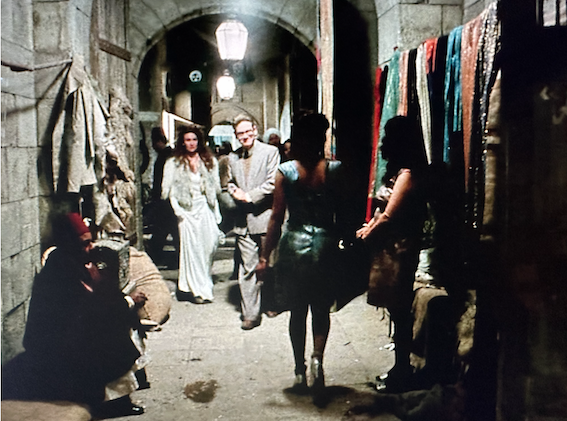

Back in Cairo Guy and Edwina are off to the Burqa for what turns out to be a fish supper, and guess what? Aidan walks in and is invited to join them. We have the ‘Where’s Harriet?’ conversation. Aidan asks if they’ve split up. Aidan is told she is dead and leaves … Guy goes after him, deserting Edwina. They stroll and chat. Aidan invites Guy to come and visit him in Jerusalem, his new posting.
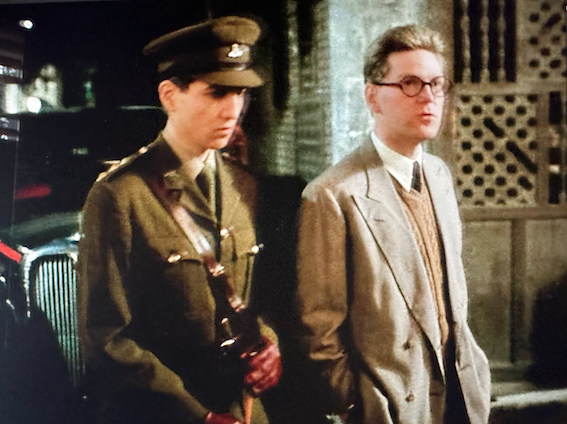
Guy: I don’t have time for holidays.
Aidan: Or for me.
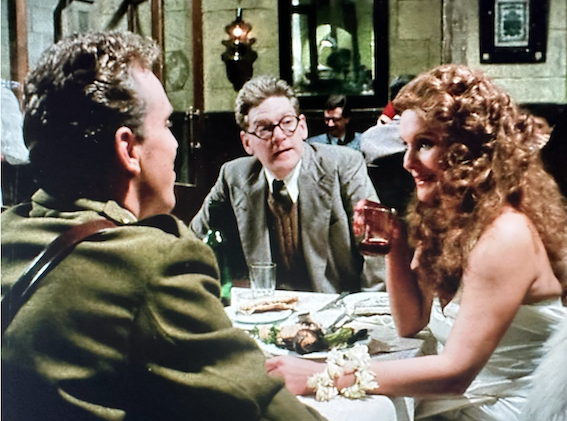
Ah! These actors. The love that dare not speak its name (well, in 1943). Guy remembers he deserted Edwina and runs back to find she already has picked up an officer companion, Tony Brody.

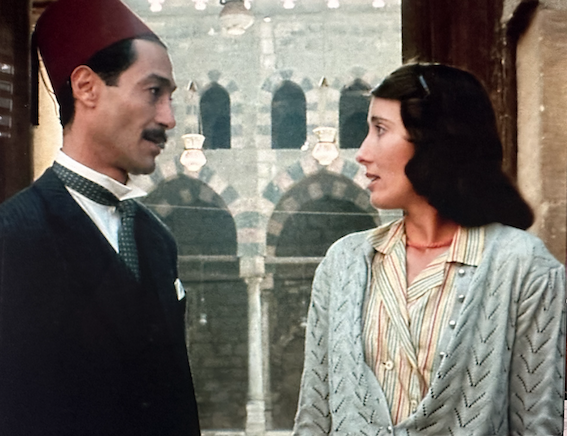
Harriet is wandering the tourist sites of Damascus. A Syrian man takes her to see the Great Mosque. Our obligatory tourist site per episode. He gives her a scarf. The first reaction is that he’s an appallingly sleazy character and his intentions are not honourable. Our flesh crept.
Syrian man: The sight of a lady’s hair might distract the men from their devotions.
Harriet: You can’t make men chaste by keeping women out of sight.
An excellent point which resonates today. They go for cake and coffee (It is God’s will).

Angela and Bill drive past the coffee house and call to her. She races over. Our Syrian man’s murky and seedy hopes are dashed. She leaves with them. He leaves in a huff, throwing a coin at the musician. He was never in with chance.
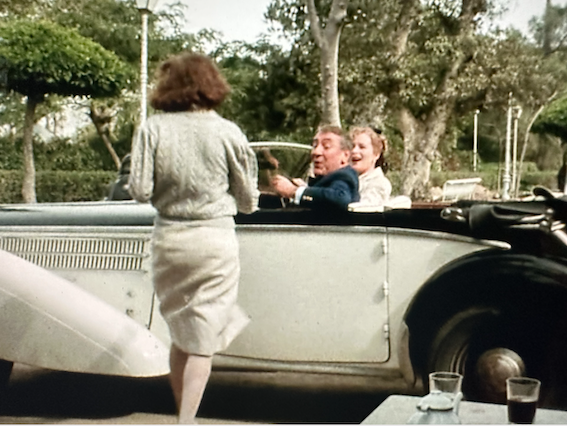
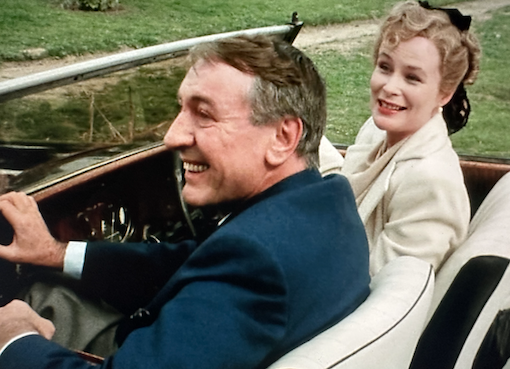
The E.M. Forster ‘Aspects of the Novel‘ critics are at this point getting in a moody about coincidence and people continually just turning up at opportune moments. I’m not bothered. I used to attend several ELT conferences a year in far flung places and it seemed perfectly normal to run into people you hadn’t seen for a year in airports and hotel lobbies.
The Brits have an uncanny knack of finding five star hotels.

Back in Cairo, Dobson and Edwina are having breakfast. Guy joins them and Dobson tells him to put his book down. My mum would have done the same. In this case they might fear he’ll start reading Joyce aloud. Dobson announces that he got the message at the embassy: Aidan is dead. He shot himself.
Guy: That’s quite a dramatic gesture …
Edwina has worked it out. While everyone thought Aidan was interested in Harriet, it was Guy all the time. Doh! That’s why Aidan was disappointed in Luxor when she said Guy wasn’t with her.

We cut to Simon’s rehabilitation, re-learning to walk as intrepidly as Kenneth Moore did as Douglas Bader in Reach For The Sky. Guy takes him out to the pyramids and Simon declares he will climb it. They make it the top.

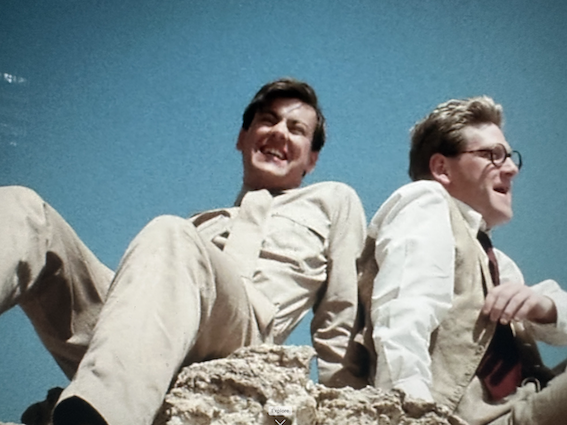
Edwina is now trying out a wedding dress in front of Dobson and Guy. Yes, it’s Tony Brody in a whirlwind romance.
Harriet is with Bill and Angela and they visit an Orthodox church for Easter. As the ceremony ends, they leave and Mortimer rushes up to them. She has heard that the ship was torpedoed and no one was saved. They realize Guy will think she’s dead, and they set off back to Cairo. (There seems no problem with petrol for private cars). Bill is in agony with stomach pain.

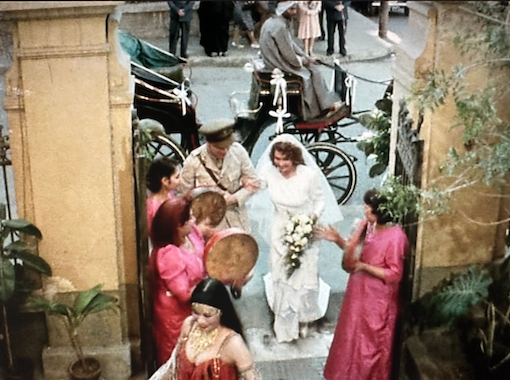
Edwina’s wedding is in progress with Simon as a cheerleader. Dobson is giving her away. Then Bill arrives at the reception at the mansion to tell him that ‘Angela is outside in the car with Harriet.’ More tears! There are looks at Edwina’s white dress. After all, they don’t know who she’s just married.
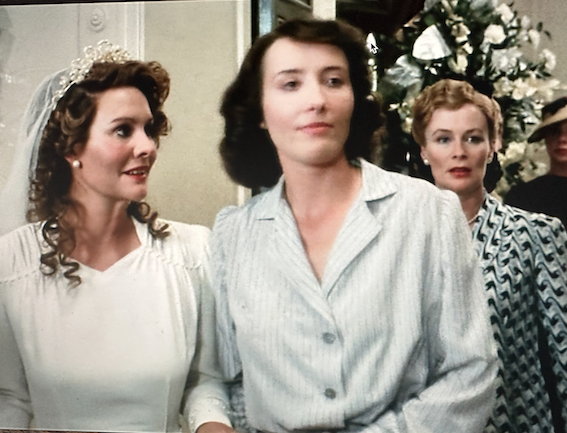
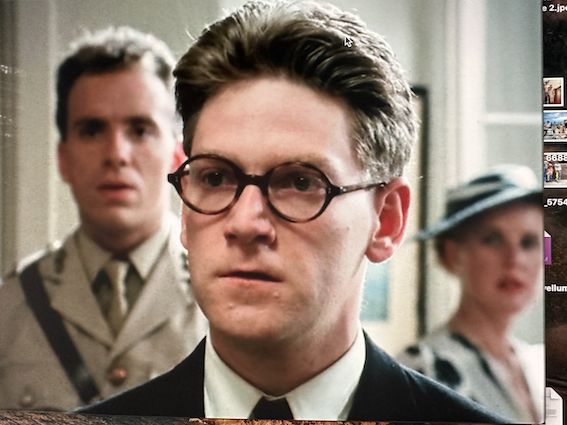
Bill is taken to hospital, perforated bowel, and Mona, the wife, turns up. We move to Bill’s funeral. In these last few scenes, Charles Kay as the calm, urbane Dobson totally steals the show for me, and he has some superb lines which helps. As the crises deepened over the wedding he sighs and he thinks he’ll write his memoirs. We end with Simon, Harriet and Guy on the pyramid.

We watched seven episodes in seven days without skipping. That’s major approval.
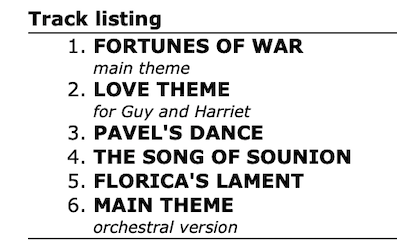
SOUNDTRACK
BBC CD. It was originally a 12″ “single” with 6 tracks, and a 7″ single with the main theme credited to Pavel’s Romanian Ensemble (same cover picture). The recurring theme is Run Rabbit Run played at a variety of tempos and styles.

LINKS ON THIS BLOG
SEE ALSO KENNETH BRANAGH:
The Entertainer
The Winter’s Tale
All On Her Own & Harlequinade by Terence Rattigan
The Painkiller, by Francis Veber
Romeo & Juliet (director)
Death On The Nile
Belfast (FILM)(director, writer)
Dunkirk
EMMA THOMPSON
Good Luck to You, Leo Grande
Saving Mr Banks
RUPERT GRAVES
Made in Dagenham
GREG HICKS
All’s Well That Ends Well, RSC 2013 (King of France)
Hamlet RSC 2013 (Claudius)
 Peter Viney's Blog
Brilliant series. We used to watch it once a year on VHS.
LikeLike
Yes, I ended up watching it all twice this time and it gets better with re0watching.
LikeLike